This lifestyle is a major change from life back home, and we are all having to make adjustments.
Being underway for more than a day early in the trip was certainly a big adjustment, but it was a very manageable one. It was quite different than when we did the Baja Ha-Ha. On that trip, we had six adults standing watch so we each had two, two-hour shifts each 24 hour period. Now we are what is commonly referred to as “cruising short-handed.” We settled on six-hour shifts. Tim had 10:00 to 4:00 and I had 4:00 to 10:00 (am and pm). This seemed to work OK, but we were pretty well wiped out by the 3rd day. I enjoyed my morning shifts and then I was able to do some school with the boys before I needed to lay down for a quick nap around 12 or 1. My evening shift was the real trying one for me. After about 8:00 Tim would go lay down to get some sleep before his watch would start, and that’s right when I would start to fade too. I would sit in the salon with the boys with my timer set for every 12 minutes. When the timer went off I would go up to the helm, do a visual sweep, and then to a radar sweep to watch for other vessels. Thankfully, there was rarely a need to make any drastic sail changes. One time I thought I would need to reef the main, but the wind never went over threshold, so I didn’t have to do that. So, I have yet to reef the main on my own, but I think I could do it since I’ve done it with Tim a few times.
My first watch was between Marina del Rey and San Diego, and it was a morning watch so it was still dark out. I was fresh from sleep, but I was a bit jittery after Tim went back to bed. The wind was dying so I had to make the decision whether to keep sailing or fire up an engine. The decision was easy, since we wanted to get to San Diego in the early afternoon, and we would never get there at under 2 knots. So, I needed to furl the Genoa, but it occurred to me Tim usually takes the roller furler while I tail out the sheets. The first watch jitters were still with me, so I had to give myself a pep talk. I put on my harness and clipped on while I stood on the side deck and rolled it up. Once complete it was like a burden lifted. It was such a simple task, but completing it on my own cured my jitters, and my self-confidence has (mostly) been with me the rest of the way. However, I did get a little spooked during my morning watch between Bahia Los Frailes and Bahia de Los Muertos. I was sitting at the helm when I heard strange splashing sounds traveling across the water. It clearly wasn’t dolphins or the jumping Manta Rays we had been seeing. I would look but I couldn’t see anything. It was driving me crazy such that I wouldn’t sit outside for a while. Then I got out the spotlight and was determined to see what was stalking me. It turned out to be schools of fish that would, as a group, repeatedly jump out of the water. Later in the watch, I experienced the sensation of heading straight towards land without being able to see it except on the electronic chart. It was pretty unnerving. There was a single lighthouse to the right of where we were heading so that at least provided one real-life data point to compare with the chart. I slowed the boat down so we wouldn’t arrive while it was still dark and the sunset that morning was most welcome and most amazing.
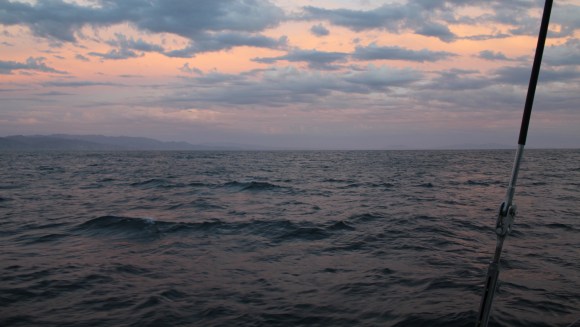
One thing about being underway that I wasn’t prepared for was the sheer workout it is keeping balance, moving around, doing chores, cooking, etc. while the boat is rocking and rolling underneath us. One evening while brushing my teeth I stood in the bathroom without holding on and just observed how many of my leg and core muscles were engaged while I stood there. So, while I actually quite like the routine that a multi-day passage provides, I am not yet in shape for a longer passage, like the 2 or 3 weeks it will take when we eventually cross the Pacific.
The entire trip has been one big learning process, and we’ve had a few mishaps keeping us humble and reminding us how much we still have to learn. By far the biggest issue we’ve had is the anchor dragging, which caught us totally off guard and could have been a real disaster. We have an iDevice app called Drag Queen (yeah, seriously) that uses GPS to alert you if you might be dragging. You set the position where you drop the anchor and depending on how much scope you put out and how deep the water is, you set an appropriate distance for the alarm to go off. We had used it a few times at Catalina Island, but we hadn’t been using it on this trip so far. I can still recall in one anchorage Tim saying, “this baby will hold up to 50 knots.” Well, our first night at Puerto Balandra we were anchored in shallow water, approximately 10 ft, near one side of the bay. About 10pm that night, after I had gone to bed, I hear the engines turn on and the kids yelling to me that our anchor is dragging. Tim was still up and he said all of a sudden he noticed we were close to the opposite side of the bay. Luckily it was a large bay and luckily it happened while everyone else was still up or we might have woken up to crashing against the rocks. It was our first experience with the “Coromuels”. Basically, when there are heavy winds out of the north on the Pacific side of the Baja peninsula coupled with a pressure gradient between the two sides, winds kick up hard out of the South on the Sea of Cortez side. That night we went from leisurely winds out of the N-NW to 20-25 knots out of the South, so we swiveled hard on our anchor and it likely ended up on its back so it didn’t reset. We have dragged a couple times after that, but we’ve been on our guard, using the anchor alarm and watching for the Coromuels. We have a new, larger anchor now, and its design is such that it is more likely to reset when the boat spins around it. We should sleep better at anchor from now on.
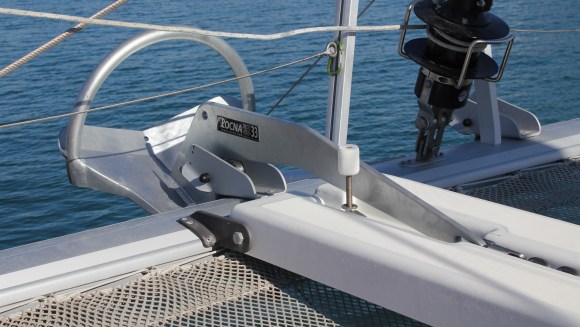
Another incident we had ended up having a comical aspect to it. At least I thought so. To set the stage a little bit, our anchor bridle hooks don’t stay on the anchor chain real well, so we rig it so the bridle line wraps around the hook to hold it in place. This creates a bit of knot that sticks out from the anchor chain. We were dropping anchor in La Paz, and Tim was at the helm and one of the boys was on the anchor and I was on the deck as well. The anchor was down and the bridle hooks were attached ready to be dropped down. Tim had backed down so the chain was sticking out in front and he called to us to drop the anchor. I saw what was about to happen before it happened but it was quick and my reaction was slow, so I wasn’t able to stop it. The knots around the bridle hooks caught on the cable attached to the bowsprit and ripped it right from the deck so it was dangling, and something, we didn’t know what at the time, ended up in the water. Tim jumped in to retrieve what was in the water, and it ended up being our navigation light. The current in the La Paz channel is pretty strong so at this point, Tim is a fair distance from the boat and making very little progress getting back to the boat, so he yells at us to drop the dinghy and go get him. Anticipating it could take us a few pulls to get the outboard started, he yelled for Alex to just row out there, so in our haste, we forgot something very important. Alex rows over and retrieves Tim, and then Tim starts rowing back. He’s rowing and rowing, and, again, making very little progress. I yell to him to just start the engine, and he yells back, “we don’t have the dinghy key!” So, I look at Brenden and he actually starts crying because he doesn’t want to get in the cold water, but he quickly sucks it up, jumps in, and swims to them with the dinghy key. At this point, I’m pretty much cracking up, but they were all still raw, so they didn’t see the humor yet. They all agreed that next time something falls in I have to jump in to get it. That has not happened yet.
We’ve had a few other more minor mishaps (e.g., starboard reverse not always engaging, torn spinnaker, mixing up the +1 deg and the +10 deg button on the autopilot) as well as some lessons learned. Our first anchoring experience in La Paz had us scratching our heads. While making our way down the long channel we noticed the boats in the anchorage were all laying differently. We thought at first maybe they had two anchors set, but as we got in closer we could see this wasn’t the case. We found a decent spot and dropped our anchor and it ended up behind us. This is not typical anchoring; normally the wind pushes you away from your anchor with your bow pointed towards the anchor. Tim watched for a while to figure out how the boat was going to move before we shut down the engines. It turns out that when the current is going opposite the wind, that’s when the boats behave differently. A heavy keel monohull will point at the current regardless of the wind. Our catamaran with small keels and large windage is much more affected by the wind direction. Anyway, we talked to some other cruisers, and this is affectionately referred to as the “La Paz Waltz.”
I’ve also learned not to head out on any errand or an activity trusting just the information in the guidebook. The biggest example of this is when I went to get our national park permits in La Paz and told the Taxi driver the address and when we got there it was an empty office building. What should have been a 20-30 minute errand turned into about 2.5 hours.
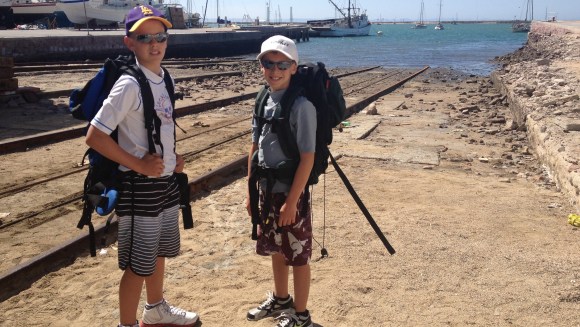
There have been several more mundane, everyday living type adjustments we are making. One of the big ones for me is cooking/preparing 3 meals a day for 4 people. At home, the only meal I had to prepare on a regular basis for all of us was dinner, but even then there was always the option of ordering out if I was tired or there was something more fun to do than cooking. That’s not an option anymore for most meals. The boys don’t complain too much, so I guess I’m doing OK so far. I’m learning to use the pressure cooker and I made a beef stew one night that was really easy and both boys said it was the best meal on the trip so far. Hmmm, really? Beef stew? I am having to take a totally different approach to meal planning and shopping than I did at home. I have always planned a menu, shopped for that menu, and then prepared that menu with little deviation aside from switching days around if I felt like eating out, as mentioned above. I was able to shop every few days with ease so veggies and meats were usually fresh and I seldom had a need to use the freezer. Now, it is all about provisioning to minimize the number of times needed to go to the store. Even being in La Paz for so long with plenty of shopping resources available, it was still considerable effort to get to the store. It would either involve a Taxi ride or a long walk with a backpacking backpack full of groceries. So, now I just keep a list of all basic ingredients I like to keep on board, prepare meals from that, and reprovision as necessary. I check produce onboard daily and incorporate whatever looks like it won’t last much longer into that night’s dinner. I don’t use nearly as many recipes as I did at home or if I do I have to alter them somewhat to accommodate the ingredients I have on board. I have made my own sour cream and refried beans, and I plan to learn to make my own yogurt and yeast bread when I get desperate enough. Milk is one of the harder things to keep on board because we go through it so quickly. I’ve started making a batch of powdered milk and keeping that in the fridge to use for coffee, oatmeal, and baking. We basically just use the fresh milk now for cereal and drinking.
Personal hygiene is something else that’s very different on the boat. Long gone are the days of leisurely hot showers. We do have a water heater on board that we can run off the starboard engine directly or off of battery power, but even when we have hot water it takes a while for the hot water to reach the shower so you end up wasting it or collecting it in a bucket while you wait for the water to get hot. Plus, you use a lot of water for the shower itself even if you hurry and turn the water off when you soap up since the flow rate is relatively high. So, we’ve taken to using the solar shower bags for our primary source of hot water while showering. One of them has a shower hose long enough that we can lay the bag on the deck and run the spout through the hatch into the master bathroom shower. So, at least we get to shower in the shower and not on the deck! Well, the boys often shower on the swim steps soaping up and rinsing off after snorkeling or swimming. I must admit I also now shave my legs with seawater sitting on the lowest swim step. Conservation of resources is something we are all very conscious of now. We have a large battery bank that can be charged by the engines or the solar arrays, and we have a water maker that runs off of the battery bank. We have found we are pretty much energy neutral using the solar arrays alone without running the engines if we make an effort to conserve. Next to showers, dishes are probably the biggest consumer of water, so I fill the sink pretty low for washing and rinse with a garden sprayer which has a much lower flow rate than the sink faucet itself. It works pretty well and definitely uses less water. However, it takes longer. In fact, most things just take longer on the boat.
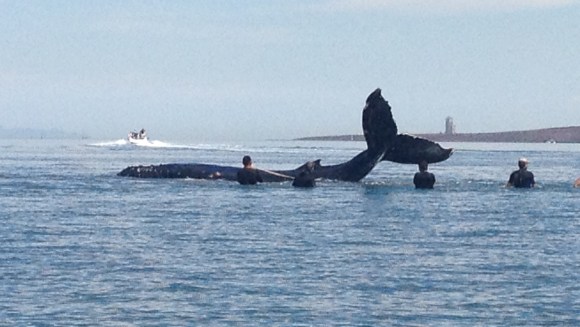
This lifestyle requires a significant amount of flexibility and adaptability since you never know what each day will bring. Having a plan is great, but I have to be much more prepared to alter the plan as things come up than I did at home. Those that know me know that I am a planner and I like routines, so I’ve still got a ways to go up the learning curve in this area, but I like to think I’m doing pretty well. The other day our “plan” was to finish chores, run some errands, then hit The Shack for an early dinner. Tim and Brenden were working on fixing toilets and I had emptied all the stuff we keep in the cockpit into the salon so that I could wash down the cockpit (it’s amazing how quickly dirt, dust, and hair collects in all the nooks and crannies of the boat). All of a sudden Brenden comes out totally distressed saying there’s poo all over his bathroom and Dad says we need to go out in the bay and dump the heads right away! Yes, things like that happen on a boat. In fact, I bet most cruisers have a good head explosion story to tell if you only ask and aren’t too grossed out. In a situation like that, there was no time to think about what I had been doing or whatever plans we might have had. Alex and I raised anchor quickly and within a few minutes, we were heading down the channel out to the bay. Tim was able to fix the head (and take a much earned hot shower NOT with the solar bag), and although I didn’t get to do as good a job on the cleaning as I would have liked and there was no time for errands, we did make it to dinner at The Shack, and the $1 draft Negro Modelos tasted a little better than usual. We also had to make a quick change of plans the morning they freed the beached whale off of the sandbar in the La Paz channel. Schoolwork becomes less important when there’s a real-life amazing event like that to witness.
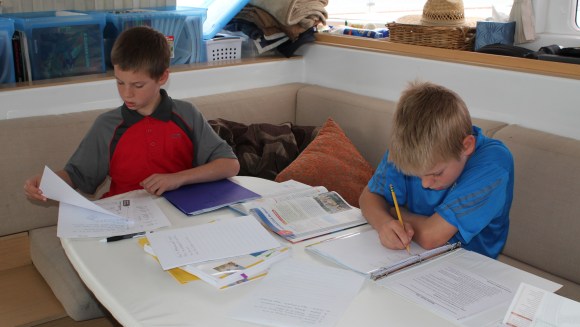
The boys are doing amazingly well. They miss school and they miss their friends, but they are adapting and enjoy taking on more and more responsibility. In fact, there have been several occasions when they have had to show me how to do something since dad had already shown them. I joke with them that I’m never going to have to learn to raise, lower, and drive the dinghy since I have my own private chauffeurs. They can also man the helm, stand a short watch, and raise and lower the anchor. The other day we even let them take the dinghy to the beach by themselves to play. They aren’t exactly thrilled with homeschooling, but they don’t complain too much and we are getting more and more efficient at getting everything done. I’m also trying to give them a few more “fun” assignments associated with their school work and trying to tie in what they’ve learned in their school work with other things we are doing so the lines are not so clearly drawn between “boring school” and “fun after school.” I can’t say it’s ideal yet by any means, but I listen to them about what they like and don’t like and I’m trying to adapt the lesson plans, at least a little bit. Up until just recently, other kids have been very scarce. However, we have now hooked up with a group of kid boats, so the boys are getting to play a little more with other kids, not just each other. Coincidentally, these are most of the kid boats that did the Baja Ha-Ha last year. Most spent the fall/winter down the coast of mainland Mexico and are now back up the Sea of Cortez either planning to stay the summer like us or go home soon. Apparently, the typical cruising behavior is to spend some time together, then go separate ways, and then hook up later. The boys are very happy to have other kids to play with for a while.

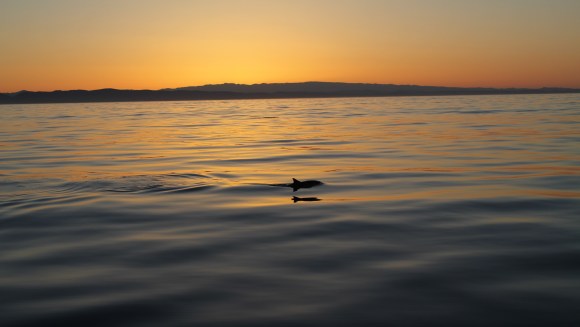
I anticipate a common question that people might ask me is what my favorite thing is so far, and I wouldn’t have to think about it too long to say the time spent with my family. At home, especially while I was still working, there was so little time, and quality time was just a fraction of that. Now we are getting to interact with and enjoy each other on a whole new level. Of course, we do get on each other’s nerves at times, but the boat is spacious enough that there’s room to retreat and regroup when that happens. In addition to that, there are so many little priceless moments that I have tucked away in my memory so far. As much as I enjoy the time with the family, I have also cherished my early morning watches when I would greet the sunrise alone. An especially memorable morning was when I could hear a pod of dolphins accompanying me in the darkness, not being able to see them but hearing their breathing and splashing, then greeting them when the sun came up and saying good-bye to them not long after that. In fact, all of the marine life we have observed has been amazing: dolphins, whales, sea lions, manta rays, sharks, and fish fish fish. The snorkeling here is as good if not better than the Cayman Islands, except that the water temperature is a bit cooler.
We are just at the infancy stage of our journey. We have seen and experience so little of what will eventually be in store for us. But it is a memorable time because everything is so new; the destination and the lifestyle. I resolved to not form an opinion until we are six months into the trip. That’s how long I’ve read most people need to really get into the swing of things, so I will not go on and on how this is the best decision we’ve ever made. At least not yet.
 Gresham Family Exodus