I had been complaining that I was sick of low-lying atolls. Since leaving Fiji we hadn’t seen even a foot of elevation, and honestly, I was craving even just a hill to climb. Well, Ailuk cured me of such a negative state of mind pretty quickly. I have to say that Ailuk was the most beautiful low-lying atoll we visited during our entire trip (and that includes The Tuamotus!) Since the definition of beauty is such a subjective and emotional thing, it’s difficult to describe exactly what made it so beautiful, but I will give it a shot: Most atolls have islets on the windward side, and those islets are typically long and skinny with the long dimension of the islet perpendicular to the direction breaking ocean waves on the outside of the atoll. In contrast, the windward side of Ailuk is dotted with many short and fat islets (as you can see in the satellite image above) and this creates much more stunning geography. It provides more waterways between the islets that shallow at low tide, which provide that idyllic turquoise water and plenty of striking sandbars that reach out into the lagoon. Perhaps a photo can do it better justice:
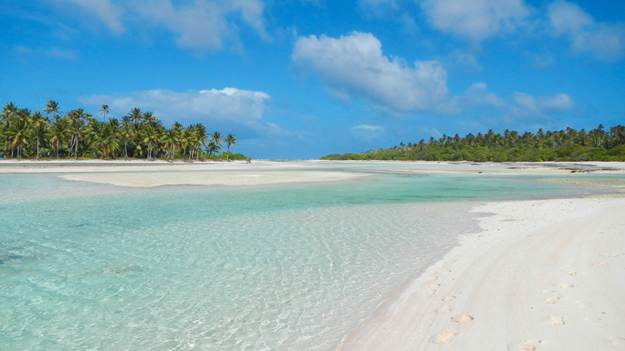
Waterways among the islets at Ailuk
We had some friends who were spending their second cyclone season down in New Zealand and were considering heading north to The Marshalls for the following season. So, of course they were curious about how we were liking it, and here is a summarized version of my initial response: “Overall, I’d say coming up here hasn’t given us any new or unique experience that we couldn’t get or haven’t gotten crossing the pacific from French Polynesia to Fiji, *however* coming up here is a great alternative to New Zealand for the cyclone season if, like I said, you want to keep cruising and aren’t ready for easy civilization (and don’t have boat projects to do that require any sort of marine infrastructure).” So, basically, nothing special, but a good alternative to New Zealand. After spending two weeks in Ailuk, I had to seriously amend this idea, because in addition to its incredible natural beauty, Ailuk offered a couple other totally unique experiences.
First of all, they still build traditional outrigger sailing canoes. And I don’t mean like in Majuro where they build them more as an art form in order to wow the tourists, no, I mean they build them in order to use them in their daily lives. On most of the other islands we’ve been to throughout the Pacific the people are dependent on more modern fiberglass fishing boats with outboard engines and gasoline. On Ailuk, they aren’t. They use their outrigger sailing canoes to zip up and down the atoll between villages and back and forth to the pass for fishing expeditions. When we were anchored near the main village, I’d enjoy watching all the men depart on the sailboats for the daily work as I was enjoying my morning coffee, and I’d watch them return in the evening as I was starting dinner preparations. Tim and Brenden were even each lucky enough to go for rides (on separate occasions).
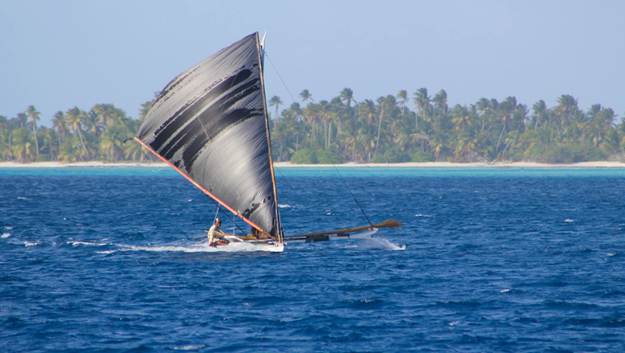
Outrigger sailing canoe at Ailuk
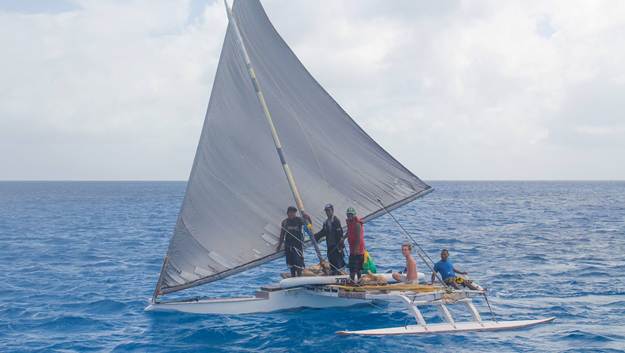
Brenden gets a ride
Another unique characteristic of The Marshalls is their handicrafts, and apparently Ailuk is known for having some of the most skilled women of all the islands. The weaving is much different than what we’ve seen throughout the rest of the pacific: it’s much more detailed and intricate and beautiful. They use pandanus leaves, coconut palm leaves, the ribs of the palm leaves, hibiscus fibers, to create beautifully ornate baskets, bowls, and wall hangings. (A few pieces from my collection are shown in the photo below.) On Ailuk it is a skill passed down from generation to generation. It’s a source of income for the island as most of their products are exported to Majuro to sell to tourists. The cruisers who go to Ailuk get to purchase directly from the women of the island, and they sell to us at the wholesale price rather than the marked-up Majuro price, and in many cases they prefer to trade for items they need rather than money.
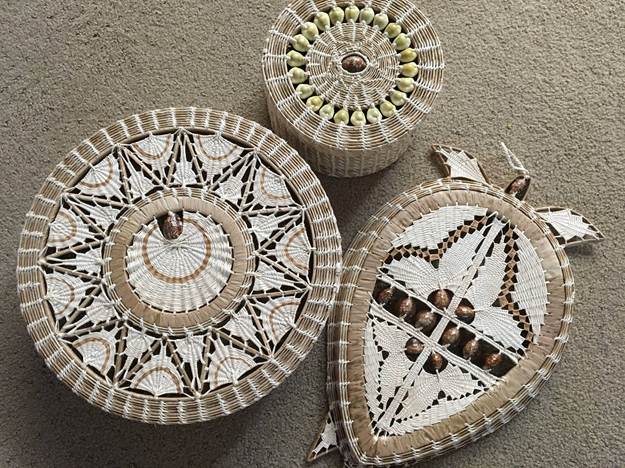
Handicrafts from Ailuk
 Gresham Family Exodus