Categories
Blog Post

Less American than a Tongan

Originally posted on November 1, 2014, by cruisingrunner

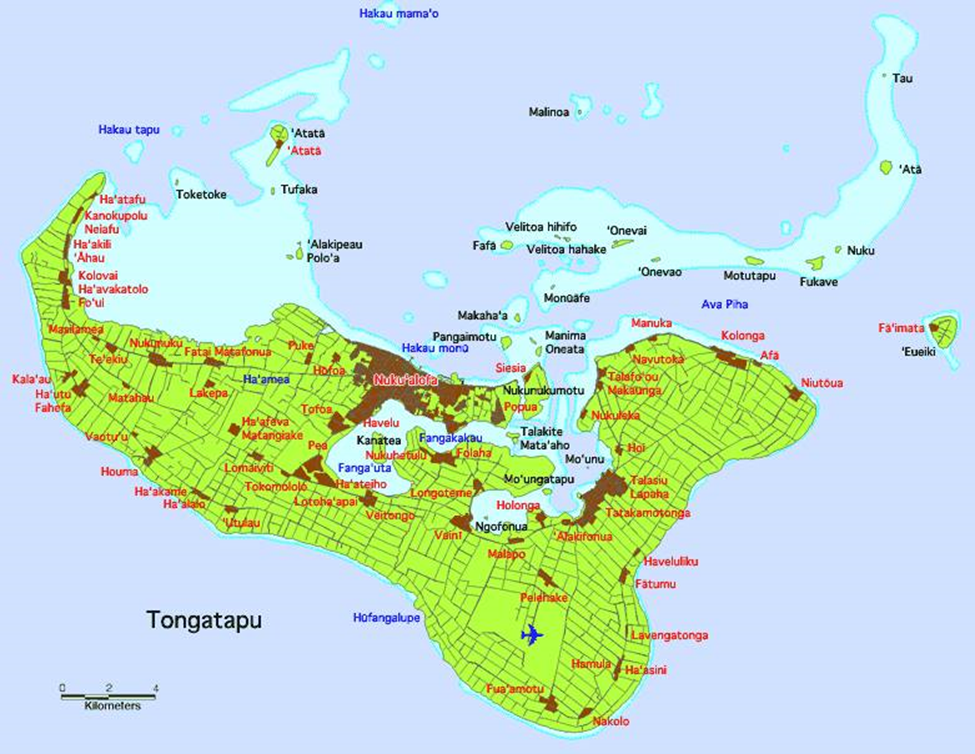
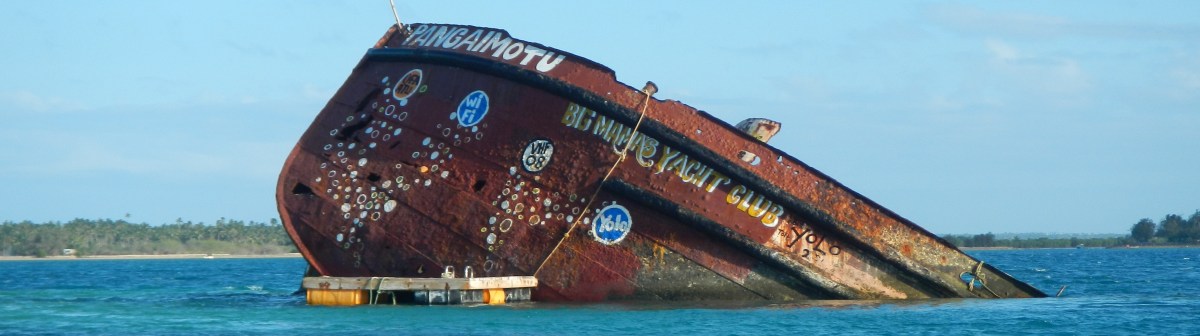
After weeks in the remote islands of Ha’apai, we’re now in the capital city of Nuku’alofa enjoying our reunion with internet, restaurants, and fresh fruits and vegetables. I had visions of proper runs along a waterfront trail, but unfortunately, that just isn’t to be. There’s an option to stern tie to the wharf in the inner harbor, which would have been good for my running options, but it’s dirty and loud and practically every cruiser that’s come before us and written anything down about it has strongly advised against it. So, we are anchored with about 20 other cruising boats off of a small island called Pangaimotu, about a mile away from the inner harbor. It’s great out here, there’s a restaurant and yacht club on shore, and we’ve been enjoying burgers and happy hours and even a big halloween/yacht club anniversary/Big Mama’s birthday bash. It’s called “Big Mama’s” Yacht Club after all, so why shouldn’t her birthday be a reason to celebrate. Sadly, there are no roads or decent trails on the small island. Yesterday, I did manage to run around the island at low tide, and the island is so small it took me 5 times around to get in 5 miles.

Our first full day here, we dinghied over to the inner harbor, walked to the customs office to do our domestic check-in, and then walked about a mile to the “city center” where there are restaurants, a big market, a few grocery stores, and of course, the royal palace. We had to make a stop at the Digicell store. Think AT&T store but the wait is even longer, and no one seems to care. While the boys and I were waiting for Tim to complete a purchase for wifi hotspot data, a lady started chatting up Alex. I guess it was pretty obvious that we weren’t from around here. Turns out that she’s Tongan, but she moved to the U.S. when she was 6 years old, and this is the first time she’s been back here. She’s from Hawthorne, right near where we were from, so of course we knew all the same landmarks and shopped at some of the same stores.

Talking to her was interesting for about 1 minute and then I started getting a bit embarrassed. She said more than once that she may be Tongan, but since she grew up in America, she’s more American. OK, fair enough, but it was the way she kept emphasizing it to me, as if she wanted to make sure I didn’t consider her, you know, Tongan, like there would be something bad about that. Then she started going on and on about how different it is here, and, “Oh my god! The men wear skirts!” Keep in mind that we are in a packed store and it’s not like we were in our own insulated bubble, I’m sure everyone could hear. She told me how she had to text here son when she got here to let him know that, “Oh my god! The men wear skirts!” I tried to change the subject and talked a bit about how we’d been in more remote locations and it was so nice to go to the market and buy some fresh produce, but that only got her started about what they DON’T have here. “They don’t even have strawberries and grapes, I really wanted strawberries and grapes, and I asked, but no, they don’t have those here, only apples and oranges.” As far as fruit goes, I guess she didn’t notice the papaya, coconuts, bananas, and mangoes.

Americans get a bad rap for being self-centered, arrogant, and loud, and so far in my cruising experience it’s totally unjustified. Americans don’t stand out at all to me amongst all of the other western cruisers, but this lady had me floored. Perhaps all of the American cruisers we know are simply less American than this Tongan.

-D.
Categories
Blog Post

Clearing In to Tongatapu

October 31, 2014

Our first morning there, all four of us dinghied the 1.5 miles from the Big Mama anchorage over to Nuku’alofa. It was difficult to find a good place to park the dinghy as the little dock was a bit rickety with rusty bolts and other protruding sharp objects that don’t exactly agree with an inflatable RIB. Finally, we found a spot we were comfortable with, and we started walking in the direction of where we thought the customs office was. After asking for directions once, we found it, about a 10-minute walk in the opposite direction as town from the wharf. Walking back, we were getting a bit hungry, but we didn’t really see anywhere we wanted to eat, so we decided to walk all the way to town. But first, we made a stop at the liquor store near the wharf to take stock of what they had available and what the prices were. From the wharf to town was a little over a mile, and we had lunch at a tourist friendly cafe called “Friends.” It was OK, even if a bit pricey. After that we explored the fresh market and several grocery stores in preparation for the provisioning we would need to do before departing for New Zealand. We took a taxi back to the wharf and then had a very wet, bouncy, upwind dinghy ride back to Big Mama’s. Our taxi driver, like pretty much every Tongan we met in Tongatapu, has been to the U.S. before, and they all like to tell you about what they experienced, what they liked and didn’t like. But mostly it was all positive.

Categories
Blog Post

Tongatapu, Nuku-alofa, Pangaimotu, and Big Mama’s Yacht Club

Tongatapu is the main island group of Tonga. In contrast to Vava’u and Ha’apai, which are clustered or scattered collections of small islands, Tongatapu is basically just one big island with dots of smaller islands surrounding it. The big island itself is also called Tongatapu, so Tongatapu can refer to just the island or the entire island group. It is the most populous island, the center of government and of the monarchy, and the main commercial hub for all of Tonga. Since it is the most southern island group in Tonga, it is also a hub of cruiser activity towards the end of the south pacific cruising season as boats are getting ready to make the passage to New Zealand.

Nuku’alofa, the capital city of Tonga, is located on the island of Tongatapu. It is by far the biggest city in Tonga with numerous grocery stores, public transportation, a large fruit/veggie market, bakeries, a donut shop (yes, a donut shop!), and a small commercial wharf. It’s possible to stern tie your boat to the wall inside the little harbor, and I think you can also anchor outside of the breakwater near the harbor, but most cruisers elect not to do that so as not to have to spend time in such an industrial location. Most cruisers, instead, elect to anchor off the small island of Pangaimotu and Big Mama’s Yacht Club.

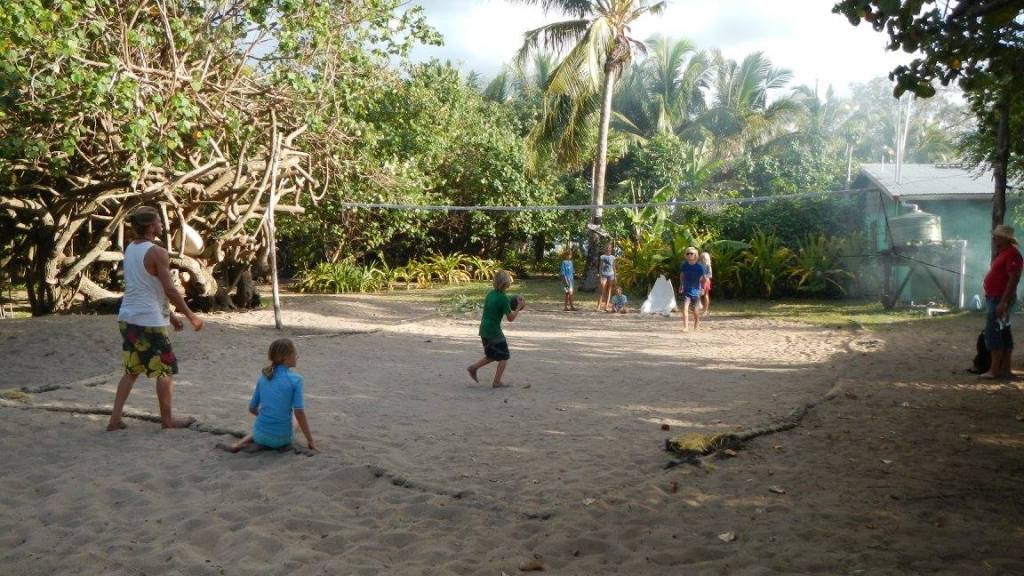
Pangaimotu is a small island, and I know exactly how small it is because I ran around it and measured the circumference to be 0.6 miles. However, it is large enough to provide adequate wind protection for a whole fleet of boats, and more importantly, Pagaimotu is where Big Mama’s Yacht Club is located. Big Mama is a real person, and yes, she is big, and yes, she is a mama. She and her husband Earl own and operate the small resort and restaurant and saying that they are cruiser friendly is an understatement. It IS called a “yacht club” after all. Big Mama’s restaurant and bar is the ultimate island hangout with a sandy floor, picnic table seating, and relatively cheap beer. The food was mediocre at best, but the restaurant provided a nice fall-back option for those times when you just don’t feel like cooking. And since much of cruising is in location where there is NO fallback option, we tend to take advantage of it when it’s there. Internet for a fee was available, and it was slow, but it was also a very welcome change from our totally unplugged existence traveling through the Ha’apai group. The kids had a lot of fun hanging out on shore at Big Mama’s because there was a rope swing, a sand court where they could play volleyball and dodge ball, and generally just lots of room to roam about and do kid things while not being confined to the space provided by a boat.

Dodgeball at Big Mama’s
Categories
Blog Post

Passage to Tongatapu

October 30, 2014

Our day sail from Ha’apai to Tongatapu covered roughly 45 miles, so we got an early start, weighing anchor at roughly 7am. This sail was some of the best sailing we had ever done. If every passage was like this I might actually start to like sailing! We sailed on a beam reach with light winds (10-15 knots) and more importantly, totally flat seas. Those of you who enjoy sailing inside Long Beach or San Diego Harbors, I totally get it now. There’s absolutely nothing like zipping along on a flat sea.

At about 10am we had a fish on the line, and when I headed up into the wind in order to slow Exodus down, I went too far, so I started the port engine to avoid irons. I used to beat myself up over stuff like this and if we got into irons, we’d get out without starting an engine, but with lines in the water it’s a real pain when you wrap one of the props, so now I will start an engine to avoid the hassle. Unfortunately, we lost the fish, but this disappointment was averted when later in the day we landed a 4 ft Dorado (Mahi Mahi).

Overall, we made excellent time. We were having safe arrival cocktails in the cockpit by 3:30, and we were on shore at Big Mama’s Yacht Club for burgers, beer, internet, and friends by 5:00.

Categories
Blog Post

More About Kelefesia

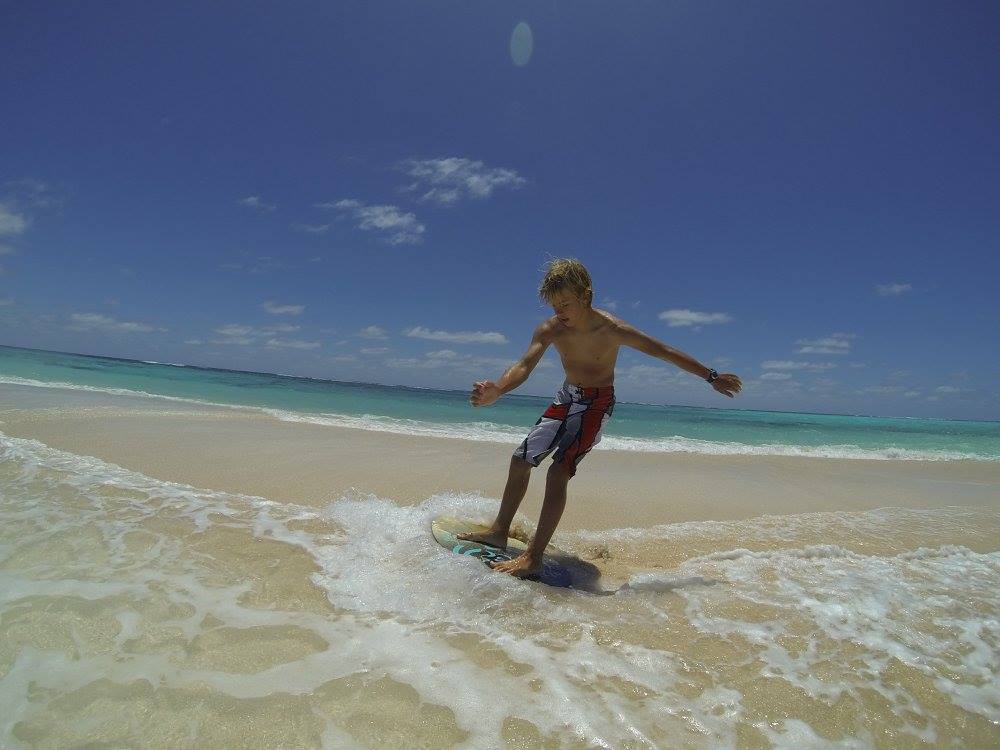
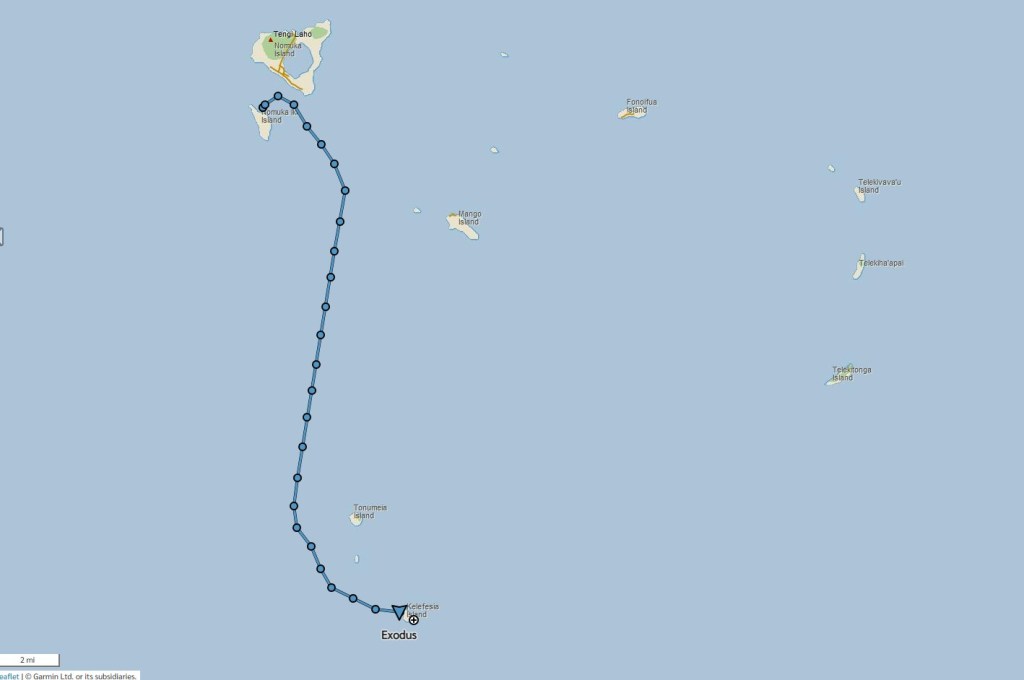
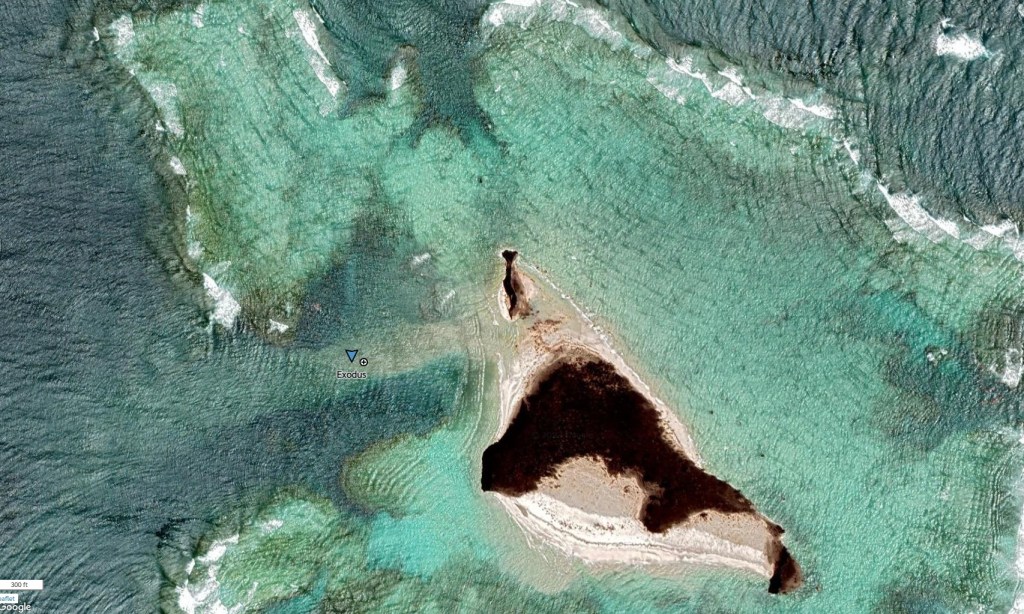
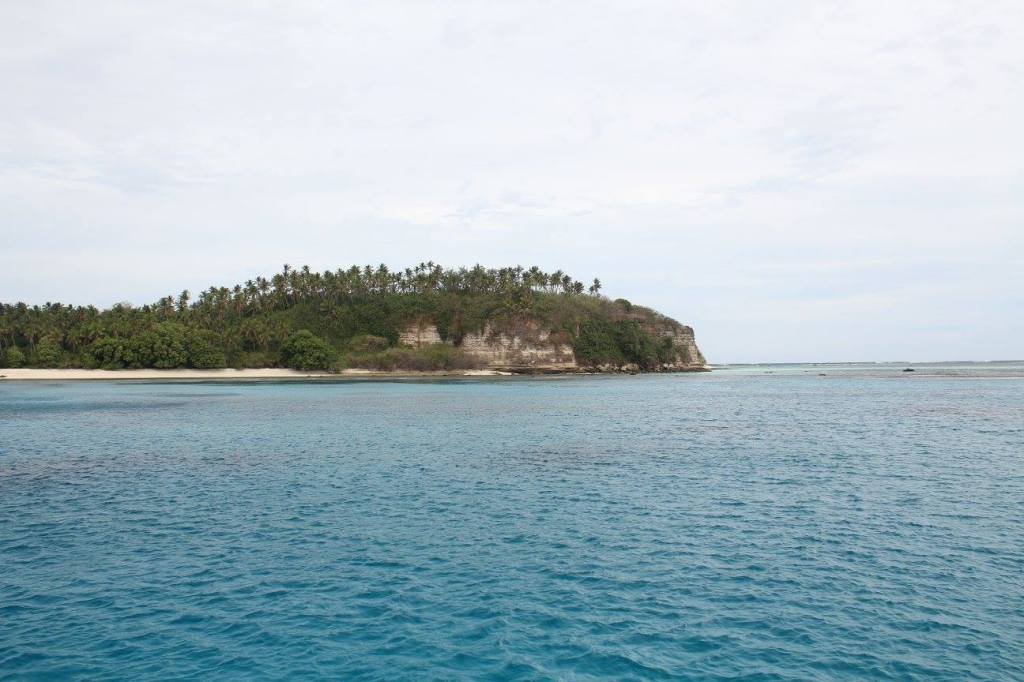
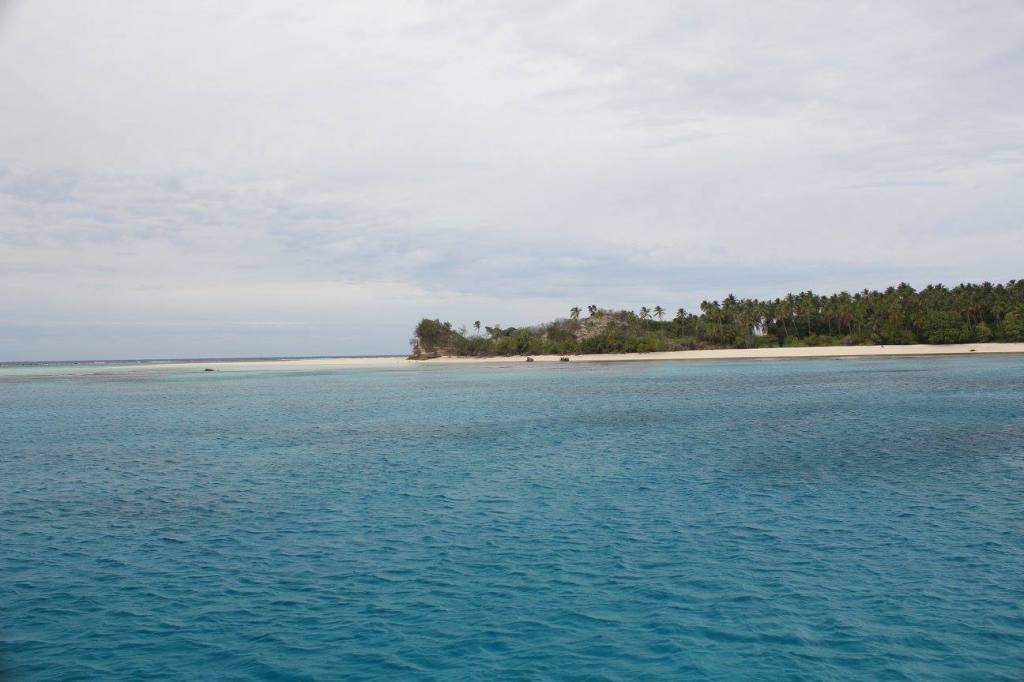
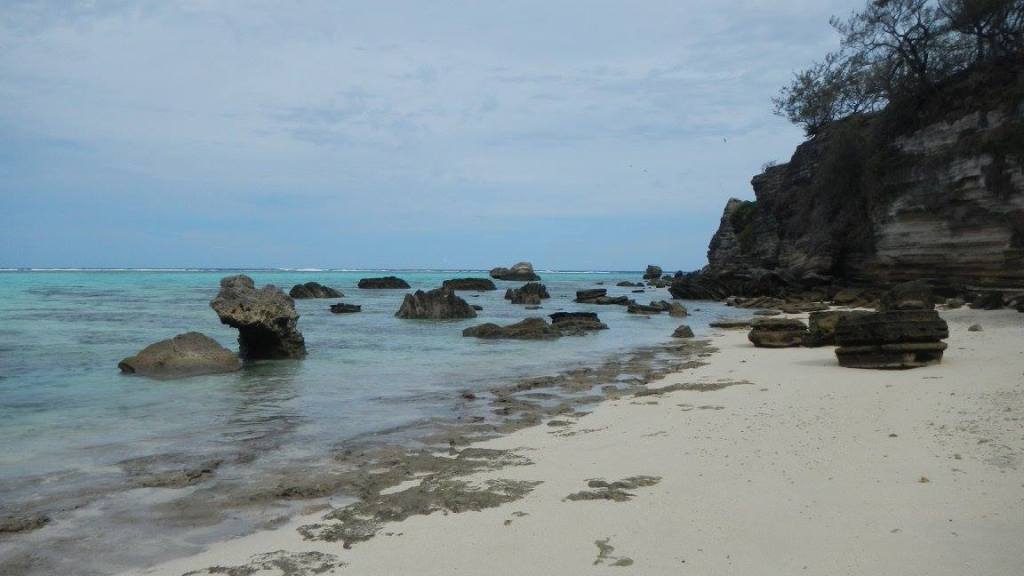
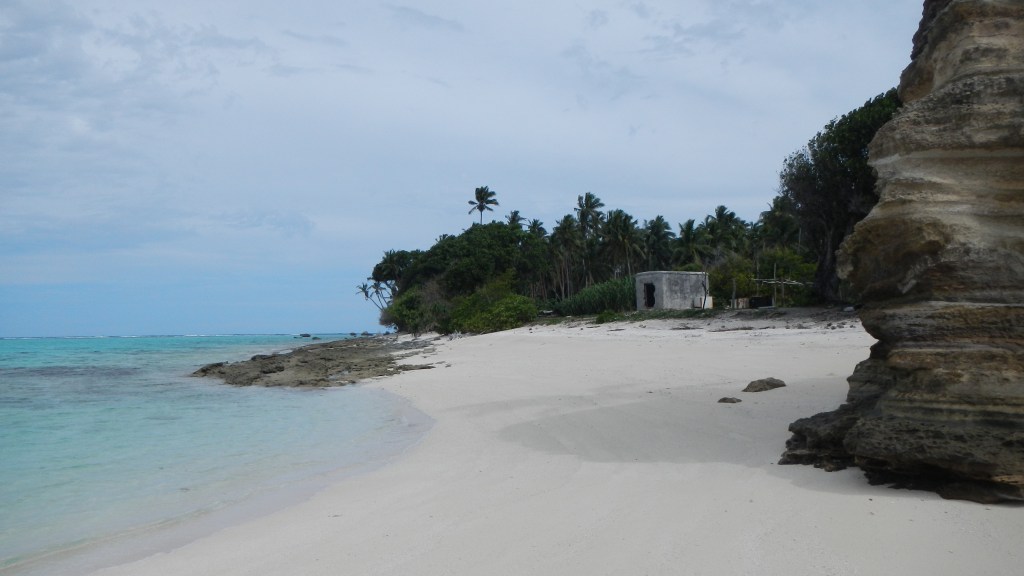
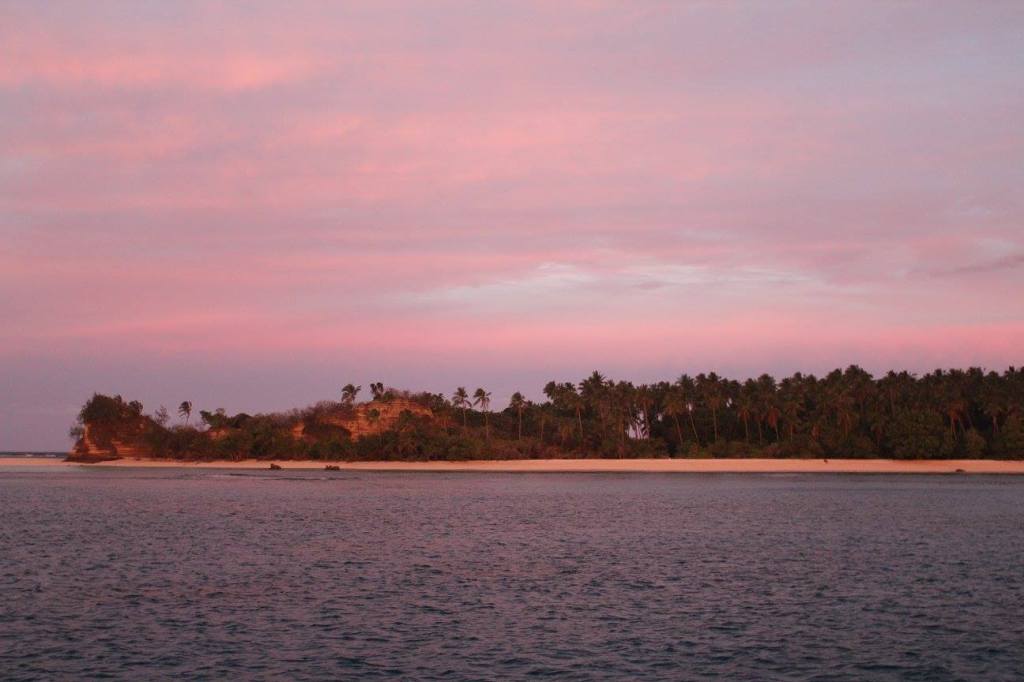
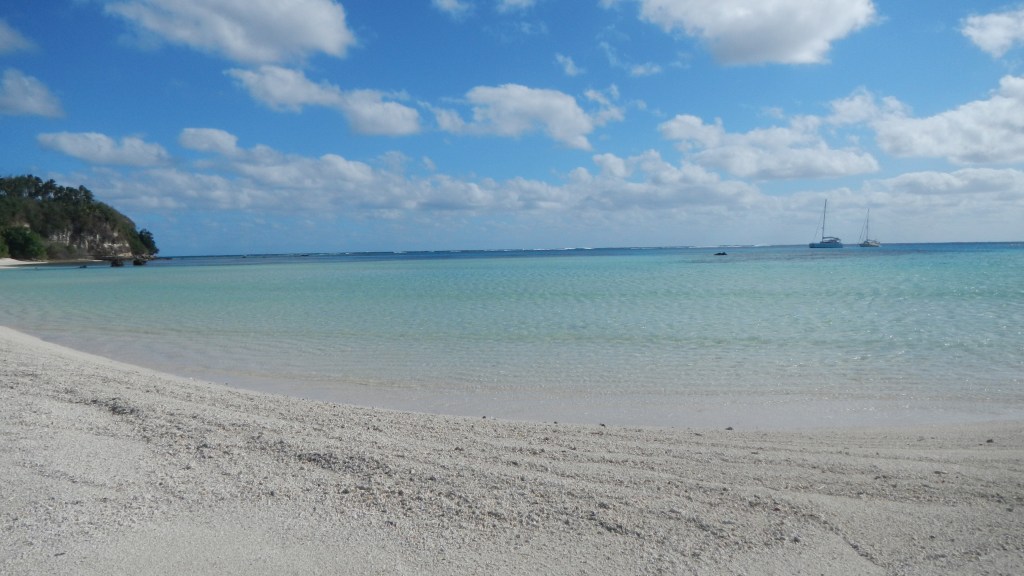
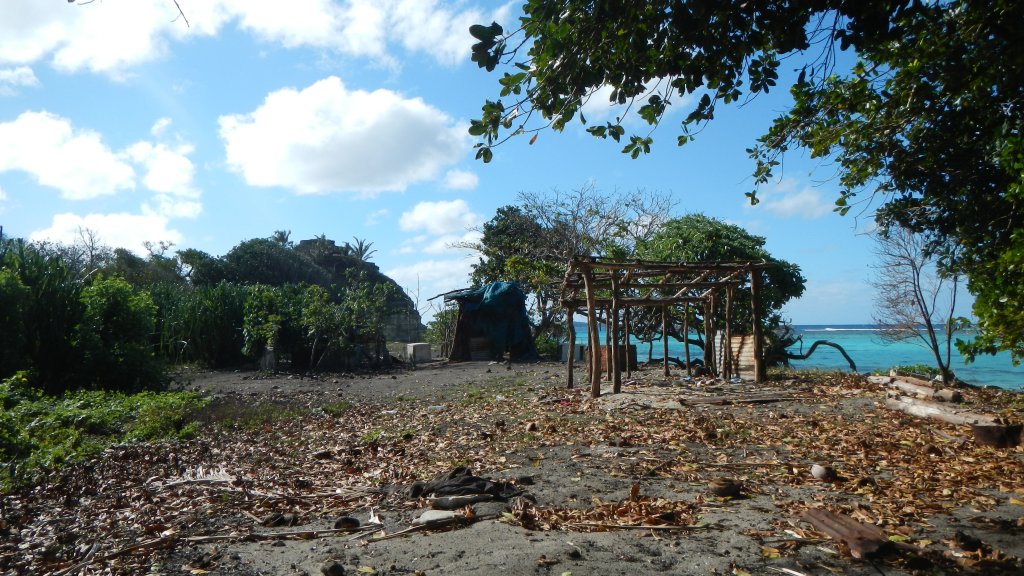
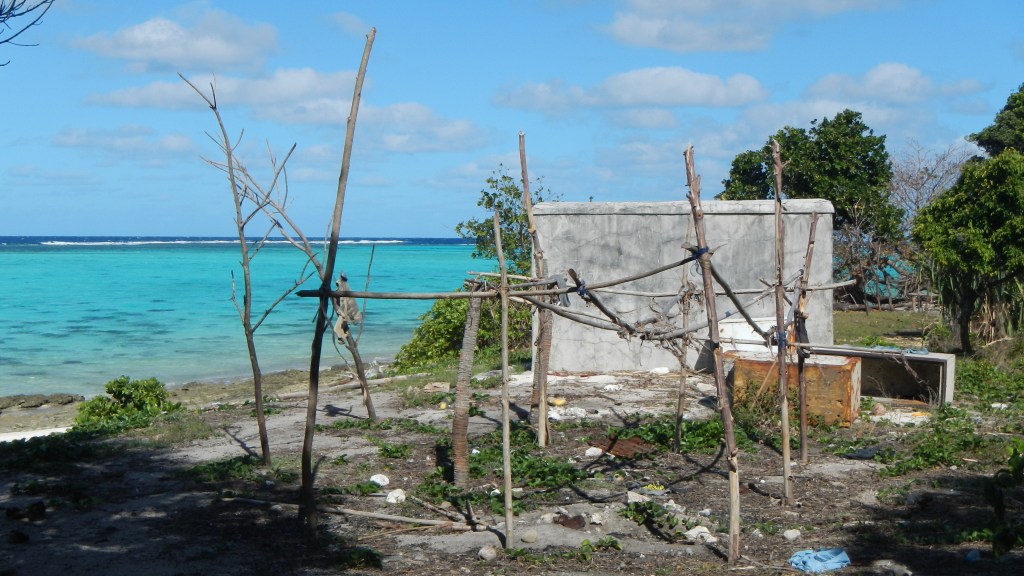
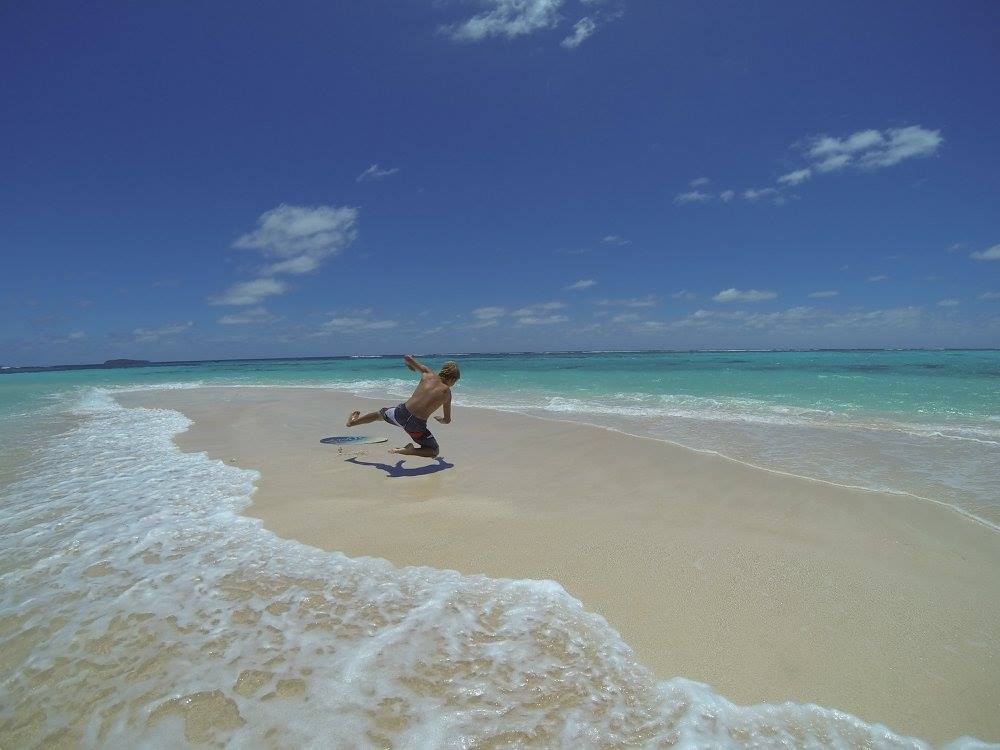
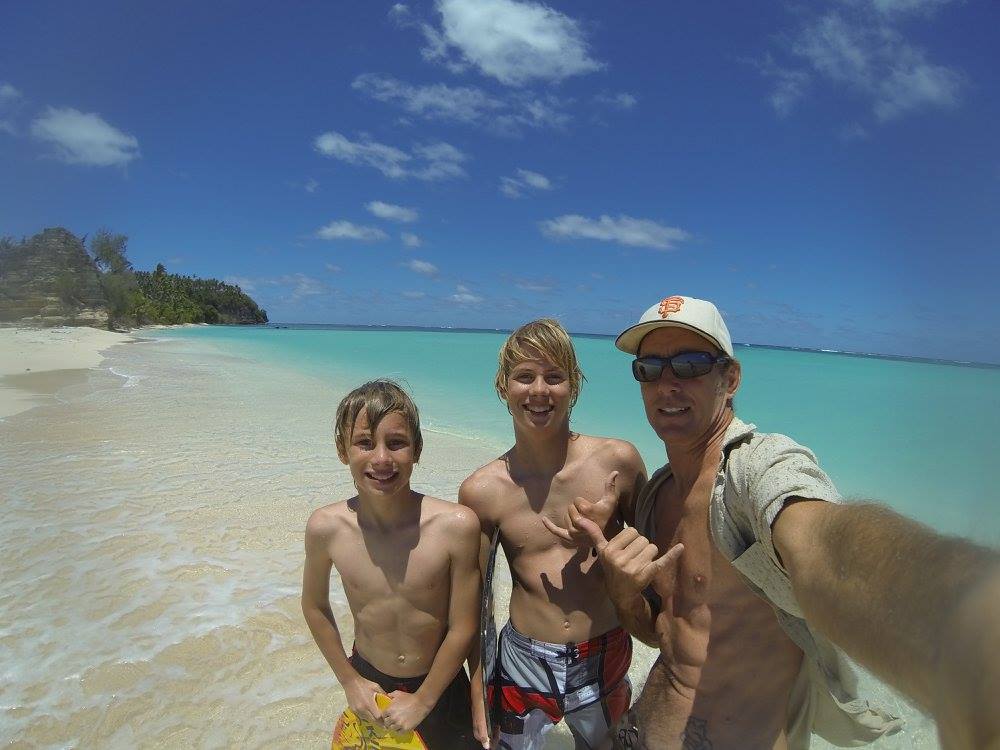
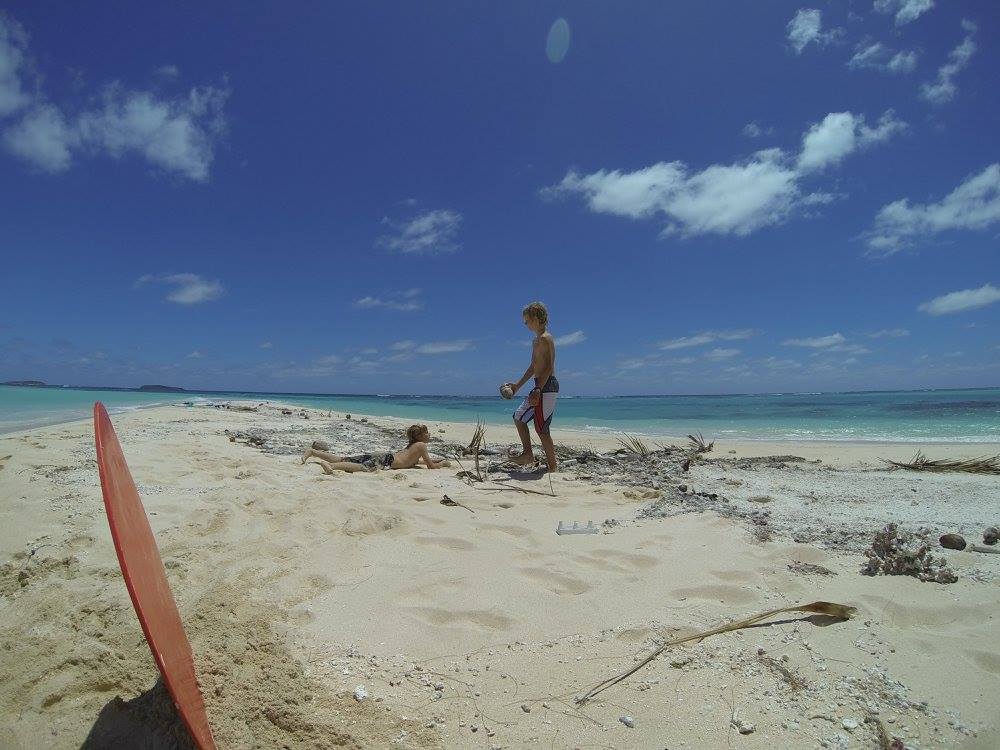
This was easily our favorite spot in Ha’apai. It is the southernmost island in Ha’apai, which made it a great launching point for heading down to Tongatapu. The island was uninhabited, however there were definite signs that people spend time there including small, corrugated tin shelters and lots of trash on the side of the small island opposite from the anchorage (not visible from out boat). The passage from Nomuka was quite a bash, but it was well worth it. It’s the only island in Ha’apai with any sort of elevation to it, so it was strikingly beautiful even if only for the contrast with the rest of the island group. There is a limestone cliff overlooking the anchorage, and a long sandspit that is just barely covered at high tide. This sandspit turned out to be a huge highlight for the boys because it was, “the best skim boarding ever!”

The best skimboarding ever – Kelefesia

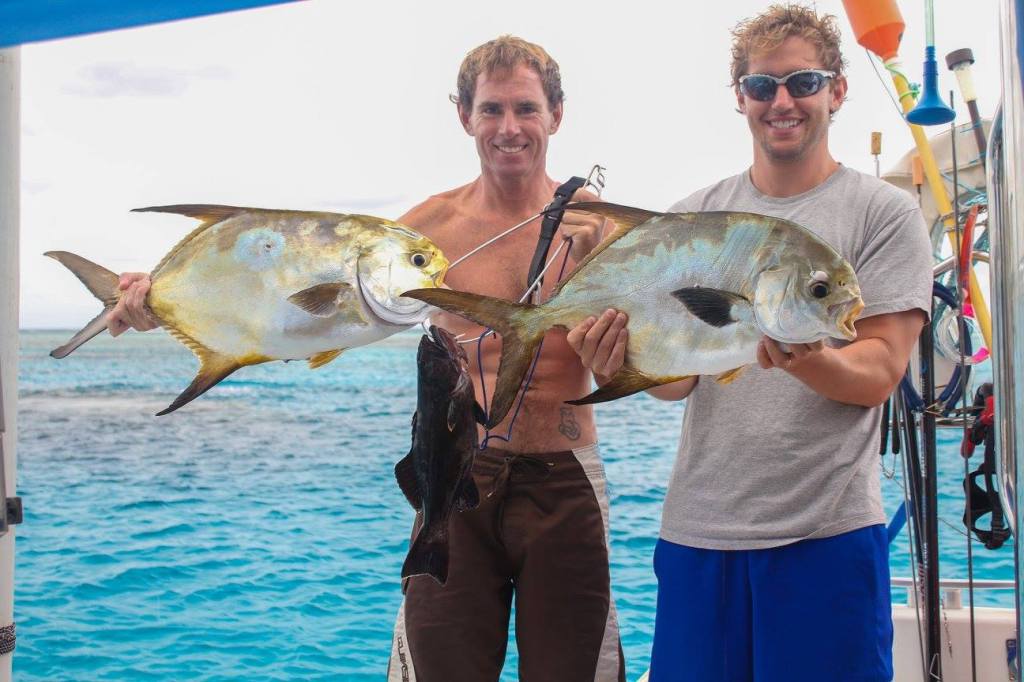
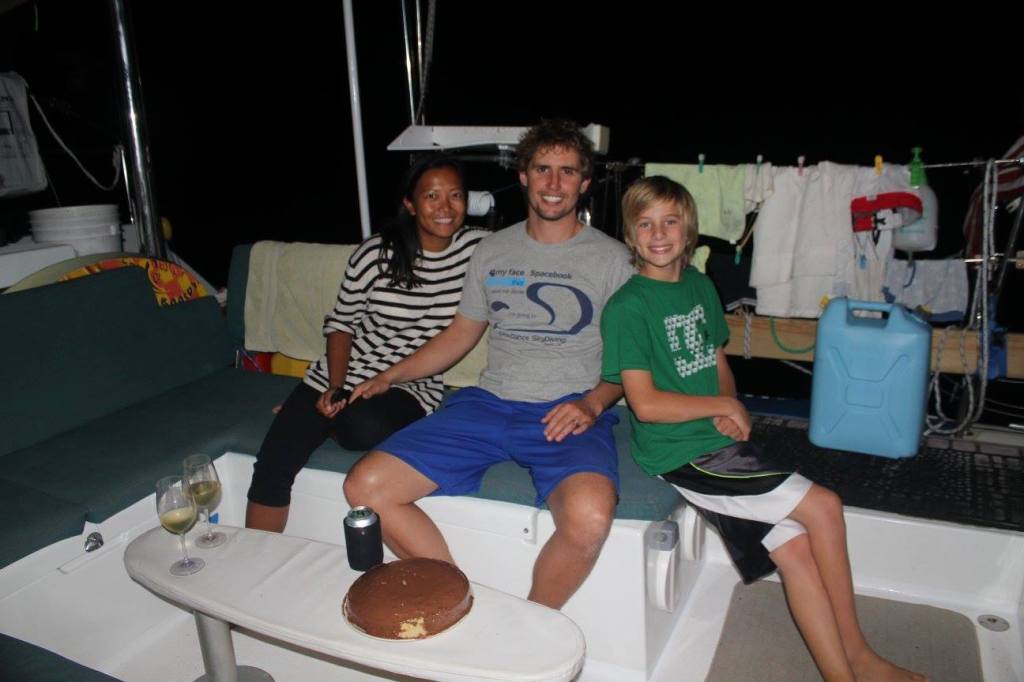
Tim and Jack went lobstering on the reef at night, but unfortunately there weren’t any to be found. However, they did have a successful day spearfishing and came back with a couple pompanos. They are interesting looking fish, but to be honest, they weren’t very tasty. We celebrated Jack’s 29th birthday with some brownies and an epic game of resistance. Our last day there we had a full day of sunshine for the first time in I don’t know how long, and I gave the boys a full day off from school in order to skim board. Our next stop would be the big city of Nuku’alofa, and although we were looking forward to internet and fresh vegetables, we were sort of sad because leaving Ha’apai would represent the winding down of our season cruising in the tropics and we turned our focus to preparing for the passage to New Zealand.

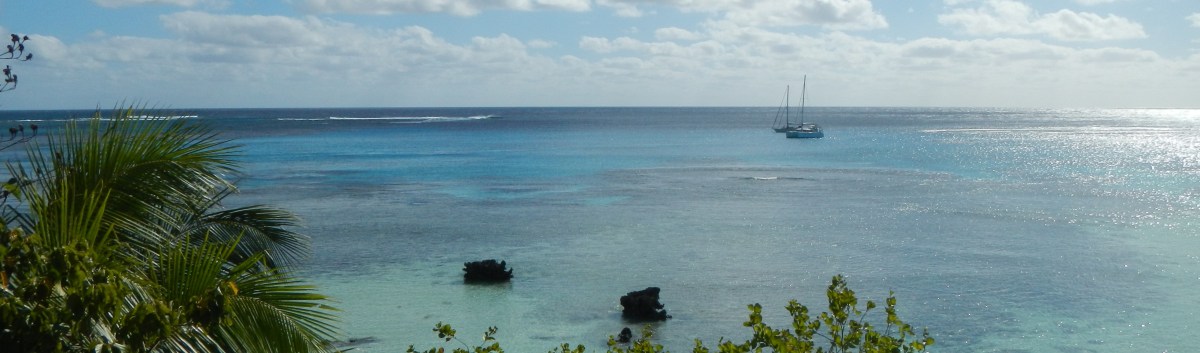
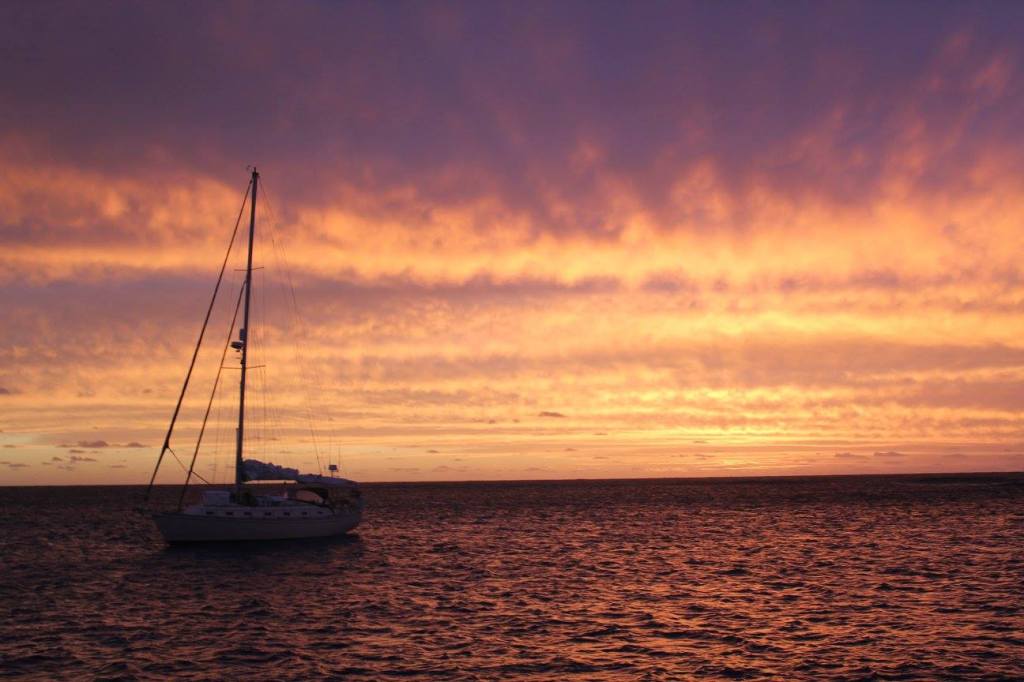
Exodus and Iguana anchored at Kelefesia
Categories
Blog Post

Kelefesia Photo Log

October 27-29, 2014


Logbook – October 27, 2014 (Nomuka Iki to Kelefesia)

Passage Log

  • 1023 Engines on
  • 1030 Depart Nomuka Iki
  • 1134 Engines off main (2 reef) + Genoa (2 reef)
  • 1330 Engines on, sails down
  • 1450 Engines off. Arrive Kelefesia

Daily Notes

  • Bash to Kelefesia, beautiful island, beautiful beach
  • B/T/Jack – explore island. Boys skim board.
  • T/Jack – Nighttime lobstering
Depart Nomuka Iki at 1030 – Arrive Kelefesia at 1450
Kelefesia anchorage

Email to family and friends dated October 27, 2014

Subject: Exodus – Kelefesia

We arrived yesterday at our last stop in Ha’apai, and wow, what a great way to end the run. Unlike the other islands, which are totally flat like motus of an atoll, Kelefesia has some slight elevation to it, and the contrast is striking. There is a beautiful beach that ends at with sandspit off the tip of the island, and apparently it’s “awesome for skim boarding!” Tim and Jack walked the reef last night lobstering. I was asleep when they got back, so I don’t know if we’re having a lobster feast tonight, or if I’m going to have to whip something up from the dregs of our freezer. We intend to stay here for a few days and then make a long day sail down to Nuku’alofa.
Love and miss you all,
-D.


Logbook – October 28, 2014 (Kelefesia)

Daily Notes

  • Jack’s Birthday!
  • T/J spearfish. 2 pampanos + 1 sm. grouper
  • Crazy game of resistance
These are cool lookin, but they weren’t so tasty
Happy Birthday Jack!

Logbook – October 29, 2014 (Kelefesia)

Daily Notes

  • Generator out of gas – 2 false starts: 1) gas vent closed (previously left open) 2) kept vibrating off water jug
  • Last day in Ha’apai. No school!
  • Skimboarding

Email to family and friends dated October 29, 2014

Subject: Exodus – Leaving Tomorrow

We intend to set sail tomorrow just after sunrise to head to the “big city” of Nuku’alofa, the capital of Tonga. From what I hear on the radio nets there are a ton of boats there now prepping and watching weather for passage to New Zealand. We are looking forward to internet and fresh veggies, but it’s sort of sad that this passage represents the winding down of our cruising in the tropics this year. Today, we had a full day of sunshine for the first time in, I don’t know, weeks, so it was a perfect final day in Ha’apai. We took the day off from school, so the boys got to get a full fix of skim boarding and overall just messing around.
Love and miss you all,
-D.

Categories
Blog Post

Floaty Eggs

Growing up I was taught that you could tell if an egg was good or not without cracking it by putting it in a cup of water. If it sank to the bottom, good, if it floated, bad. I’ve also seen this advice perpetuated on cooking and cruising websites as well.

Well, at this point in the Ha’apai group we were easily out of eggs, but then Tim, Jack, and Camille dinghied over to the village on Nomuka and came back with a dozen for us to share. So, with just a few eggs, you can imagine that they were highly valued. They were gold. So, now imagine my dismay when I’m down to my last two and in the middle of baking something (I don’t remember exactly what) and my last egg floated. And this is how I learned that a floaty egg is not necessarily bad. I cracked it open, and it looked fine, and it smelled fine, so I used it.

I’ve also learned that an egg that sinks is not necessarily good. I’ve cracked open a sinker and had it be all moldy inside.

So, I no longer use the float test on my eggs. I do, however, always crack each individual egg into a small bowl rather than cracking it directly into whatever I’m making at the time. Nothing worse than cracking the 8th of 8 eggs into a large bowl and have it come out all black and stinky, ruining the whole lot.

Categories
Blog Post

Highlights of Nomuka and Nomuka Iki

We anchored off the west tip of the island of Nomuka, which is where the family from s/v Wildlife lives, but it turns out they weren’t home, because they had gone to Tongatapu to drop off some friends. Iguana caught a nice sized dorado (Mahi Mahi) on the passage, so we grilled up an excellent dinner that night on Exodus. Camille and I took a walk to the village to see if they had any supplies, and it was a large srawling village, one of the largest we had seen in Tonga outside of the main ports (Neiafu and Pangai). The people were very shy and not too friendly, and we asked several people where the store was before we actually found it. Turns out it was closed. It was nice to get off the boat and stretch our legs, none the less.

The “anchorage” was even more rolly than O’ua. We were there two nights and it was just tolerable, but the next morning the winds had clocked slightly more to the North, and then it got really lively. I was having to secure things as if we were underway, and I was having trouble doing simple things like make coffee, because the swell hitting us on the beam was intense. I was trying to wait until Tim got up, but in the end I ended up waking him with a plea that we move anchorages now.

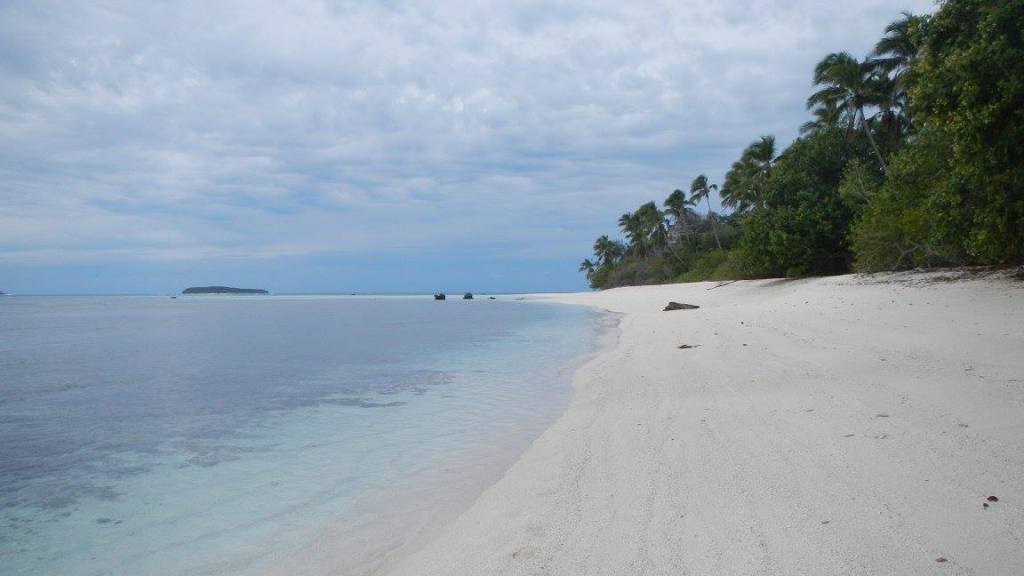
So, we moved south across the channel and anchored off the smaller island of Nomukaiki (meaning little Nomuka) and it was a much better location. There was more windchop on the water, but at least there were no huge swells that hit Exodus’s natural frequency. In addition to the reduced rolliness, there was also a nice long beach which I took advantage of for a run, even if the sand was soft and the run was slow and sluggish. Unlike Nomuka, which as the large village, Nomukaiki is mostly uninhabited. I say “mostly” uninhabited, because there is a bit of a camp of some sort as well as pigs, and one pig in particular is not too shy. Tim, Jack, and Camille went ashore to collect coconut water, and I guess Tim and Jack left Camille alone to process some coconuts while they went to explore. At some point they heard a faint, “help” and they returned to find Camille in the water and a pig swimming after her. Yes, pigs can apparently swim. We had been told by a local guy that the pigs can be aggressive and sometimes even charge, so Camille wasn’t taking any chances. Well, I knew Tim was a cat whisperer, but it turns out he’s also a pig whisperer. He named the pig Hamlet and petted it like a dog, and it reacted like a dog, snorting and laying down. Then it followed him around, and when they got in the dinghy to come back to the boats it swam after them for a little while. I don’t think the dogs get pet around here very often, let alone the pigs, so I think that pig will remember Tim forever.

It turns out we were going much slower through the Ha’apai group on our way to Nuku’alofa than we thought we would. At this point, some of our friends who had left Neiafu after us were already in Nuku’alofa about to depart for New Zealand. We realized that the end of the South Pacific cruising season was just about upon us, but we are milking every last bit out of it that we could.

The beach at Nomuka Iki
Categories
Blog Post

Hablas Espanol?

After being in Mexico for a year and getting by with the language and then being in French Polynesia and well, not really getting by, I decided I really wanted my boys to learn another language. As native English speakers, I think we are never really forced to learn another language, and I think that’s a shame. It’s a very rewarding and humbling experience at the same time.

I gave the boys the option of studying French or Spanish, however, they had to choose the same one. I am so glad they chose Spanish because 1) I already had a bit of a head start on that one, and 2) It will be more valuable to us in our lives if/when we move back to California. There are so many lanugage curriculums out there, but I had stumbled upon a simple podcast that I really liked called “Coffee Break Spanish.” In my opinion, it takes a very effective “peel the onion” approach to learning Spanish. In the beginning we just used the audio and I would write out the vocabulary for the boys, but after it was obvious we would be sticking with it I went ahead and puchased the “bonus material” for 3 seasons, and that has been really great. There are .pdf lesson guides as well as bonus audio material. Overall, I think it’s a really great program.

Tim teases me about my timing of learning Spanish. He asked me if after we leave Tonga, I’ll be learning Tongan.

Categories
Blog Post

O’ua Anchorage

O’ua is an interesting anchorage. We were not exactly anchored off the island but rather off of the extensive reef that surrounds it. It was one of the rolliest anchorages we’d been in, and it was at its worst at high tide when the reef provides less protection. There’s actually a winding channel through the reef to navigate back to a much more protected anchorage just off the island, but we opted to stay outside the reef with faster access to spear fishing spots. There were two small islets near where we anchored that looked inviting to explore, but the weather conditions (rainy and windy) pretty much kept me on the boat the whole time. It’s not exactly fun paddle boarding with 15 kts of wind in your face and 2 ft wind chop on the water. Since we were with Iguana, we still had some fun together, including some pretty intense game nights playing Resistance.

We didn’t stay long at O’ua. We heard on the SSB net that there were 13 boats at Uoleva heading south and we wanted to stay ahead of the crowd.

Tim doesn’t often write any notes in our logbook, so most days I write, “T/J – spearfish…” and then include what their catch of the day was. All the other exciting or not so exciting things that happen remain in Tim’s head and I hope that one day he’ll write a little about his spear fishing adventures all over the world. However, while we were in O’ua Tim wrote this note in the log: “spearfishing expedition to Whickham reef. Amazing spot. Made holes in 4 tuna and 2 coral trout but came back empty. Huge bull shark and leopard shark said hi.”

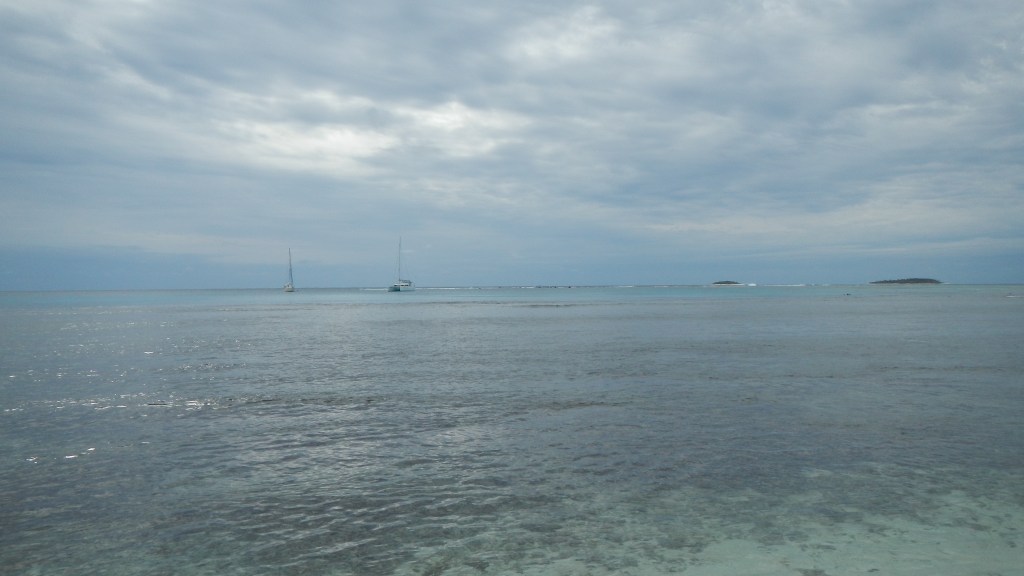
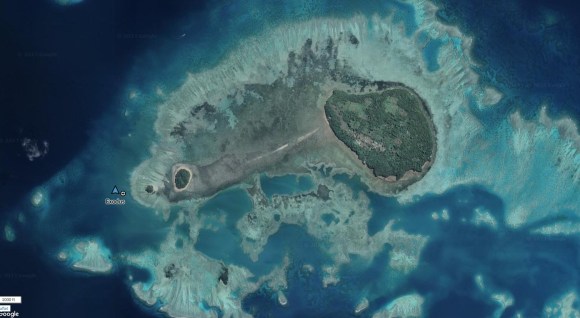
The extensive reef system around O’ua. You can see a village on the main island, but we never ventured ashore.