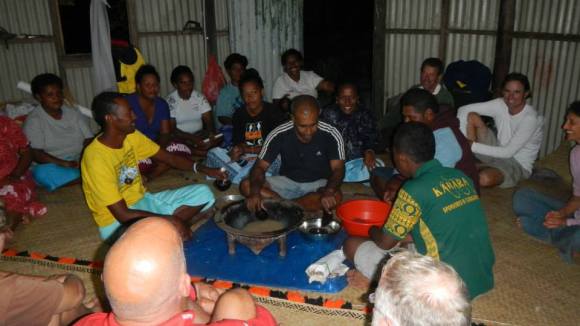
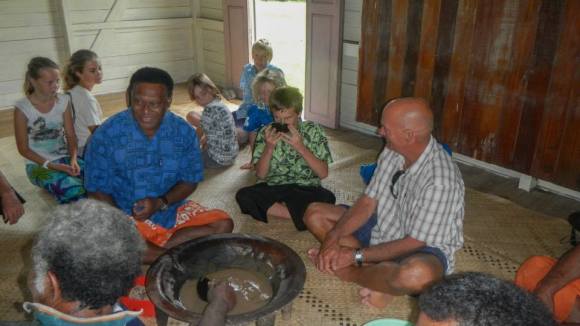
There are hundreds of blogs explaining sevusevu and the different experiences people have had, so I’m not inclined to dwell too much on the details and variations of it. Just know that sevusevu is a Fijian tradition where visitors to a village present a gift of yaqona (dried pepper tree root) and once the gift is accepted, the visitors are then fully accepted into the village. It’s generally good form to present sevusevu to the village before engaging in any other activities in the area, including swimming, fishing, diving, hiking, and playing on the beach.
If I have to be perfectly honest, sometimes it can initially feel like a bit of a burden. You pull into an anchorage, possibly quite tired after a passage, and the first thing you have to do is dress up in your chumbas and sulus and head to shore to present sevusevu. Sometimes getting to the village is simply an easy dinghy landing, but sometimes a bit of a hike may be required as well. However, even if I leave my boat a bit grouchy over this obligation, I never leave the sevusevu feeling that way. I usually leave feeling humbled and grateful that we were “forced” to make this personal connection with the people in whose back yard we have parked our boat. Even in the few villages where the people were a bit less friendly and obviously just wanted to milk us for money, I was still happy to have connected with them, to have had the face time, and to have gotten a glimpse into their lives and stories and given them a glimpse into ours. Some cruisers grow tired of presenting sevusevu and avoid it or even dislike it, but I have come to appreciate this tradition, which intentionally takes the anonymity out of our brief presence here in their islands and opens the way to richer experiences.
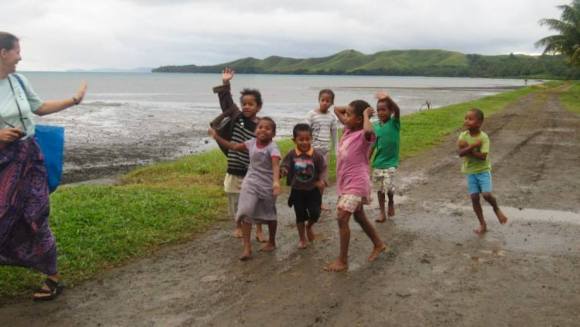
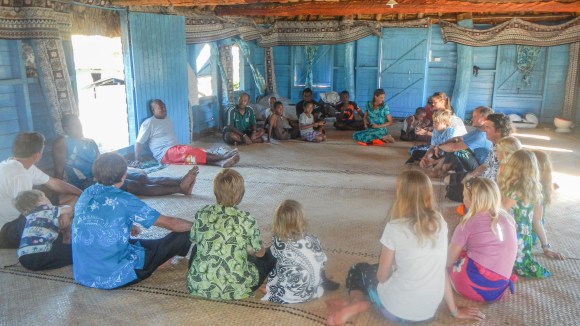
Here are some photos from just a few of places where we have presented sevusevu:
Drinking kava in FulagaEven Brenden got to try kava in MatukuSaying bye to the kids in GauPresenting sevusevu in ViwaTouring the village at Sese (Blue Lagoon)Father’s Day lunch after church at Yadua
Even though we really needed to get to Savusavu to sort out the watermaker issue, we decided to head just a little bit south for a few days to the island of Namena, which is a small island in the middle of a marine reserve. I thought when Tim learned that he couldn’t spearfish there he would change his mind about going, but I guess the pristine diving still enticed him. I really didn’t want to go. More than ever, I was ready for fresh provisions and restaurants, and I really had my heart set on arriving in Savusavu sooner rather than later. However, I was much less grumpy about the decision about going to Namena when we arrived to find our good friends on True Blue V already there.
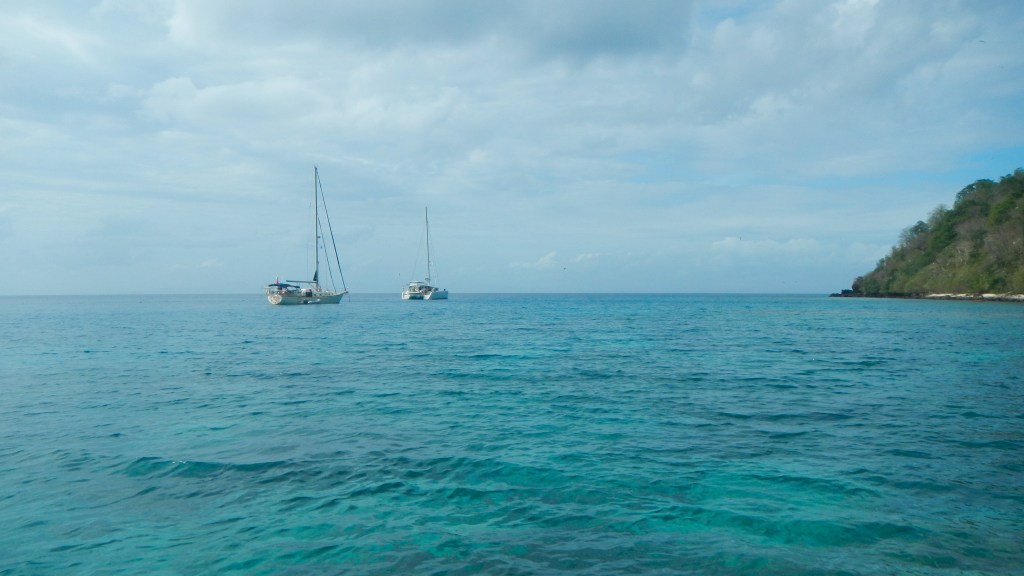
The Universe is set right again: True Blue V and Exodus anchored next to each other
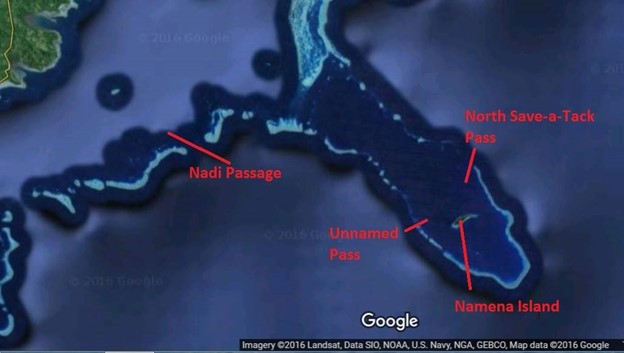
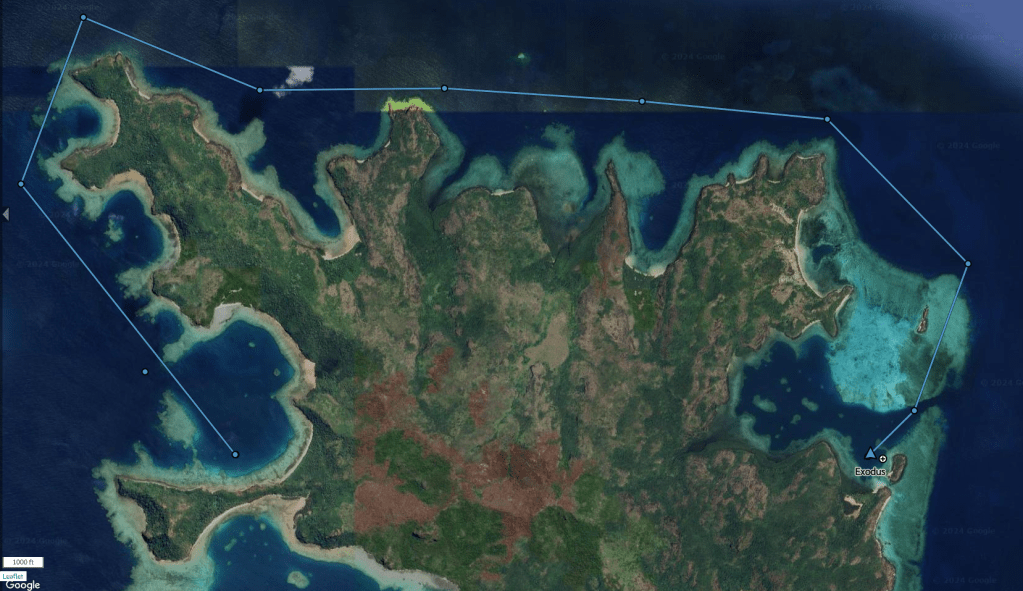
The satellite image below shows where we exited and entered the various reef systems. We exited the Vanua Levu fringing reef through what is labeled “Nadi Passage.” It was wide and it was easy to see due to the breaking waves on the reef, but there were some strange wave patterns in the pass due to current which were a little unsettling as I viewed them from a distance. We entered the Namena reef through an unlabeled pass that we had chosen by examining the satellite imagery. There was a wider, obviously deeper pass further to the south, but the pass we chose a little more direct. In the pass there were two pinnacle coral heads that we spotted rather late but still avoided in plenty of time.
Namena reef system
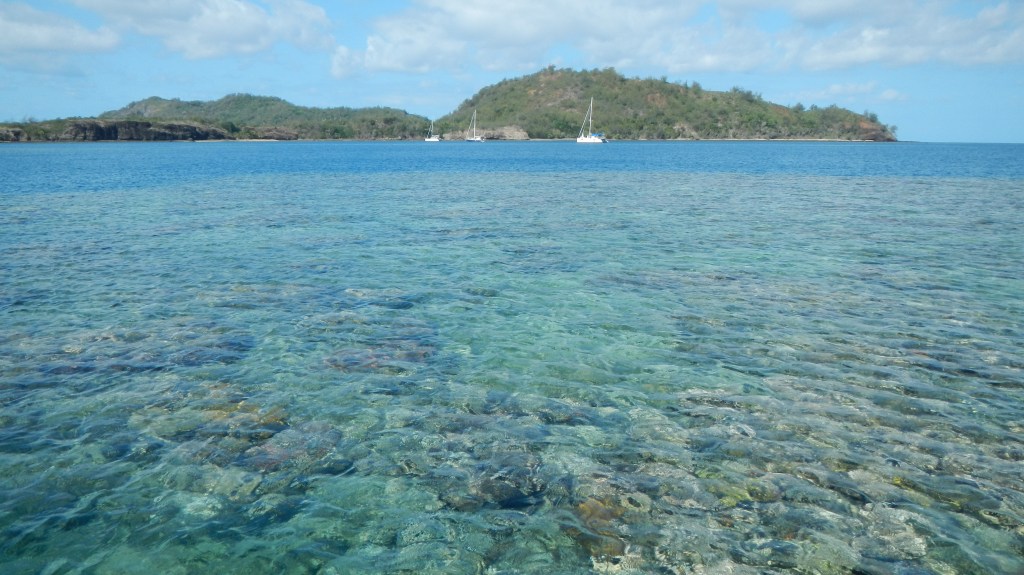
We anchored on the north side of the island, and we mostly had light winds while we were there, but they say you can also anchor on the south side if the prevailing wind is from the north. The island is mostly uninhabited, in that there is no village or anything. But there is a single dive resort on the north tip of the island, but from our vantage point in the anchorage you barely knew it was there, except for the dive boats. There is also a dive operation based in Savusavu that brings people out to dive the Namena reef.
The weather was actually perfect during our stay, or maybe just a bit too hot, and Tim and Brenden broke out the huka to do a dive out on on the reef. They went to a dive spot called “The Chimneys” and it turns out that these were the same two pinnacles that we had previously avoided as we entered the reef. They thoroughly enjoyed the dive, but from these two you don’t hear about how pretty and healthy the coral was or how many fish there were, no you only hear about all the big fish that would swim right up to them, taunting them because they couldn’t spearfish.
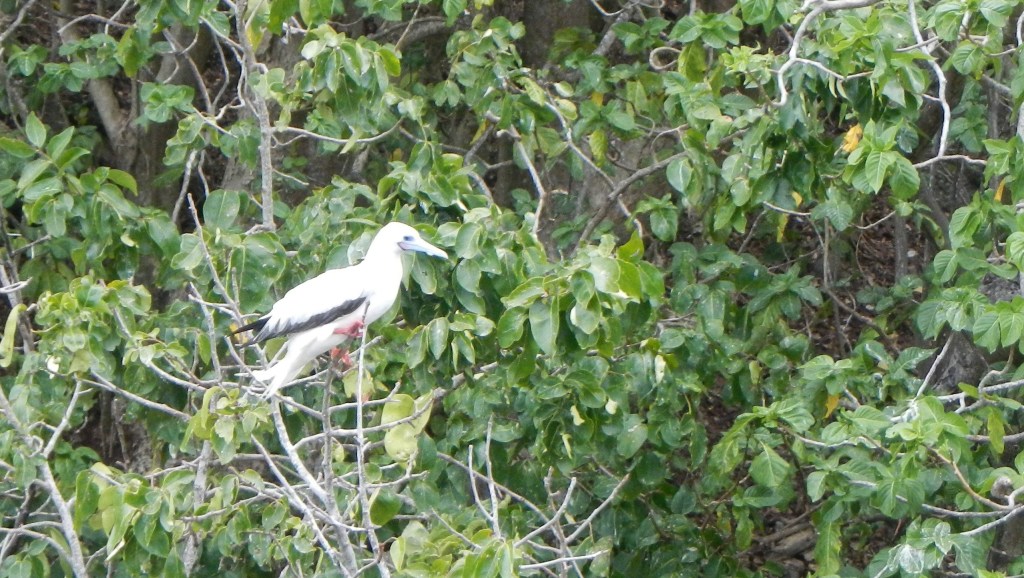
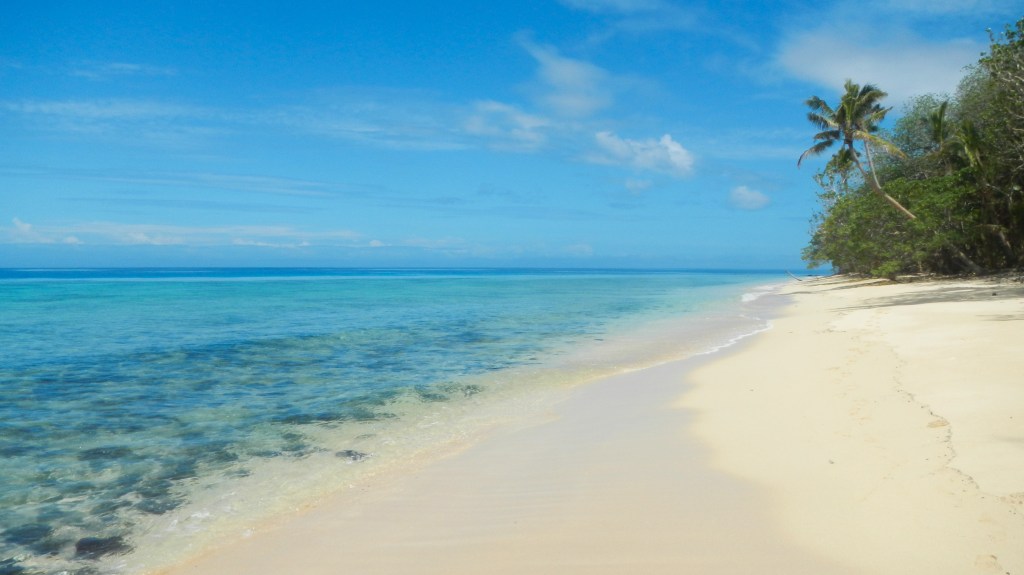
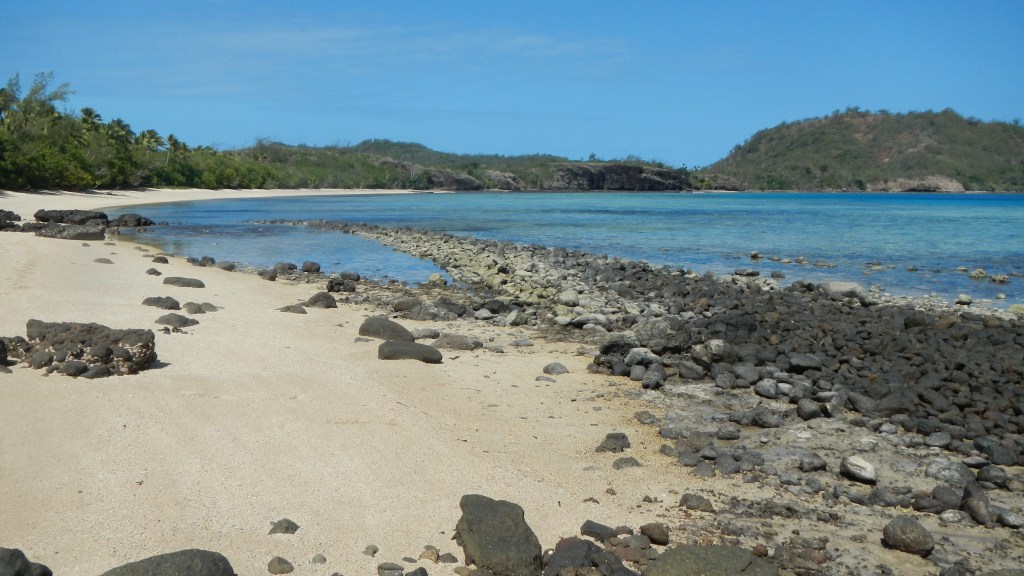
Myself, I enjoyed the crystal-clear water by taking the paddle board around the island and exploring an amazing white sand beach on the other side. One of the unique things about this island is the abundant bird life. The boobies (red footed) and frigates are so numerous; it reminds us a bit of Isla Isabel in Mexico. We were pondering what makes this island have so many birds when we haven’t seen that anywhere else in Fiji, and we think probably because there’s no fishing allowed so they have abundant food close by, and also because there’s no predators, no humans to take their eggs. I also went on a brief snorkel with Max and Liz on the southwest tip of the island, and it was nice healthy coral and lots of little “aquarium fish.”
Red footed boobieBeautiful beach on the south side of Namena
On another day Tim took both boys out on hooka dive. Yes, Alex even went this time. This time it was to the north pass to a dive spot called “Grand Central Station.” Tim seldom writes notes in our logbook, but after this dive I found the following note in his handwriting: “Awesome dogtooth! Walu, fish, sharks, coral”
When we departed Namena we left up through North Save-a-Tack pass and had an easy day sail up to Savusavu. It was a cold, rainy, and foggy day, so the visibility was pretty bad, but we were happy for two reasons: 1) We were able to sail, like actually sail with no engines or anything. After all the upwind motoring we’d been doing to get back east, it was very nice. and 2) We were accompanied by a pod of dolphins. Back in Mexico it seemed like you couldn’t move 2 miles without seeing dolphins but since then they’ve been more sparse. They swam with us for a while and it was good fun.
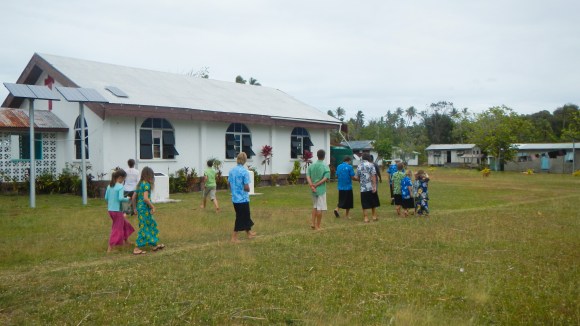
It turns out that Father’s Day in Fiji is in September, and we were invited to church and then afterwards to a lunch with the Chief’s clan, so of course we accepted.
Being Father’s Day it was a special kind of church service. Instead of the pastor giving a single sermon, several dads of the village got up and read scripture and did a little of their own preaching. It was all in Fijian so we couldn’t understand a word, but it was interesting to observe the different styles of the men who were speaking. Some were quiet and reserved and some were real fire and brimstone. However, this format produced the longest church service ever! Well over 2 hours. The kids did great, and so did the adults. As usual, what really made it bearable was the singing. It’s also in Fijian, but so beautiful you feel like you can understand it anyway.
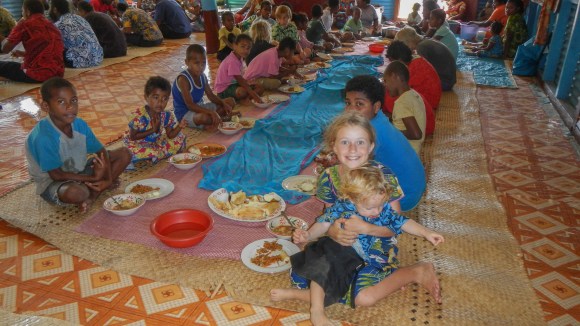
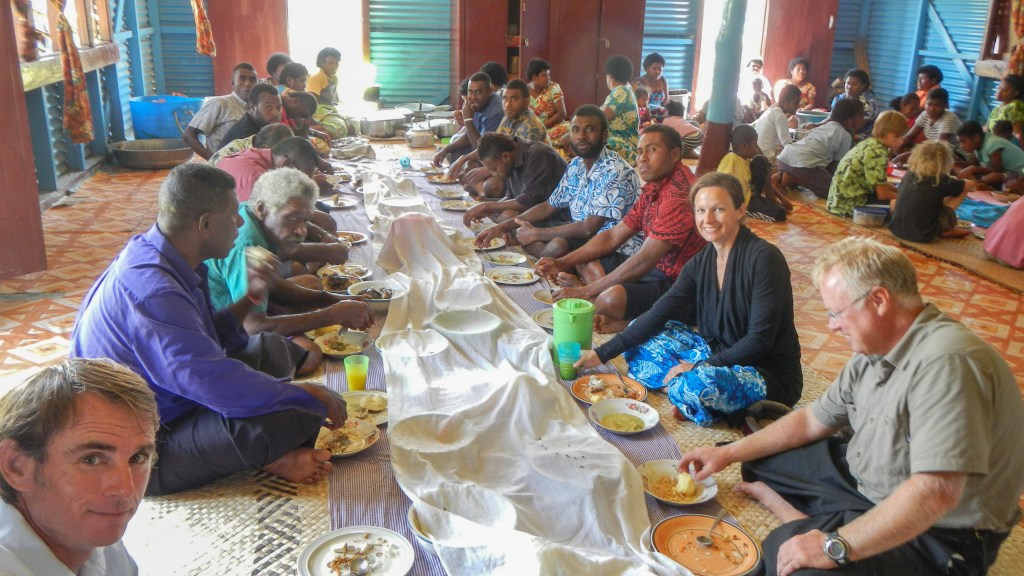
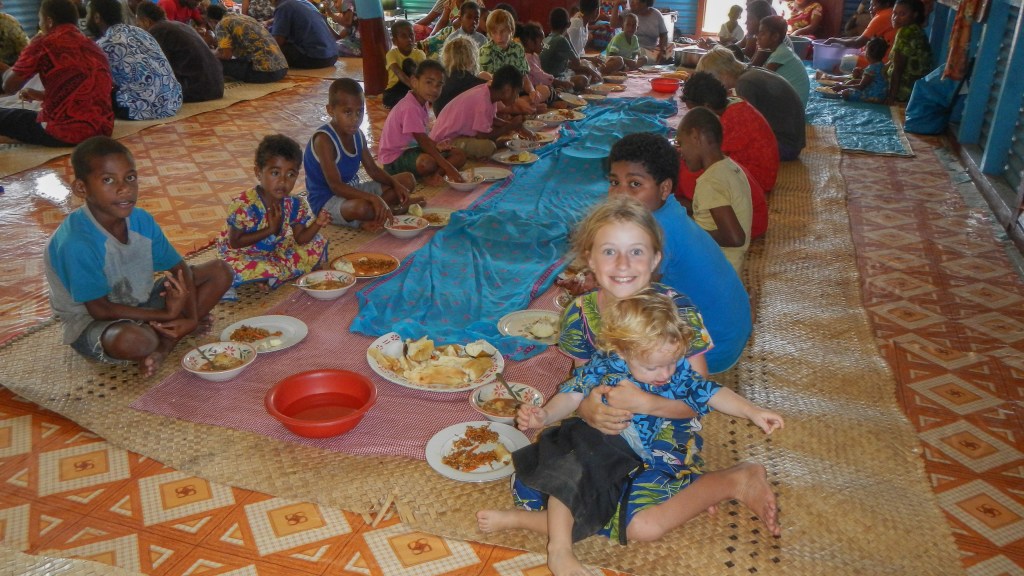
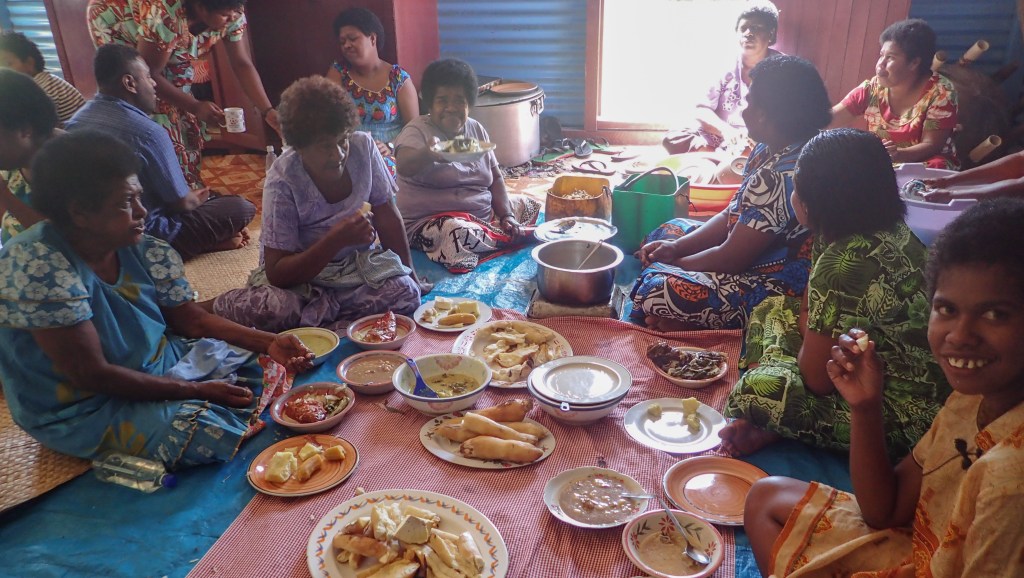
After church went to the big family lunch with the entire chief’s clan, something like 50-60 people including many, many kids. It was an enjoyable afternoon, and I must say that this was the nicest, most welcoming village that we had been to since the Lau group. As is the usual Fijian custom, the men and children ate first and then after they had dispersed from the meeting hall, the women had a turn. Being the guests, it was expected that Liz and I eat in the first round, which we did, but then we hung around with the women after, and even helped with washing the dishes. I liked Liz’s observation that she shared with the women… it’s good that they wait until after the men and children leave to eat because then they get to eat in peace! There was a little bit of laughter at that comment.
A big family lunch after churchKids’ tableThe women enjoy their lunch in peace and quiet
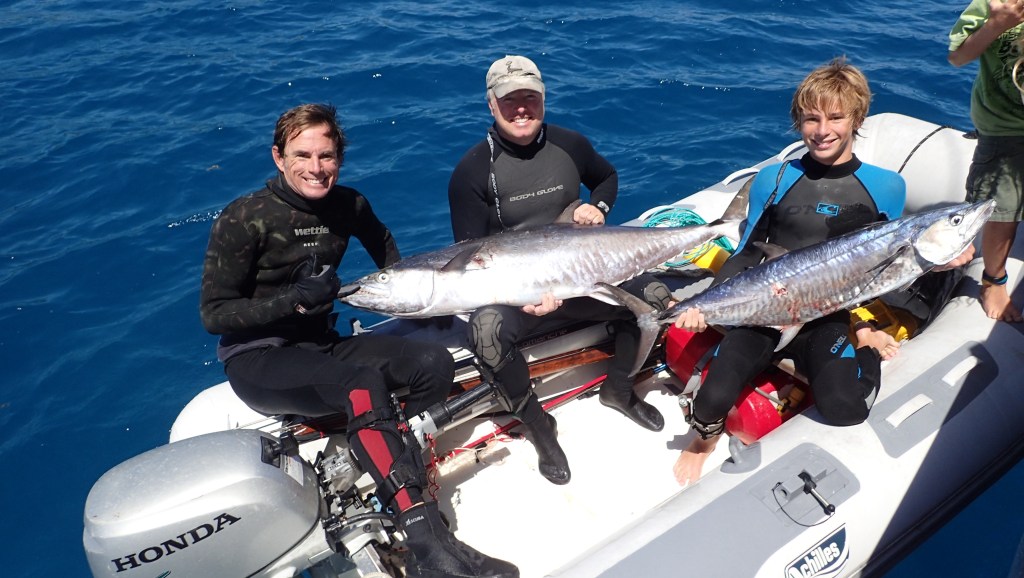
One day the guys hit the walu jackpot. Brenden got a big one, while Max got a HUGE one. We still had some of the last one in the freezer, so we decided to split Brenden’s fish between our two boats and then give Max’s to the village.
They hit the walu jackpot!Sharing the day’s catch with the guys from the village
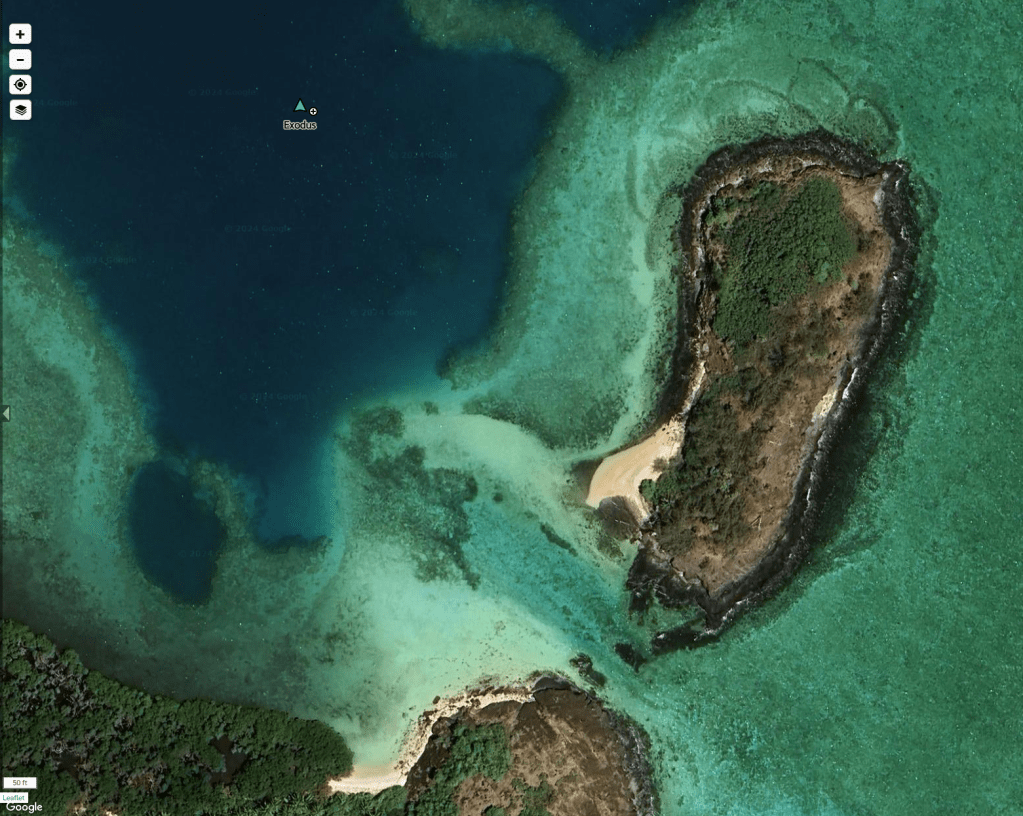
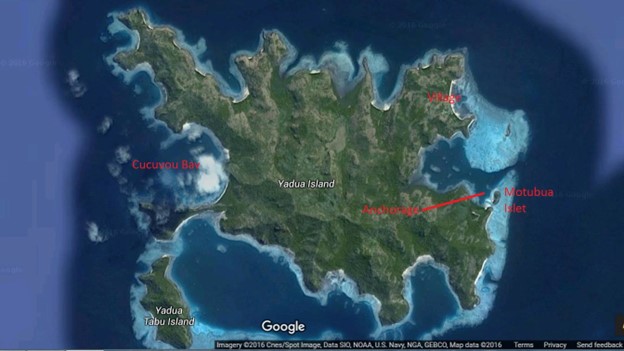
For a change of scenery and to be closer to the village we moved around the top of the island to the east side and anchored inside the reef just off of the little islet called Motubua. This was a gorgeous spot, but although we were closer to the village, visits had to be timed with the tide since there is quite a swath of reef between where we were anchored and the village.
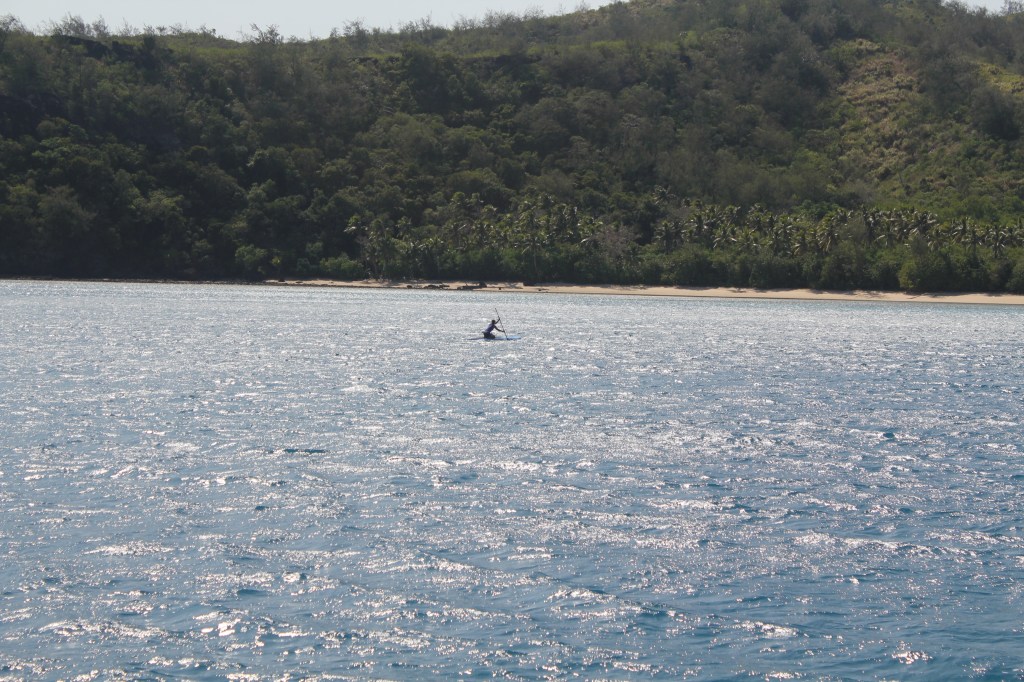
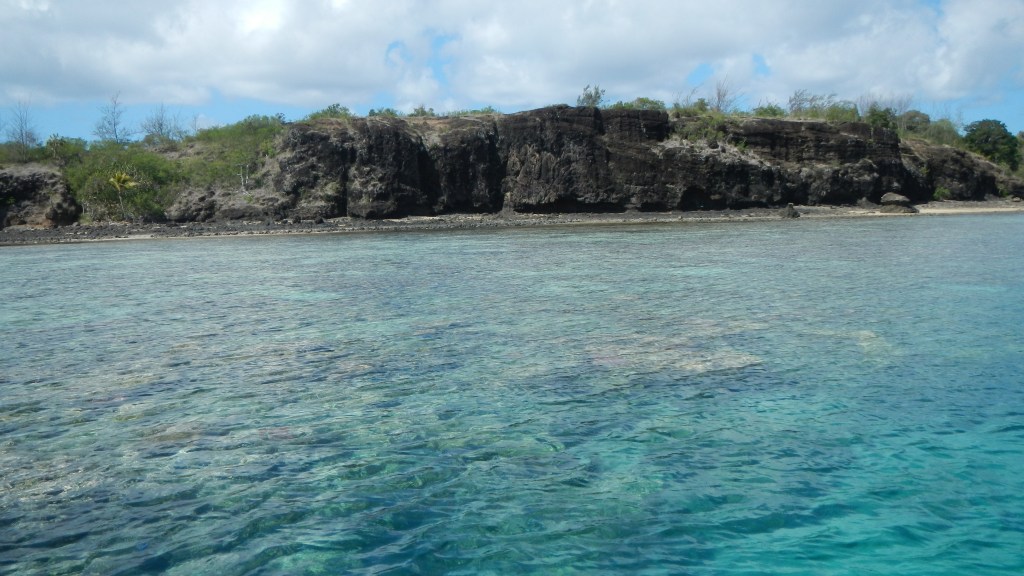
Just south of where we were anchored there is a small patch of sandy beach on the island proper of Yadua. One day we did a bit of exploring and ended up in the middle of a dried-out mangrove flat. It was eerily quiet back there and there wasn’t too much to see, but it was a nice little walk and good to get off the boat for a while.
The boys didn’t come back into the mangroves with us, instead they climbed up the sheer cliff at the edge of the beach. OK, it wasn’t a sheer cliff, but I swear from time to time those boys need reminding how far away a hospital is!
The kids decided they wanted to swim back to the boats, and in the photo below you can see that for a short moment Victoria had second thoughts and started to turn back. However, in the end the boys reassured her, and they all made their way all the way back to Exodus. It was heartwarming to watch Alex and Brenden swim alongside Victoria and Jonathon. Liz and I watched pretty much the whole time, because it wasn’t a short distance, but we were reassured that the big boys weren’t leaving the smaller ones behind.
Tim had arranged with one of the guys from the village to go out with them to dive for cucumbers, so one morning he was up early, and I made biscuits and popcorn for him to take and share. The people of Yadua seem to LOVE popcorn. Anyway, they never showed up, so the boys enjoyed snacking on the biscuits and popcorn all day long. Tim was disappointed, but the upside is that he and Max (Fluenta) ended up going out spearfishing and they came back and filled both of our freezers.
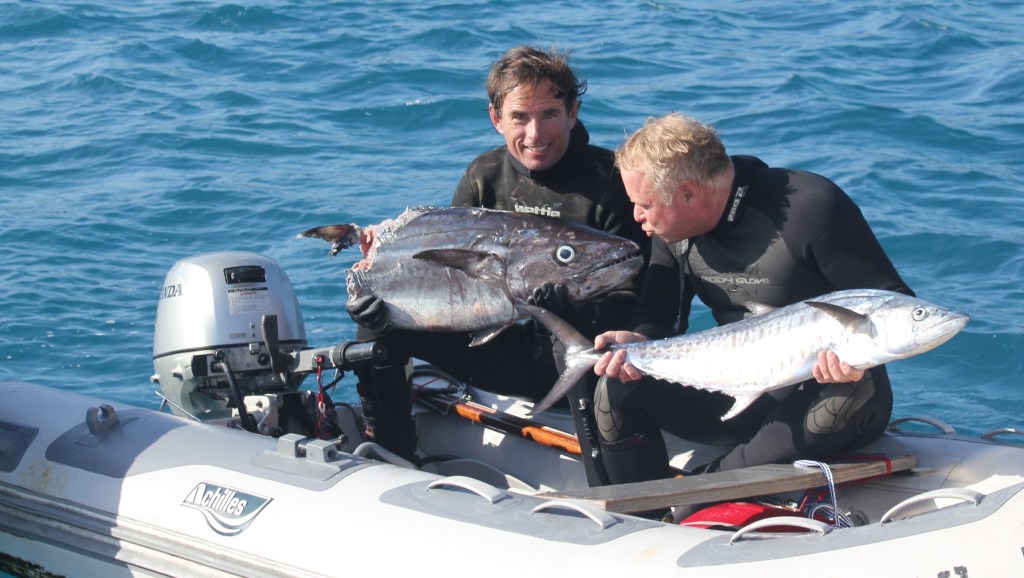
I was just getting out of the shower when I hear them pull up in the dinghy yelling, “anybody home?” After hearing that a couple more times, I thought I should see what’s up, so I poked my head out and asked if he needed anything. His response was priceless… “just a photographer.” Clearly there was something to see so I dressed quickly, and wow, was it a sight. The biggest dogtooth tuna that I’d ever seen BY FAR, but the thing was, it was only half a tuna… Because a shark took the other half! And just that half a tuna weighed 35 lbs! And of course, they also came back with a couple good sized walus as well. I told Tim we needed a fishing ban now, and he gave me the stink eye. We saved the heads from all these fish to give to the village, and as you might imagine the tuna head was enormous, but somehow Fluenta’s magic freezer was able to accommodate it.
Cucuvou was a beautiful bay, but there wasn’t much space for a proper run. So, I got in the habit the few days we were there of paddle boarding to the beach and going for a walk. That might not sound like much of a workout, but with the wind blowing offshore at about 20 kts most of the time, the paddle to get from Exodus to the beach would really get my heart rate up. Sometimes I wouldn’t even be moving forward, and it would seem like I was on some sort of paddle boarding treadmill. And then when I finally made it to the beach, I would reward myself with a leisurely walk along the sand, picking up this rock or that shell and making the most of my “me-time.”
Luckily, one of the last days we were there the wind eased, and I got to enjoy a long paddle around the entire bay and enjoy its beauty from almost every angle.
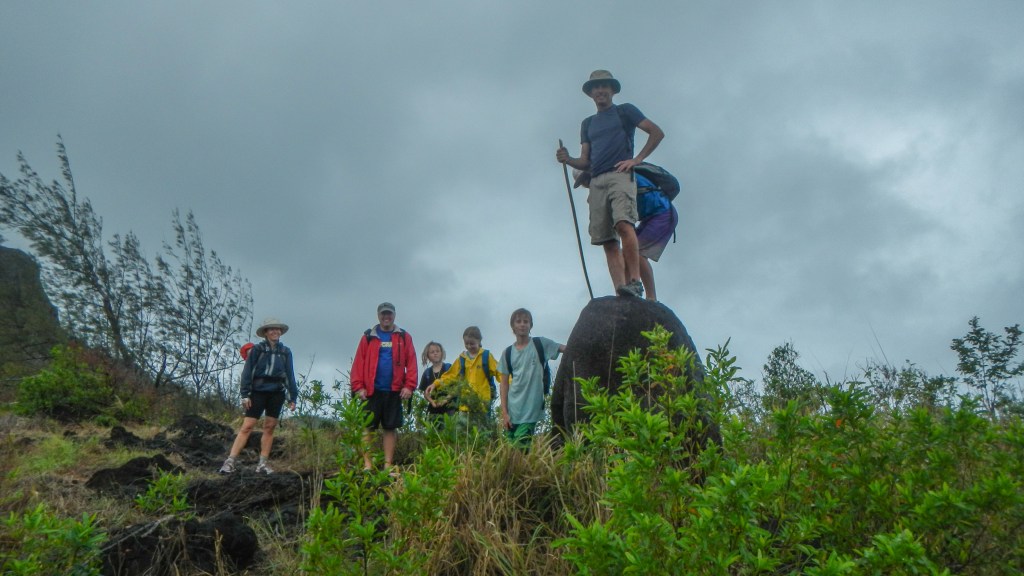
We had read that it’s possible to hike from Cucuvou across the island over to the village, and so we decided to give it a go. The fact that we had no idea where the trail was and that it was a gray drizzly day wasn’t stopping us. It turned out to be quite a long hike, three hours in all, but I’m pretty sure we weren’t breaking any speed records. Other than the dampness, it was an enjoyable hike, mostly along a ridge with views of the different bays around the island.
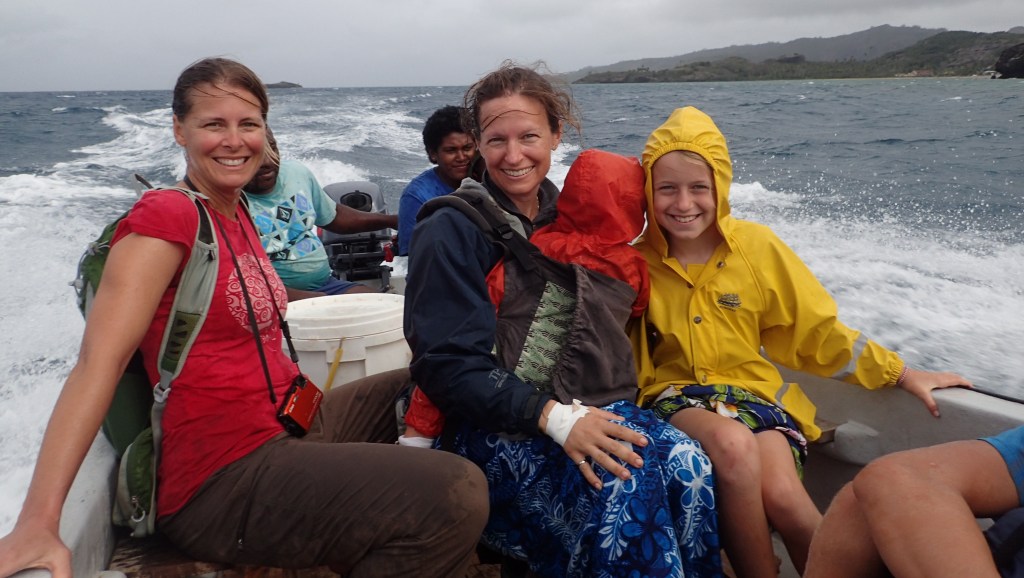
The people of the village were pleasant and they appreciated our effort to come all that way to present Sevusevu. The chief wasn’t there, so we presented our Yaqona to his son. We ended up getting a ride back to our anchorage in one of their small fiberglass fishing boats. Quite a ride, and it sure beat another 3 hour hike back.
The primary source of income for this village is selling sea cucumbers for sale in Asian markets. They were doing that as well in Matuku, and there they told us they had a Korean buyer. Not sure who the specific buyer is here at Yadua, but they dive every day, and while we were in the village they were filling all their dive tanks. It is unclear what the sustainability of this operation might be. Tim told me that in Matuku they said they keep having to dive deeper and deeper to find the sea cucumbers, so that seems to indicate that it may not be a long-term endeavor.
Hiking on a drizzly dayA view of the village on the island of YaduaGetting a lift back to the anchorage
Cucuvou is not a harbor, it’s just a regular ole bay, but for some reason it’s listed as a harbor on Navionics, so I’m going with that. It’s a west facing heart-shaped bay with a narrow entrance and north and south lobes. When we first pulled into the bay we anchored in the north lobe next to Fluenta, and after Tim and I exchanged some very typical anchor time, let’s call it banter, and turned the engines off the sheer silence was deafening. We were pretty sure Fluenta had to have heard our exchange, but it’s OK, because we were pretty sure they wouldn’t judge.
Once we were settled and relaxed and hanging out in the cockpit, we had that cruisers bliss feeling that we were missing in the resort laden, high traffic area of Yasawas. There’s only one village on the entire island and it’s on the other side from Cucuvou. So, the bay was completely missing any evidence of human activity, and it was absolutely gorgeous and peaceful.
The next morning, both Exodus and Fluenta reanchored over to the southern lobe in preparation for the trade winds to fill back in.
We thought you couldn’t visit Yadua. We had heard that there are protected iguanas there and that people are not allowed to go there, and boats aren’t allowed to anchor there. Curly in Savusavu, among other people, had told us that.
But thankfully, our friends on Lumbaz had gotten to the bottom of it. It turns out that Yadua isn’t off limits at all, rather it’s the small sister island of Yadua Tabu. And since Yadua Tabu is a totally separate island, it’s OK to go to Yadua, as long as you stay off of Yadua Tabu. So, when we met with people in the village of Yadua, they confirmed the situation, and that coming to Yadua, the bigger island, is OK, and that we should tell all our friends that too.
When we got back to Savusavu Max (Fluenta) went to talk to Curly and tell him the situation, but Curly was adamant about his position. The Fijian government had told him Yadua was off limits, so that’s what he was going to tell the cruisers. And when I reviewed our cruising permit that listed the islands we were allowed to go to, Yadua *was* conspicuously *not* mentioned. But then I took a careful look again and the Fiji 2015 cruising guide and it very clearly says that it’s Yadua Tabu, not Yadua, that’s off limits.
So, at this point I have no idea what the real deal is. But I’m glad we made the stop at Yadua, because it was pretty great.



 Gresham Family Exodus