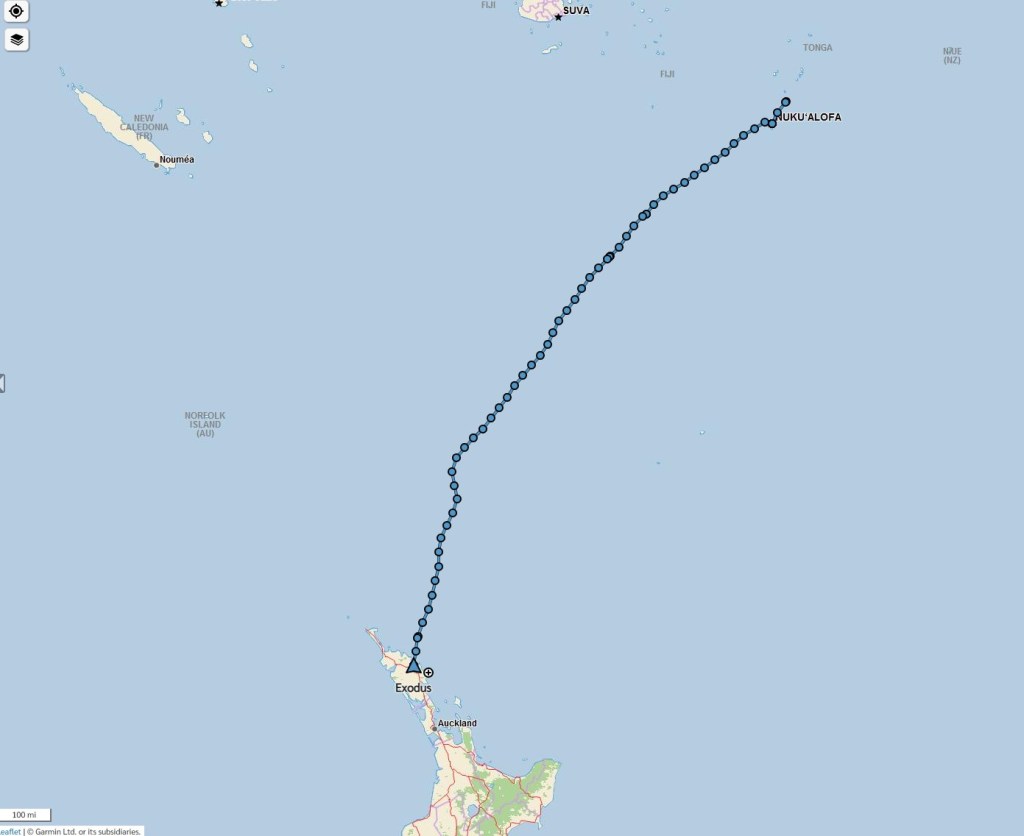
Our day sail from Ha’apai to Tongatapu covered roughly 45 miles, so we got an early start, weighing anchor at roughly 7am. This sail was some of the best sailing we had ever done. If every passage was like this I might actually start to like sailing! We sailed on a beam reach with light winds (10-15 knots) and more importantly, totally flat seas. Those of you who enjoy sailing inside Long Beach or San Diego Harbors, I totally get it now. There’s absolutely nothing like zipping along on a flat sea.
At about 10am we had a fish on the line, and when I headed up into the wind in order to slow Exodus down, I went too far, so I started the port engine to avoid irons. I used to beat myself up over stuff like this and if we got into irons, we’d get out without starting an engine, but with lines in the water it’s a real pain when you wrap one of the props, so now I will start an engine to avoid the hassle. Unfortunately, we lost the fish, but this disappointment was averted when later in the day we landed a 4 ft Dorado (Mahi Mahi).
Overall, we made excellent time. We were having safe arrival cocktails in the cockpit by 3:30, and we were on shore at Big Mama’s Yacht Club for burgers, beer, internet, and friends by 5:00.
We had a glorious day sail from Kelefesia in the Ha’apai group down to the island group of Tongatapu, which is the southern-most island group in Tonga and also where the capital city of Nuku’alofa is located. We arrived at Big Mama’s Yacht Club on the small island of Pangaimotu on a Thursday, and our plan was to clear out of Tonga the following Thursday at the latest because our visas would expire on that Saturday. We met that goal of being ready to leave, but the weather smacked us down and reminded us that we will leave when mother nature says it’s time. We ended up staying 16 days at Big Mama’s, reanchoring twice: once to move in closer to get out of the wind so Tim could go up the mast and once after returning from the fuel dock. We finally left Tonga on Saturday, 15 November, with an entire fleet of southbound boats. After a two-day passage we spent three absolutely magical days at Minerva Reef before embarking on the dreaded passage to New Zealand. That passage turned out to be one of our easiest, and we pulled onto the quarantine dock in Opua just before midnight on Wednesday, 26 November.
From Tonga to New Zealand with a stop at North Minerva Reef
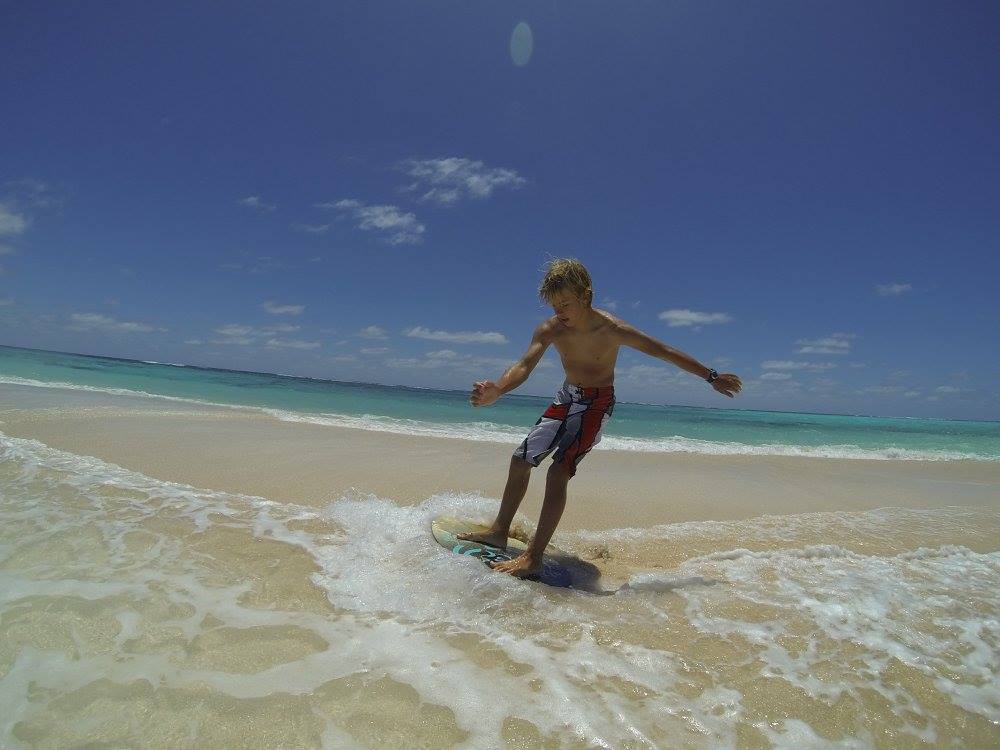
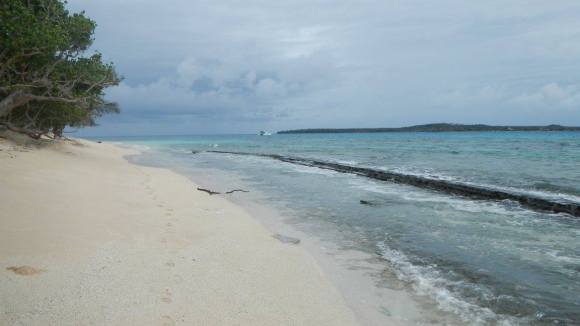
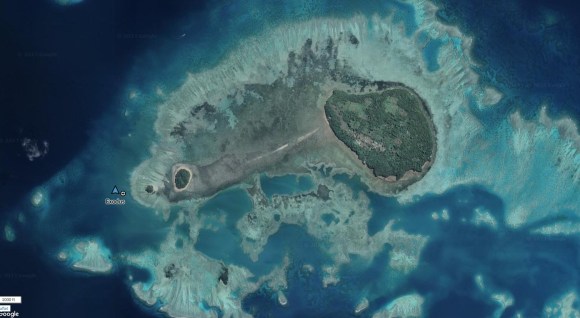
This was easily our favorite spot in Ha’apai. It is the southernmost island in Ha’apai, which made it a great launching point for heading down to Tongatapu. The island was uninhabited, however there were definite signs that people spend time there including small, corrugated tin shelters and lots of trash on the side of the small island opposite from the anchorage (not visible from out boat). The passage from Nomuka was quite a bash, but it was well worth it. It’s the only island in Ha’apai with any sort of elevation to it, so it was strikingly beautiful even if only for the contrast with the rest of the island group. There is a limestone cliff overlooking the anchorage, and a long sandspit that is just barely covered at high tide. This sandspit turned out to be a huge highlight for the boys because it was, “the best skim boarding ever!”
The best skimboarding ever – Kelefesia
Tim and Jack went lobstering on the reef at night, but unfortunately there weren’t any to be found. However, they did have a successful day spearfishing and came back with a couple pompanos. They are interesting looking fish, but to be honest, they weren’t very tasty. We celebrated Jack’s 29th birthday with some brownies and an epic game of resistance. Our last day there we had a full day of sunshine for the first time in I don’t know how long, and I gave the boys a full day off from school in order to skim board. Our next stop would be the big city of Nuku’alofa, and although we were looking forward to internet and fresh vegetables, we were sort of sad because leaving Ha’apai would represent the winding down of our season cruising in the tropics and we turned our focus to preparing for the passage to New Zealand.
Growing up I was taught that you could tell if an egg was good or not without cracking it by putting it in a cup of water. If it sank to the bottom, good, if it floated, bad. I’ve also seen this advice perpetuated on cooking and cruising websites as well.
Well, at this point in the Ha’apai group we were easily out of eggs, but then Tim, Jack, and Camille dinghied over to the village on Nomuka and came back with a dozen for us to share. So, with just a few eggs, you can imagine that they were highly valued. They were gold. So, now imagine my dismay when I’m down to my last two and in the middle of baking something (I don’t remember exactly what) and my last egg floated. And this is how I learned that a floaty egg is not necessarily bad. I cracked it open, and it looked fine, and it smelled fine, so I used it.
I’ve also learned that an egg that sinks is not necessarily good. I’ve cracked open a sinker and had it be all moldy inside.
So, I no longer use the float test on my eggs. I do, however, always crack each individual egg into a small bowl rather than cracking it directly into whatever I’m making at the time. Nothing worse than cracking the 8th of 8 eggs into a large bowl and have it come out all black and stinky, ruining the whole lot.
We anchored off the west tip of the island of Nomuka, which is where the family from s/v Wildlife lives, but it turns out they weren’t home, because they had gone to Tongatapu to drop off some friends. Iguana caught a nice sized dorado (Mahi Mahi) on the passage, so we grilled up an excellent dinner that night on Exodus. Camille and I took a walk to the village to see if they had any supplies, and it was a large srawling village, one of the largest we had seen in Tonga outside of the main ports (Neiafu and Pangai). The people were very shy and not too friendly, and we asked several people where the store was before we actually found it. Turns out it was closed. It was nice to get off the boat and stretch our legs, none the less.
The “anchorage” was even more rolly than O’ua. We were there two nights and it was just tolerable, but the next morning the winds had clocked slightly more to the North, and then it got really lively. I was having to secure things as if we were underway, and I was having trouble doing simple things like make coffee, because the swell hitting us on the beam was intense. I was trying to wait until Tim got up, but in the end I ended up waking him with a plea that we move anchorages now.
So, we moved south across the channel and anchored off the smaller island of Nomukaiki (meaning little Nomuka) and it was a much better location. There was more windchop on the water, but at least there were no huge swells that hit Exodus’s natural frequency. In addition to the reduced rolliness, there was also a nice long beach which I took advantage of for a run, even if the sand was soft and the run was slow and sluggish. Unlike Nomuka, which as the large village, Nomukaiki is mostly uninhabited. I say “mostly” uninhabited, because there is a bit of a camp of some sort as well as pigs, and one pig in particular is not too shy. Tim, Jack, and Camille went ashore to collect coconut water, and I guess Tim and Jack left Camille alone to process some coconuts while they went to explore. At some point they heard a faint, “help” and they returned to find Camille in the water and a pig swimming after her. Yes, pigs can apparently swim. We had been told by a local guy that the pigs can be aggressive and sometimes even charge, so Camille wasn’t taking any chances. Well, I knew Tim was a cat whisperer, but it turns out he’s also a pig whisperer. He named the pig Hamlet and petted it like a dog, and it reacted like a dog, snorting and laying down. Then it followed him around, and when they got in the dinghy to come back to the boats it swam after them for a little while. I don’t think the dogs get pet around here very often, let alone the pigs, so I think that pig will remember Tim forever.
It turns out we were going much slower through the Ha’apai group on our way to Nuku’alofa than we thought we would. At this point, some of our friends who had left Neiafu after us were already in Nuku’alofa about to depart for New Zealand. We realized that the end of the South Pacific cruising season was just about upon us, but we are milking every last bit out of it that we could.
After being in Mexico for a year and getting by with the language and then being in French Polynesia and well, not really getting by, I decided I really wanted my boys to learn another language. As native English speakers, I think we are never really forced to learn another language, and I think that’s a shame. It’s a very rewarding and humbling experience at the same time.
I gave the boys the option of studying French or Spanish, however, they had to choose the same one. I am so glad they chose Spanish because 1) I already had a bit of a head start on that one, and 2) It will be more valuable to us in our lives if/when we move back to California. There are so many lanugage curriculums out there, but I had stumbled upon a simple podcast that I really liked called “Coffee Break Spanish.” In my opinion, it takes a very effective “peel the onion” approach to learning Spanish. In the beginning we just used the audio and I would write out the vocabulary for the boys, but after it was obvious we would be sticking with it I went ahead and puchased the “bonus material” for 3 seasons, and that has been really great. There are .pdf lesson guides as well as bonus audio material. Overall, I think it’s a really great program.
Tim teases me about my timing of learning Spanish. He asked me if after we leave Tonga, I’ll be learning Tongan.
O’ua is an interesting anchorage. We were not exactly anchored off the island but rather off of the extensive reef that surrounds it. It was one of the rolliest anchorages we’d been in, and it was at its worst at high tide when the reef provides less protection. There’s actually a winding channel through the reef to navigate back to a much more protected anchorage just off the island, but we opted to stay outside the reef with faster access to spear fishing spots. There were two small islets near where we anchored that looked inviting to explore, but the weather conditions (rainy and windy) pretty much kept me on the boat the whole time. It’s not exactly fun paddle boarding with 15 kts of wind in your face and 2 ft wind chop on the water. Since we were with Iguana, we still had some fun together, including some pretty intense game nights playing Resistance.
We didn’t stay long at O’ua. We heard on the SSB net that there were 13 boats at Uoleva heading south and we wanted to stay ahead of the crowd.
Tim doesn’t often write any notes in our logbook, so most days I write, “T/J – spearfish…” and then include what their catch of the day was. All the other exciting or not so exciting things that happen remain in Tim’s head and I hope that one day he’ll write a little about his spear fishing adventures all over the world. However, while we were in O’ua Tim wrote this note in the log: “spearfishing expedition to Whickham reef. Amazing spot. Made holes in 4 tuna and 2 coral trout but came back empty. Huge bull shark and leopard shark said hi.”
The extensive reef system around O’ua. You can see a village on the main island, but we never ventured ashore.
We had a blustery day sail from Uonukuhihito to Ha’afeva, making the jump from the eastern to the western island group of Ha’apai. However, when we arrived at the Ha’afeva anchorage on the west side of the island, we found that it would be an uncomfortable spot in the strong southerly wind that we were having. So, instead of dropping anchor, we just did a drive by and then proceeded just about 2 miles to the southwest to the small island of Matuku. Matuku is a rectangle shaped island with its long side lying east to west and reefs sticking out from the corners. While not an ideal anchorage, it provided reasonable protection from the strong south winds.
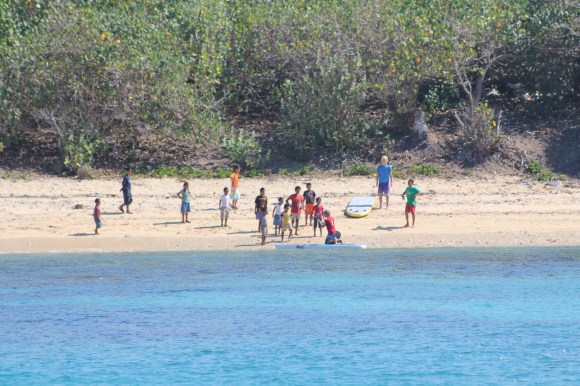
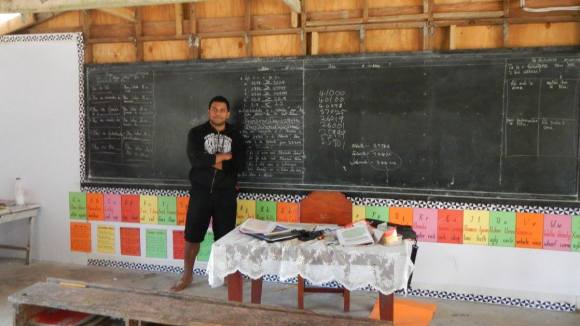
As we were nearing the anchorage, we could see that there was a village there, and there was a group of children on the beach huddled in the shade of a palm tree. As we got closer and Alex and Brenden came out on deck, there was obvious excitement among the kids on shore and they shouted and waved. As soon as our anchor was set the boys took the paddle boards ashore, and they took a soccer ball. You should have heard the squeals of delight from the village children as Alex and Brenden approached the beach; it was too cute. While the boys were ashore, the schoolteacher, Isaac, borrowed one of the paddle boards and came out to Exodus for a visit. He was quite young, early thirties, and from the capital city of Tonga, Nuku’alofa, so this teaching assignment in a small village in the Ha’apai was a big change for him. He explained that usually the new teachers get these assignments. He told us that he had seen many yachts, but he had never been aboard one, so he was glad to get to come see Exodus. He was also very interested in going spearfishing with Tim and Jack, and he also invited us to the school in the morning.
Kids on the beach at MatukuIsaac the teacher
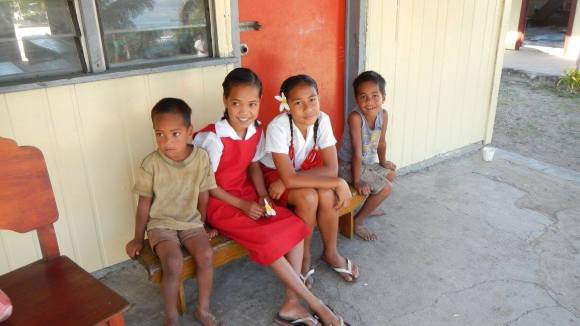
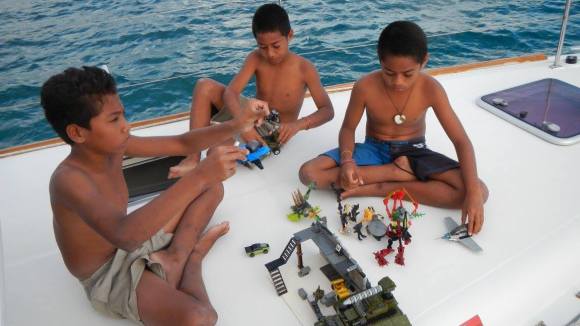
The village was small with a total of 14 children aged 12 and under. Older children go to one of the bigger cities for school, so Alex was the biggest kid on the island. We had to get up and get ready for school by 8:30 (not an easy task, especially for Brenden who likes to sleep in well past 9). When we got there it turns out they didn’t really have school since they finished exams and were having a little break. So, they just played some more soccer. I took a few small items for the school (pencils, paper, crayons), and Camille (our friend on s/v Iguana) took some lollipops, which were a huge hit. And we also gave them the soccer ball, which was accepted with applause. The kids mostly don’t speak English, so it’s even harder than when we were in Makemo, because at least we knew a few catch phrases in French, but I don’t exactly have a book called Tongan for cruisers. When I asked Alex if it was hard, his response was, “when you have a (soccer) ball, you don’t need to speak the language.” Three of the older boys (12 yrs. old) came out to visit Exodus a few times when the boys were not already on shore. They used the lids of ice chests as kick boards to get to us. They seemed to be especially fond of Brenden, which I thought was maybe because he’s exactly their size, but Alex told me it’s because Brenden sang Jingle Bells with them. Of course! Brenden entertained them for a couple of hours on Exodus one afternoon, and they even taught him a little Tongan. The sat on deck outside his bedroom hatch and he handed them Legos to play with, since they couldn’t go in his room because they were wet. They kept asking us if we were going to leave the next day and all of them, including Brenden, were begging us not to. He was having fun with his new friends. Of course, when we would leave was solely dependent on the wind.
Ready for schoolLegos on Exodus
When Tim and Jack went spearfishing in the morning, they came back with a tuna (Tongan – Atu) and two huge red snapper (Tongan -Fongamea) and they took them to shore to share with the village. I didn’t go, but apparently it was very well received, and they even got to meet the chief. In the afternoon they went spearfishing again with Isaac, the teacher. Isaac was totally amazed at how deep they dive and for how long they can hold their breath.
The winds stayed strong but they shifted from the south to the east, so we moved back up to anchor off the west side of the island of Ha’afeva. The village is on the east side of the island, so we took about a 20-30 minute walk along an easy trail to get there. A little girl immediately approached us and asked us if we wanted mangoes, and of course the answer to the question, “Do you want mangoes,” is always, “Yes!” so she climbed a tree and brought down several green, hard as a rock mangoes and wanted to charge us for them. We passed and asked where the store was. When we got to the building we thought was the store, it was locked up, so we just kept walking. A Chinese guy was walking along in our direction, so we asked him about the store, and he gestured for us to follow him, and it turned out he was the store owner and opened up for us. In Neiafu, there were many Chinese people running the shops, but I was surprised to find it the same in a small village in Ha’apai. The store was organized so that everything is behind the counter, and you have to ask for what you want, which was slow and frustrating for us, because the Chinese guy didn’t speak English, and well, we don’t speak Tongan or Chinese. However, soon a Tongan man came in who spoke English, so he helped us out.
We didn’t really do much during our stay at Ha’afeva, mostly because of the weather. I was able to get in a few good runs on the system of trails, trying to avoid the village in my running clothes. Other than that, we mostly had lazy rainy days on board catching up on school, playing games, and making cookie dough. We had planned to snorkel on the wreck of an old Korean fishing boat that is near the anchorage, but we never did get around to it. Tim and Jack finished a few boat projects together, and I made one more trip into the village store, because Brenden was concerned about how low we were on ramen noodles.
Tonga calls itself “The Friendly Islands,” but of all the places we’ve been so far, I’d say they actually seem to be the least friendly. However, the longer we’ve been here, and the more people I interact with, the more I have started to notice a pattern. There seems to be a direct correlation between how “friendly” someone seems and how confident they are in their English speaking skills. So, I’ve come to the conclusion that people who may on the surface appear unfriendly, or at least less friendly, are really just shy and self-conscious. Contrast that with Pago Pago, American Samoa, where everyone speaks very good English and everyone is super friendly, including the many Tongans I met who live there. Also, contrast that with French Polynesia, where there simply was no expectation of them to speak English. They spoke French, and it was up to us to try our best not to butcher the language too badly, all with varying degrees of self-consciousness.
Now that we are out in the much more remote areas of Tonga, we are finding this even more. It’s quite possible to walk through an entire village without speaking to anyone, which creates a dilemma for us. We aren’t exactly the most friendly or outgoing people ourselves, but we recognize how rude it is to go to a village without talking with the people who live there, if for no other reason than to thank them for letting us be there. Luckily, we’ve got a couple of good ice breakers: Kids and fish.
Every village has kids. Usually a lot of them. And kids seem to be less concerned about whether or not they can speak the same language with other kids. For example, when we were approaching the island of Matuku, we could see right away that there was a group of about 12 to 15 kids on the beach watching us. They were waving politely, but once they saw Brenden and Alex, they started running around the beach and they took their waving up a notch. They were obviously excited to see other kids. Shortly after getting the anchor set the boys got on the paddle boards and headed to shore, one of them with a beach soccer ball situated between his feet. I’m not sure if it was just the excitement of the boys heading to shore, or if someone caught a glimpse of the ball, but whatever it is, we could hear the squeals of delight from the kids on the beach loud and clear. And when we looked towards shore we saw them all running towards Alex and Brenden and helping them get their boards up. Shortly after they arrived, all the kids, including Alex and Brenden, vacated the beach, presumably to somewhere suitable for a game of barefoot soccer. The village teacher, Isaac, ended up paddling out to visit with us, and he invited us to school the next morning too. The boys ended up spending quite a bit of time on shore during our stay there, and when they weren’t on shore, three of the older boys from the village would come out to Exodus to visit. They sang jingle bells with Brenden, played with legos, and even taught a little bit of Tongan. Isaac ended up going spear fishing with Tim and our friend, and in the end he gave us many coconuts and kasava root. I could go on, but the point really is just that the kids were our opening for interaction. When you have kids, you automatically have something in common, and it makes overcoming the language barrier and getting a out of your comfort zone a little easier for the shy and self-conscious. I’ve heard babies and young children are even better for this, but I’ll just have to take that on faith.
Every village likes fish, too. Bringing a fish to shore to share with the people of a village can get you an audience with the chief and usually lots of island fruit in return too. Too bad the mangoes aren’t ripe yet.
-D.
The kids of Matuku are crowded in the shade of a palm tree watching Alex and Brenden paddle to shore
The island of Ha’afeva is great for running, relatively speaking. There is a major road between the anchoring side of the island and the town that is a very well kept dirt road, which means I don’t get scrapes along my ankles, calves, and shins from any overgrowth. There are also many side chute roads that are in various states of maintenance, and they made for lots of little ways to get sidetracked and make a long run not quite so monotonous. And by long run, I mean 5 miles, because that’s about all I’m up to. I ran slow, with “Allstar” by Smashmouth in my brain the whole time (curse you, Alex!) And by slow, I mean s…l…o…w. Knowing this was the first decent terrain I’d had to run on in about 2 weeks, I tried not to judge myself. Not judging is hard, though. I felt great at milestone 4.5, so I extended my goal from 5 to 5.5 miles in order to run just a little bit further than my last “long” run. Of course, I seriously hit the wall at mile 5, and it was a severe effort to keep moving my legs at all after that. But since I had already resolved to go 5.5 miles, I found it impossible to stop, because I rarely stop before I reach whatever distance I’ve set out for myself, only because of abnormal pain or, well, bathroom issues. I say “abnormal” pain, because there’s always a little bit of normal pain with any long run. The last half mile lasted forever, and when I was finished, I was spent. I felt like I used to feel after a 12 mile long run at home. Like I said, I was spent.
I am looking forward to running in the cooler climate of New Zealand. Not that I can blame my pathetic run entirely on the heat and humidity, but it certainly doesn’t help.

 Gresham Family Exodus