Categories
Blog Post

Not Plans, Intentions

Originally posted on cruisingrunner

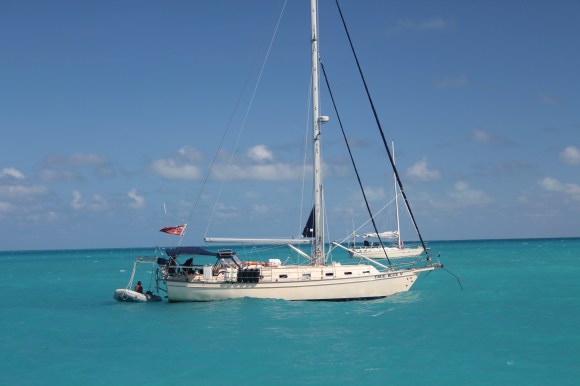
A while back, a fellow cruiser advised me that out here, we don’t have “plans” we have “intentions.” That resonated with me. Coming from a schedule oriented professional background there is something about the word plan that gives changes to that plan a negative connotation. Right? If everything goes according to plan, that’s good, right? Well, it’s a rare cruiser whose plans, I mean intentions, don’t change quite frequently, and there are so many reasons why these changes happen: It could be a boat maintenance issue, weather, influences of other buddy boats, need for internet, need for fresh provisions, weather, a change in heart, or simply reality setting in regarding how quickly you can really get through a specific area or island group. We have certainly made our fair share of changes in intentions on this journey, the first one coming almost immediately after leaving home. To think back on it now, we must have been crazy. We left California at the end of February with the intent of hustling down the coast of Mexico to Central America to The Galapagos and then making a late crossing of the Pacific to The Marquesas. I’m thinking we simply didn’t understand the vastness of the miles we were intending to cover and how difficult that would have been given our lack of experience. When we got to La Paz, or more specifically, the beautiful islands in the vicinity of La Paz, we had a serious timeout moment. First of all, we had learned that the anchor we had was simply not big enough for the boat and we would need to order a new one, and who knew how long THAT would take. Second, the area was amazing with beautiful bays and snorkeling, and did we really want to rush away from the Sea of Cortez so soon? It turned out the answer was no, and after a week or so of research we decided to stay in Mexico for a full year and then make the jump to The South Pacific the following season. And even after giving ourselves so much time, we still never made it to Central America. We left to The Marquesas from Puerto Vallarta only ever making it as far south in Mexico as Tenacatita (just north of Barra de Navidad).

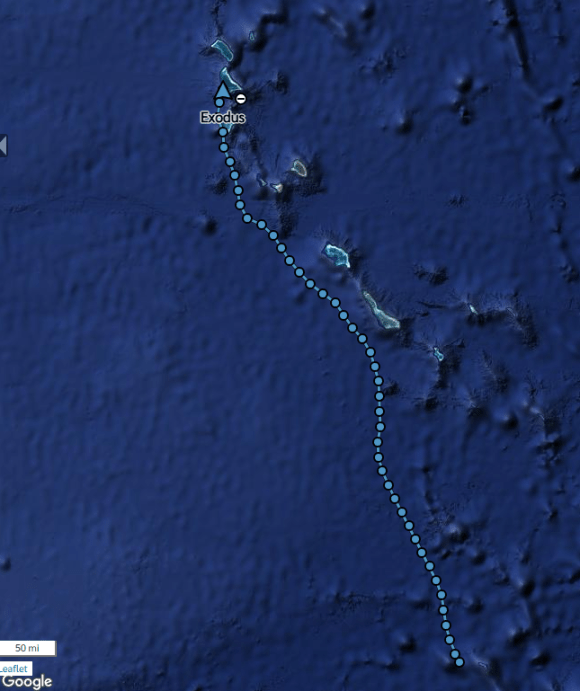
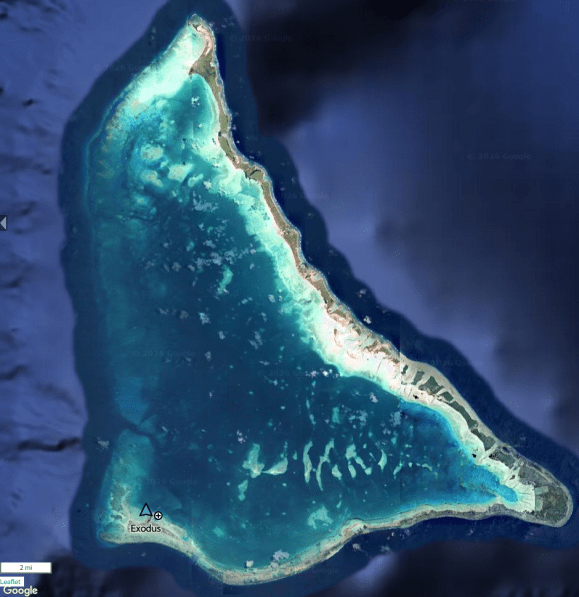
Currently, we are in Fiji, and we’re smack dab in the middle of totally reassessing our intentions both on micro and macro levels. On the micro level, we left Savusavu 3 weeks ago intending to tour the Lau group, starting in the south and working our way north, and then hitting an island or two on the east side of Vanua Levu before making our way down around the northwest side of Viti Levu to the Nadi area to meet up with our friends who are coming to visit us. Now we are in Fulaga (southern Lau) with four other kid boats, and we have been having a great time and have stayed much longer than we intended. So, now instead of heading north we will take a shorter route directly west, probably to the island of Matuku and then Kadavu (and the great Astrolabe reef) and then around the southwest side of Viti Levu. Of course, this is dependent on an upcoming weather window that looks like it’s deteriorating due to an intensifying front heading our way, so all of this could be different tomorrow. We may just set up permanent residence here in Fulaga.

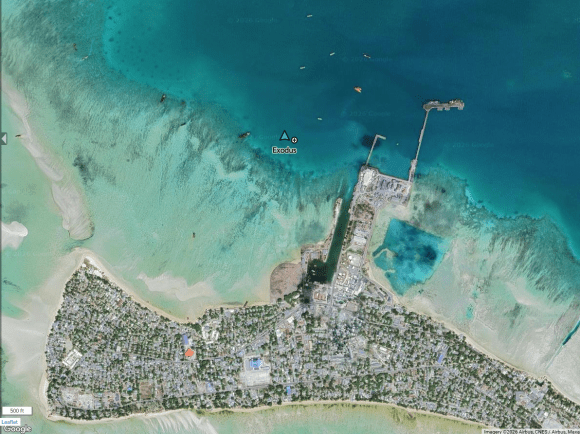
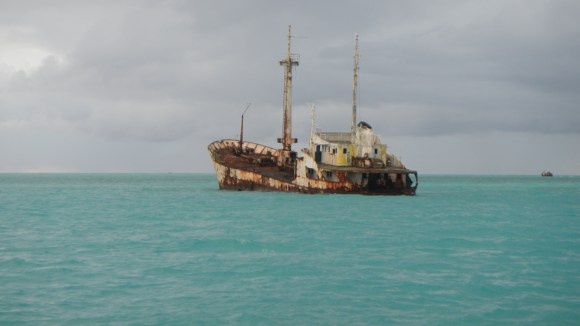
On the macro level, we have always planned, I mean intended, to go to Australia for this next cyclone season and there we would end our journey and sell Exodus. Yeah, we’ve just chucked that plan right out the window. When we got to New Zealand last November it was a welcome change to leave the tropics and spend some time in a temperate climate with a different geographic makeup, and it also felt good to be somewhere a little more like home for awhile. But now that we are back up in the islands, we aren’t quite ready to head back to that so soon. I mean, if we go to Australia that would really only give us about 3 to 3 1/2 more months here in the tropics. Since we still want to get out of the cyclone belt during cyclone season, we are now furiously researching heading north to The Marshall Islands. We hear mixed things about it, but we also heard a lot of mixed things about staying in the Sea of Cortez for the summer, so you just never know. So, it’s really looking like Fiji to Tuvalu to Kiribati to The Marshall Islands just might shake out to be the right choice for us. Of course, we have friends heading to Vanuatu then Micronesia the The Philippines, so who knows!

But the point is, we’re not locked into anything. We are cruisers. We have intentions, not plans.

Categories
Narrative

The Pass at Fulaga

On arrival as we approached the atoll, the pass was visually difficult to pick out, but we were in good shape since we had Curly’s waypoints and as we got near, we were able to locate the entrance. I had the helm that day, and the pass was straightforward, especially since we had decent visibility. Tim was continually commenting about how cool this place looked but I was focused on the coral on either side of us.

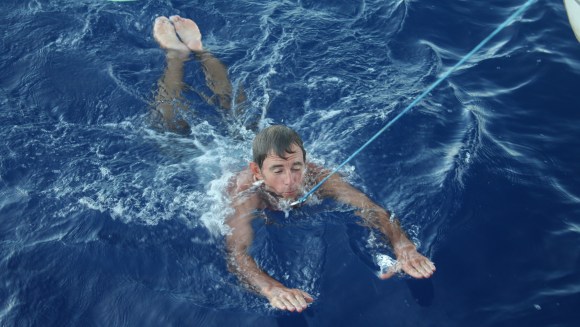
In the pass, as you approach the inside of the lagoon, it is necessary to stay to port (to the left) near a very large rock. Although it is a little uncomfortable to be so close to the rock, it is necessary because there is a big coral head right in the middle of the pass. Since we had the waypoints in the chart plotter it was very easy to see the route we were supposed to take and when we needed to veer left. We entered about 1-2 hours after high tide, so we had current flowing out of the pass against us at about 1-2 knot, so pretty good conditions. Our friends on Nautilus entered later when the current was flowing out stronger, and they had a bumby right in the standing waves.

The next day we were four boats anchored near the pass entrance when our friends on Nirvana arrived. Tim was spearfishing in or near the pass while I was out further in the lagoon enjoying a beautiful and peaceful paddle board excursion. As I kept glancing back at Nirvana making their way into the lagoon, I could have sworn it seemed like they had stopped moving. As I paddled back, and I watched them a little more closely I was certain that they were at a dead stop in the middle of the pass. Back at the boat I heard the radio chatter that sure enough Nirvana had hit the reef. Tim said that he and Hans were heckling Gary from the water when all of a sudden, they heard him start yelling, “Stop the boat! Stop the boat!” They got off the reef without drama and there was no damage to their boat, but that big coral head in the middle of the Fulaga pass will forever be known to all of us as “Nirvana Reef”.

Our pass exit was a little more bouncy and lively. We were a parade of kid boats crossing the lagoon that morning headed for the pass, and Fluenta was out in front and the first one to leave and they timed it perfectly, very near slack tide with just a little current flowing in (against them). We were near the back of the pack and by the time we got to the pass an hour later we had outflowing current and standing waves near the outside of the pass.

Categories
Narrative

Spare the Rod

The most memorable thing about church in Fulaga was the man with the switch. That’s right. Some of the local kids were sitting together and apparently they were being too loud, because one of the men went up and smacked them with a stick. It got our kids attention alright. Especially Seppe, who wanted to sit with his parents after that because if he sat with the other kids he might be too loud. Wow, back home I’m hearing that you can’t even let your kids walk to the park by themselves anymore, so definitely gone are the good ole days when you can smack your kids with a stick.

Well behaved in church

Categories
Narrative

Hiking Without a Guide

Someone heard from someone that there was a cave with human bones in it from back in the cannibal days, so of course we needed to set off to find it. We were three adults, Tim, Danny (Lumbaz), and me, and we had all the kids from Exodus, Lumbaz, and Nautilus with us. The first part of the hike was flat and uneventful, and amazingly we found the cave with the bones quite easily. After taking some photos and telling the kids more than once that, “No, you can’t play with the bones,” we were off again. We headed the other way, towards the ocean side of the island, and after a slight incline and then short steep decline, we found ourselves in a mangrove swamp. The Exodus normal routine is for Tim to go ahead and scout while I wait, so we followed this usual routine, but I didn’t see Tim again after that. He called from up on the ridge to head back up and then over, so we filed back up and headed in the direction we thought he was telling us to go. At the time I had the impression that Danny had seen and talked to Tim, but in the end I’m not sure. Danny, the kids, and I hiked all across the island, never really knowing quite where we were but with a sense that we were heading back towards the lagoon. We covered some amazing geography; some the photos simply could not capture. There were steep little limestones valleys that looked like craters and there was lush green vegetation all around. We found another mangrove swamp and the mud was too deep to walk through. A couple of the girls tested it and then ended up with slippery, muddy feet that had trouble staying in their flip flops. So, then they had to go barefoot which was difficult because the ground was a lot of pointy limestone rock. As we approached near to our starting point, we found Tim again, who had an equally interesting hike across the island. The funny thing was that Seppe (9 years old from Nautilus) told him mom, and he was totally serious when he said it, that we all got lost and that Tim was the only one who didn’t get lost and next time he will stay with Tim. Too funny! How he concluded that we were the lost ones and not Tim is a mystery.

After we made it back to the anchorage we met up with a local couple who then showed us the way up to one of the high points on the island. It was a short, steep climb, and the views were absolutely stunning. You could see the entirety of the lagoon and you also could see out to the ocean side and the reef beyond. Amazing.

The cave with the bones

Overlooking the Fulaga lagoon

Categories
Narrative

Methodist Youth Rally

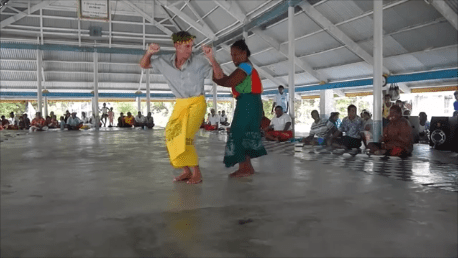
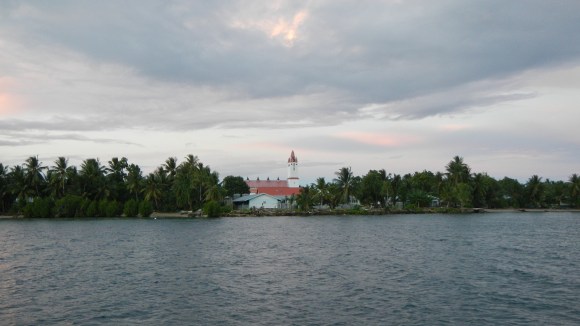
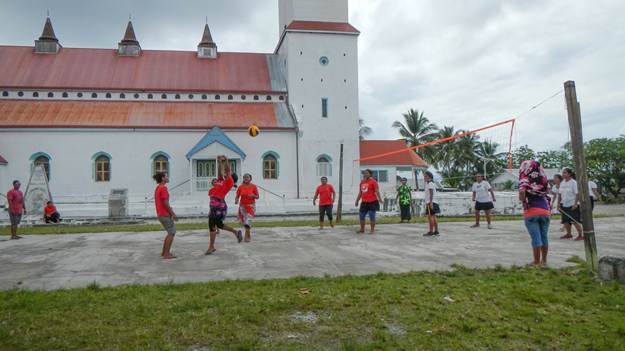
There is one church in Fulaga, and it is Methodist. While we were there, they had their annual MYF Rally. MYF stands for Methodist Youth of Fiji, and the rally included all 3 villages on the island. In the morning, the youth, which were really young men, did community work, but then the women of the village prepared a huge feast for lunch, and they invited us eat with them. Since we really didn’t know what the plan for the day would be, we ate a big lunch on board before heading ashore, but that didn’t stop me from trying new things, like boiled sea cucumber stuffed with fish. I’d say it wasn’t good, but it wasn’t bad either. It tasted like the ocean. After lunch was a volleyball tournament and the villages competed against one another, but somehow Tim and Danny (our friend from Lumbaz) ended up on one of the teams. After their tournament they let all of us yachties play, and even Brenden and I joined in. After volleyball was a church service, which we stayed for, but we left before the choir competition, kava drinking, dinner, and dancing, because we wanted to be back on the boat before dark (and I think I’m still full of kava from the last time).

Volleyball at the MYF

Categories
Narrative

Project Day with Lumbaz

One day we found ourselves anchored south of the pass with only Lumbaz while the rest of the gang was either anchored at the village or at the sand spit. It was a beautiful spot, even if a bit rolly, but the real memorable part was when they invited us to participate in one of their “project days” with them. On project day they throw out the normal school curriculum and each of the kids gets to pick any topic that interests them and then they research it and give a presentation about it. What a great idea! Alex and Brenden were not too keen to participate, though. I convinced Brenden to prepare a brief introduction of himself in Spanish, but Alex was pretty insistent that he wasn’t going to do anything. All four Lumbaz kids give presentations to us… Nils-the moon, Noa-echolocation, Luna-orcas, Ainara-the Middle Ages. They were all nervous, and of course they had the challenge in that they were presenting in English, but they did a fantastic job, and Brenden felt a little more at ease speaking his Spanish paragraph. Alex still didn’t want to do anything, but we pressured him into summarizing what we had learned in our history podcast that day (the battle of Quebec during the early part of the American Revolution. Who knew we tried to invade Canada?!) I finished the afternoon rolling my r’s with a Spanish tongue twister I had learned from my Spanish podcast. What a great afternoon, and we’ve since incorporated “project days” into our own school program on Exodus. In fact, the rest of the kid boat fleet did it together at the next anchorage at Matuku.

Categories
Narrative

Our Host Family

Our Host Family in Fulaga was Simon and Senna. Their house was right next to the Chief’s house, and we quickly learned that this was because Simon is the Chief’s son. Our first evening after Sevusevu, Senna invited us to visit with her, and she was apologetic, because her husband was not home yet from the beach cleanup. She served us tea and some corn muffins, and to her delight, Brenden loved the muffins, so she kept offering him more, and it tickled her each time he would take one. I’m pretty sure he ate a total of 8 of them, and he was sick to his stomach when we got back to the boat. When Simon came home, he was friendly, yet quite formal, and he was happy to discuss some of the details of the island with us.

The next day we were planning to move anchorages over to the sand spit, so I went ashore with Alex to visit Simon and Senna and take them some cookies. They seemed disappointed that we were leaving and also that Tim did not come in with us. I wondered if this was somehow some kind of an insult, being visited only by the woman and children, but then I realized that they had prepared lunch for us. If they had told us the night before about lunch then I must have missed it, or perhaps from their perspective it was simply a given that we would have lunch together. So, Senna put a bunch of food into the container I brought the cookies in and sent us on our way.

Simon and Senna didn’t come to the beach picnic, and we didn’t see them the night we went for the grog, so the next time we saw them was Sunday for church. We stopped by before church to give them some spice cake that we made, and they insisted that we join them for lunch after church. We had a nice, even if a bit awkward visit, and it was here that we learned of the the Fijian custom that guests eat before the hosts. They were waiting for us to eat and we were waiting or us all to start eating, and we didn’t know they were waiting for us. But once we talked about it out in the open, it was all quite relaxed. When it came up that we had come to the village for a grog, it seemed to us that there was some negativity around the fact that we didn’t come to see them. They said more than once that they didn’t know we were in the village, and that they would have liked us to stop by and say hi and drink some kava with them. We realized we had made a serious mistake and had possibly even insulted and embarrassed our host family that their guests were in the village without them. We never talked about this one out in the open, and still today I wonder how serious this mistake of ours was or if possibly I’m blowing it out of proportion in my own head.

Lunch with our host family

Over our stay in Fulaga, we did have a few interesting conversations with Simon. He told us about how the village is organized in clans, along familial lines, and that each clan has a responsibility to the community. His clan is the chief’s clan, so they are the leaders responsible for order and organization, and there are other clans, for example, one is responsible for fishing, one for gardening (growing vegetables), and one for managing resources (like water). He didn’t say this outright, but it seems like you are pretty much stuck in the clan you’re in. For example, the man that Tim met at the kava party is in the clan to grow vegetables, but what he really likes to do is fish, so he tries to fish whenever he can get the chance.

Simon also told us about obligations to family. He explained that family members can take anything from you and you are obligated to give it without complaint. It seems like a nice thing, sharing with your family, but it seems it becomes an issue when some family members are motivated and successful, and others are not.

We also had a conversation with Simon about cruisers who came before us, and specifically, Tim asked if any cruisers ever did anything that was bad, that made the people of the village unhappy, and Simon’s response somewhat surprised me and made me reflect a little over our own behavior. He said, well, there was this one couple from Turkey, and they had their hosts out to their boat, and they served them cold coffee, and the hosts were really upset and complaining about that. I almost laughed out loud. That hardly seems like a horrible offense, I mean iced coffee on a hot day isn’t a strange thing to drink, perhaps they thought they were giving their host family a treat. It gave me a little bit of a glimpse into the fact that first of all, these people have a certain level of expectation of what they are to get in return for being the hosts, and second, that they may not all be as opened minded about accepting our foreign customs as we are to accepting theirs. I understand that we are the visitors in their country so we are the ones with the responsibility to respect their culture, but I have to admit that I was a bit disappointed that being served cold coffee was the first thing he thought of regarding bad things cruisers have done. The other thing he mentioned was a boat that came and did a sevusevu and then stayed in the lagoon for over a month without ever returning to the village. He said the host family was very disappointed and upset about that one. And this is where I started to reflect on our own behavior, since we had spent so much time away from the village. Had we disappointed our hosts too? Perhaps even insulted them? I truly hope not.

I mentioned before that they charge a $50 per boat anchoring fee in Fulaga, and we had a bit of a conversation with Simon about that. He said the reaction from the boats is a mixture: some people complain about it while some people give more, and most people just pay it without any sort of reaction. He told us that he’s been given some advice that they should raise the fee, that it’s worth a lot more and he could get a lot more. But he says he doesn’t want to raise it because it provides enough money for what they need. They don’t need more, so why charge more? He gave us a warning that we remembered much later when we were in the Yasawas. He told us that some people when they see us will not see us as visitors or friends but only as a source of money and free stuff. He doesn’t want to be that way, and he doesn’t want his village to be that way.

When it came time to leave Fulaga we went into the village to say our good-byes the afternoon prior to departure. Simon insisted on drinking kava together, but he needed just a few minutes to prepare so he suggested that perhaps we would like go down and look at some of the carvings that the village has for sale. Later we returned and had a few rounds of Kava with Simon and some other men, who as far as I could tell, were never introduced to us. We exchanged farewell gifts, and then Senna fed us dinner, although they did not sit down and eat with us. That was extremely awkward for us, but I couldn’t tell about how it was for them.

In the end, I have somewhat mixed feelings about the whole host family thing. At first I thought it was a good idea because it immediately makes the visitors feel welcome and they have someone right away to connect with and someone who they can ask questions. If you are only going to be somewhere a short time then this is a strong advantage. However, if you are going to be somewhere for somewhat longer, then having a host family means, well, to be frank, that you are stuck with your host family and it cuts off the development of natural friendships with people you might be more drawn to if given time.

Another thing is that we did learn that they used to have just a single point of contact with the yachties, but then people in the village complained because that one person was the only one who would get all the gifts and stuff, so then they implemented host families to spread it around. So, even though Simon spoke about not just seeing us as sources of free stuff, that mentality is there in Fulaga after all. Cruisers are generous and cruisers typically have things that villagers want, but I think as a cruising community we have taken it too far and we’ve created this attitude among them. On Exodus we started to take this very seriously and we no longer just lightly give things away, especially when someone we’ve just met or barely know asks us for something. Instead, we are trying to forge friendships if possible, or at least acquaintances, before giving gifts, and in general we prefer donations or gifts that benefit the community, like for schools for examples. Cruisers go around giving personal handouts to strangers and then wonder why they constantly get asked for things.

Categories
Narrative

Be Careful What You Borrow

While we were all anchored at the sand spit, another boat came to Fulaga, from Germany (I think), and they anchored over near the pass. This is only significant because word got around that they had already been to Solomons and beyond (Papua New Guinea, Indonesia, etc.) and since that’s where Lumbaz and Nautilus were planning to go, they were quite interested in meeting the new boat. One evening, Nautilus stopped by on their way over to the new boat, and since it’s quite far away, Tim offered them our dinghy to take since it has a bigger outboard and they can make the trip much faster. After politely refusing once or twice and then Tim less politely insisting once or twice, they agreed to take our dinghy. A decision they soon regretted.

They ran out of gas on the way! Luckily they were very close to the other boat when it happened, and not halfway there in the middle of the lagoon. So, they were able to get it to the other boat on fumes, but then there was challenge of getting back! Luckily, the people were very nice and gave them some gas to get back, but it was definitely a lesson that you have to be careful what you borrow!

We laughed about it together, but I honestly cringe at the thought that we actually loaned someone an out of gas dinghy!

Categories
Narrative

Our First Grog

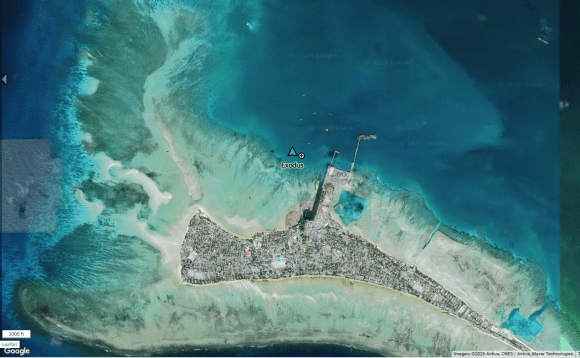
As things were winding down at the beach picnic, discussion turned to the kava party (aka grog) they would have that evening. They insisted we were all invited, so, not wanting to miss a party, we raised anchor and moved over to the village for easier access.

A grog is basically a social gathering for drinking kava, which is a drink that is made from a powder of dried, ground pepper tree root (called yaqona, the same stuff we present to the chief for sevusevu). Kava is very important in Fijian culture, not just because of the physical effects it has on you, but because of its central role in the social aspect of society. We’ve been told that they drink kava every night. Not always in huge gatherings or big parties, but often, even usually, with a small group of friends or family.

When we first arrived at the grog, it was mostly yachties and only a few locals, and somehow our friend Hans (s/v Nautilus) was whisked off to another, apparently more exclusive, grog with only locals and for a while we were wondering where he was. When he turned up a little later, he hung out for a while, then said his party was better (smiling the whole time) and went off again. Feeling not a little bit jealous to be at the grog with more white people than locals, I was happy as that changed as the night progressed and we drank round after round of kava.

They make the kava right there by putting the ground uproot in a mesh bag and swishing and squeezing it in the water. They serve it out of a large hand carved kava bowl with small coconut bowls and when it’s your turn to drink you can request, “low tide, medium tide, high tide, or tsunami.” When they offer you the bowl to drink, you clap your hands once and say, “Bula!” then it’s down the hatch all at once. When you are done you say, “Maca” meaning empty, and everyone claps three times. Then it’s the next person’s turn. (Although later I learned that you are only supposed to say “Bula” and “Maca” for your first bowl and then after that you don’t say it. But it has also been made clear a few times that the specifics aren’t so important in these social grogs, just have fun and enjoy the company.)

After each round the server waits for the caller to yell, “Taki” meaning something like “let’s drink” before the next round can begin.

The Kava here in Fiji seems to be much better than what we drank in Tonga, and it also seemed to get much better as the night progressed. Eventually, there was singing and dancing, including a conga line that somehow, I ended up leading. During the evening Tim made a friend, Tai, whom he chatted with for a while, and when the dancing started, Tai leaned over and told him, “If we act like we are having a very important conversation then we will not have to dance.” Needless to say, Tim was grateful for that! The next day, Tim repaid him with a couple of barracuda.

I have no idea how many rounds of kava we drank, but I think it was more than 10 and less than 20. It’s difficult to describe what its effect feels like. There is a definite numbness to the lips and tongue that you feel right after each drink and seemed to intensify as the rounds racked up. Towards the end I was feeling the numbness all the way down in my throat. When I was feeling like it was time to go, I was at a loss of how to politely extract ourselves, but then the locals took care of that for us. At some point, they basically told us it was time to go.

Now, they say the kava doesn’t make you drunk and that it’s not a narcotic. But when we got up to leave, I felt seriously bad. It was a lot like being drunk, I felt weak and nauseous, and I stumbled about a bit, but it was distinctly different as well. I finally nailed it this morning: it was like being physically drunk while still having a clear head. And luckily, no hangover! On the walk back my friend Gennie distracted me from how bad I felt by talking to me and by the time we got back to the boat I just collapsed in bed.

Categories
Narrative

Kid Boat Corner

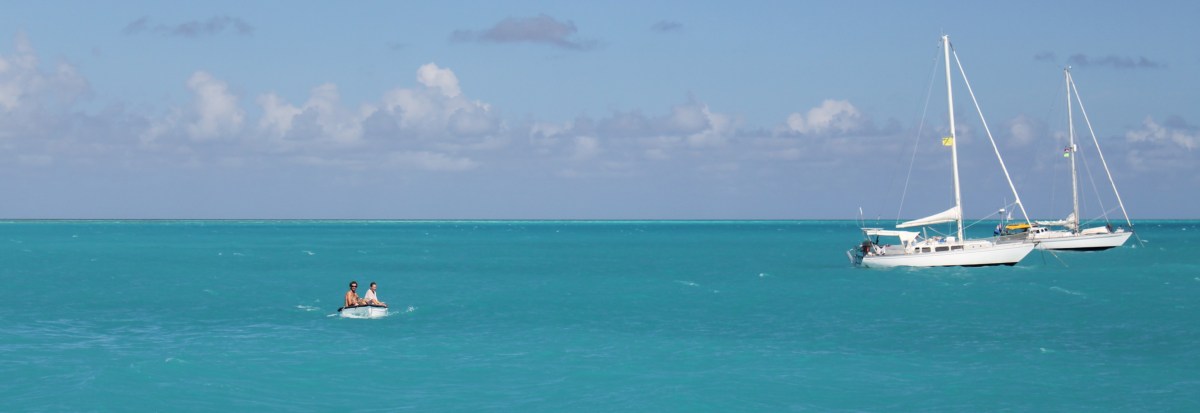
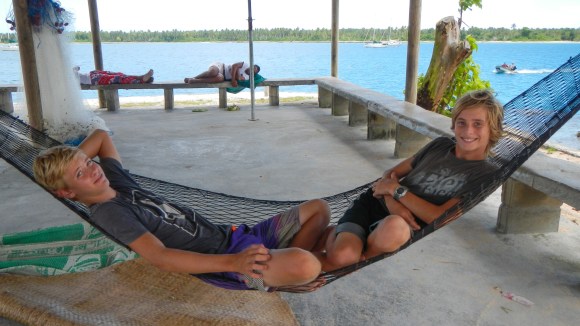
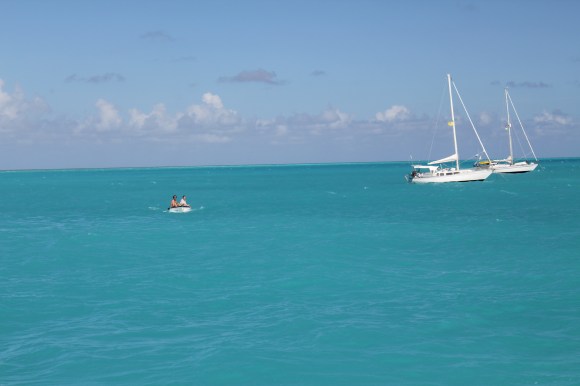
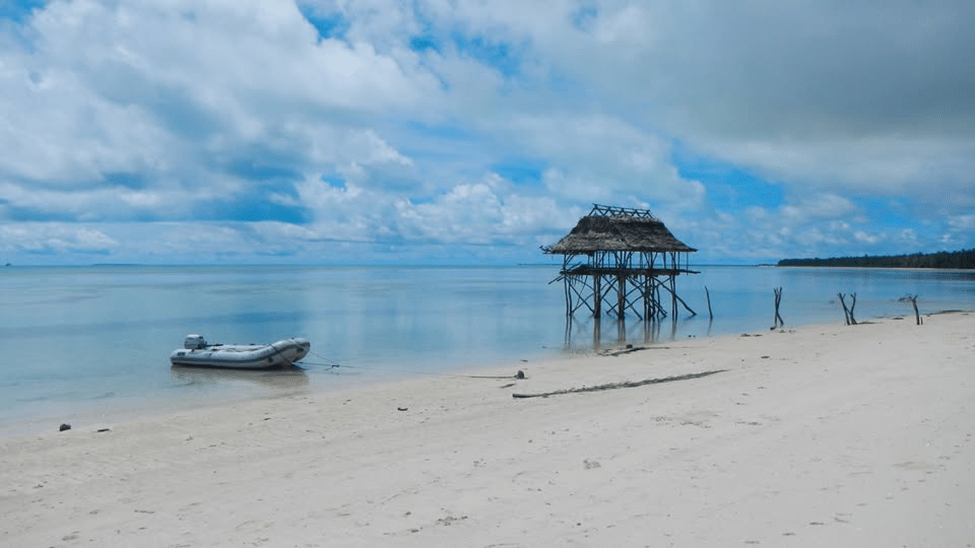
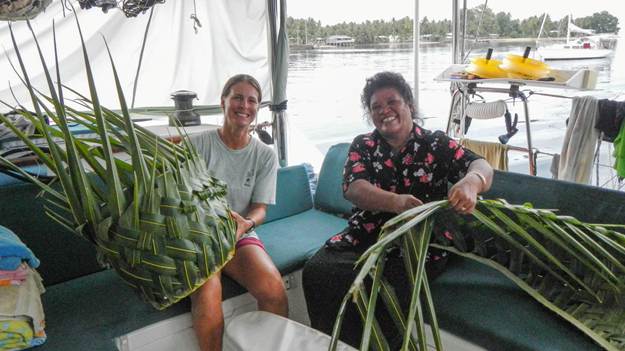
Our favorite anchorage in Fulaga was at “The Sandspit,” aka “Kid Boat Corner” and the only downside was that it was far from the pass, so it was quite a dinghy ride for the spear fishermen. However, for the rest of the family it was a great spot. The anchorage had very good holding and it also had great protection, so it was a preferred place to be during periods of very strong trade winds. There is an absolutely gorgeous white sand beach that almost entirely disappears at high tide, however at other times it was the perfect place for me to go for a run or for the kids to play. Even with the disappearing beach, the kids were able to stake out a spot that stays dry, and that’s when construction of kid boat village began. They built huts out of tree branches and palm fronds, and they pitched several tents and lived there for the better part of four days. Brenden was the exception: he spent his days there, but he chose to sleep in his own bed on Exodus rather than on the beach because, well, he likes to sleep. Alex, on the other hand, I hardly saw for the whole 4 days. It seems like the kids only interacted with the parents when they needed to restock their food supply. They drank coconuts, cooked breadfruit on the fire, and even cooked most of their meals on the fire as well. One evening the parents joined the kids on the beach for a bonfire and a potluck dinner, but the kids made it very clear to us that is was their expectation that all the parents go home after sundown!

The Sandspit

There were twelve kids in total ranging from Age 13 (Alex and Ainara) down to age 5 (Nils). I loved watching Alex and Nils together. Nils was always sitting with Alex on his lap, and he was so excited that he got to sleep in a tent with Alex. They reminded me of a group of cousins where the oldest and youngest have a tendency to bond.

One day, Tim organized a beach scavenger hunt for the kids. He printed out a list of approximately 35 items for the kids to find or make, like “a live creature,” “a woven mat,” or “3 coconuts for drinking.” The kids broke up into two teams with boys against girls, and they all spent a couple of hours doing their best. Wow, what a great job they all did. There was a perfect palm frond dress (made by the girls) and a bow and arrow (made by the boys). There were hermit crabs and heart shaped sandcastles. Tim even conned them into cleaning up the beach a bit by putting “10 plastic items” on the list. All the parents were on hand with cameras and smiles while the judge gave rulings and the scores were computed. The girls eeked out a win by only 3 points in the end, and it turns out that being able to make a woven beer cozy was the difference. Later, when we were all back on our boats, the girls from Lumbaz radioed and gave Tim an exceptional lyrical thank you for organizing the game for them. It was very sweet. Then, a little later, Hans, the dad from Nautilus, in a bit of a parody, radioed and gave Tim another lyrical thank you for helping him to learn to spear fish. Both Alex and I had the same independent thought, “well, it could be worse, it could be the wind turbine song!” (For those that don’t know or don’t remember, Exodus is only powered by solar, but in addition to solar, Lady Carolina also has two wind turbines. In a fit of mad creativity or peraps a rum stupor, Steve once sang us an ode to his wind turbines over VHF, and unfortunately, it’s a tune that is hard to forget!)

Boys against girls scavenger hunt

On another day the parents organized spear fishing and snorkeling in the pass, but the kids opted to stay in their village on the beach. Since all the parents would be in the water and out of radio contact, I suggested maybe we hand a few safety rules down to the kids while we’re gone. We decided to tell them, “No climbing coconut trees,” and “No machetes.” There, that’ll keep them safe, right? When we got back and asked them what they did all day, it turns out they had a sparring tournament with long sticks. Apparently, Gigi won, and only a few cuts and bruises were had by all. I guess it wasn’t enough to say no climbing trees and no machetes, we forgot to tell them not to hit each other with large, sharp objects. Priceless!

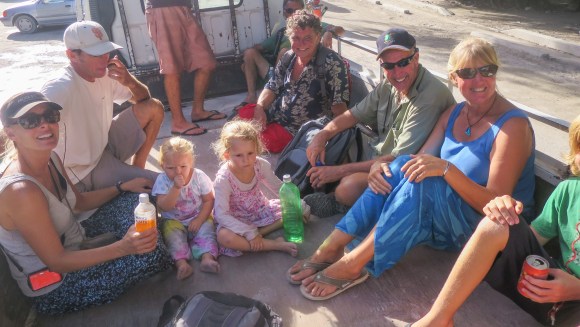
One of the best days at the sandspit anchorage was when we had a big picnic with people from the village. Two of the boats that were anchored near the village, including our friends on Lumbaz, ferried about 30 people from the village over to the beach near us. They put kasava in a lovo (underground oven), fished, caught crabs, dove for clams, made a table out and plates out of palm leaves, made coconut milk, and basically made sure that all of us yachties had a great time. I tried everything, even the raw clams and the crab guts, and they even seemed to like my pasta salad.

The beach picnic

We anchored four different places in Fulaga including near the pass and near the village, and Kid Boat Corner was by far our favorite.