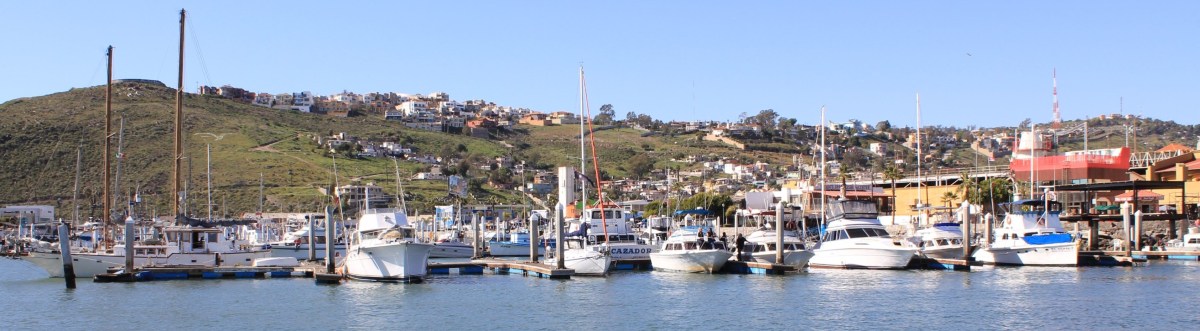
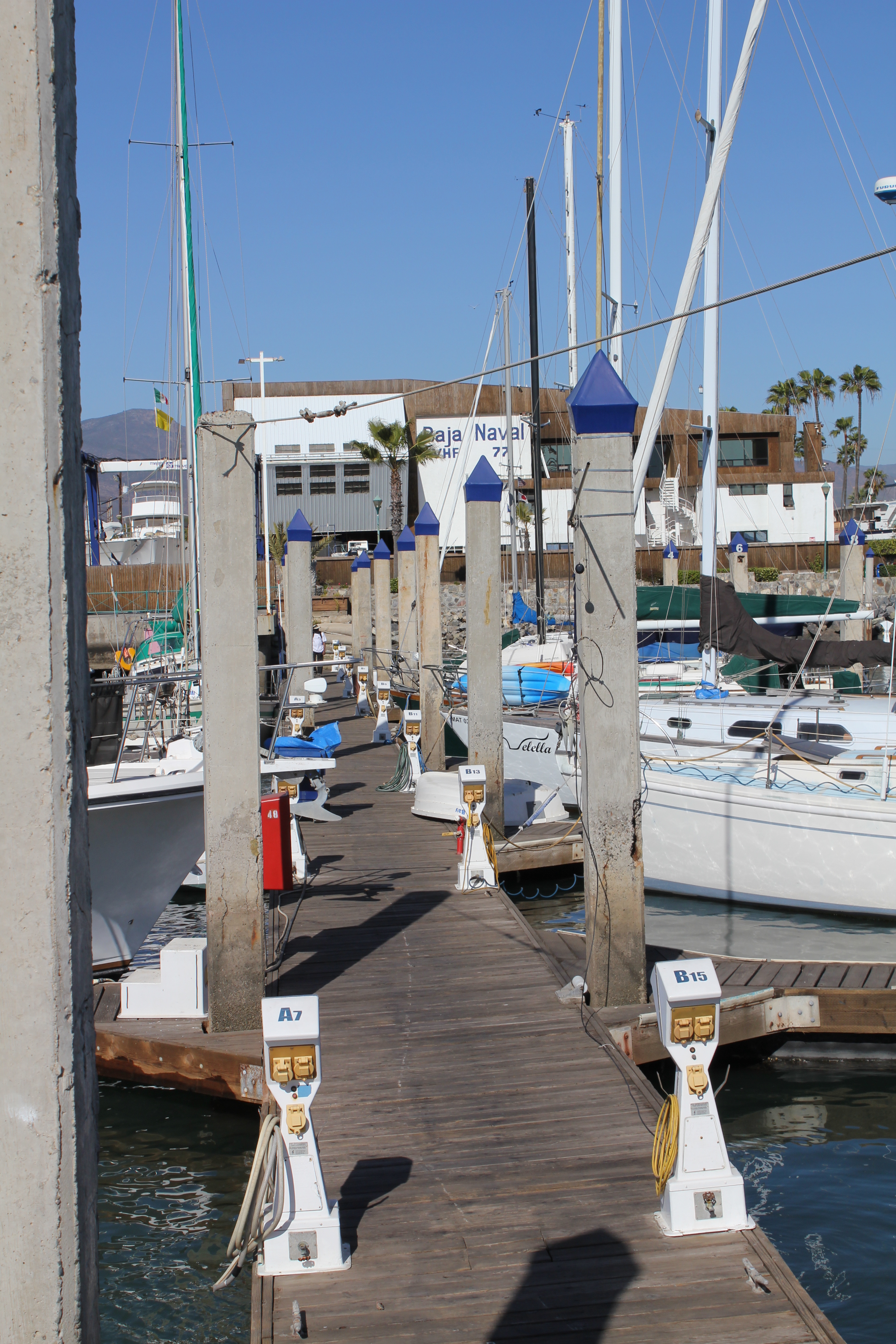
Our visit to Ensenada was brief. When we arrived in the harbor it seemed like a ghost town, and we had no idea where to dock the boat so we could clear in. The Harbor Master, Rojelio, at Baja Naval helped us out. We cleared in, had lunch on the boat, then headed out. There is no anchoring allowed there, and we were pretty done with Marina life for awhile.
Logbook – March 1, 2013 (San Diego to Ensenada to Turtle Bay)
Passage Log Highlights
0120 Leave US, Enter MX
0606 Listened to Amigo net (SSB)
1130 Arrive Ensenada
1600 Depart Ensenada
Edit: Not sure how I possibly “listened” to the Amigo Net, because it took us a good while to hunt down all of the SSB radio noise sources on the boat to actually be able to listen to any of the cruising nets.
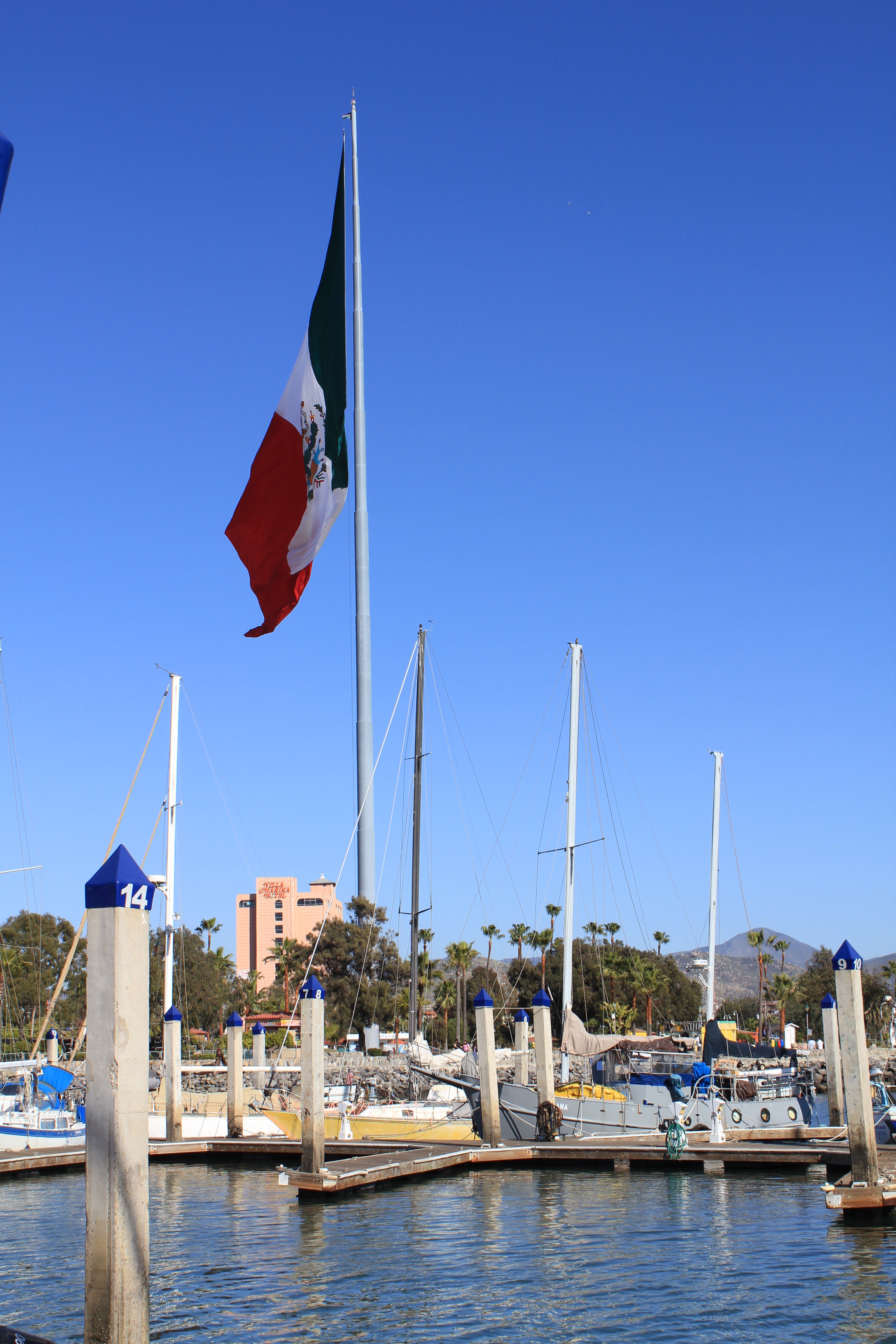
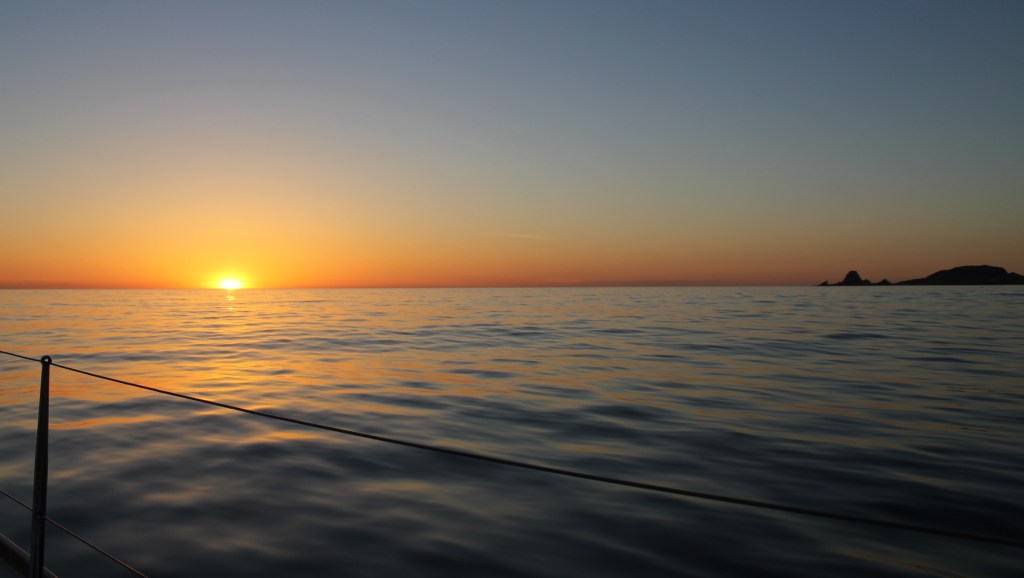
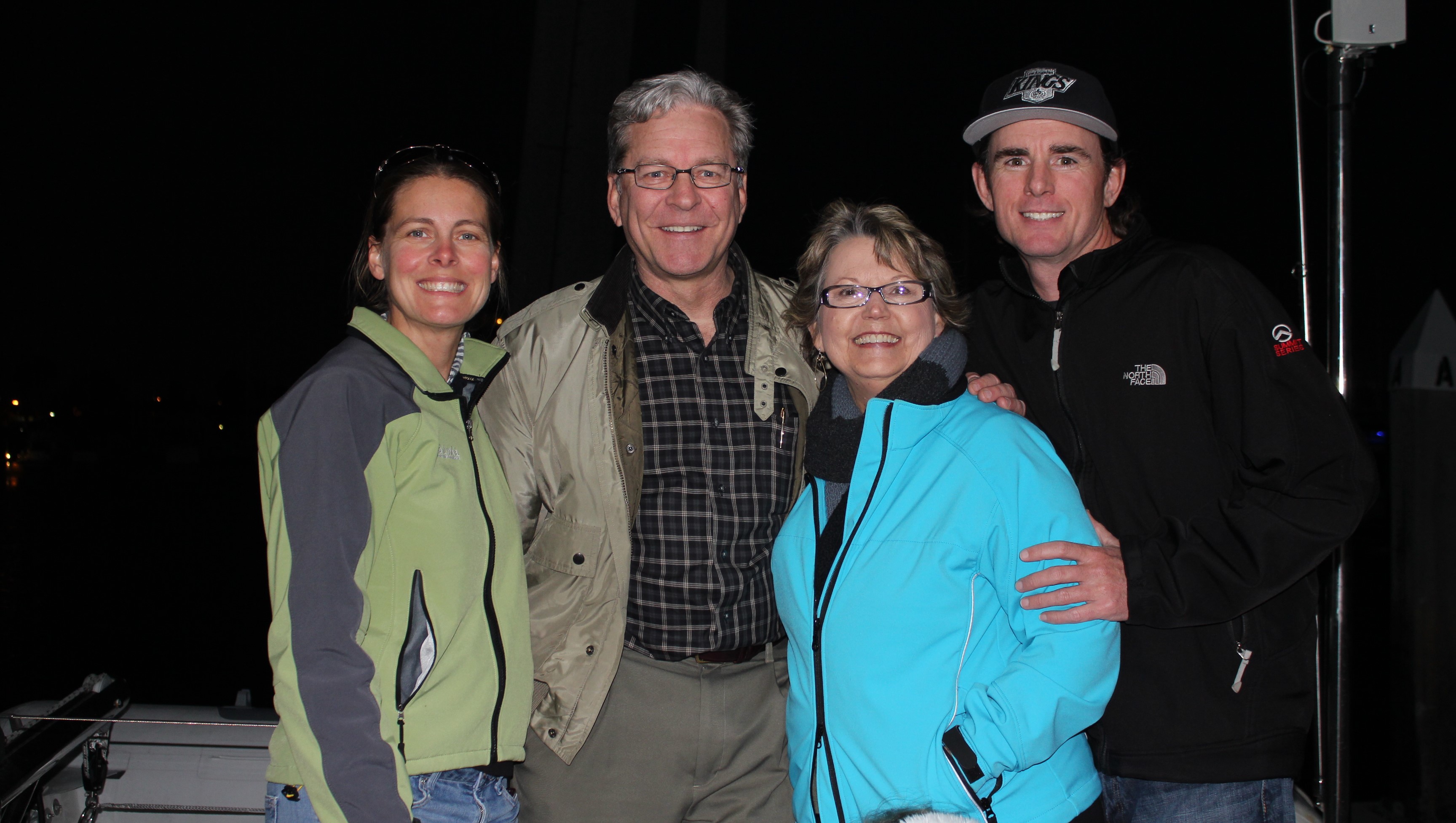
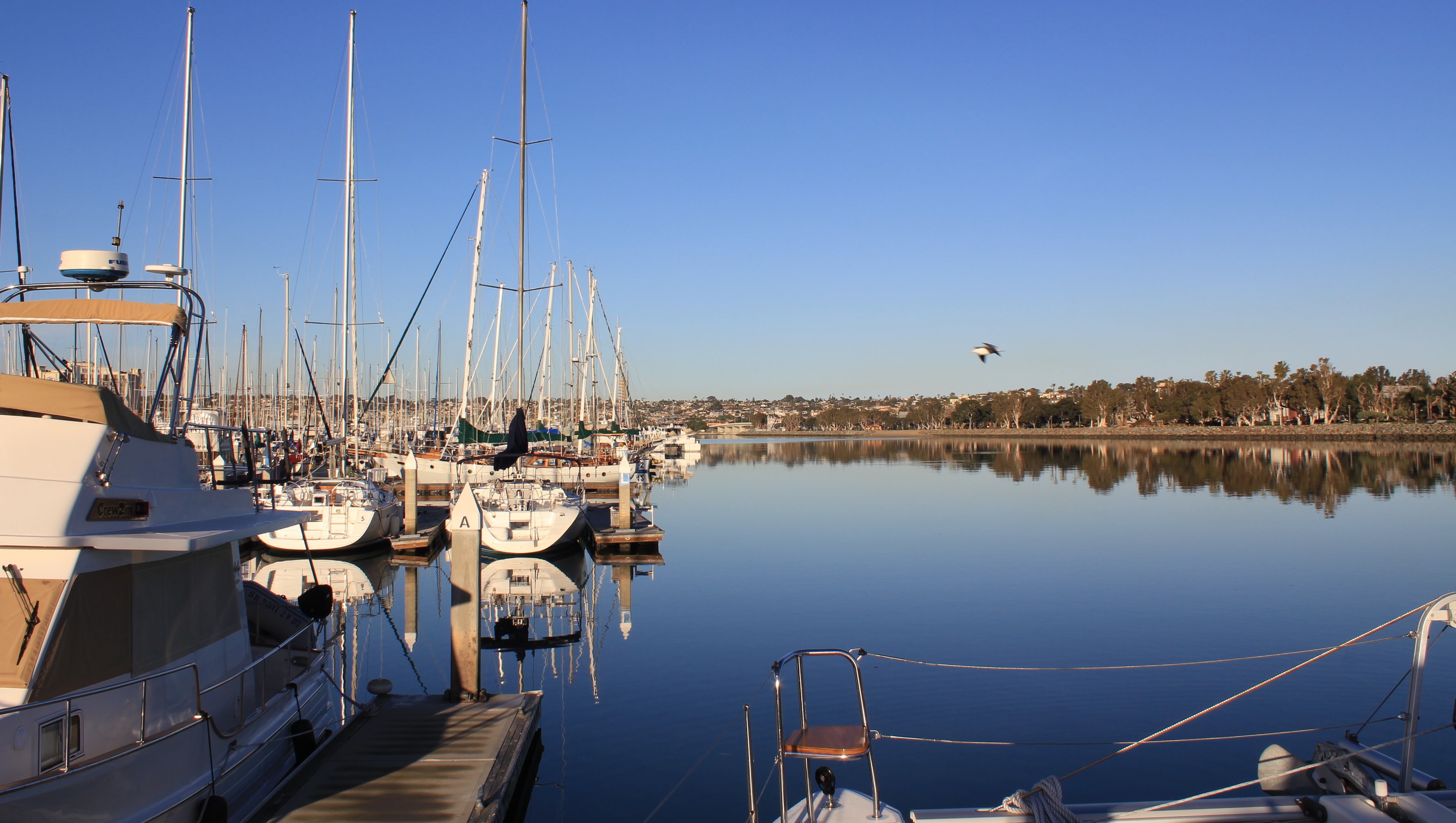
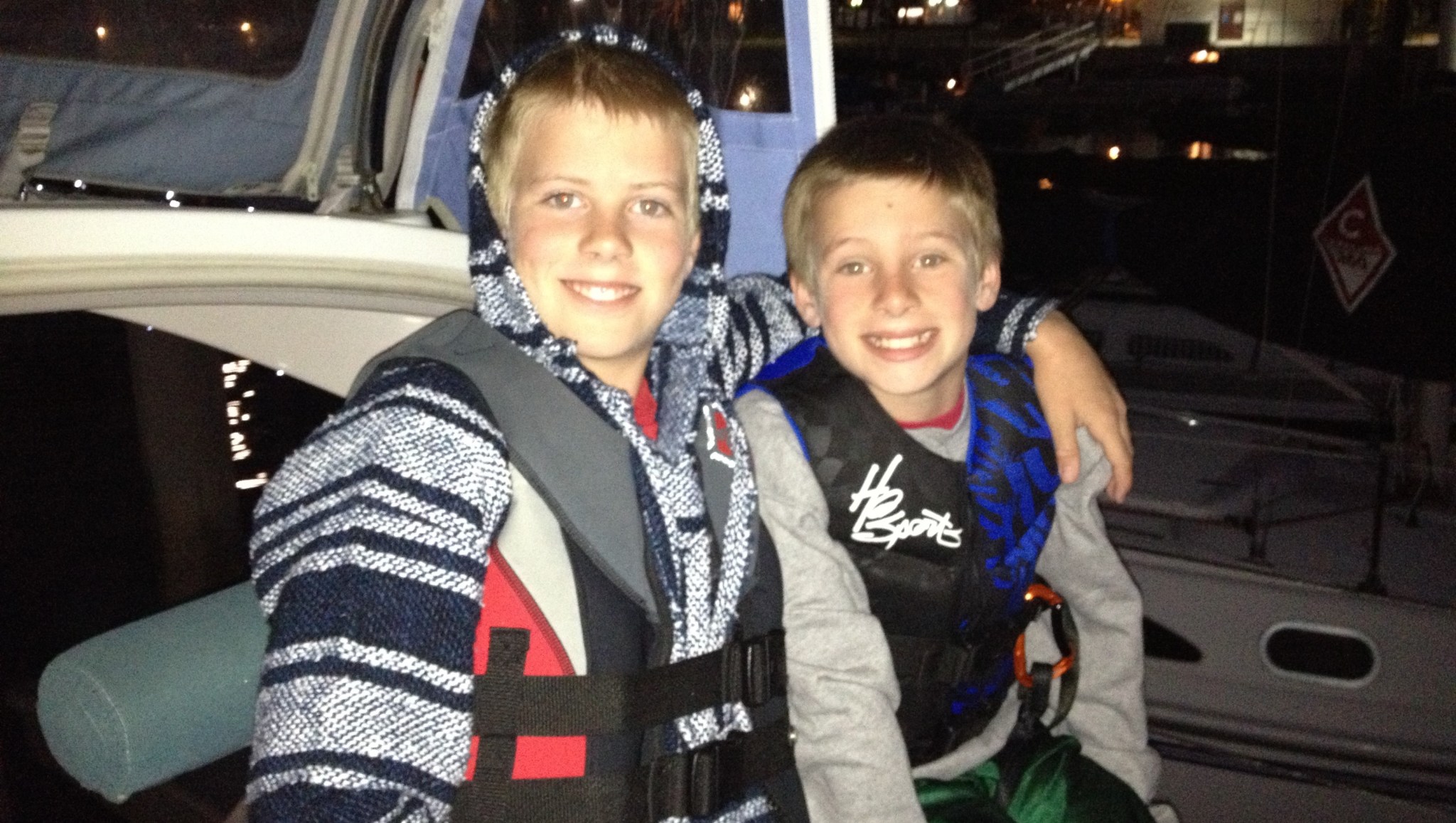
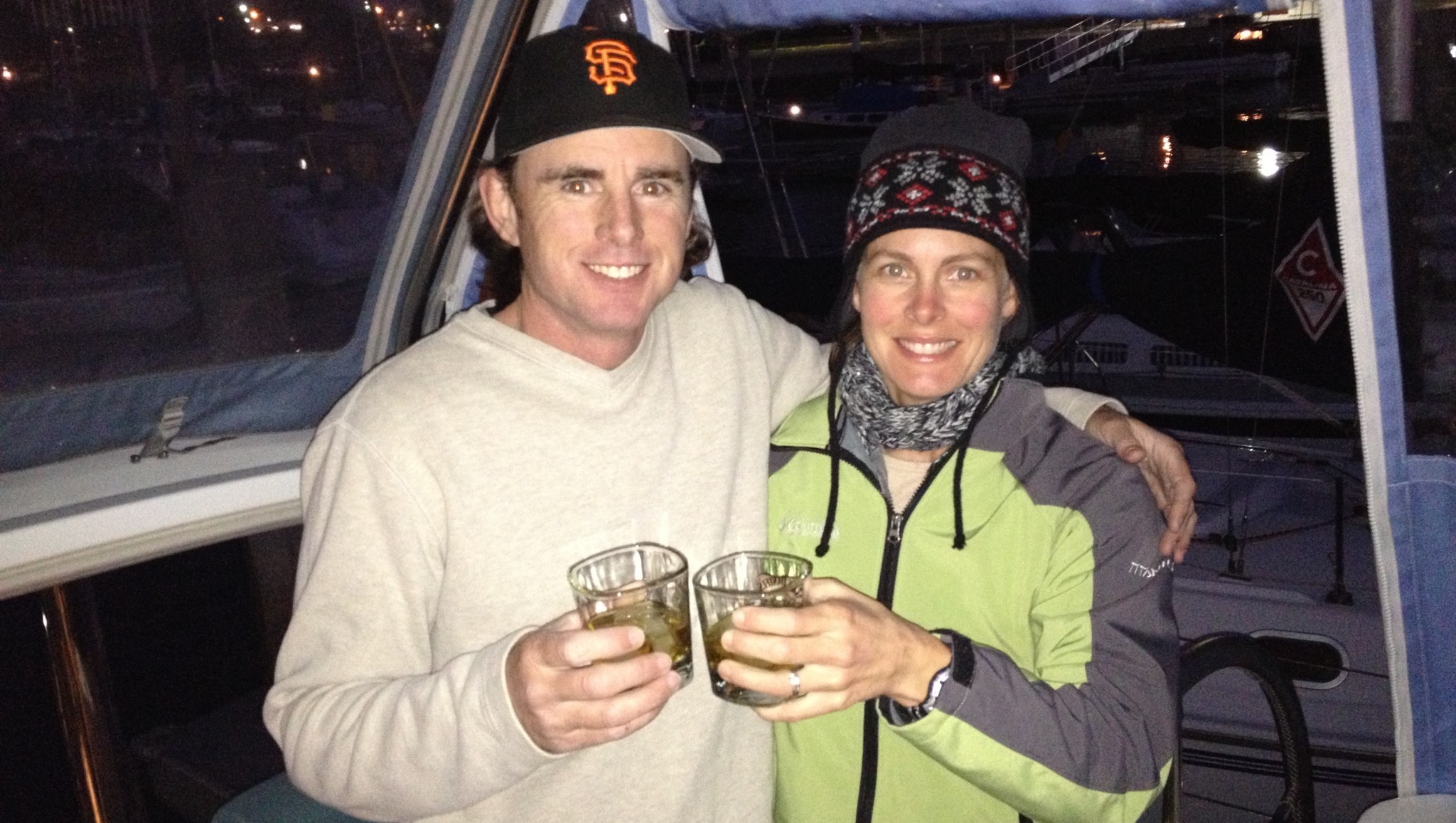
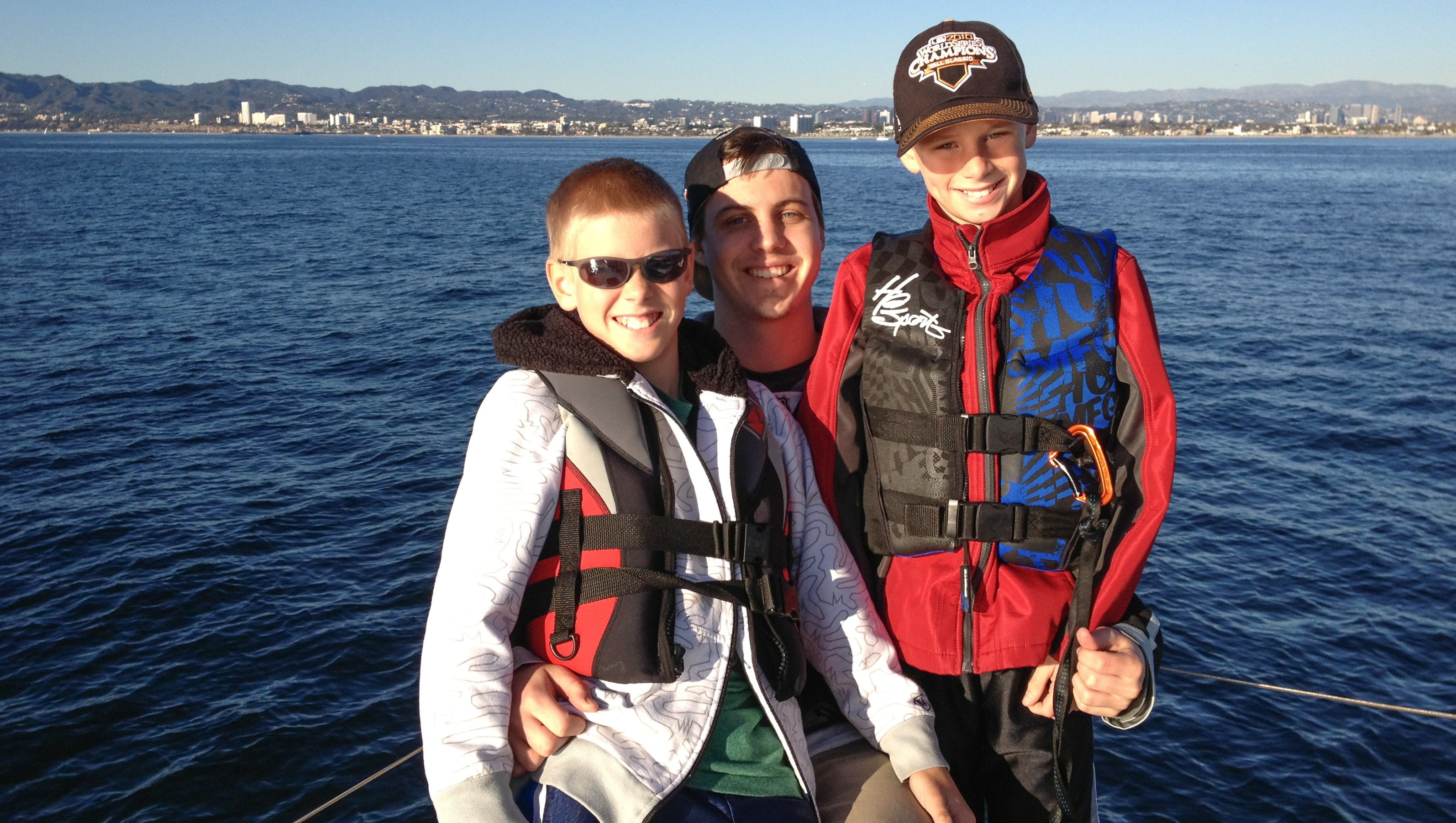
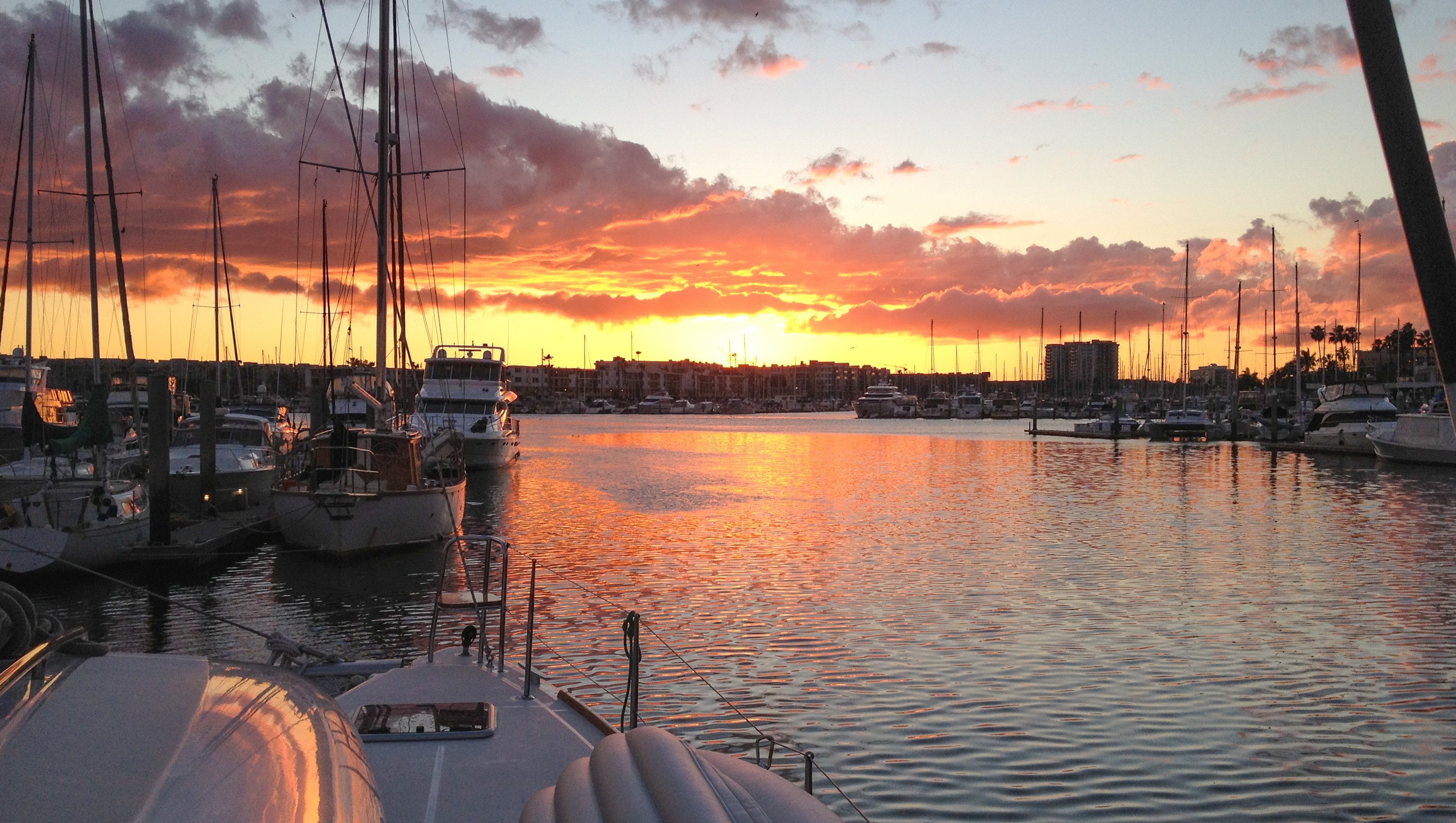
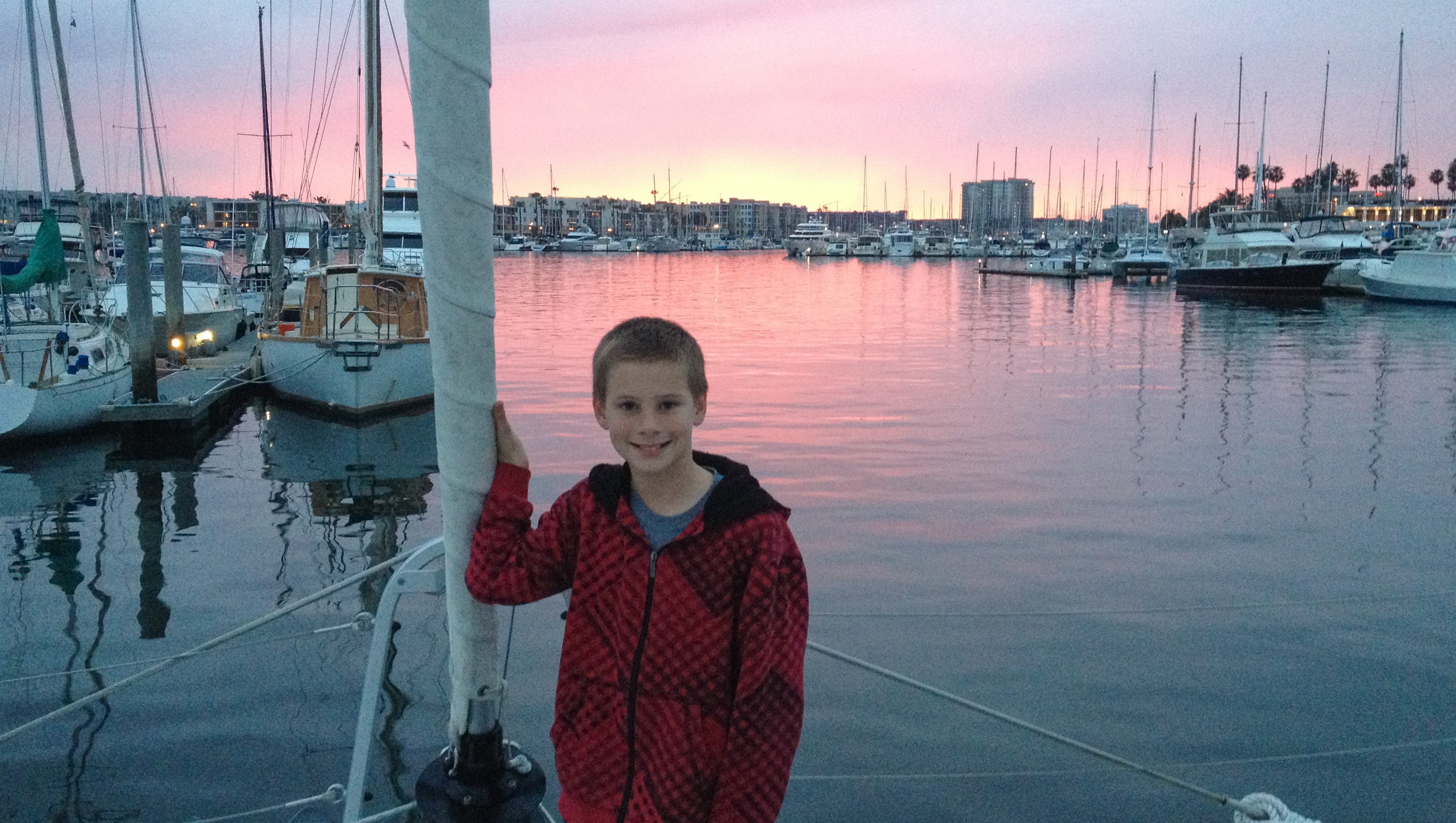
We departed San Diego at night at 23:00 but the harbor lighting made it easy to navigate. We arrived at Ensenada the next morning at 11:30, just over a 12 hour passage.Cheers to a safe arrival! (I asked Brenden to take the picture, and my only instruction was don’t make the flag come out of my head.)The boys were pretty happy to arrive at our first foreign portThe dock at Baja Naval was pretty rustic, but it was a nice place to stop for a couple hours.No anchoring allowed in the Ensenada HarborThe docks at EnsenadaSunset after a beautiful day at sea after leaving Ensenada
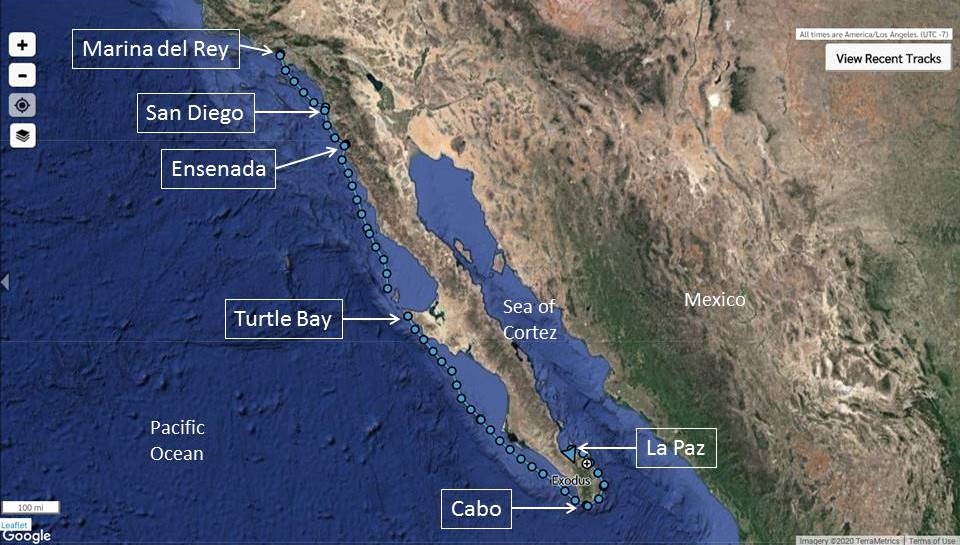
Our route so far has been reasonably paced down the Pacific Coast of Baja California and around the cape up into the Sea of Cortez.
We navigated out of San Diego at night on Thurs, Feb. 28 bound for Ensenada. We weren’t sure we would actually stay in Ensenada, but we wanted to clear into Mexico there so we would be able to stop if we felt like it along the way down the Baja coast. It took roughly 12 hours to get to Ensenada, so we arrived with plenty of daylight to make sure we could get through all of the formalities. The clearing in process was confusing at first. First of all, we didn’t know where we could park the boat, and we were getting no response when hailing the Port Captain on VHF 16. Finally, we enlisted the help of a local marina and after that, it went fairly smoothly. The Port Captain, Immigration, Customs, and the Bank are all in one office building, so there was no trekking back and forth across town required.
Our first foreign port
We ended up deciding not to stay in Ensenada, since there was no anchoring allowed in the harbor, and having just left home, we weren’t exactly ready to stay in another marina just yet. So, we left Ensenada after being there for all of about 4 and a half hours. Our next stop was Bahia Tortuga (Turtle Bay), and it took about 3 days to get there. This was longer than it took us during the Baja Ha Ha in October, mostly due to lack of wind after leaving Ensenada. This was the first time in a while that we weren’t in some kind of hurry, so we weren’t frustrated by just drifting along without much wind. And there were whales everywhere! You couldn’t look outside without seeing a spout of water or a fin or a fluke. We didn’t get much school done those first few days. We were just soaking it all in.
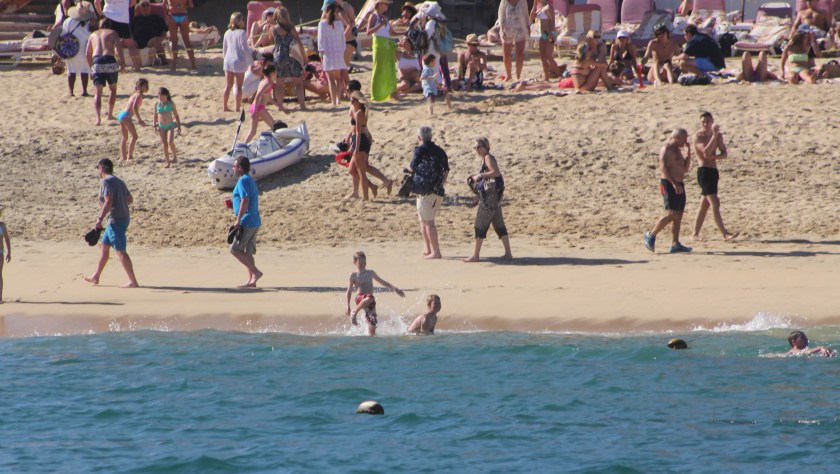
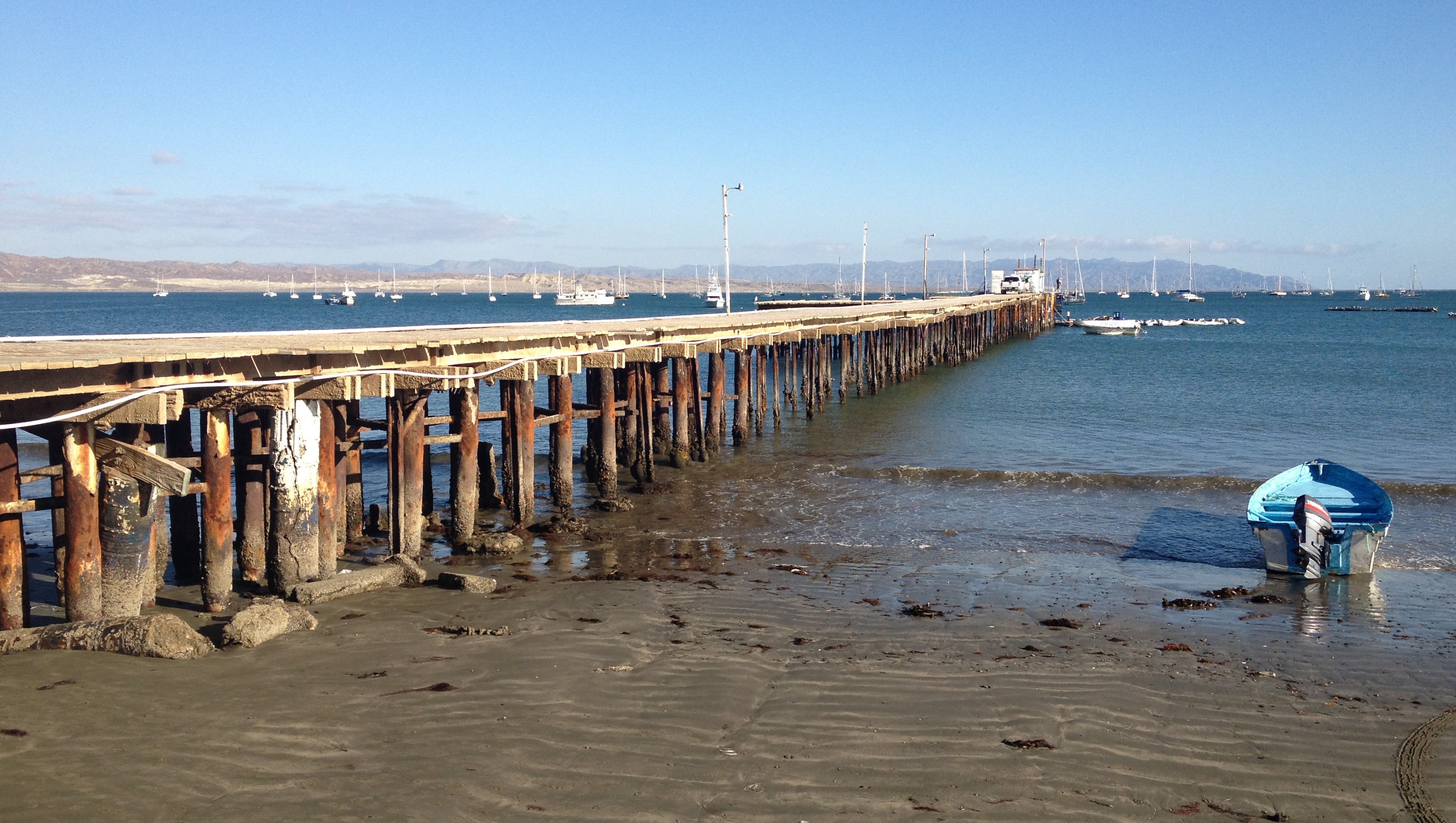
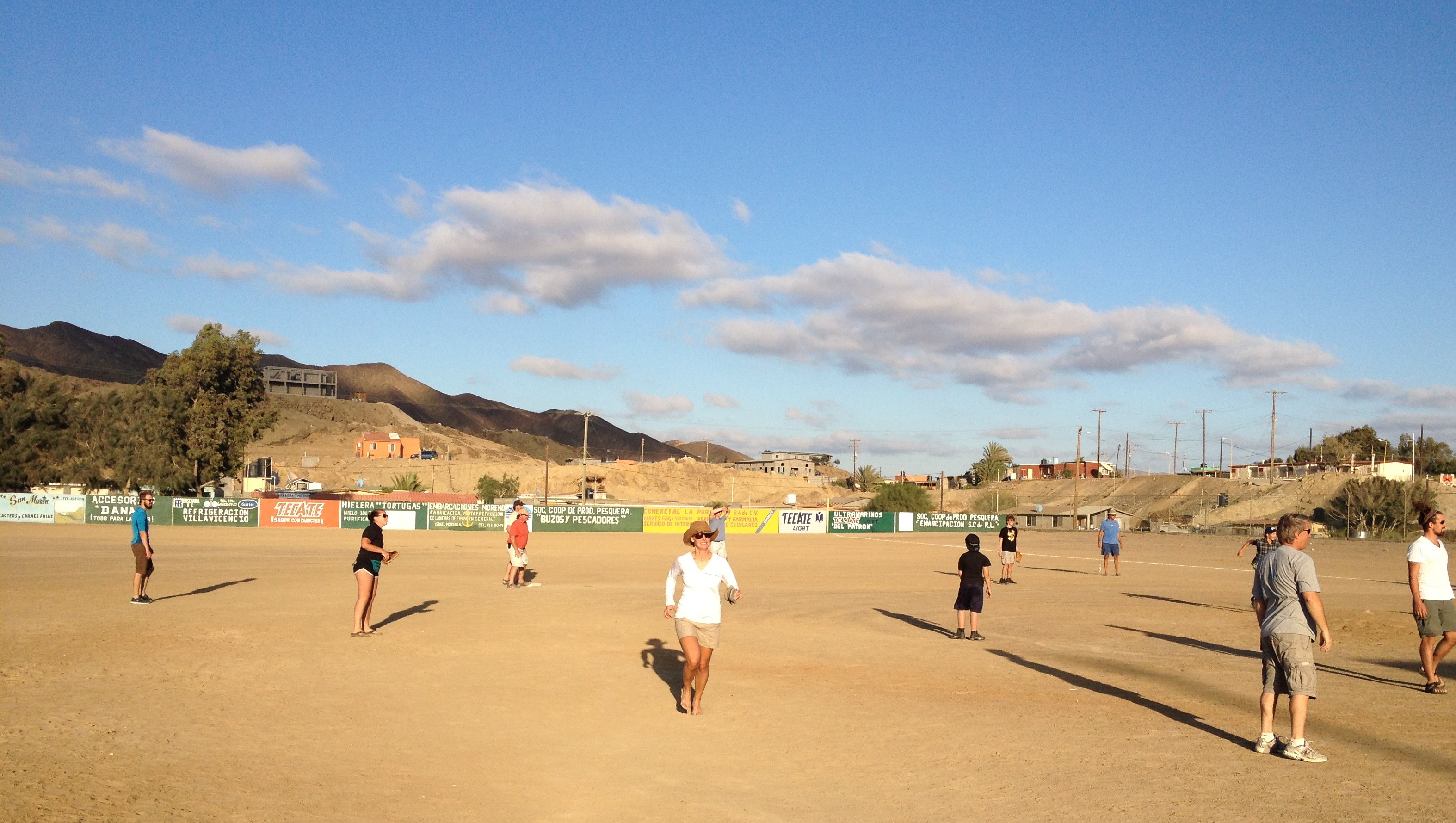
Turtle Bay is a small fishing town and we enjoyed relaxing at the anchorage. We were able to pick up fresh veggies and milk and we enlisted the help of some local boys just finishing baseball practice to help us find a restaurant, where Brenden had “the best bean and cheese burrito ever!” After three days in Turtle Bay, we left on Thursday afternoon, and we decided to go on to Cabo San Lucas without another stop along the way. We arrived in Cabo Sunday morning, March 10 after having strong winds behind us most of the way. Cabo was fun because it was familiar to me and Tim but new for Alex and Brenden. We anchored in the bay and we were close enough for the boys to kayak to the beach and play in the water while we stayed on the boat, so they enjoyed Cabo much more than Turtle Bay. Being a larger town, we were able to take care of laundry and some light provisioning, but after four days we were definitely ready to leave the spring break scene behind. We left on Thursday before sunrise, and from this point forward we were in new territory. Also, from this point forward we haven’t had any passages longer than half a day since the anchorages are so closely spaced. We have enjoyed moving slowly and exploring them.
The boys playing on the beach at Cabo
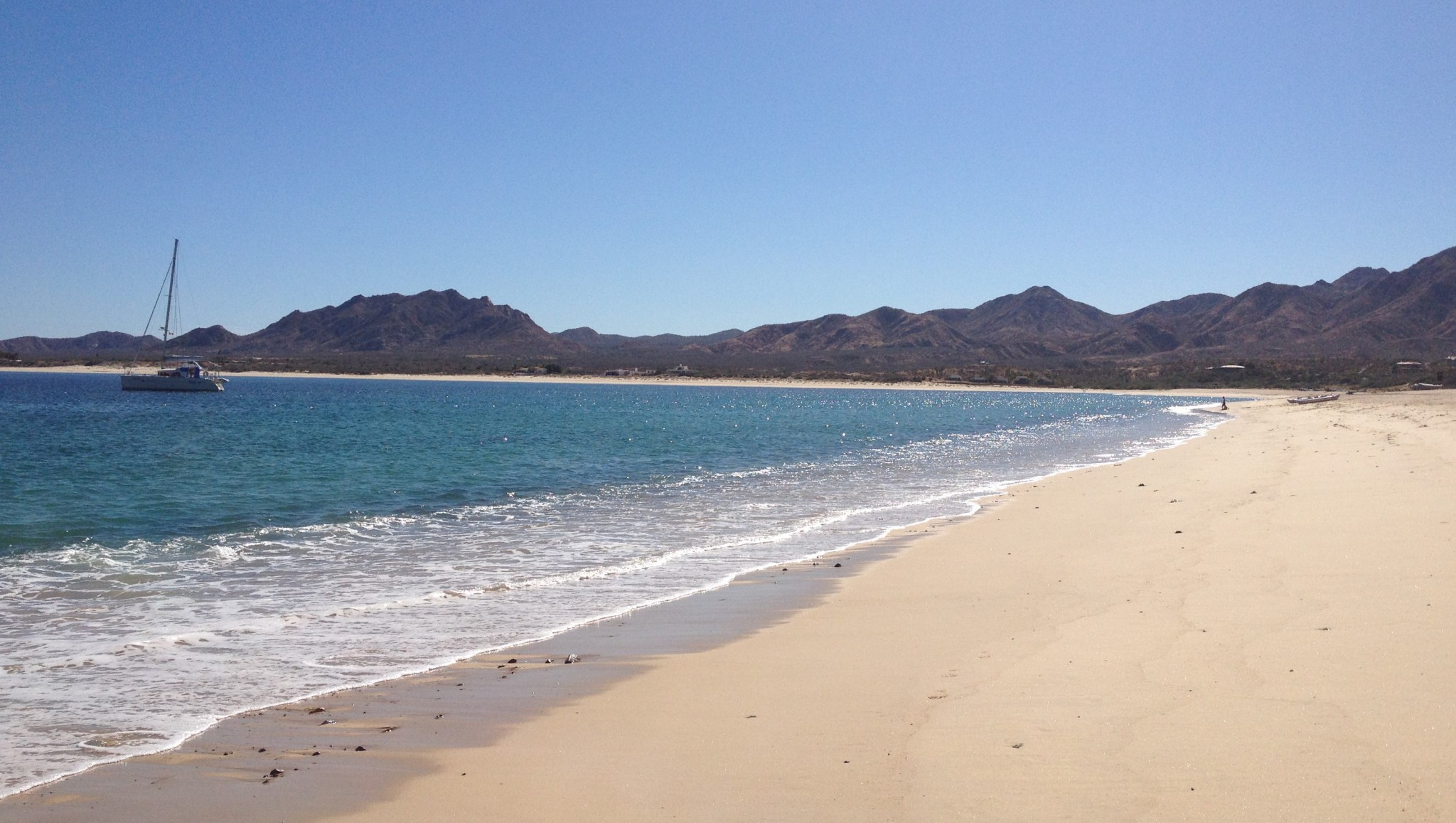
Our first stop around the tip of Baja was Bahia Los Frailes, where there was a long stretch of beach, excellent for barefoot running. Again, the boys were able to easily kayak to the beach and play in the sand and water, and there was also a campground there and other kids to play with. We also had our first cruisers “happy hour” with another cruising couple preparing to make the jump across the Pacific.
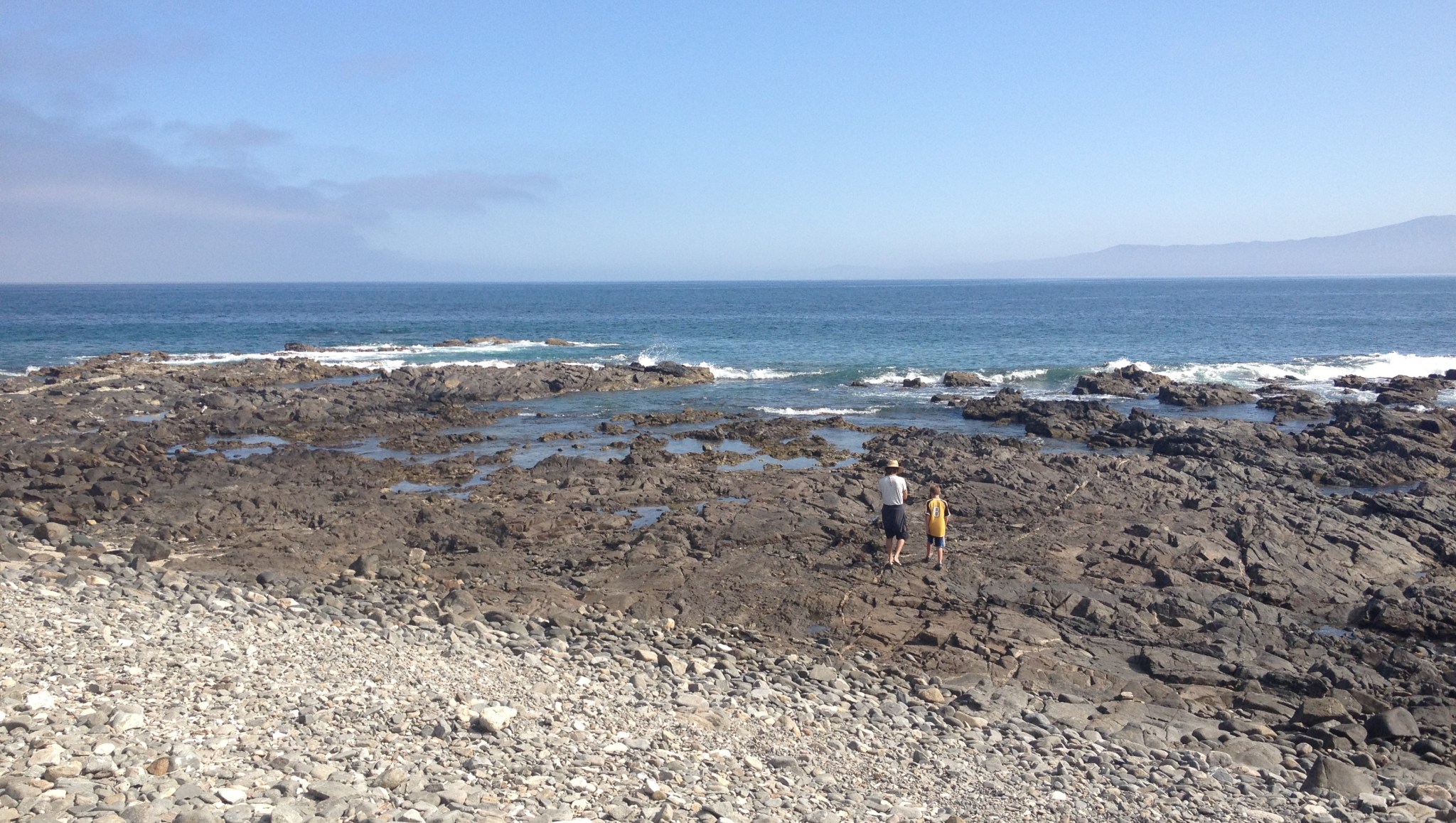
After a couple days, we departed at night so we would arrive at the next anchorage, Bahia de Los Muertos, around sunrise. There was no wind, so we motored the whole way, and I had the second watch, so I slowed down so we wouldn’t arrive while it was still dark. We only stayed there for one night because the beach wasn’t as nice for playing or running. The boys actually dumped the kayak trying to launch from the beach to get back to the boat. However, we did enjoy a nice, huge lunch at the restaurant there and a pleasant walk around some tide pools. It was also the first time we were able to get decent wifi from the boat so we were all like addicts getting our fix. I spent all evening uploading photos to Facebook.
Nice Running beach at FrailesThe Tide Pools at Los Muertos
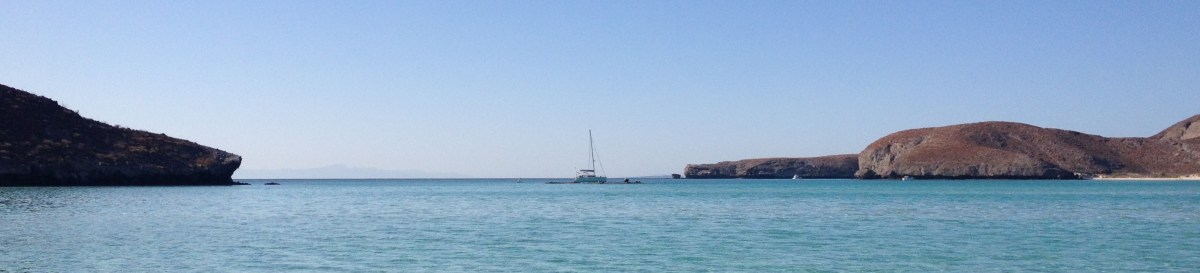
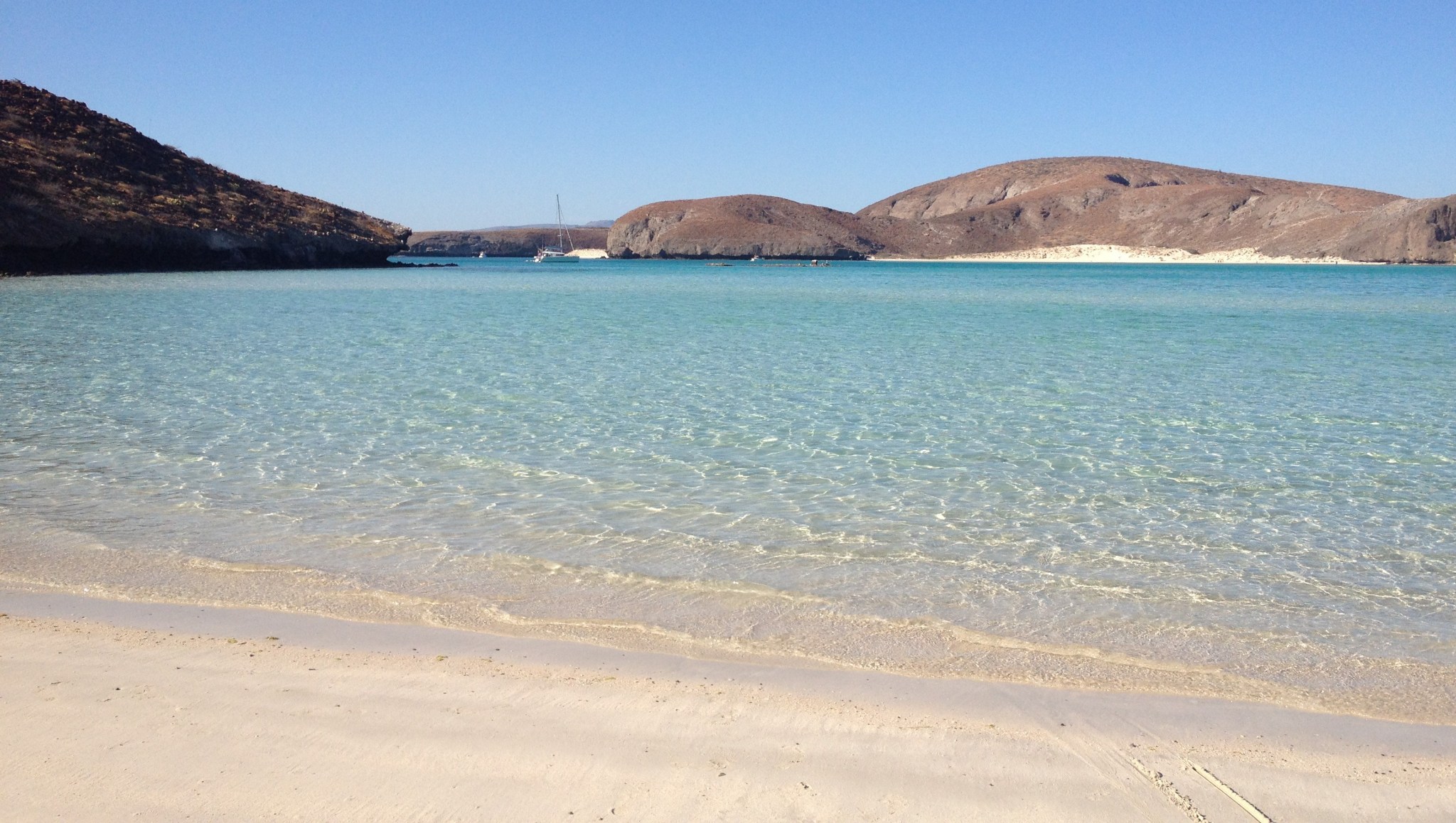
We raised anchor the next morning and passed through the Cerralvo Channel and the San Lorenzo Channel. We didn’t go all the way to La Paz just yet but stopped at Puerto Balandra, and it was absolutely amazing. It was by far the most beautiful anchorage yet. There were several white sand beaches and shallow turquoise water stretching far offshore. We stayed several days, even though our first evening we had our initiation to the night time corumuel weather “feature” of the south sea. There was great shallow snorkeling and I even managed to get another run in on one of the longer beaches in the bay. We were sad to be leaving a nice anchorage to rejoin civilization, but we needed to move on to La Paz and take care of several things.
Turquoise water and white sand beaches of Balandra
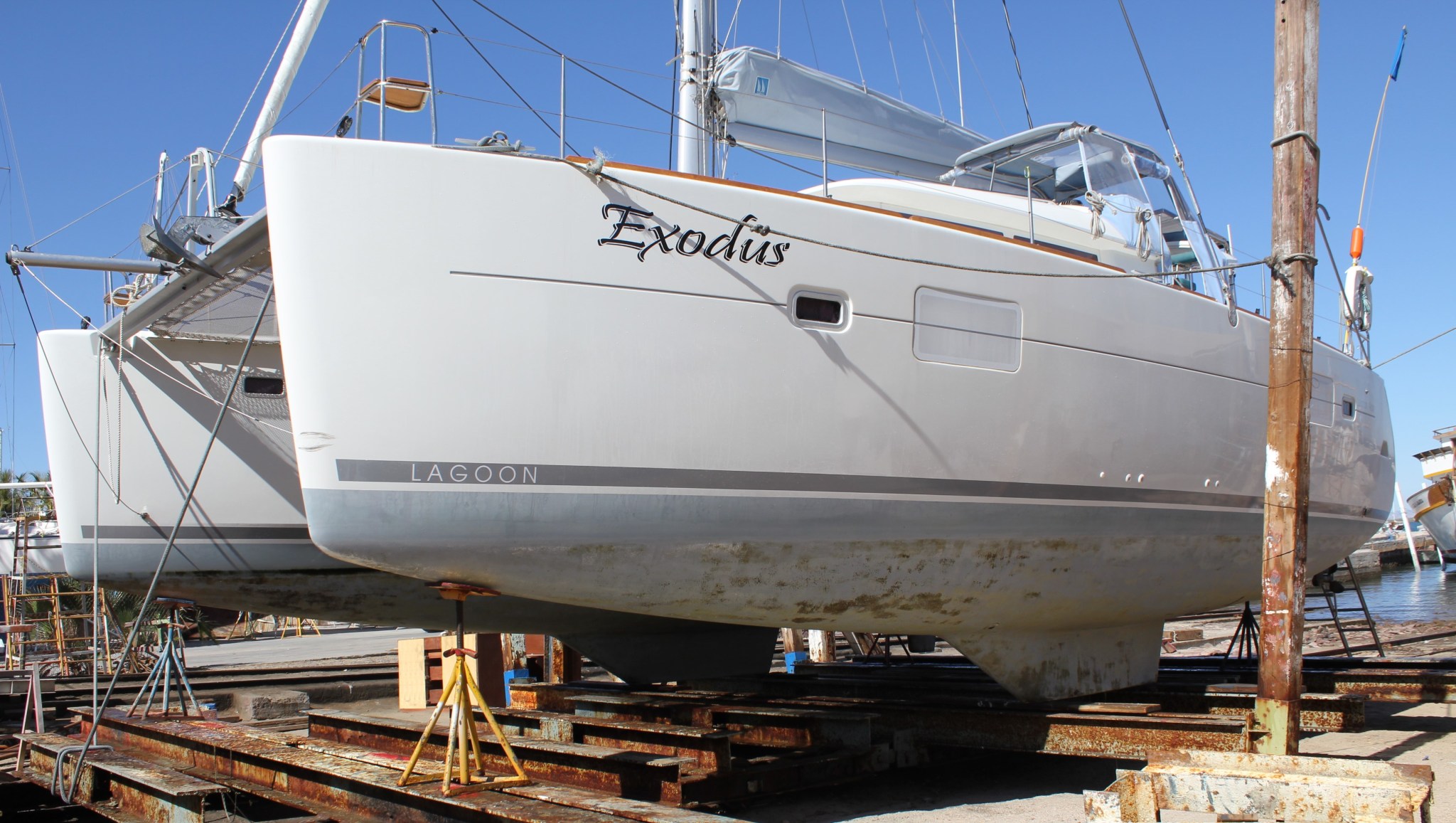
The channel leading into La Paz is narrow, so it creates a relatively strong current as the tides go in and out. A very large cruising community exists in La Paz, and we plugged in immediately joining the morning VHF cruisers net our first morning there, and we were able to easily find out which boatyards had facilities that could haul out a boat as wide as ours. We arrived in La Paz on a Thursday and we were on the rails and Abaroa Boat Yard on Saturday morning. We were living “on the hard” until Wednesday, and by then we were all ready to be back in the water. Tim worked around the clock on boat projects and the boys and I continued our school routine and made several trips to the store for provisioning.
On the hard in La Paz
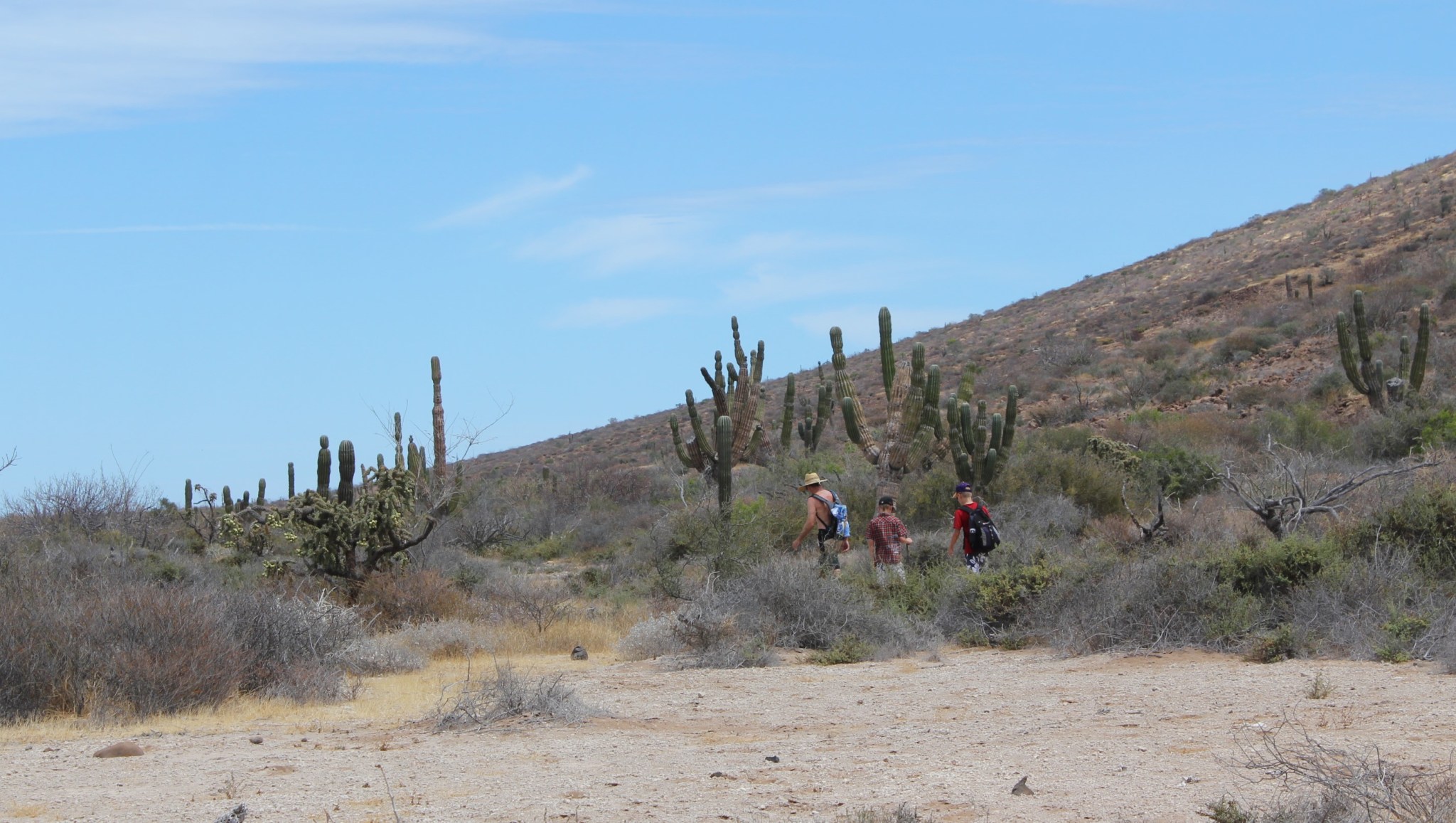
After the haulout we stayed one night in the anchorage and then couldn’t get out of La Paz fast enough. We headed to Isla Espiritu Santo, an island to the north of La Paz, where there is beautiful anchorage after beautiful anchorage. We decided to start at the bottom and work our way up. So, we stayed the weekend at Bahia San Gabriel. Our first day there the Ranger boat came to ask us for our permits since all of the islands in the Sea of Cortez are part of the national park system. We said we would like to purchase them, but they told us we had to get them in La Paz, but since the office is closed they said it was OK for us to stay until Monday or Tuesday. At Bahia San Gabriel we went on an absolutely miserable hike across the island. The beach on the other side was very nice, but nobody thought it was worth the desert wasteland we hiked across to get there. I’m bummed it was that bad because now I don’t think the boys will voluntarily go on any more hikes with me.
Hiking through a desert wasteland
On Monday we made a day trip back to La Paz to get permits, which ended up taking me and Brenden several hours and a long taxi ride all over town. This was my first real “no one speaks English and I don’t speak Spanish” moment, but we got through it with the phrasebook and Google translate on my phone. I purchased annual permits, since the price payoff point was only about 5-6 days, and that means we can stop at any of the islands without having to worry about it again. We arrived back at Isla Espiritu Santo at night so we went back to the familiar spot we had previously anchored, and we ended up having our worst night yet at anchor. Bahia San Gabriel is a South West facing anchorage, and the wind kicked up from that direction so we had no protection from wind or swell. It was almost worse than being underway. We moved around the corner the next morning to the bottom lobe of Puerto Ballena. It had a little more protection, but the wind died later that morning, so it didn’t really matter at that point. We stayed just one night and then scooted up to Ensenada del Candalero. Here there are camps on the beach out of where they run kayak tours around the island.
The next stop was Caleta Partida, which was our favorite anchorage on the island. It is actually an anchorage wedged between Isla Espiritu Santo and Isla Partida, and there is a very shallow strip of water between the islands. It offered little wind protection, in fact in North winds they kind of funneled through the landforms of the two islands. However, it offered plenty of swell protection, so we had comfortable nights at anchor. We took a dinghy trip between the islands and around to the other side to visit some sea caves the guide book talked about. The water visibility was amazing and we all had a great time snorkeling. On the way back it was pretty much low tide so we had to walk the dinghy through the islands since the outboard would have dragged on the sand.
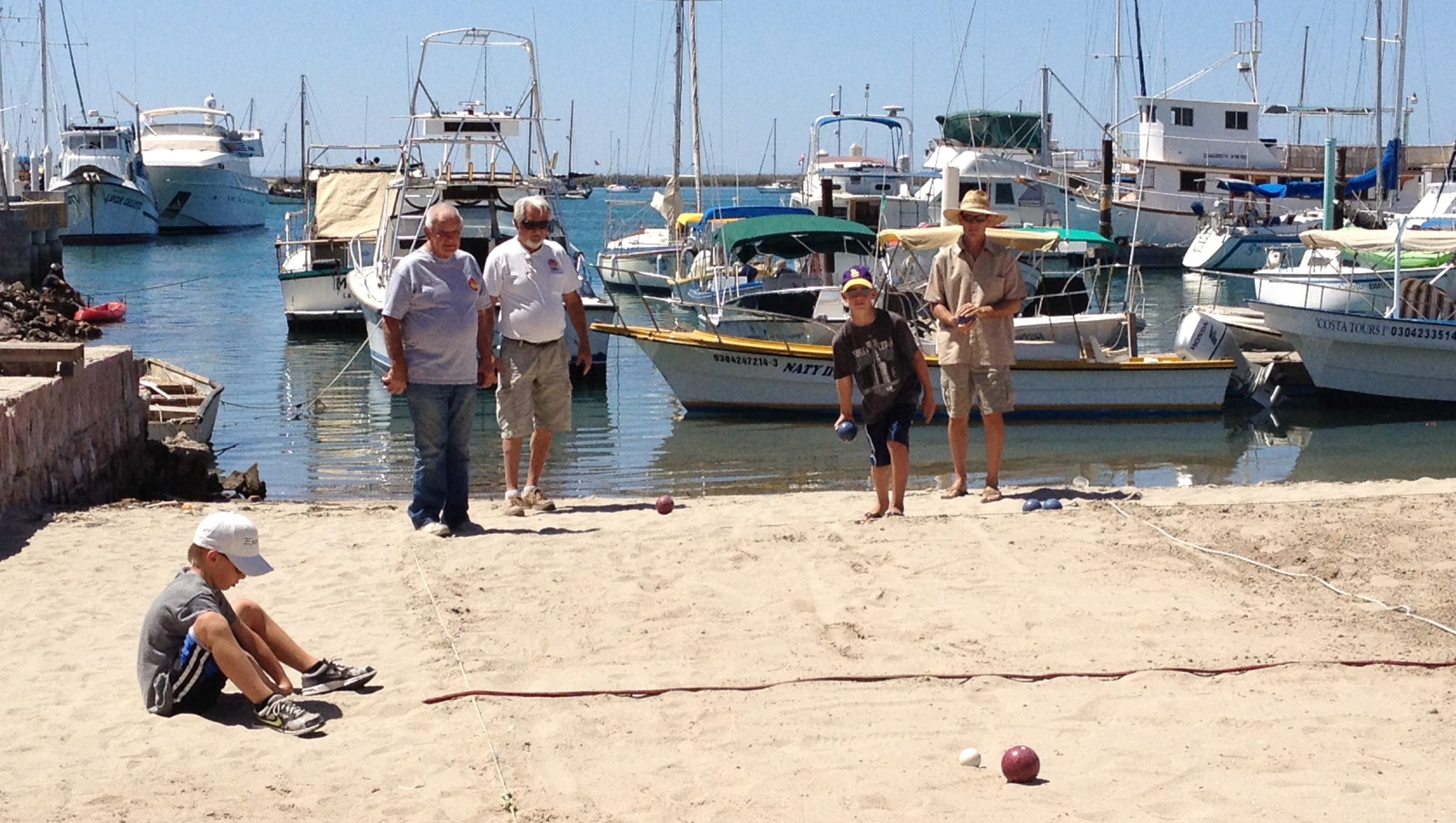
After a few nights, we decided we needed to head back to La Paz. We were at a crossroads regarding where we should head for the summer (north or south) and we needed internet access to do some research. By that point, we had also decided we really did need a bigger anchor, so we thought La Paz would be as good a place as any to pick that up. We had good timing because we were here for “Bay Fest” which is a little weekend festival put on by the local cruising club that includes a sailboat race in Bahia de La Paz, a few seminars (including how to prep your boat for a hurricane and how to use a pressure cooker), and lots of fun and games, including Bocce ball and backward kayak races.
Tim and Alex took 2nd place in the Bocce ball tournament
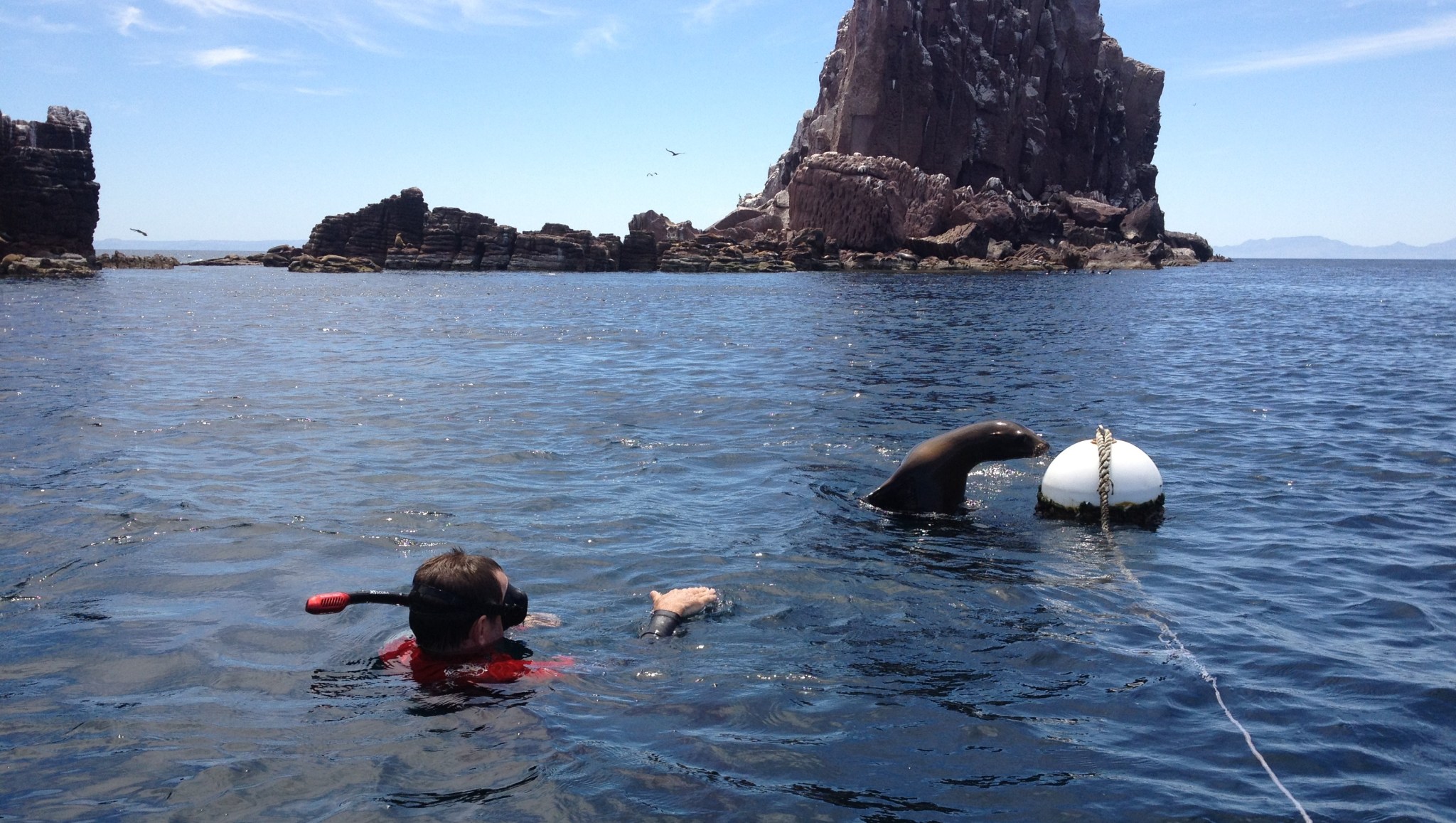
Although our time back in La Paz has been fun, we are very ready to leave. It’s been over 2 weeks since we ordered the anchor so we did make one more trip out to Isla Partida and visited Bahia Grande, Ensenada el Embudo, and Los Islotes. At Los Islotes there is a natural sea lion rookery and they are very accustomed to humans so we were able to swim with them. A few were very playful and spent a lot of time diving with Tim and Alex. Brenden and I get cold too quickly so we are usually out of the water first, which means we watched most of the swimming with sea lions from the dinghy. Since returning to La Paz for the fourth time we have had the good fortune to meet several of “kid boats.” Up to this point, other kids have been very rare, so it’s been a welcome treat to have play dates (for kids) and happy hours (for parents). When we leave La Paz we will start a slow journey up into the Sea of Cortez.
Swimming with sea lions at Los IslotesFrom Marina del Rey to La Paz
Our stay in San Diego was hectic and way too short. We continued trying to pack everything into every nook and cranny of the boat and ran around running errands. Most importantly we got to spend time with family before heading south.
Logbook – Feb 24, 2013 (MDR to San Diego)
Passage Log Highlights
1758 Started engines
1826 Depart
1917 Both engines off, main and genoa, reefed the main earlier
Logbook – Feb 25, 2013 (MDR to San Diego)
Passage Log Highlights
0609 Moon set, sun about to rise
1430 Arrive, both engines off
Daily Notes
Whale sighting off SB stern
Alex & Dad yoga on deck
Edit: I have absolutely no memory of Alex ever doing yoga. These are the gems that live inside this logbook.
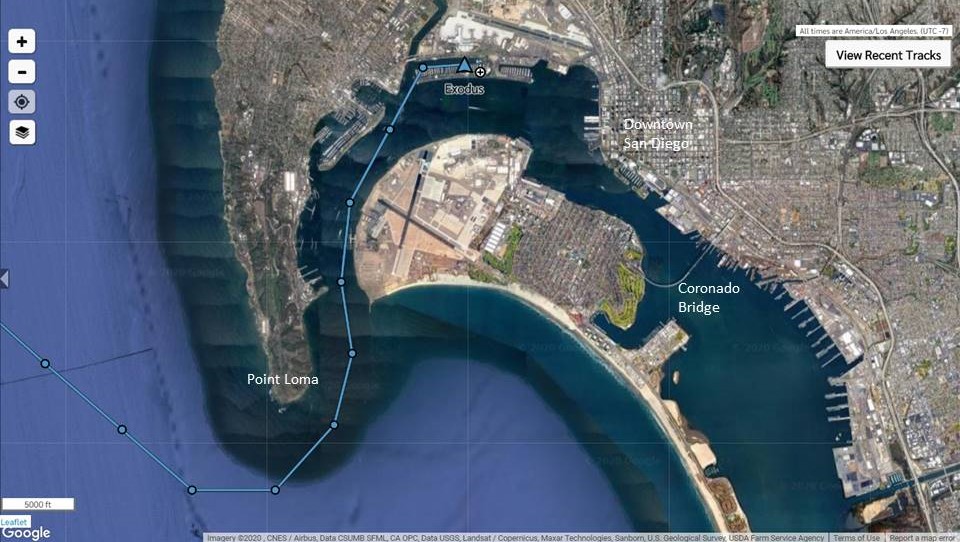
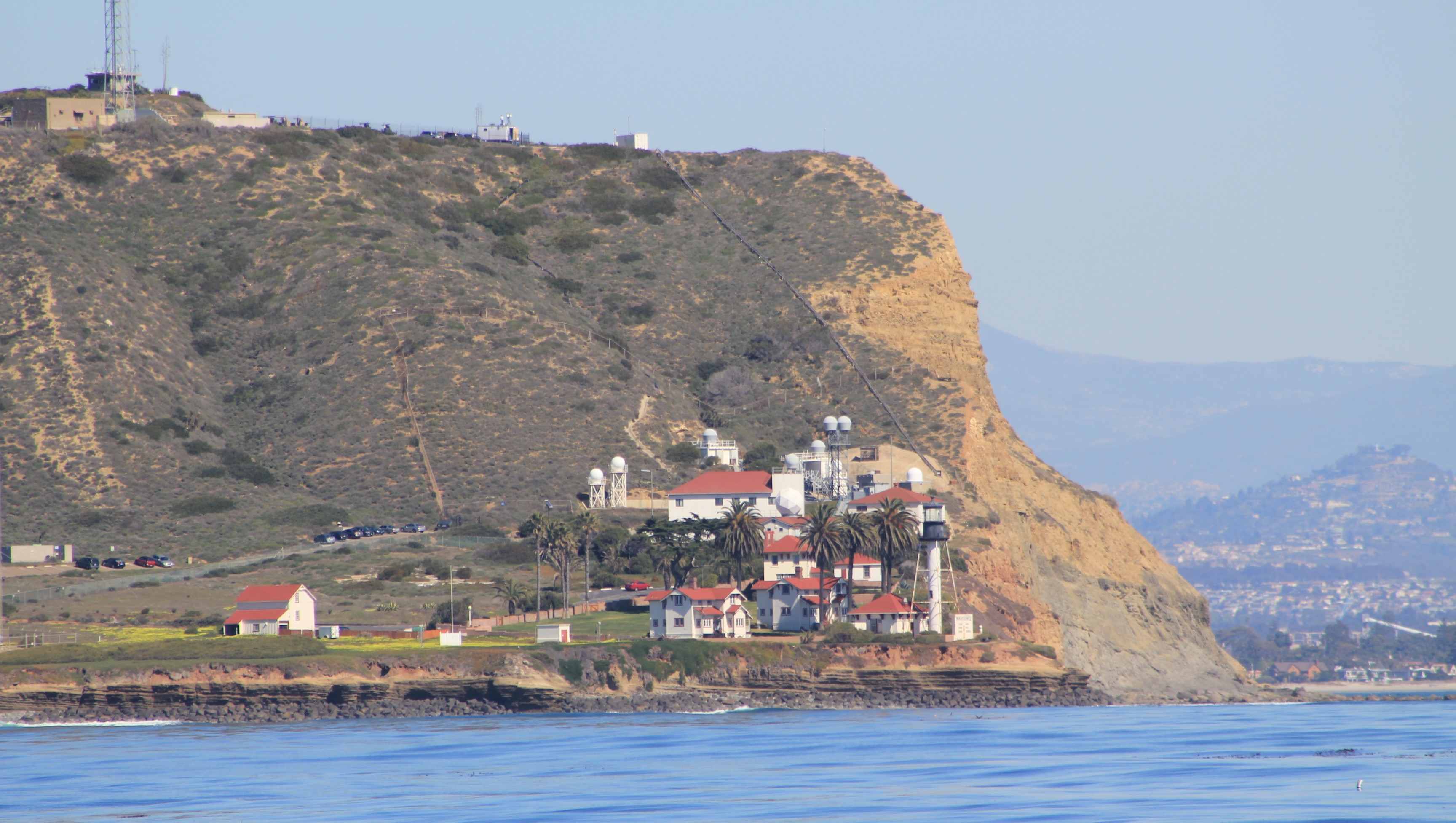
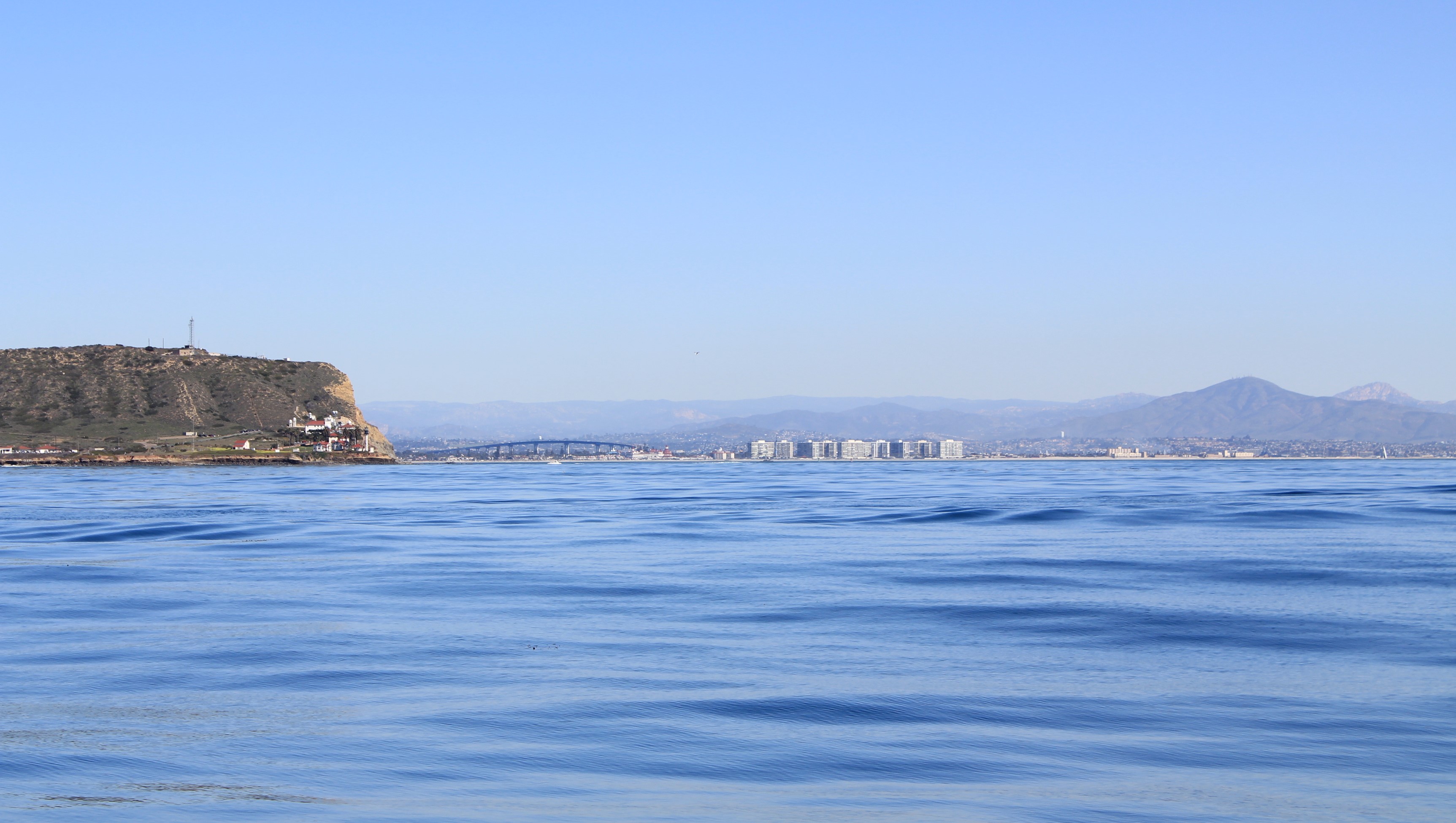
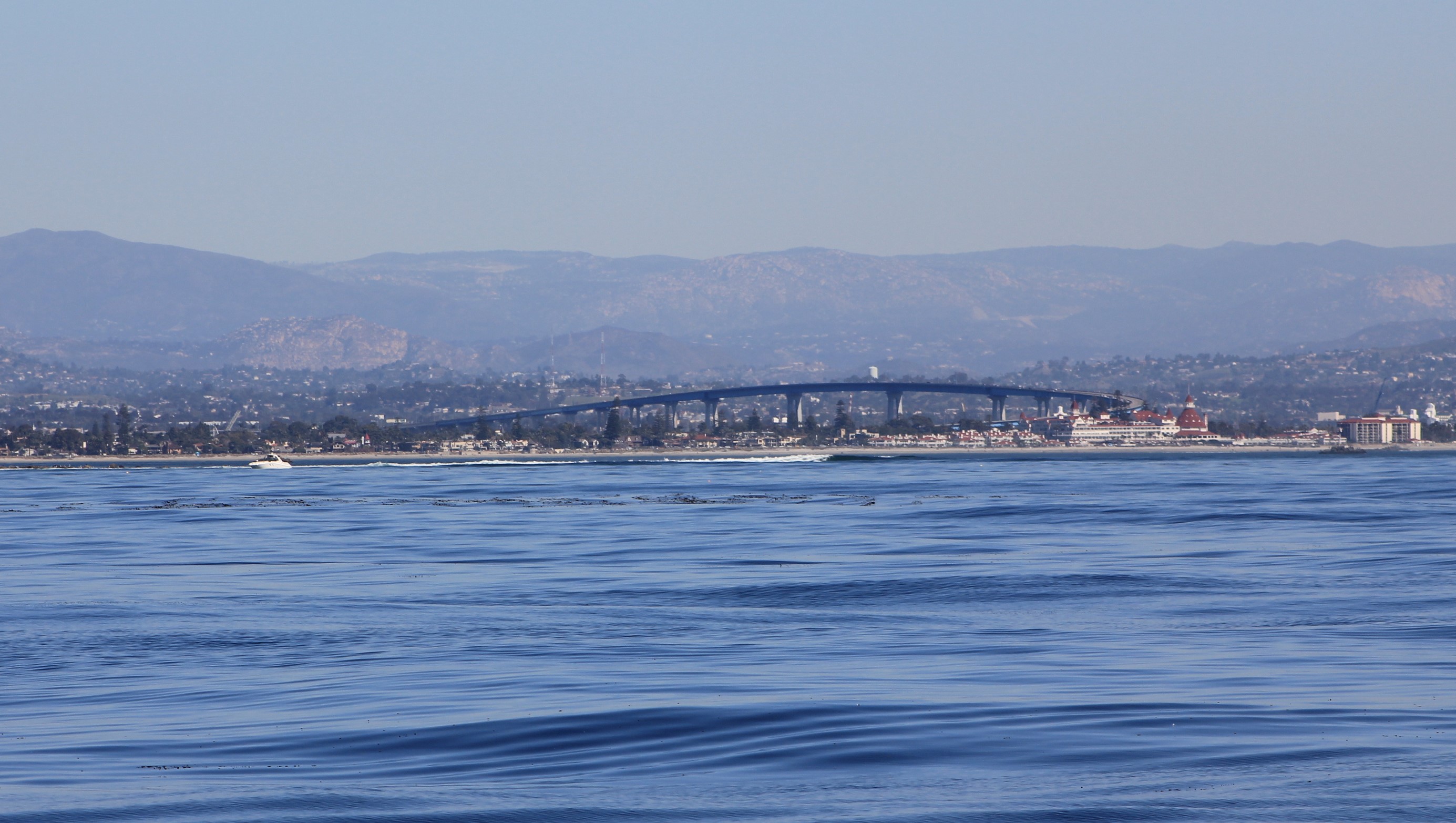
We departed Marina del Rey at 18:26 February 24 and arrived in San Diego the next afternoon at 14:30. According to the logbook, Alex and Dad did yoga on the deck at 11:1The geography of San Diego HarborPoint Loma LighthouseA view of The Coronado Bridge as we sailed into San Diego HarborCoronado BridgeExodus at the end of the dockA final going away party in San DiegoA quiet morning, our last one in the marinaA quiet morning, our last one in the marinaOne last run along the waterfront
Logbook – Feb 28, 2013 (San Diego to Ensenada)
Passage Log Highlights
2300 Depart San Diego
Daily Notes
Filled propane tanks while still in MDR on 2/22
Filled fuel tanks + 2 jerry cans diesel + 1 jerry can gas today
T minus 0We went to Colin and Jen’s to say goodbye. No photo of C & J, just the boys with MonkeyLast-minute dinghy shake downChris came by for one last goodbyeLast goodbyes with Grandma and GrandpaNighttime departureCheers to a safe passage
The final preparations were fast and furious, but once we had set the departure date, we were absolutely determined to leave. We didn’t intend for the departure date to be a firm deadline, but in the end, we somewhat treated it that way. Many people had told us the hardest part of cruising is getting off the dock, but we didn’t really experience it that way. We each had our (very) long to-do lists, but we identified those items that would have to delay our departure if not complete, and we focused mainly on those. We purchased so many last-minute tools, parts, supplies, and provisions that the UPS and FedEx guys were at our house every day.
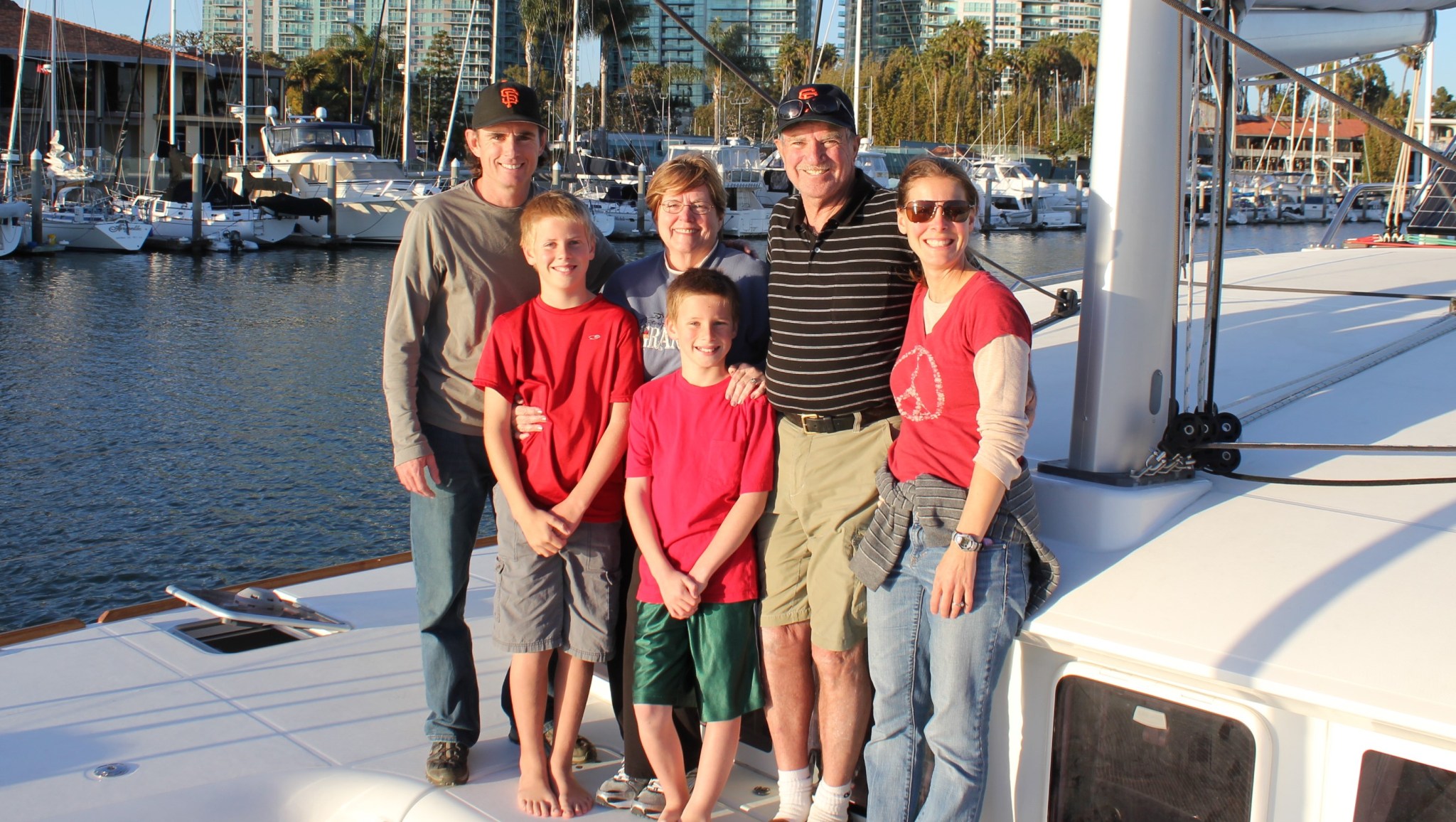
Most of my time the last week or so was spent figuring out where to store everything on the boat. It was like a giant puzzle, and it wasn’t a huge stretch to get everything to fit, but my concern was not remembering where I put everything. We were running errands down to the last day before leaving and picking up things at random moments of opportunity. For example, “Hey, there’s a sail maker’s shop, let’s stop by and get a sail repair kit.” I started to wonder what else we had forgotten that we didn’t have the good fortune to drive by during those last few days. Tim’s parents were with us our last days in Marina del Rey, and that was a huge help in many ways. They helped us move our last items onto the boat, make several trips to Good Will, and entertain the boys during all the chaos.
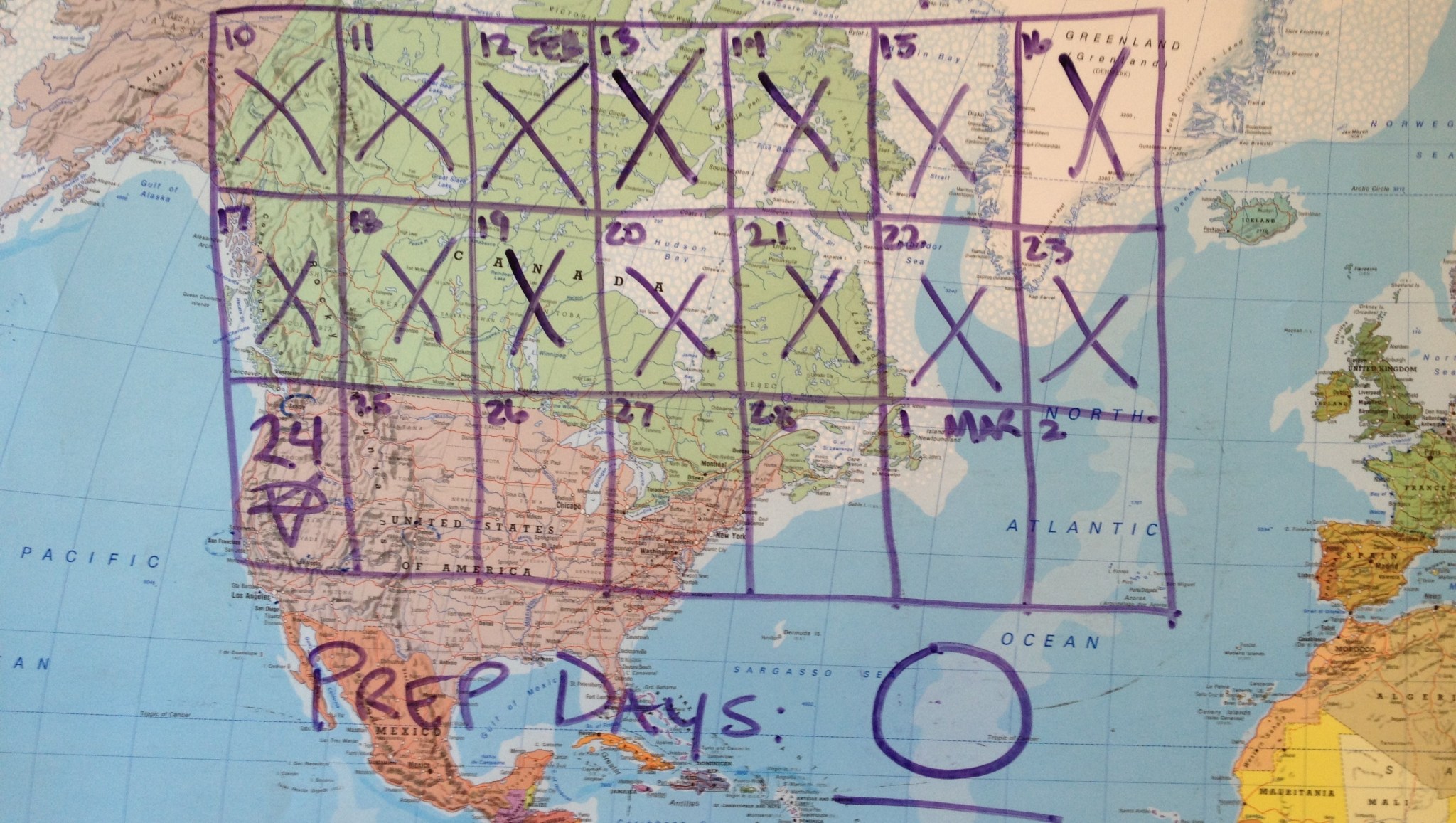
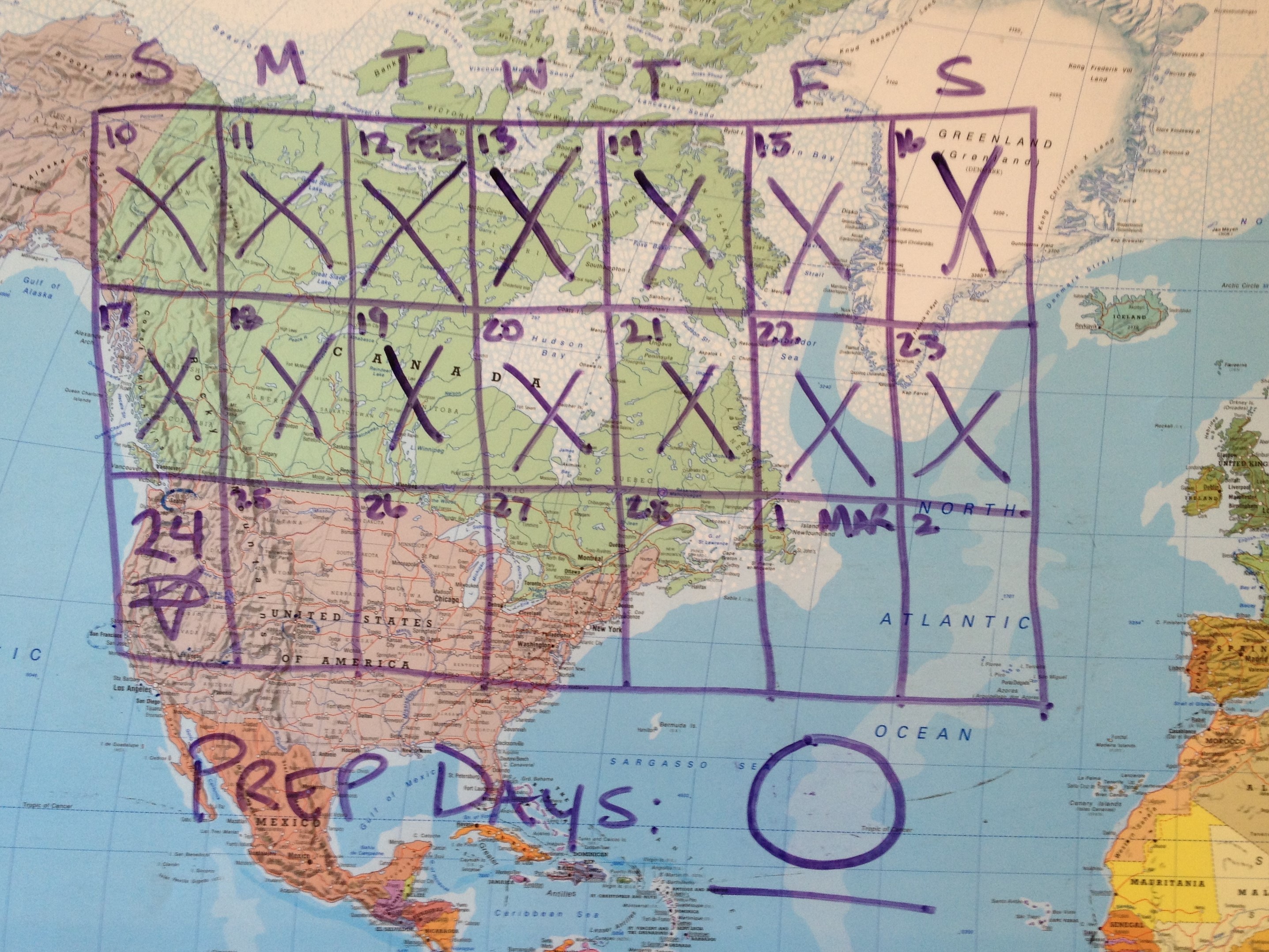
Time to Leave!
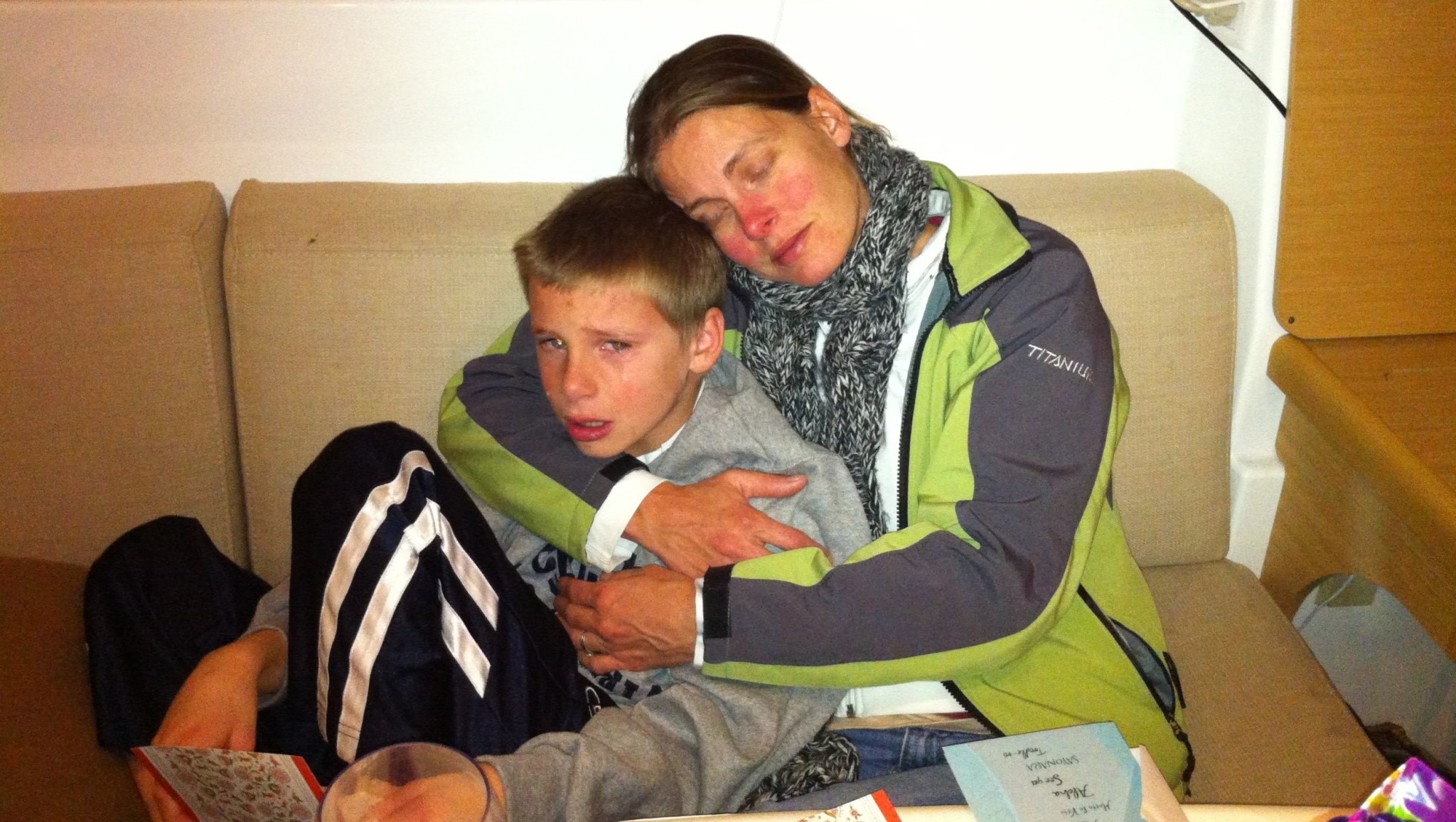
We had a going away open house on the boat the day before we left, and it was a welcome opportunity to slow down a bit and hang out with friends. There are so many people we are missing. Brenden had the visibly hardest time saying goodbye and leaving. I comforted him several times telling him it was normal and totally OK to be sad and to write it down in his journal so he can remember how he felt right then. In a year our lives would be totally different and we will want to remember everything, even the sad feelings. Brenden returned the favor when I said my final good-byes to Colin and Jen. It’s like he could tell I was starting to get a little teary inside and he came over and put his arm around me. Alex is also missing everyone, but he is much more Stoic about it. In addition to friends and family, I am desperately missing running. I was nearly devastated not being able to run much my last month at home due to a sore foot, but I did get one last run along The Strand and one last run on Harbor Island in San Diego to remember the beautiful coastal running I was leaving behind.
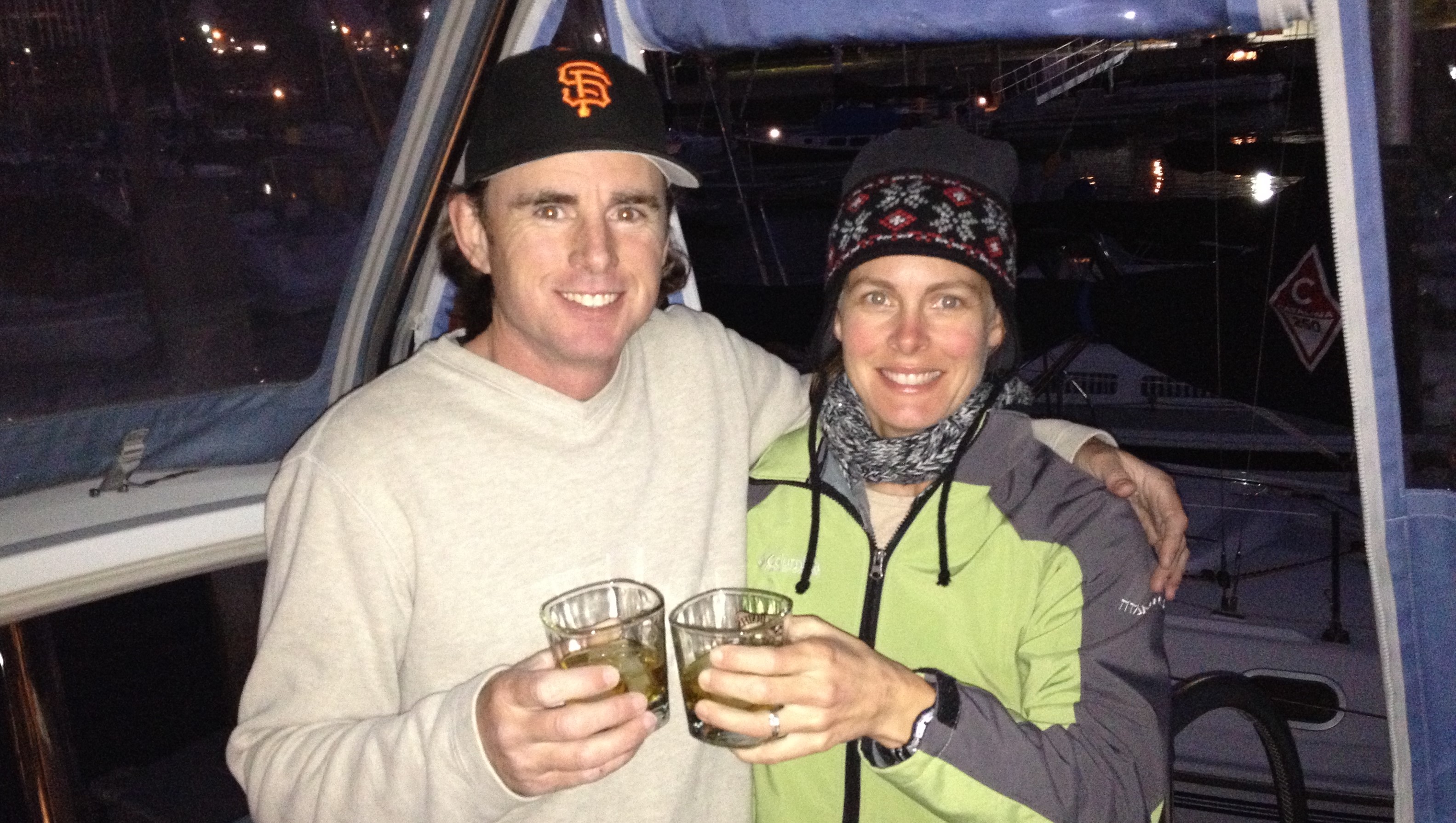
Cheers to a safe journey – Leaving Marina del Rey
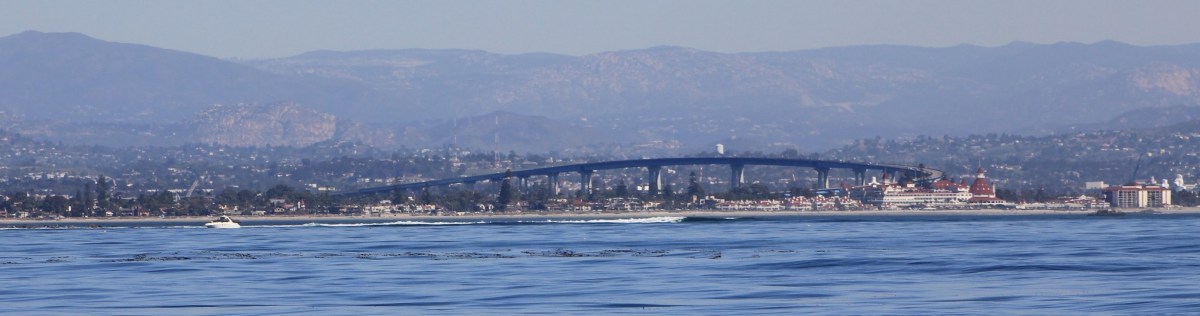
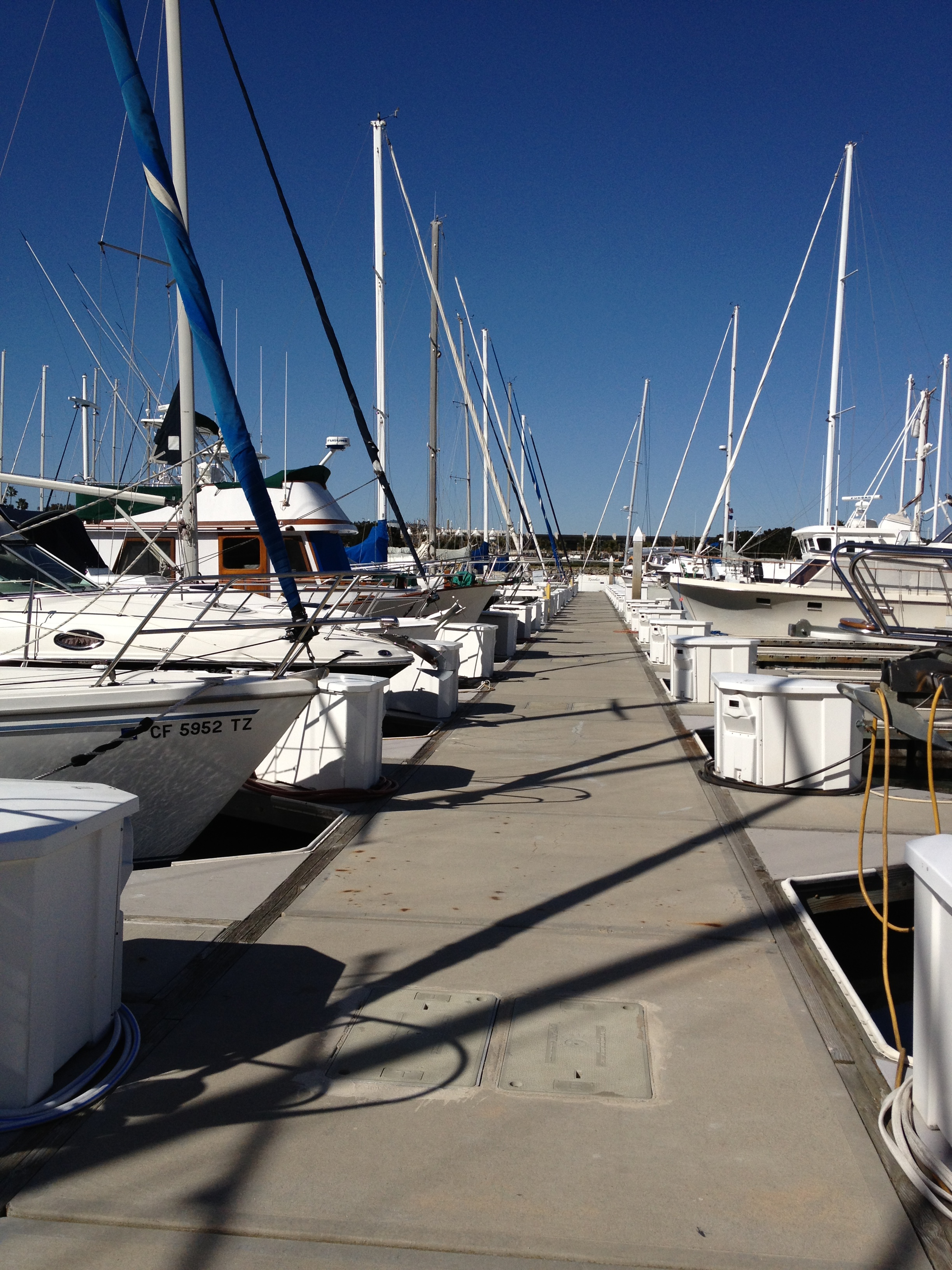
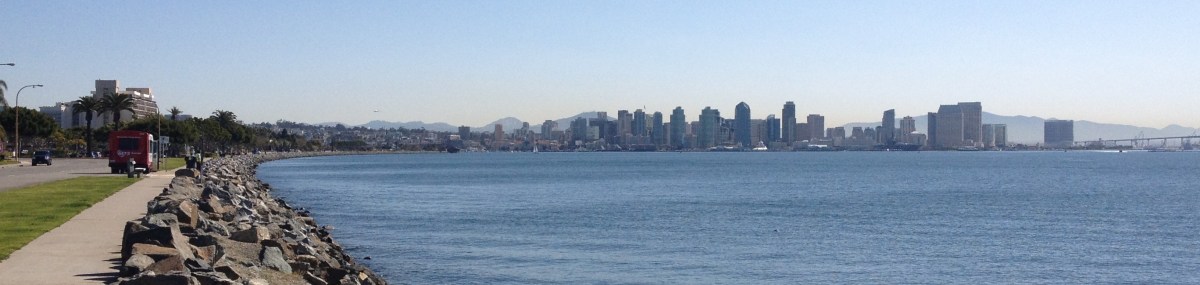
We left Marina del Rey at night after sundown on Sun, Feb 24th to find very choppy seas until we turned the corner around the Palos Verdes peninsula. Our first destination would be San Diego, and that made leaving home a lot easier than it otherwise would have been since I knew we would still have the comfort of friends and family while we took care of last-minute to-do items and provisioning before leaving the U.S. We arrived in San Diego early the next afternoon, and it was enjoyable entering the very familiar harbor and seeing the Point Loma Lighthouse and the Coronado Bridge, two landmarks I’ve spent time around over the years. We stayed at the Cabrillo Isle Marina on Harbor Island, and we had an end tie at the furthest possible location from the dock gate, which meant all of our visitors got their exercise walking out to Exodus. We had a final going away party on Tuesday, and other than that it’s regrettable that we didn’t relax more and soak up the time we had with family, instead we were frantically running around doing errands and trying to get everything stowed on the boat.
We had another night time departure when we left San Diego and the real adventure began.
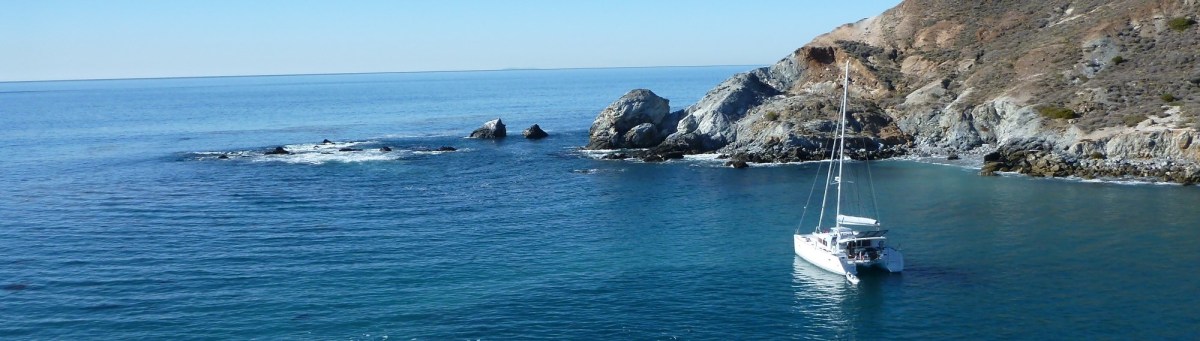
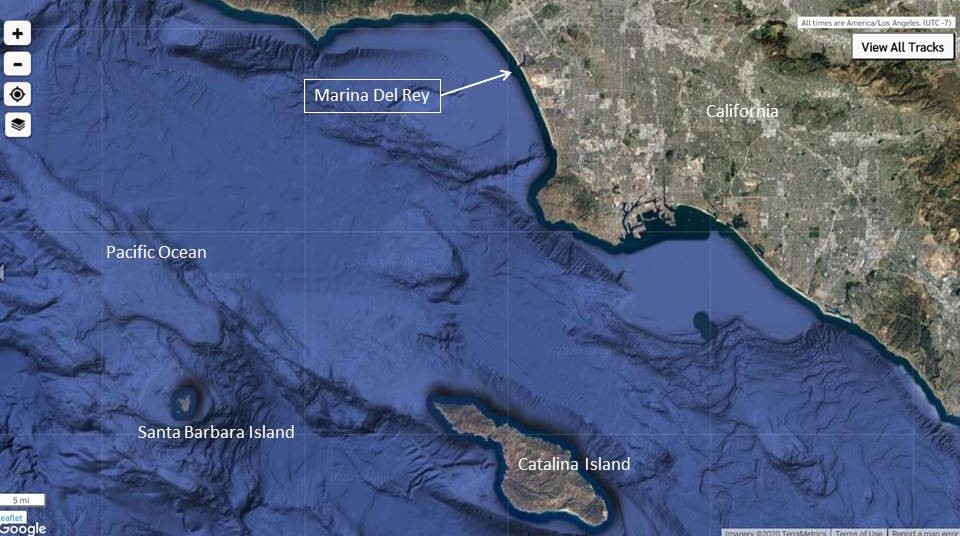
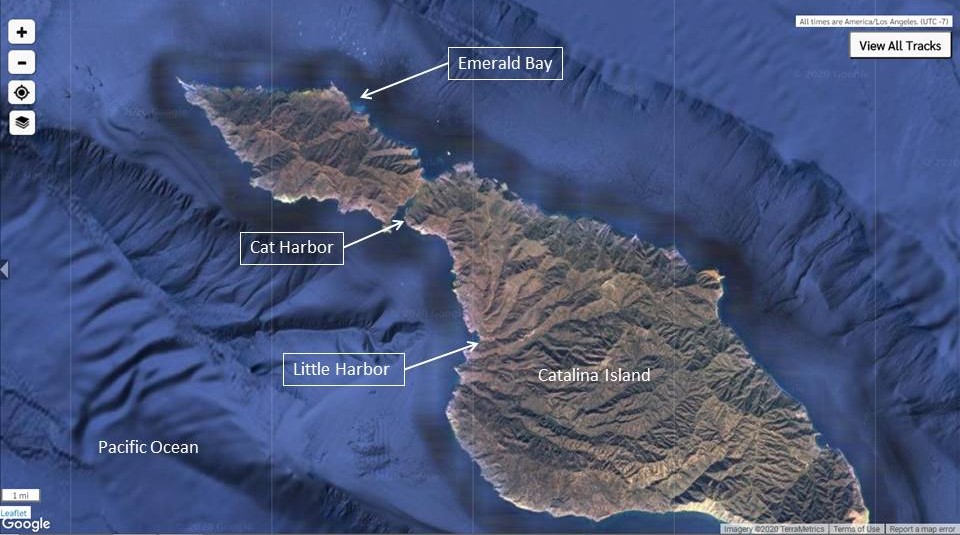
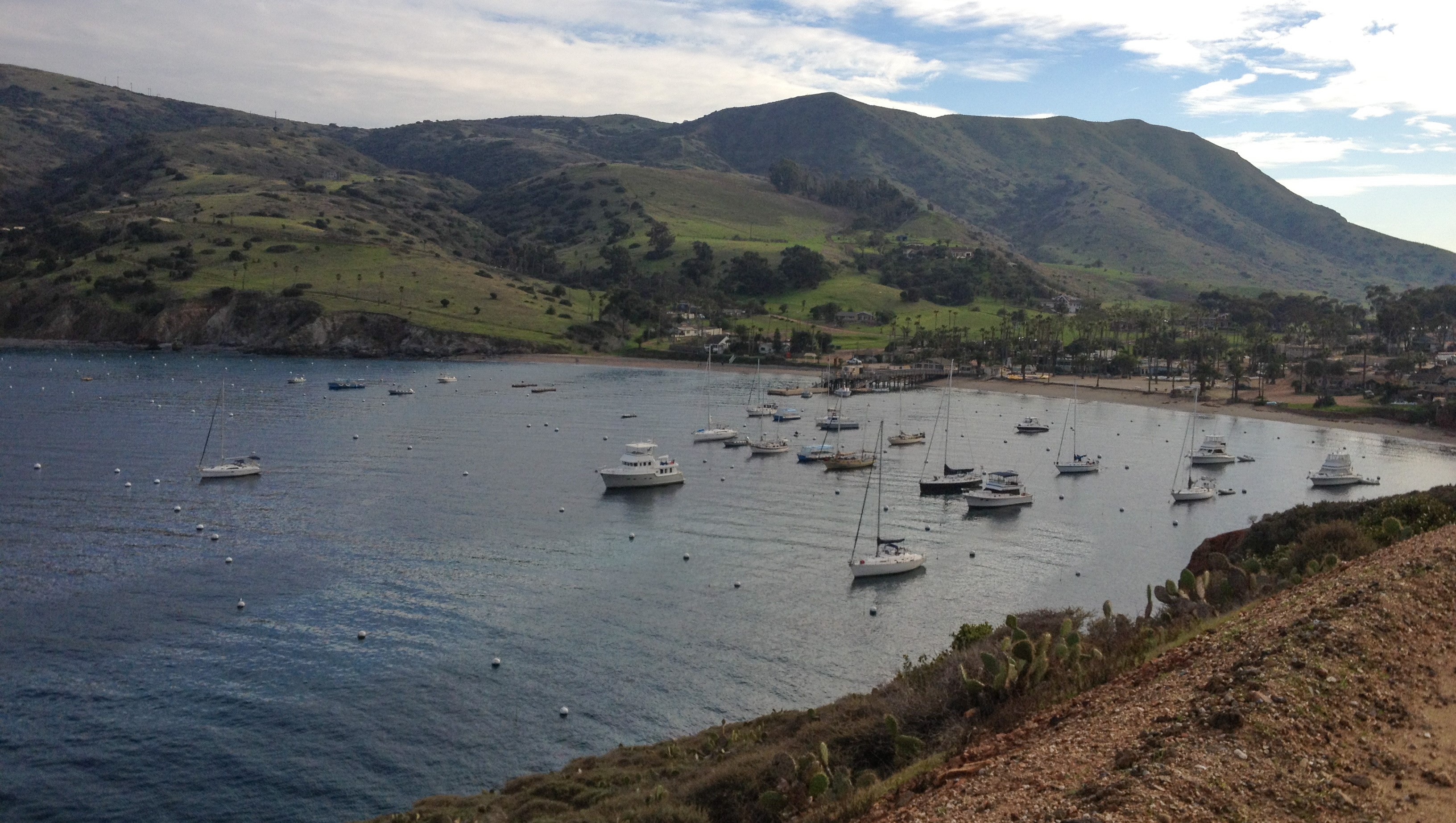
Shakedown cruise is a term referring to when a vessel is taken out for performance testing and or crew familiarization. It’s used in the nautical community for vessels of all sizes and also used prolifically within the sailboat cruising community when someone gets a new boat or does major repairs or upgrades and wants to test it out before venturing too far offshore. We did what we called a mini-shakedown cruise with Exodus, getting off the dock for a few days and venturing out to Catalina Island, which is part of the Channel Island chain off the coast of Southern California. We spent the first two nights at our favorite spot, Emerald Bay, and then also took a day trip out to Santa Barbara Island. The boys and I went ashore at Santa Barbara Island, and the dinghy drop off and pick up was quite adventurous, since we basically had to grab on to a ladder which was hanging down while the dinghy was bouncing around in the swell. We had a nice walk around the island, and the guest book at the visitors center showed that they don’t get too many guests this time of year.
We left Santa Barbara Island a little late and ended up arriving at Cat Harbor (the backside of Two Harbors) after dark on New Year’s Eve. We carefully navigated the forest of mooring balls until picking up one that turned out to be set up for a boat a bit longer than ours. The boys were ready to rally and go ashore, but Mom was the party pooper. We all ended up in bed before midnight.
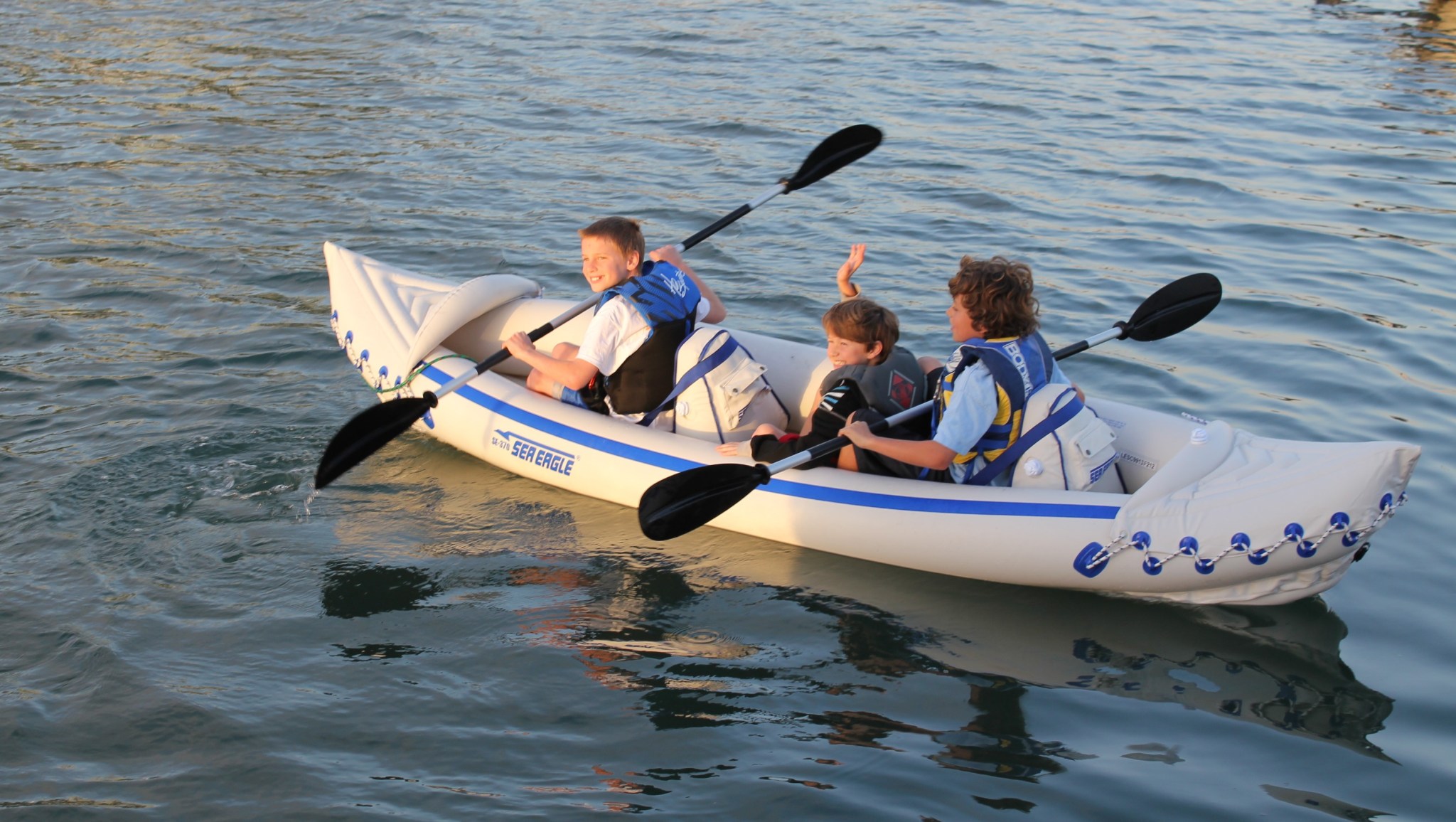
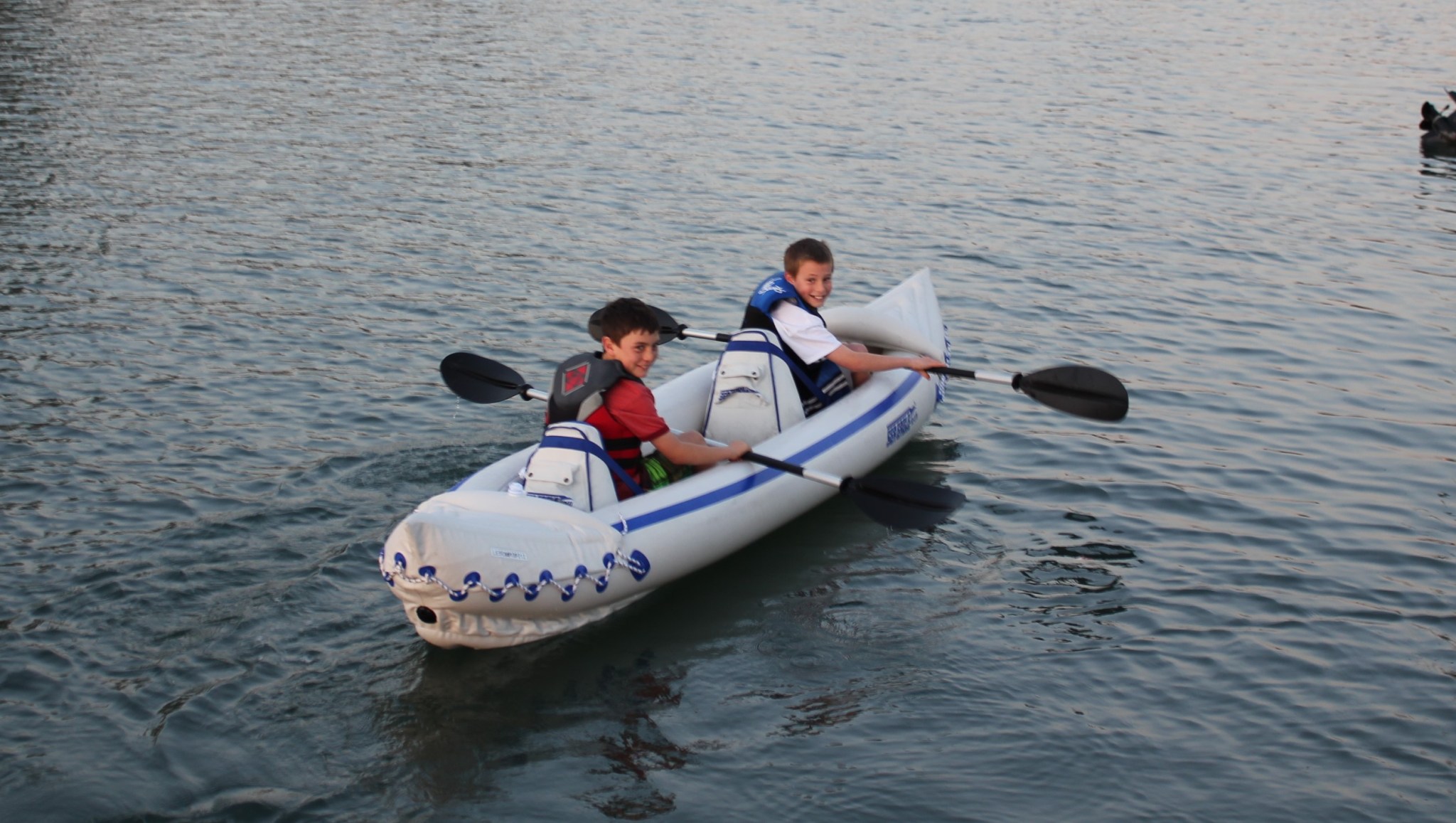
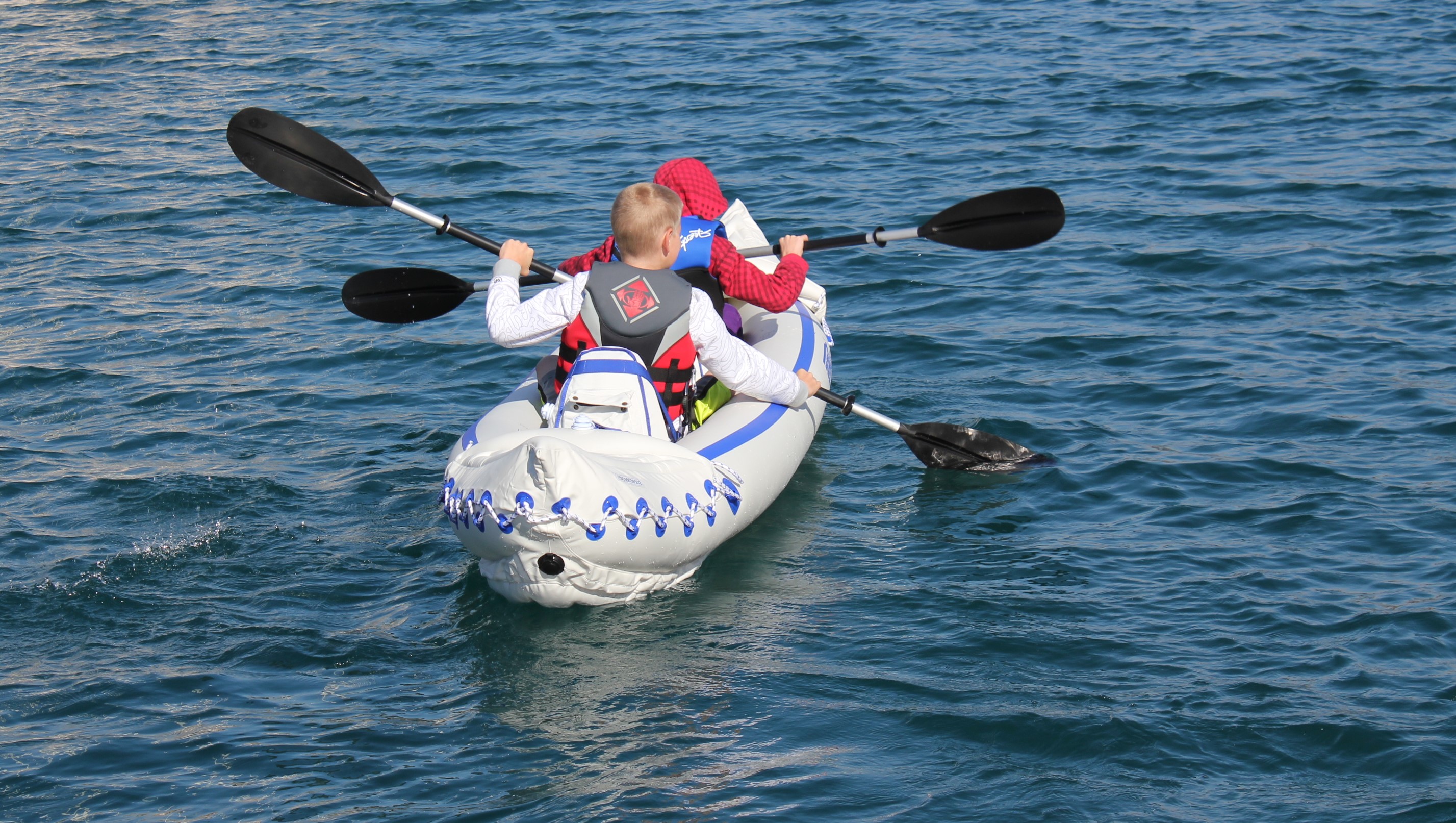
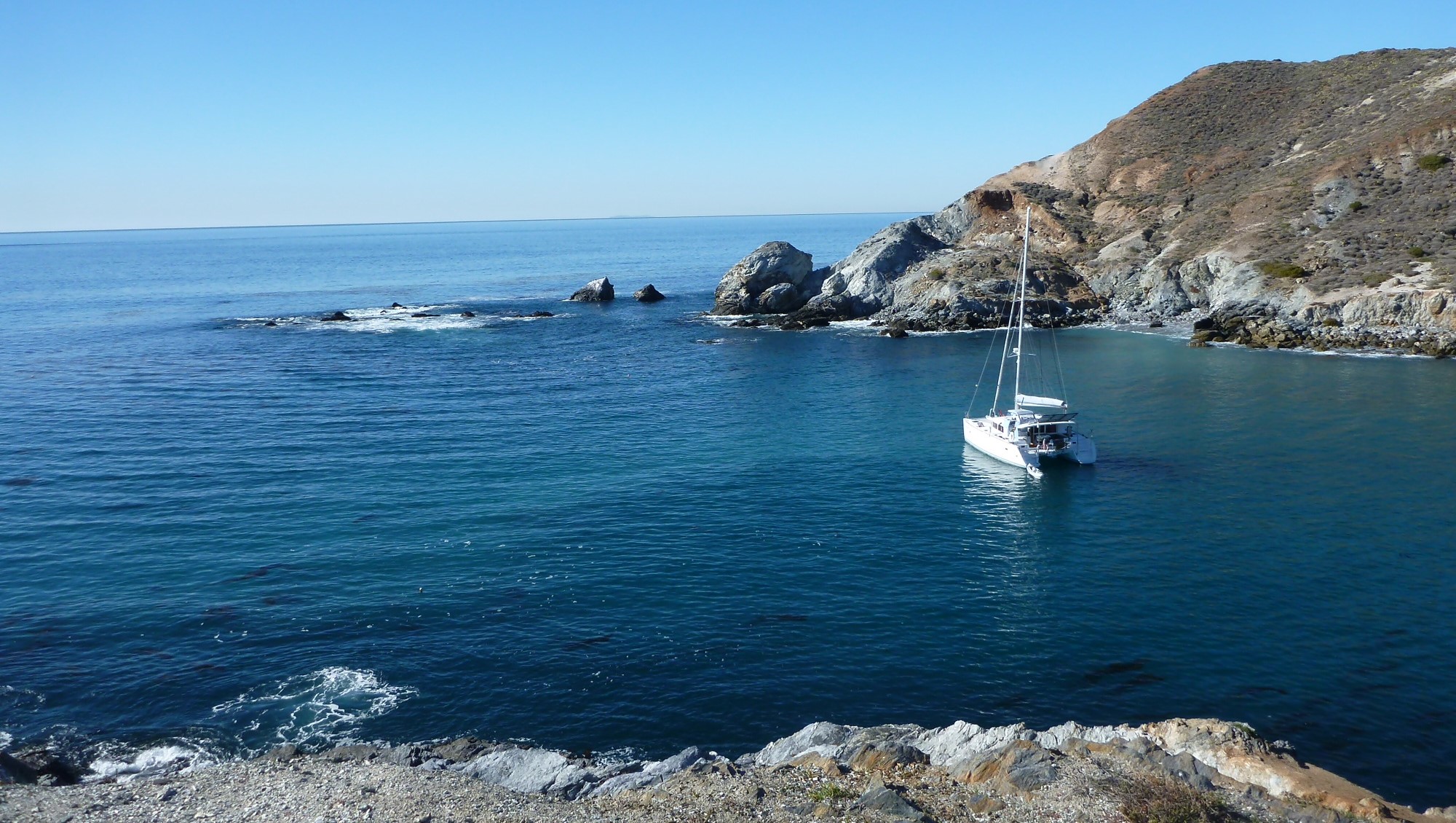
The next day we headed to Little Harbor, which was the highlight of the trip. There was one other boat there with us, a young couple on a small monohull, and they went for a hike and took some great photos of Exodus from up on the ridge. The boys fished, tried out the new blow-up kayaks, and practiced driving the dinghy. It was cold, and we were all very much looking forward to the warm weather when we went south. (There will be days in the tropics where we will long for this weather!)
Catalina and Santa Barbara IslandsThe geography of Catalina Island
Logbook – Dec 29, 2012 (Marina del Rey to Emerald Bay)
Passage Log Highlights
1740 Departed MDR
2320 Arrive Emerald Bay
Daily Notes
Under engine the entire way
Anchor alarm went off twice after arrival
Edit: The anchor alarm is basically just an iPhone app. You set a waypoint where the anchor is located and then set a distance threshold, and if the iPhone GPS location exceeds that distance threshold from the anchor waypoint then the alarm goes off. The alarm is intended to be an indication that the anchor is dragging. The trick was always setting anchor waypoint accurately, so you don’t get false alarms. Eventually, later on when we were in Mexico, we developed a procedure where I would drop a waypoint on the boat chart plotter at the helm when we were dropping anchor, so we would have a more accurate anchor waypoint. Then I would transfer that waypoint location into the app and it became quite a reliable indication of anchor dragging.
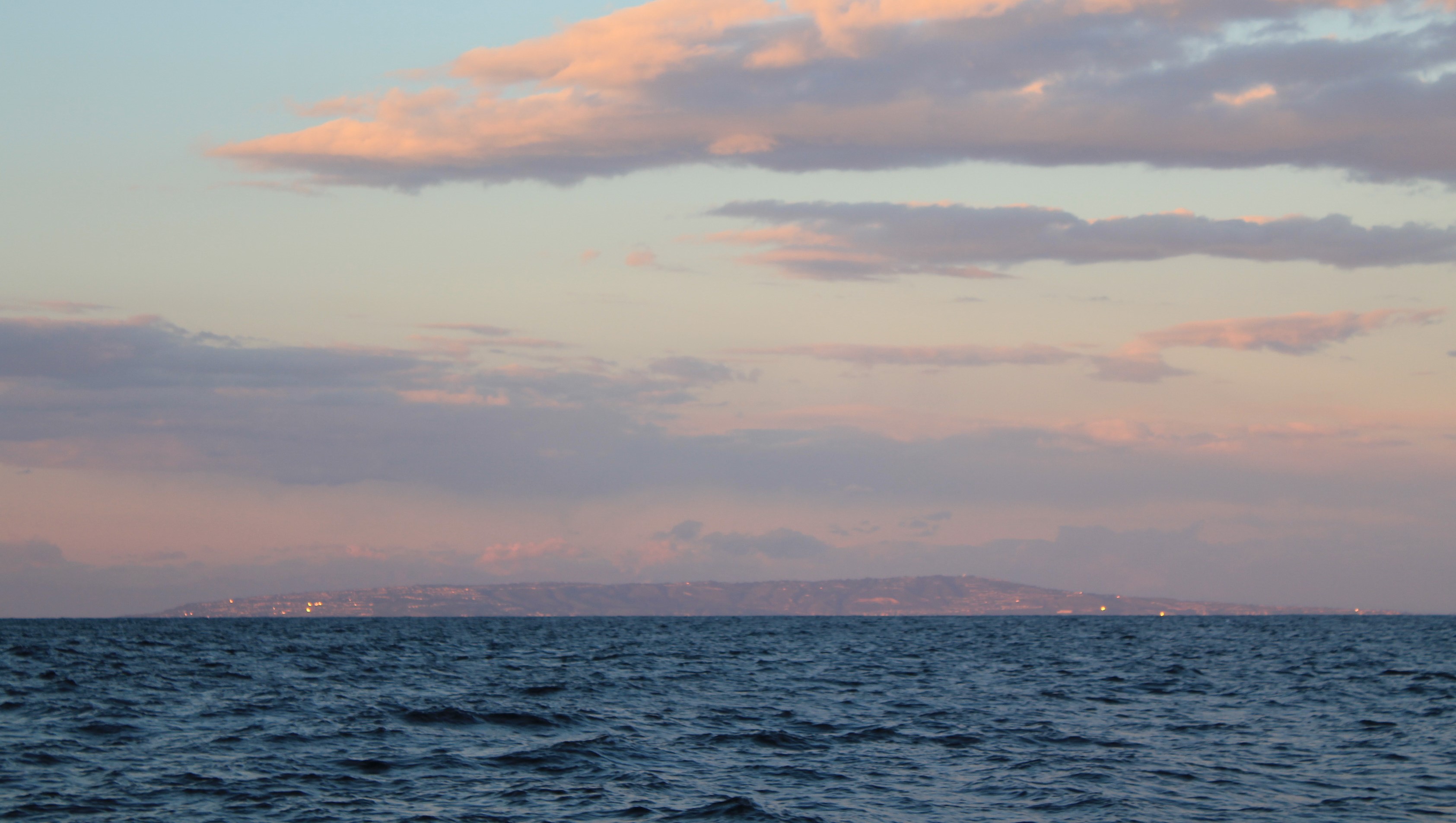
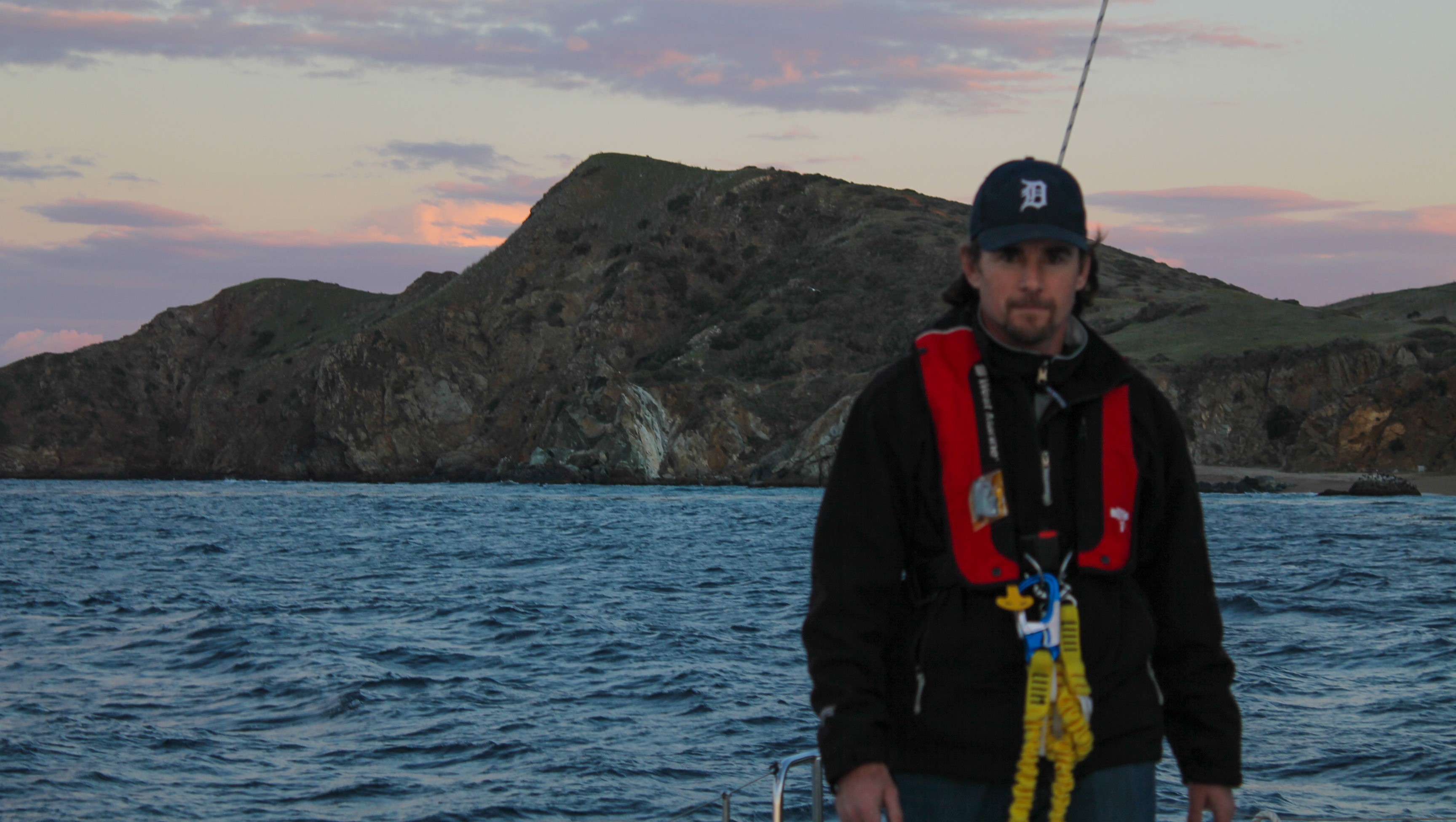
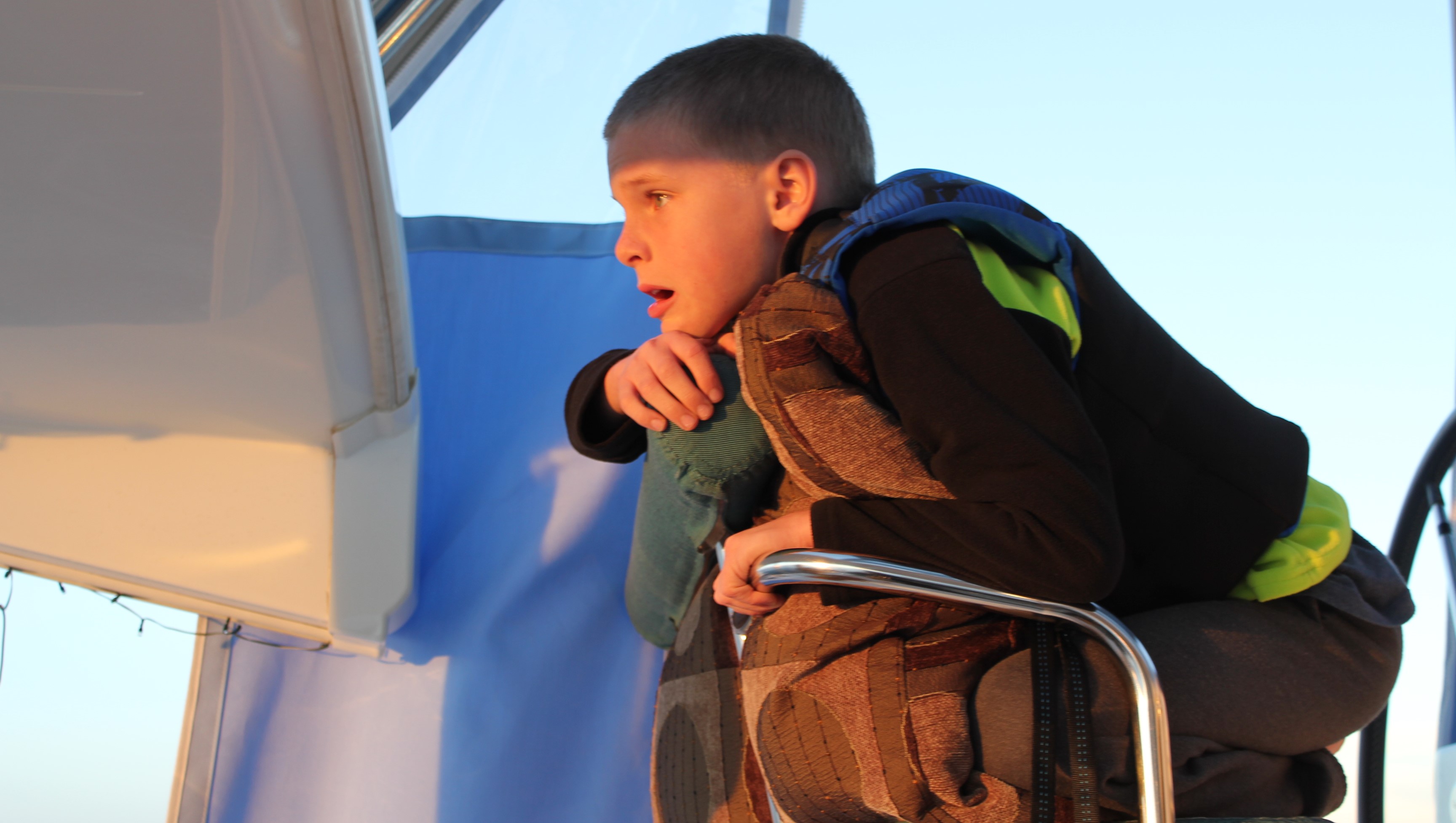
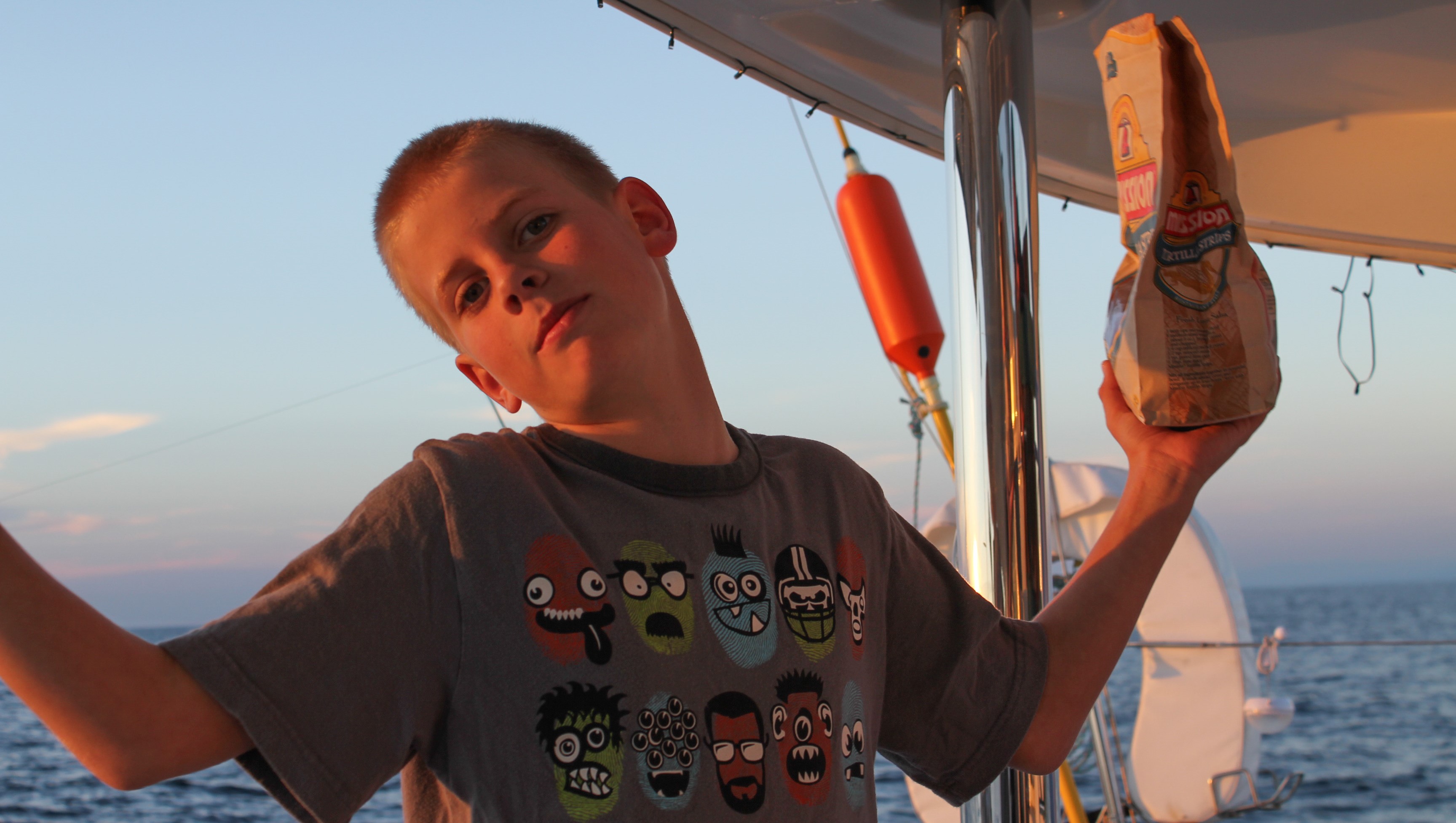
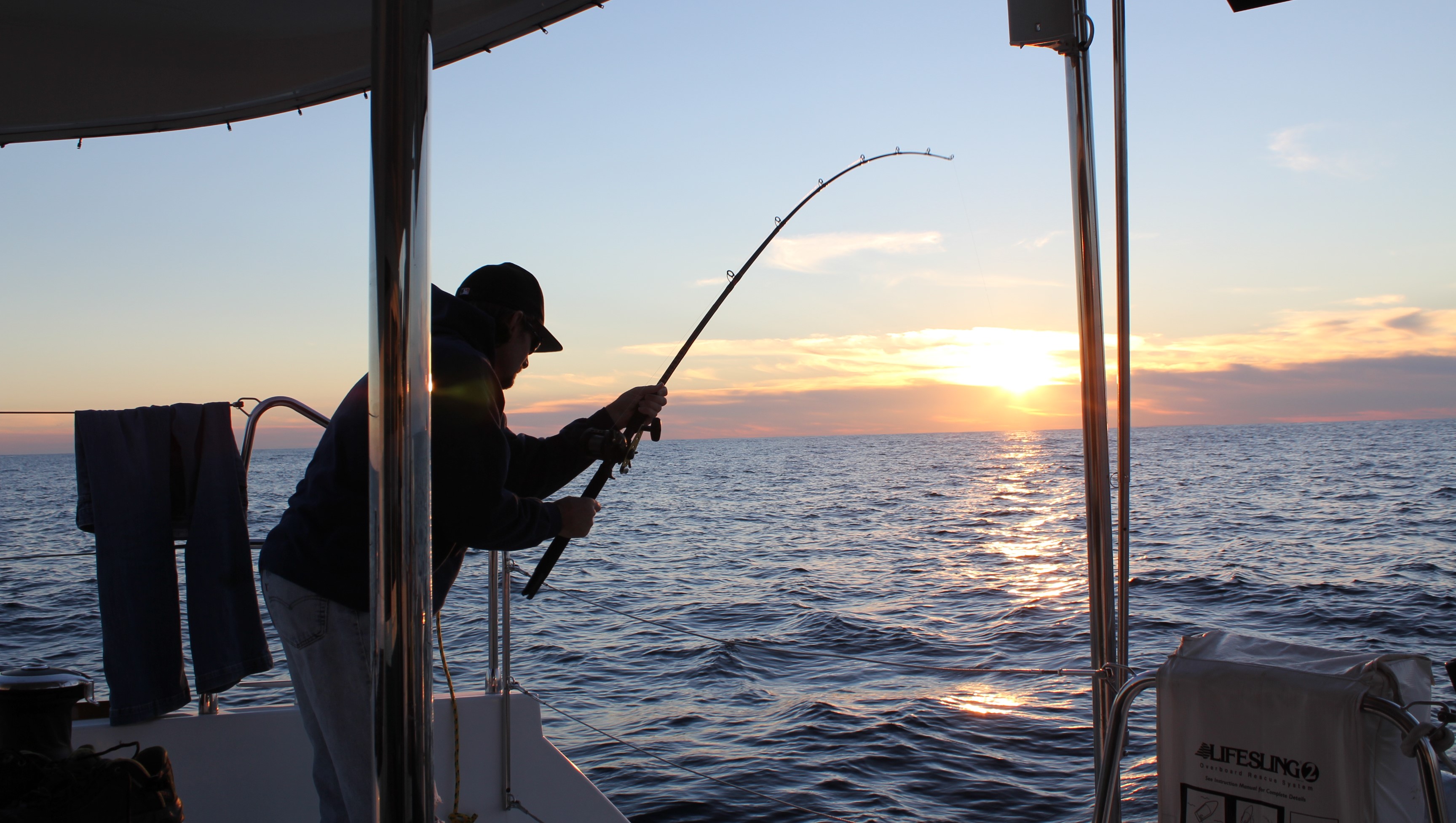
Sunset reflecting off the California mainland as we head to Catalina.Captain Tim, fully equipped with his harness and everything. The harness serves two purposes. It lets you clip yourself onto the boat when moving about in order to prevent an accidental man overboard. It is also a flotation device in the event you do go over.Brenden at the helm, but not exactly navigating.Chips help with seasickness, but Alex doesn’t get seasick. He does like chips.Trying to catch dinner.
Logbook – Dec 30, 2012 (Emerald Bay Day Sail)
Passage Log Highlights
1330 Engines on, depart
1740 Engines off, arrive
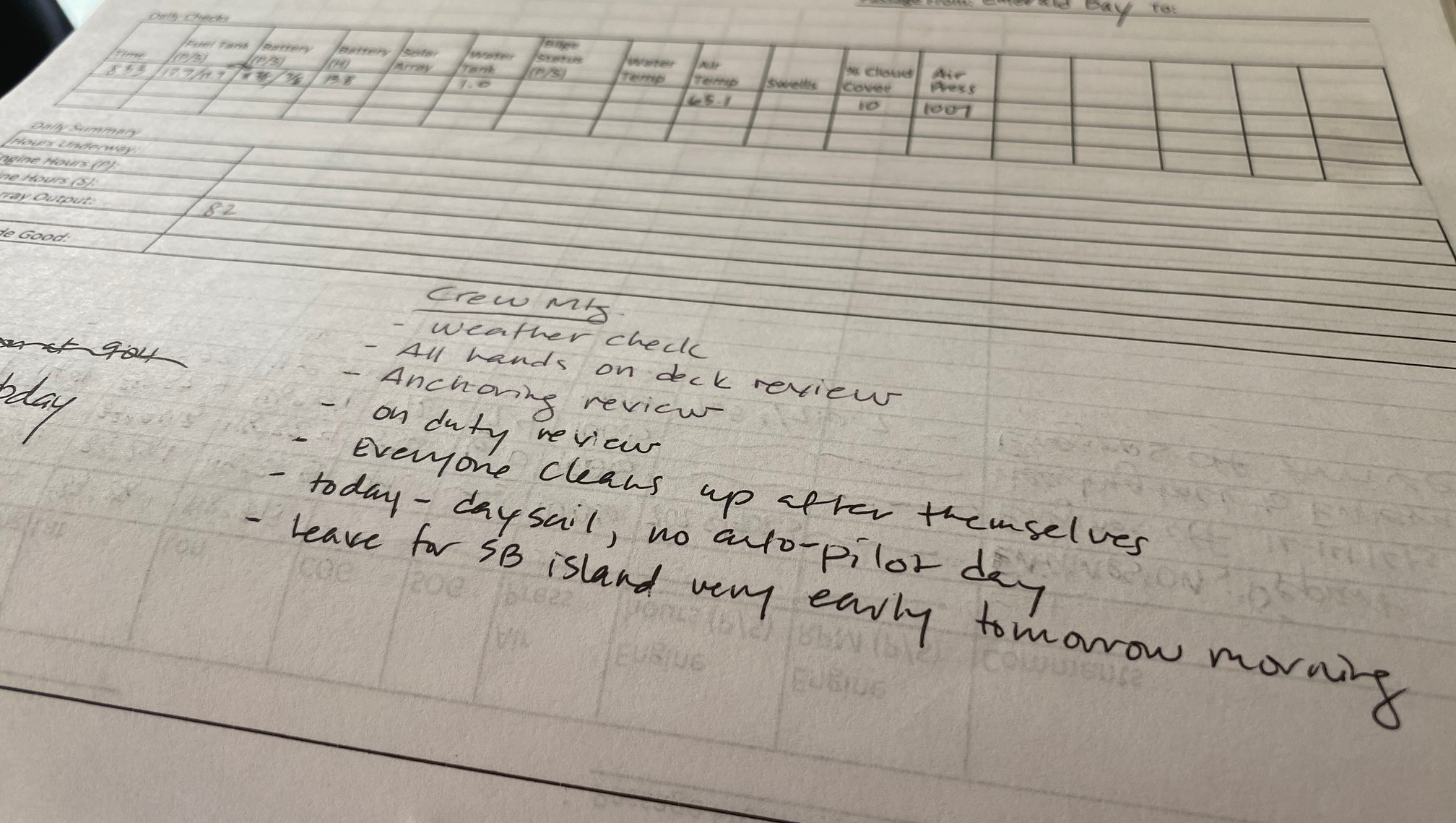
Notes from the deck log. There were no further occurrences of crew meetings in the log.
Logbook – Dec 31, 2012 (Emerald Bay to Santa Barbara Island to Catalina Harbor)
Passage Log Highlights
0630 Start engines, depart
1215 Arrive, anchor down, SB Island
1545 Just after departure from SB Island
2036 Secured to mooring at Cat Harbor, engines off
Daily Notes
Deanne, Alex, & Brenden –> Hike on SB Island
Logbook – Jan 1, 2013 (Cat Harbor to Little Harbor)
Passage Log Highlights
1520 Engines on – leaving for Little Harbor
1626 Anchor down, engines off at Little Harbor. Heading 196 deg, depth 10.4 ft
Daily Notes
Going ashore for lunch and ice cream (1300)
Alex & Brenden test out the new blow-up kayak
We had lunch (and of course ice cream) at Two Harbors on New Years Day, and I walked up the hill to get this shot. When we have gone to Emerald Bay in summers past I have run from Emerald Bay to Two Harbors, and this is the view that greets me as I’m approaching Two Harbors.Trying out the new blow-up Kayak (we bought two of them, so they should be fun for the whole family).
Logbook – Jan 2, 2013 (Little Harbor)
Passage Log Highlights
1352 Start engine for day sail for Man Over Board (MOB) drills
1453 Arrive back at Little Harbor
1548 Re-anchored due to original location too close to another boat
Daily Notes
Alex took the dinghy solo – started it himself
Tim and Brenden caught a rockfish while out in the dinghy
Ryan & Nicole on SV Noana – took photos of Exodus
Ran out of water. Ran watermaker for 4 hours
Fault alarm on watermaker – service pre-filters
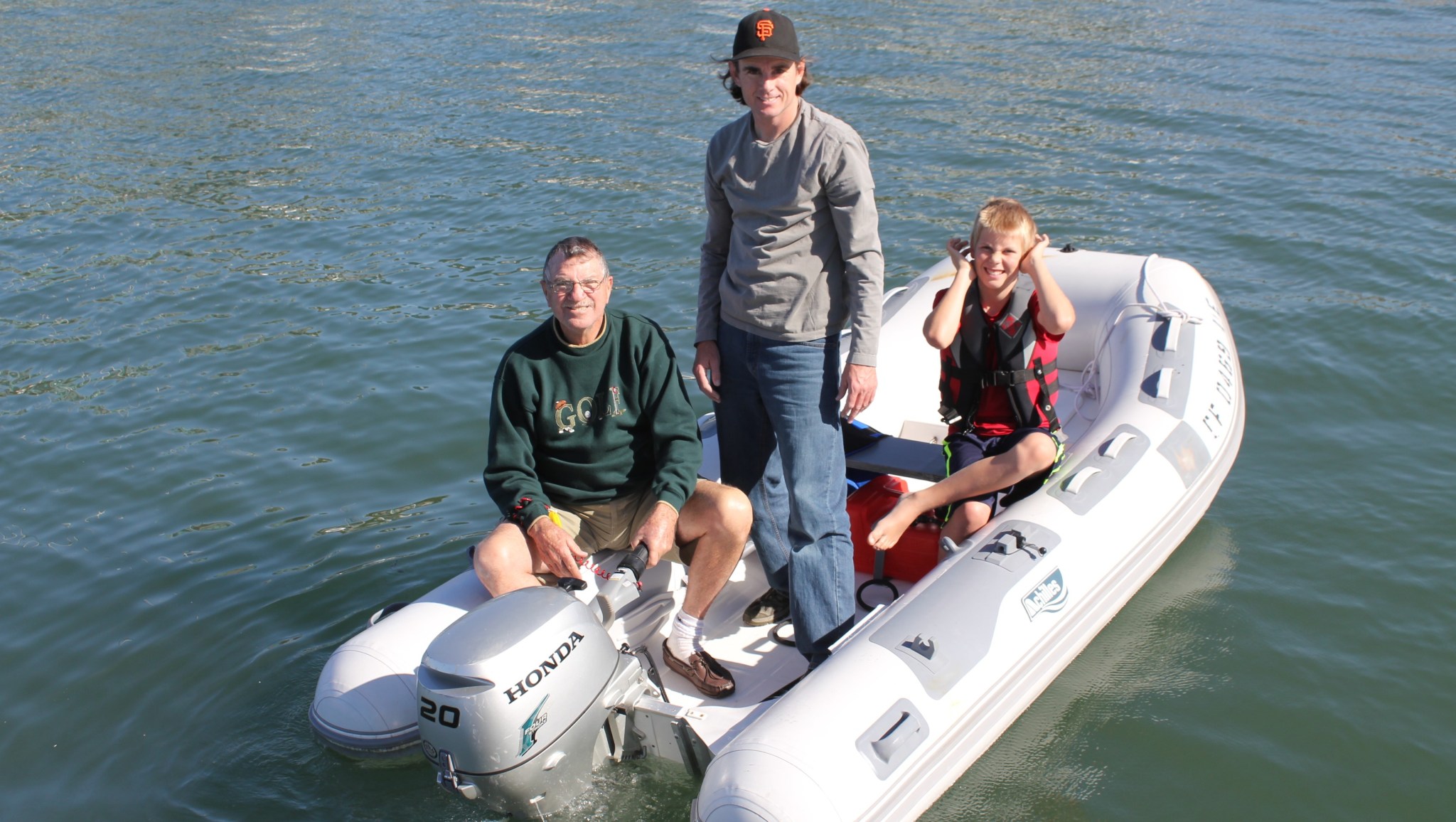
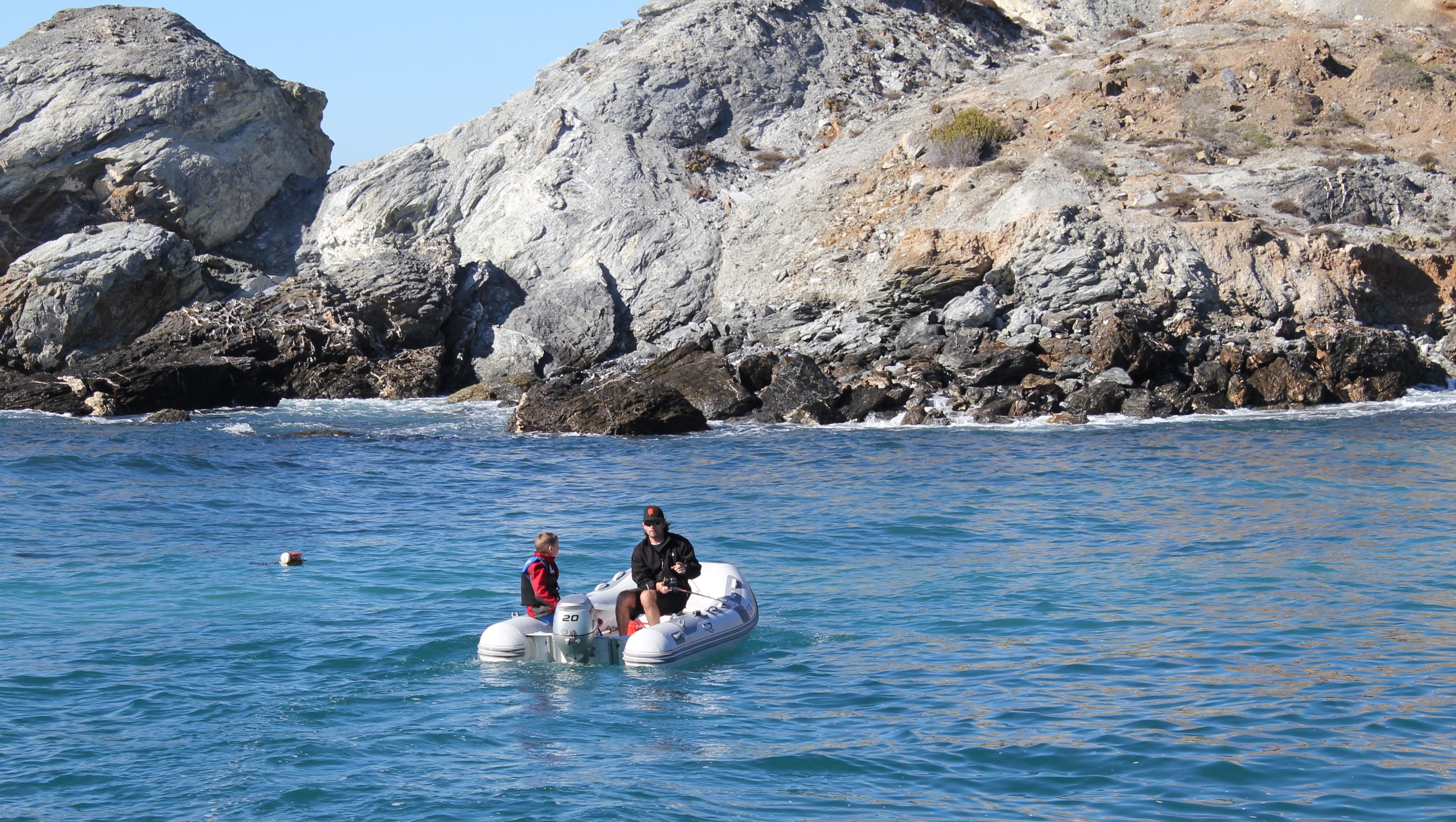
Edit: Our dinghy engine was a 20hp 4-stroke, which had a pull cord starter. It didn’t take Alex long to master the mechanics of getting it started. It took Brenden and I just a bit longer.
Edit: Running out of water is a rookie move. It won’t be our last.
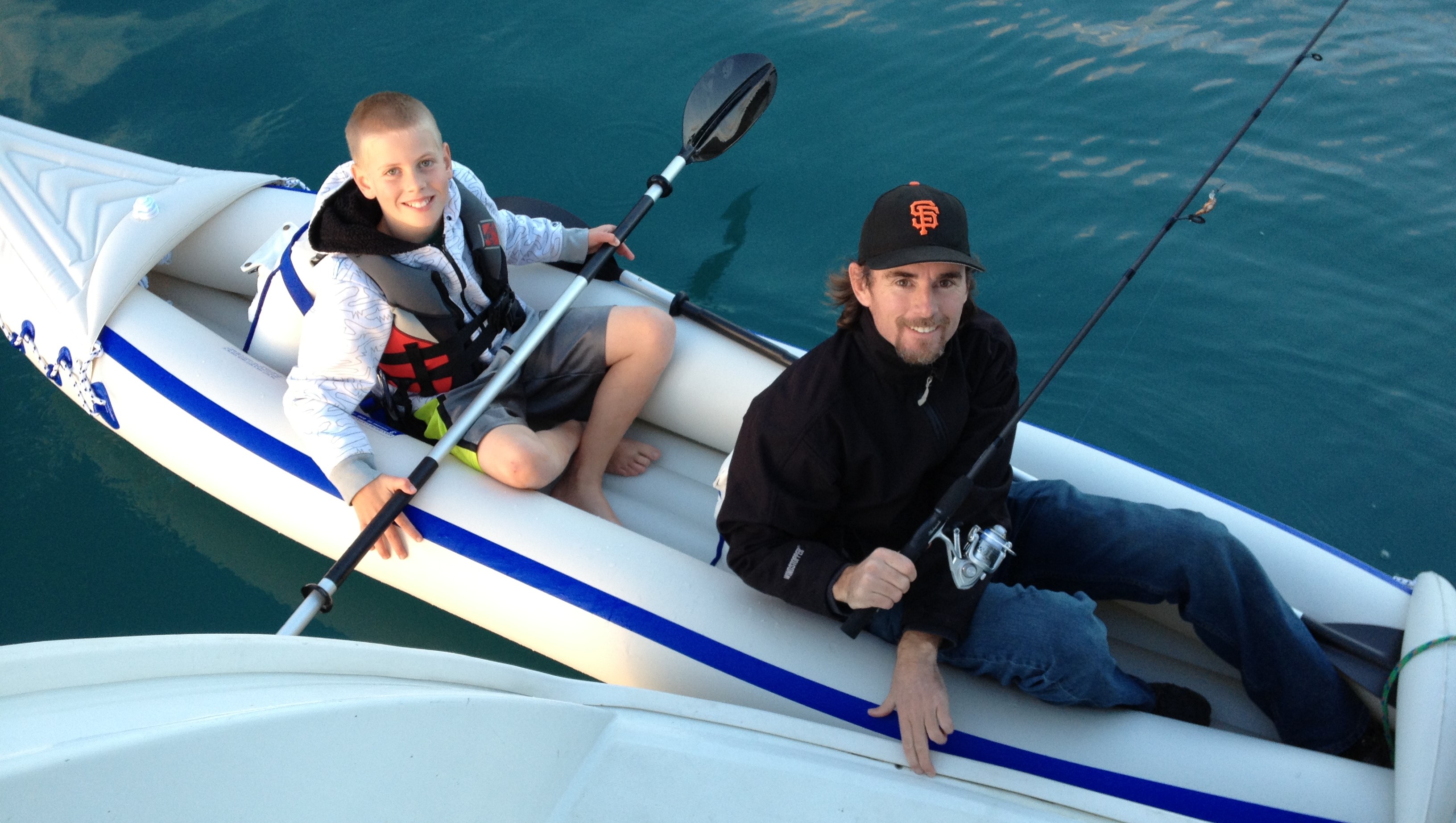
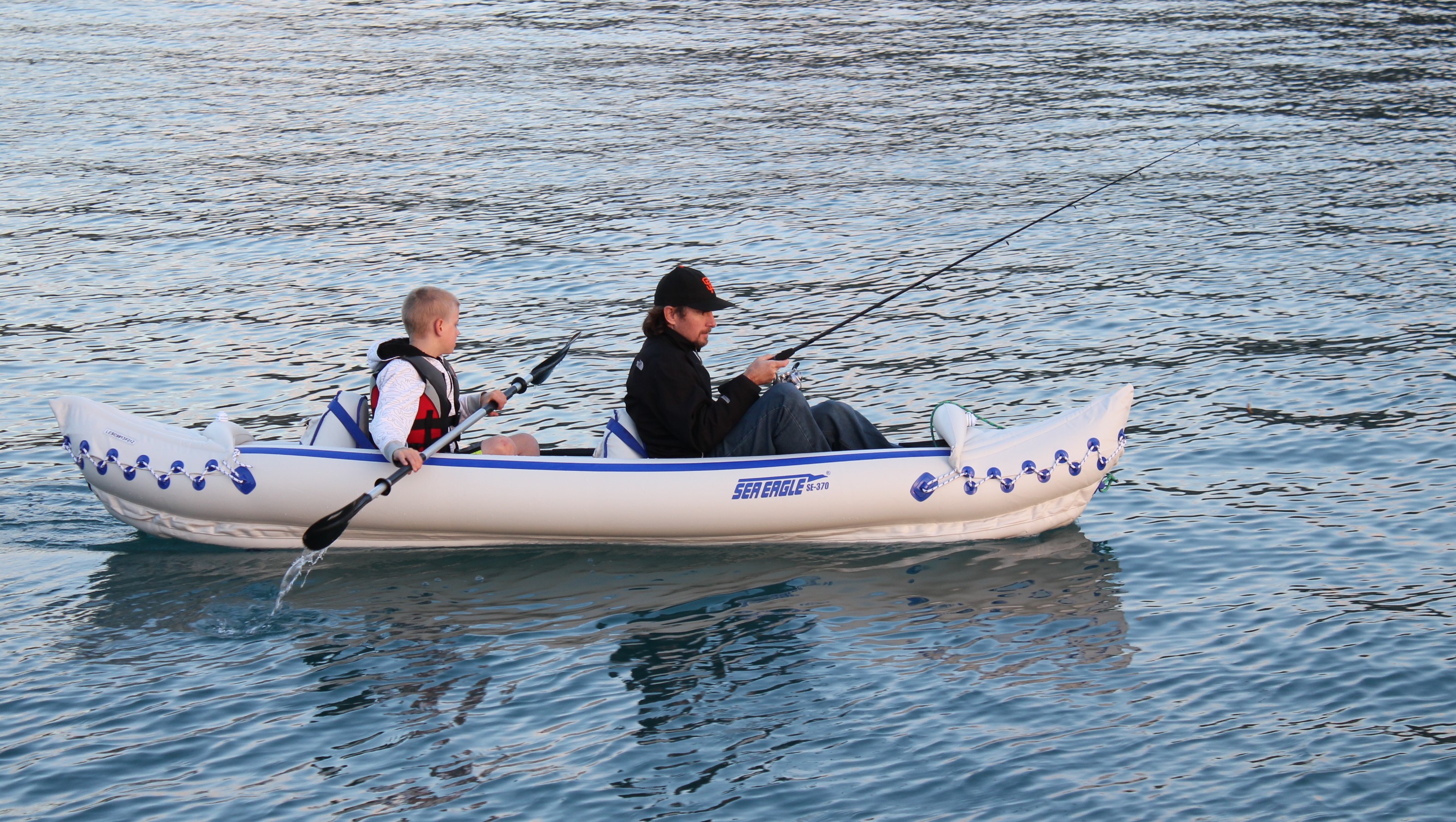
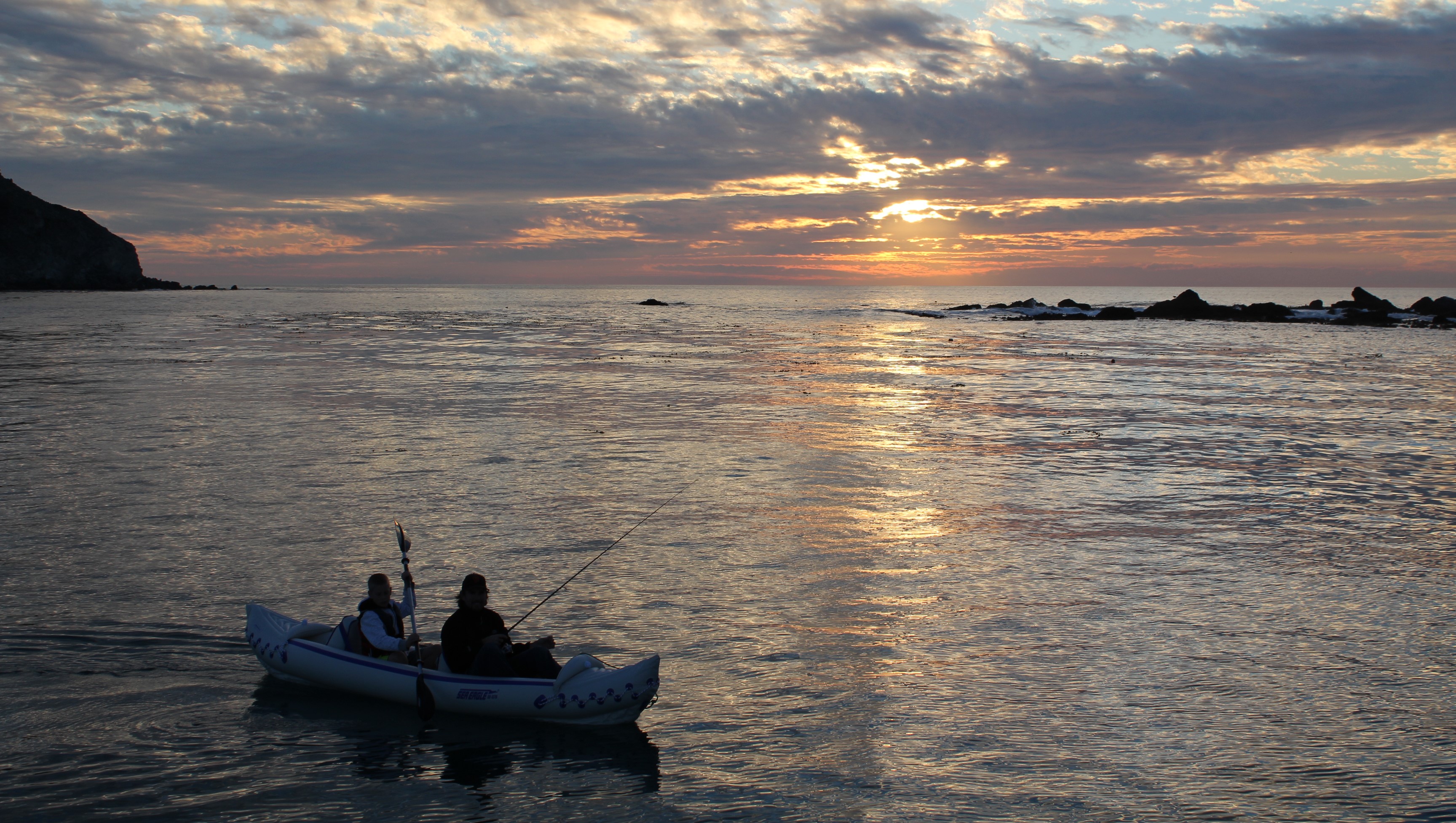
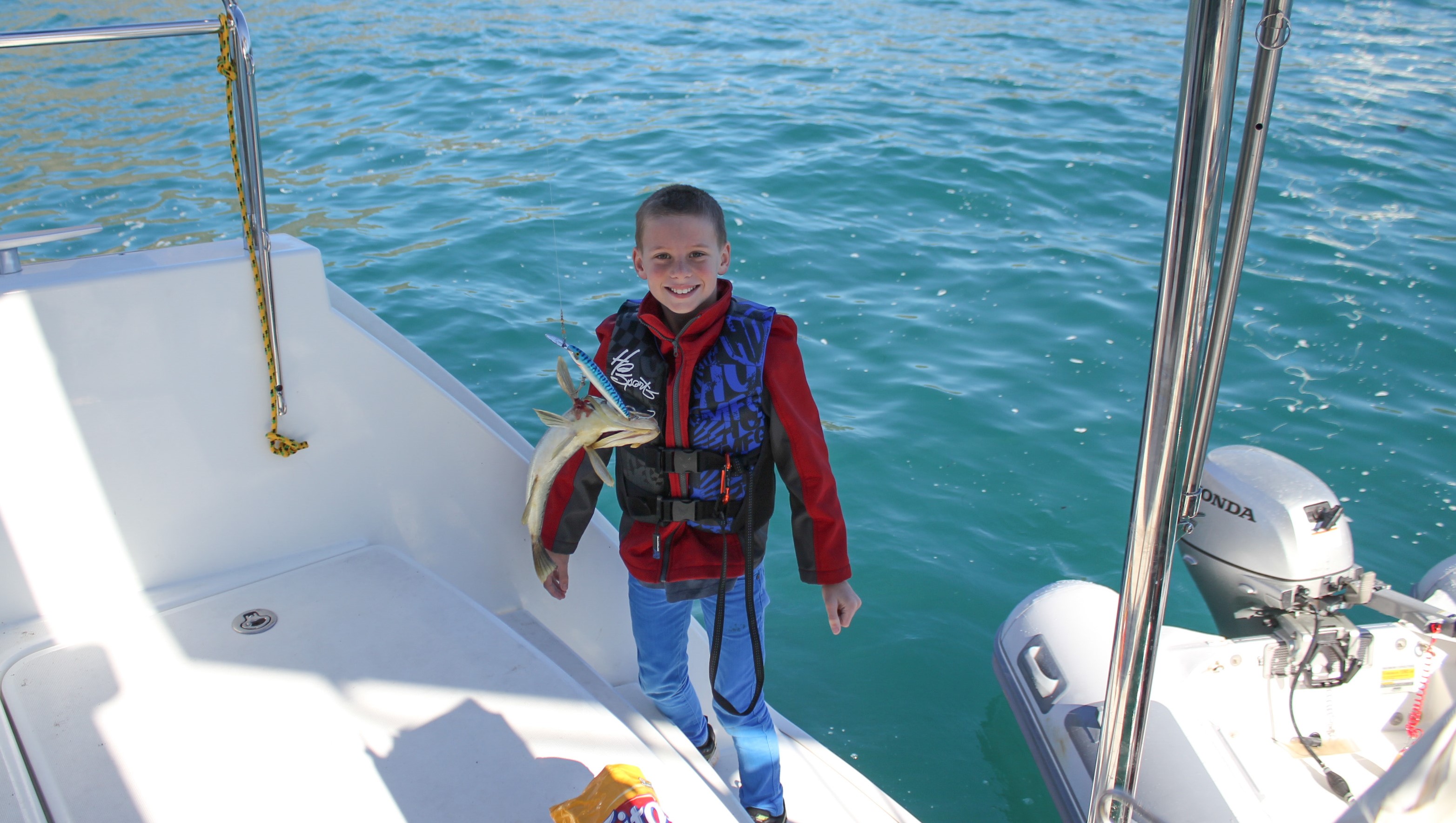
Exodus on the hook at Little Harbor (This is the photo we used for our cruising boat cards. It was taken by Ryan and Nicole from s/v Noana)Heading out to do some kayak fishing. I guess Tim is the fisherman and Alex is the propulsion.Sunset kayak fishing.Sunset kayak fishing.Let’s hope we never take this kind of view for granted.Alex had plenty of room (and time) to practice driving the dinghy. He loved it!Brenden and Dad doing some dinghy fishing.Here’s Brenden with the catch of the day. He was quite pleased.Brenden is amazed by his fish!
Logbook – Jan 3, 2013 (Little Harbor to Marina del Rey)
Passage Log Highlights
0932 Engines on
1605 Whale sighting
1812 Arrive, engines off
Daily Notes
Pan pan from USCG
Edit: A pan pan is a distress signal one step down from a May Day. It basically means there’s an urgent situation, but no one is in immediate danger.
We took possession of Exodus in San Diego on Dec 1, 2012. It was a long, overnight sail from San Diego to Marina del Rey via Emerald Bay (Catalina Island). We weren’t official owners yet, but we took possession in order to have time at home for final outfitting and preparation.
When we left San Diego we were intent on sailing (not motoring) but the winds were light and from the wrong direction, so after many hours of going further and further off course we finally motored up. We arrived at Catalina island while it was still dark and although Avalon was the closest anchorage, we weren’t that familiar with it, so we kept going to Emerald Bay, where we felt comfortable anchoring in the dark, since we had previously spent a few chartering weekends there. We got a few hours of sleep and then started the second leg to Marina Del Rey. We were able to sail most of this leg and pulled up to our end tie at Marina Del Rey Marina in the late afternoon.
Logbook Entries from New Boat Owners
Our logbook format evolved over time, and eventually we settled in on one section for passage log (indexed by time) and another section just for daily notes. But in the beginning, it was a bit of a mess.
Logbook – Dec 1, 2012 (San Diego to Emerald Bay)
Passage Log Highlights
0945 Departed San Diego
1140 Raised main and genoa
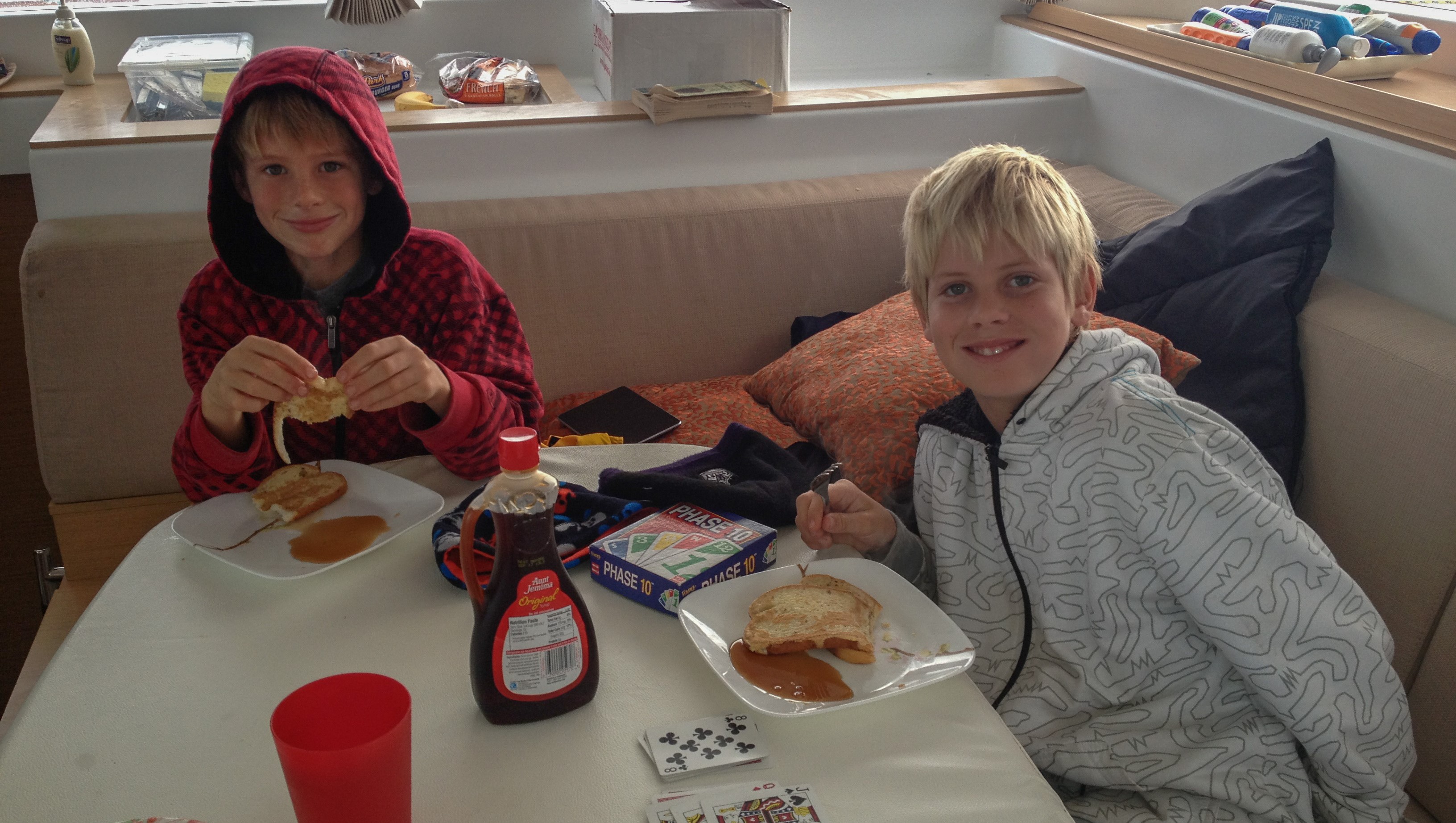
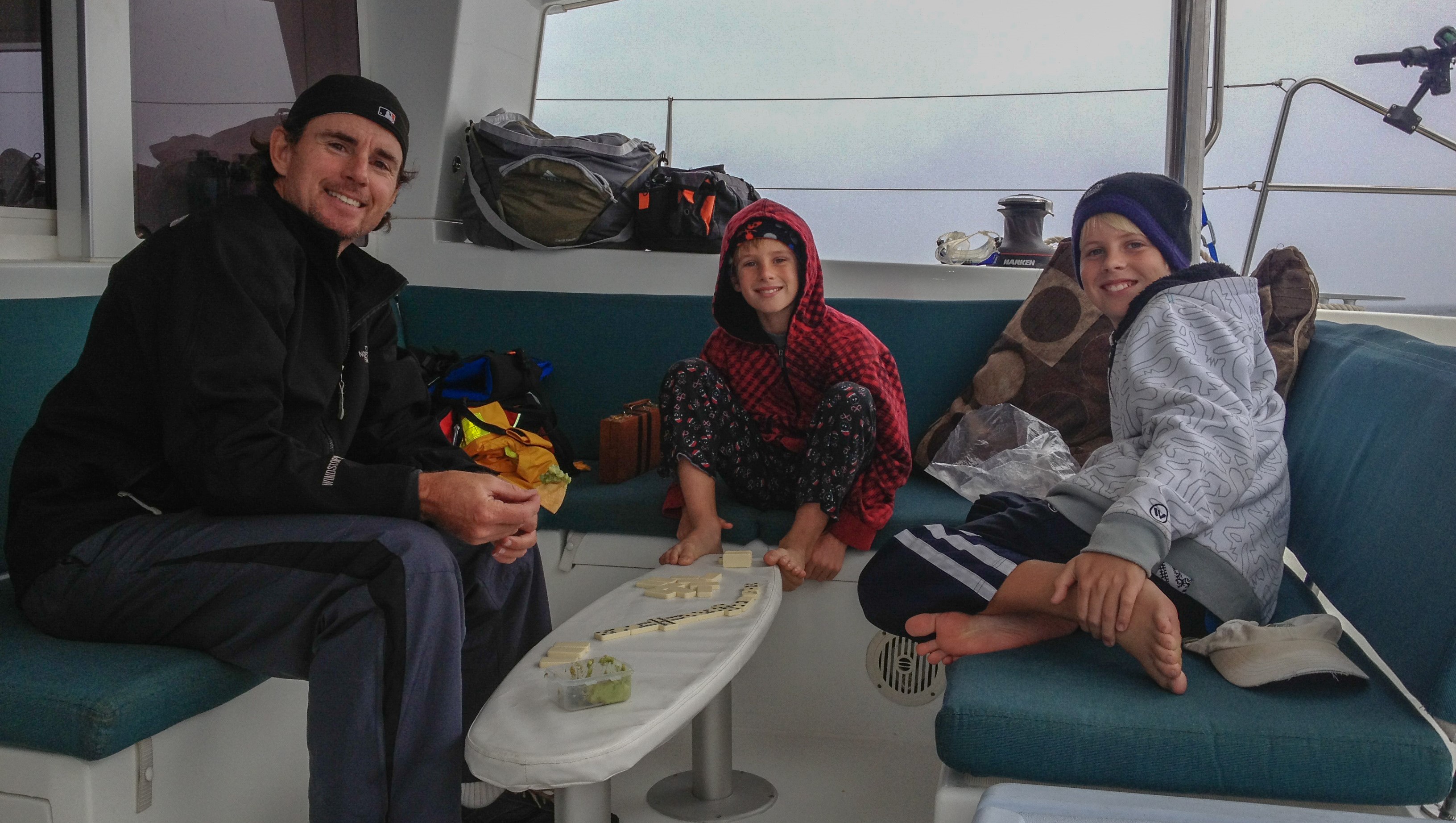
French toast breakfast in the salon on passage from San Diego.A game of dominoes in the cockpit. It was December, so the weather was on the chilly side.
Logbook – Dec 2, 2012 (Emerald Bay to Marina del Rey)
Passage Log Highlights
0643 Arrive Emerald Bay
1104 Depart Emerald Bay
1231 Light rain
1656 Arrive @ MDR Marina
Edit: From the beginning, we used 24 hour military time for the logbook.
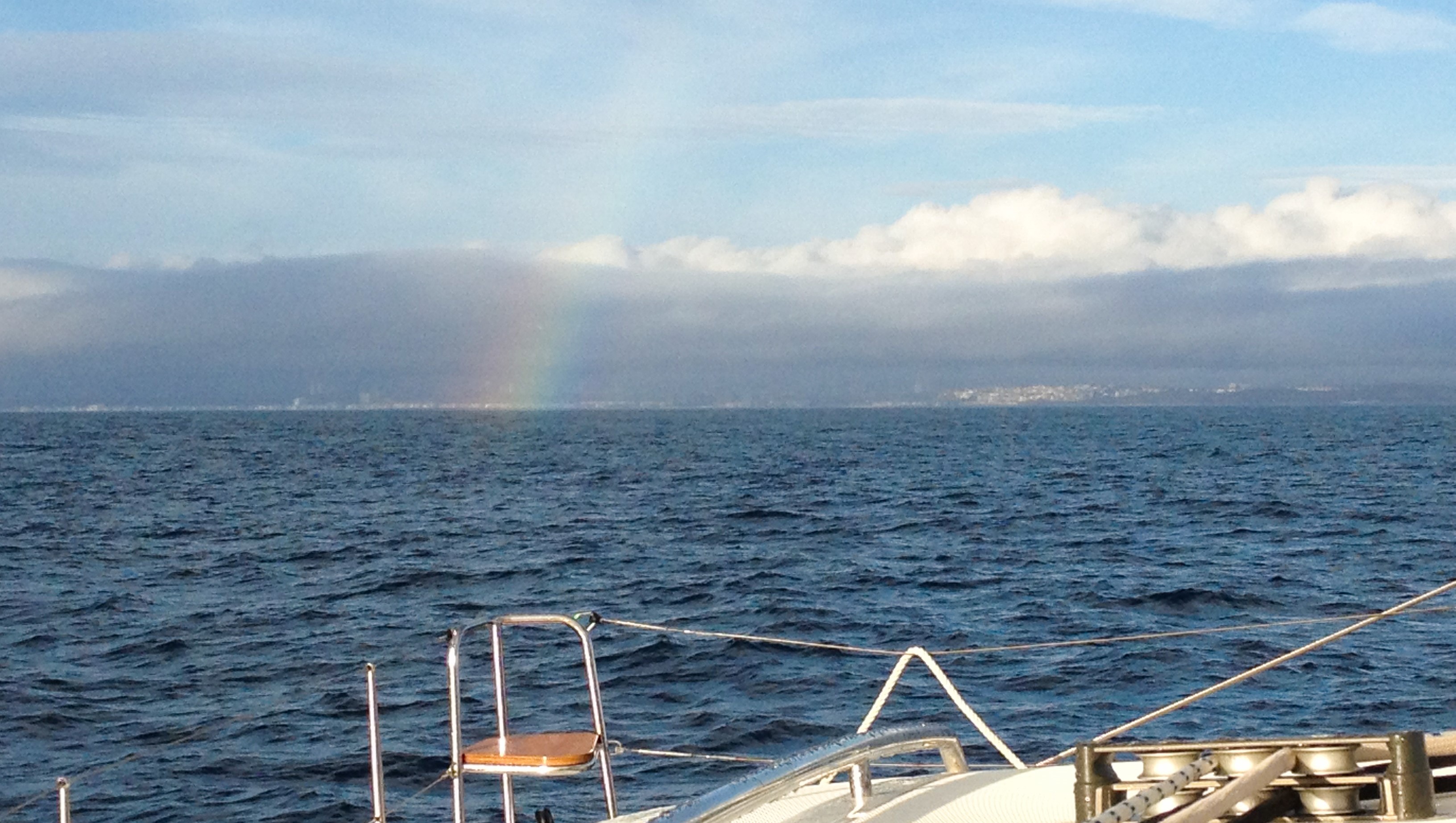
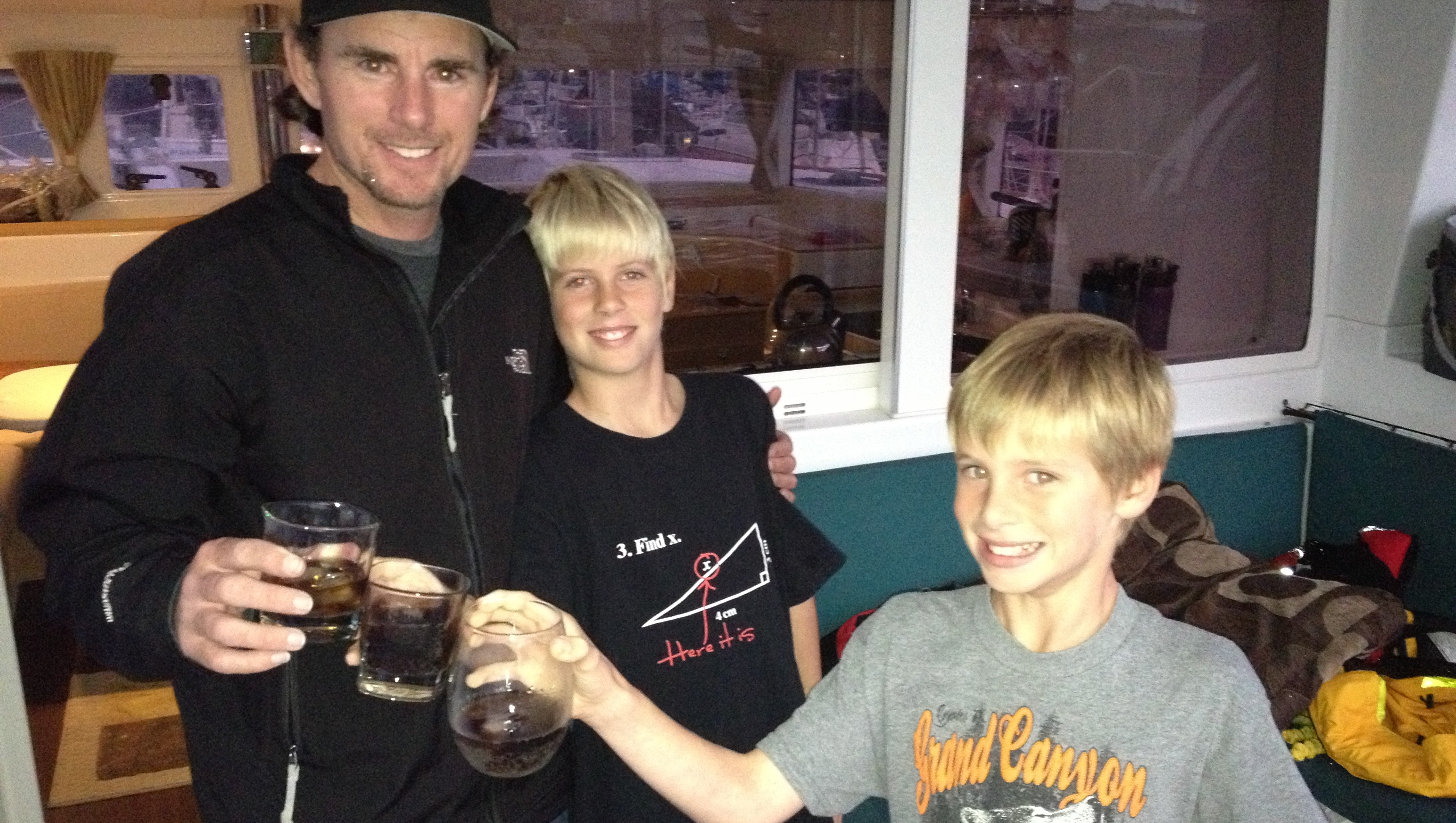
A rainbow guided our way as we were headed towards Marina del Rey.Safe arrival drinks!Exodus on an end tie at the Marina in Marina del Rey.
We had Exodus in Marina del Rey for almost 3 full months before our big departure. During that time we practiced navigating and docking; completed cleaning and maintenance work; and did a ton of provisioning and preparation. There was a lot to do but we also had a little fun.
Logbook – Dec 9, 2012 (Day Sail)
Passage Log Highlights
1423 Departure
1725 Arrive back at dock
Daily Notes
Deanne, Alex, Brenden practiced maneuvering with engines
Left the harbor to watch the sunset
Edit: Being a catamaran, Exodus has two engines, one at the back of each hull. This makes maneuvering a catamaran infinitely easier than a monohull.
Edit: The harbor at Marina del Rey is quite small compared to places like San Diego and Long Beach, so it was easy and quick to get from the dock out to open ocean.
Brenden practices parking on a dime next to a buoy in the Marina del Rey harbor.
Logbook – Dec 16, 2012 (Day Sail)
Passage Log Highlights
1345 Departure
1552 Arrival
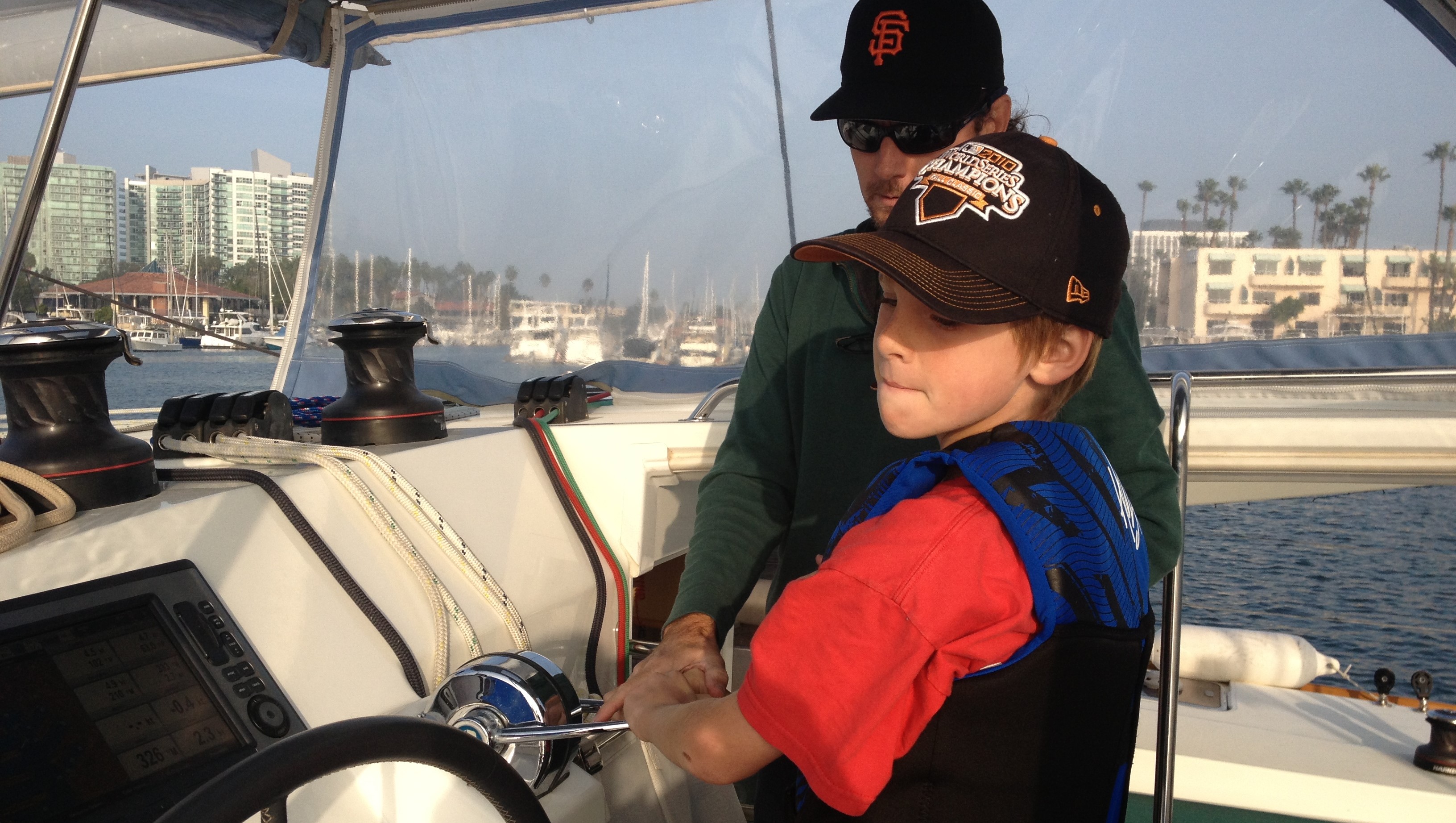
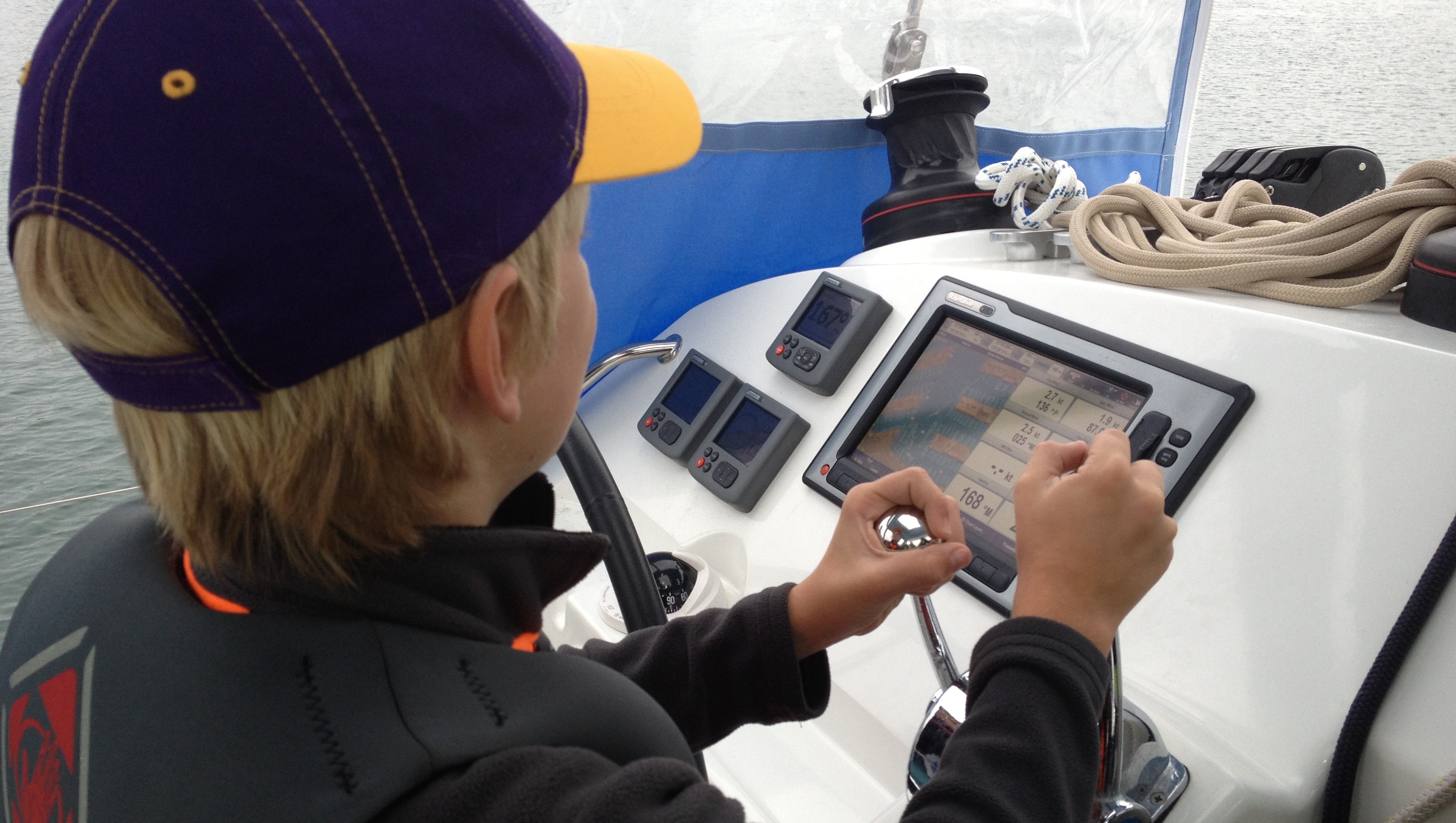
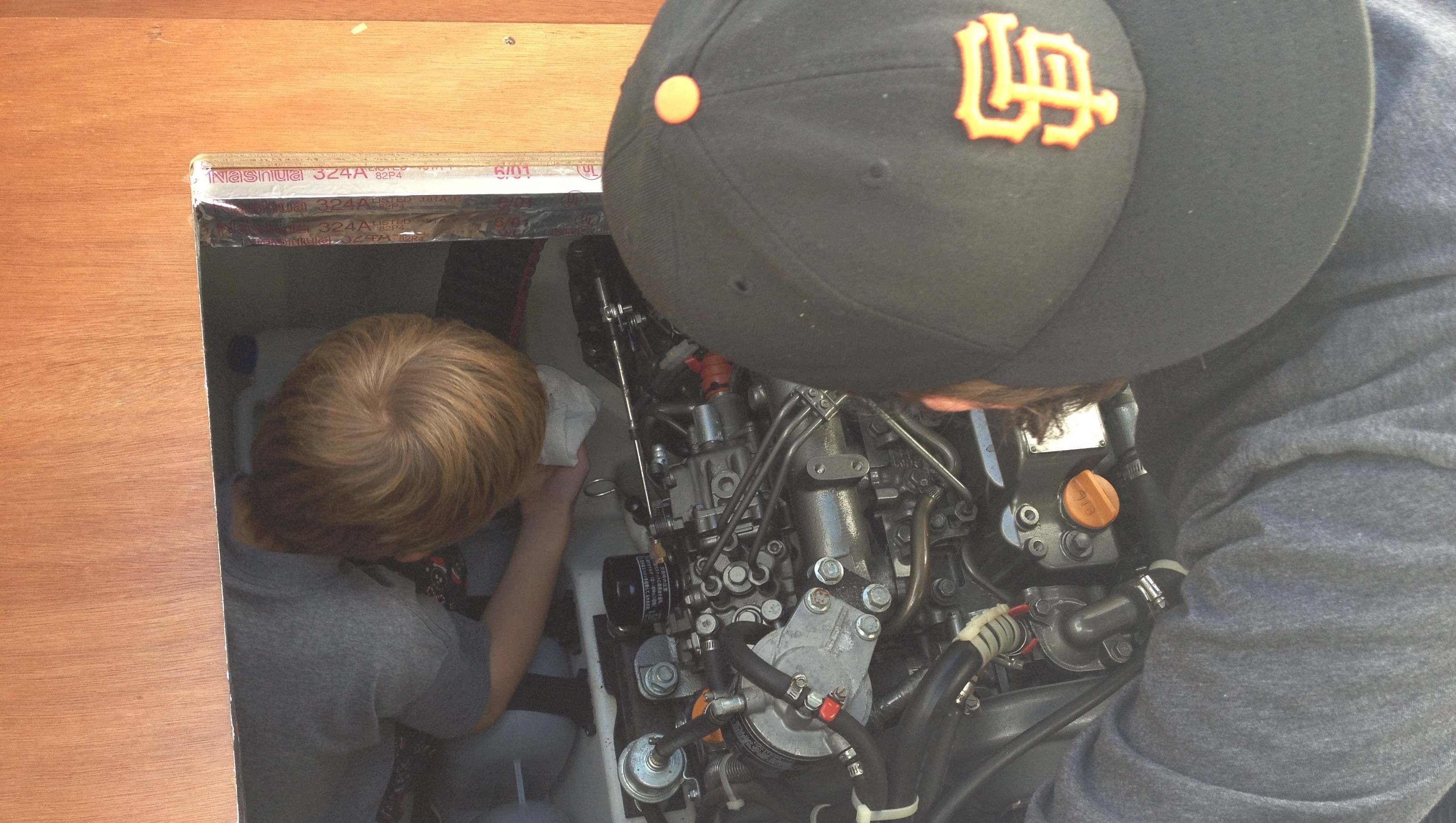
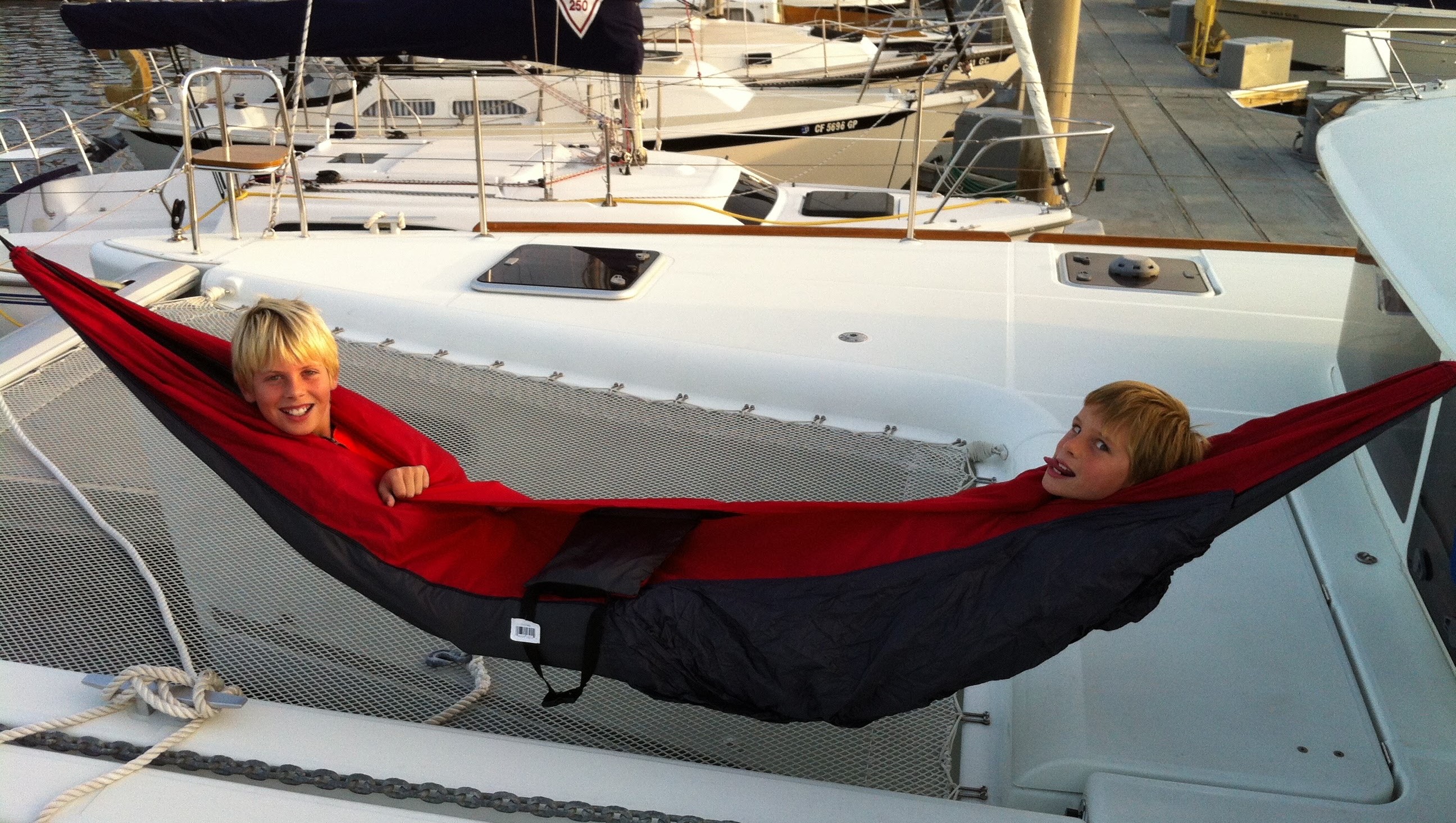
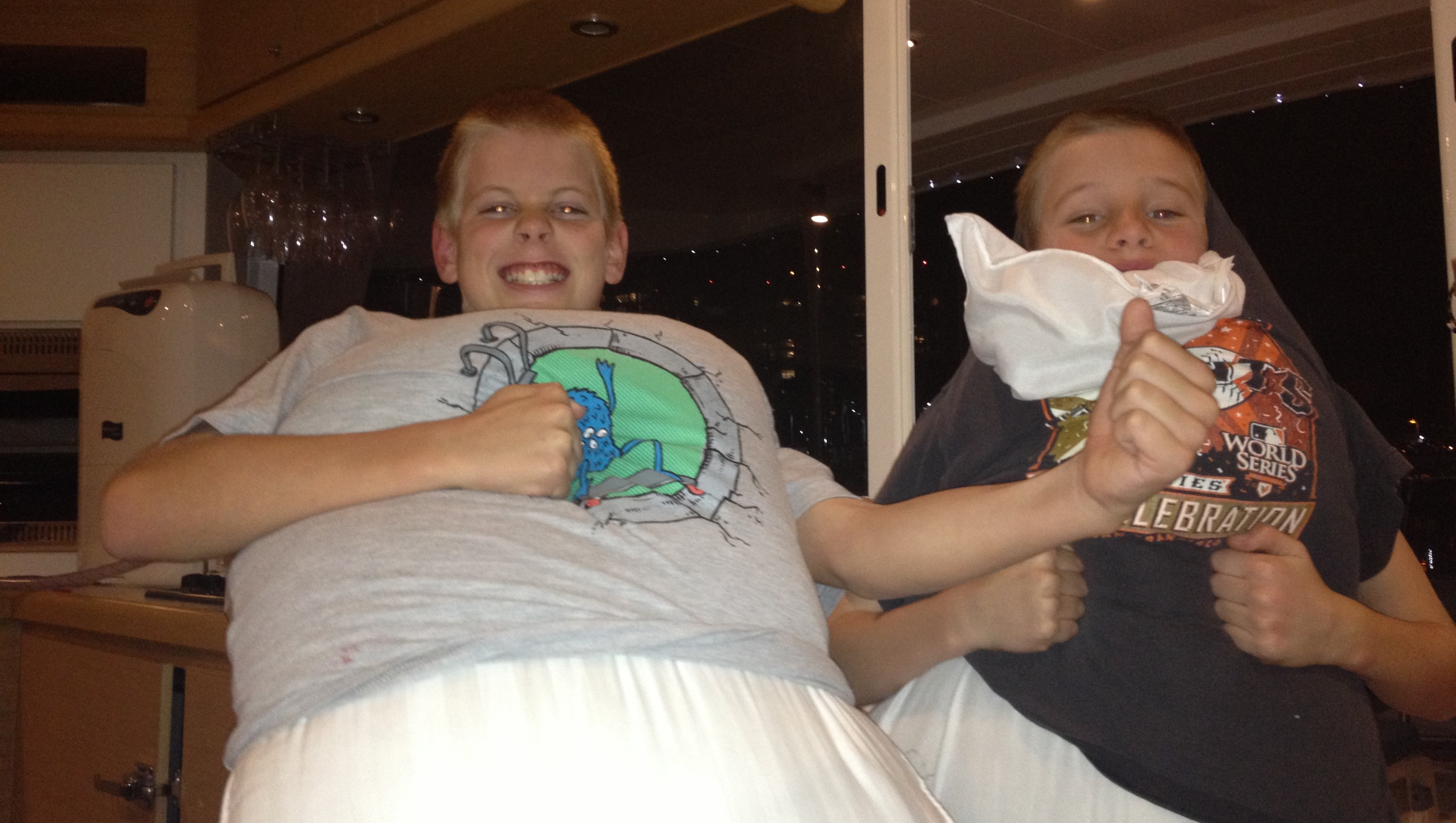
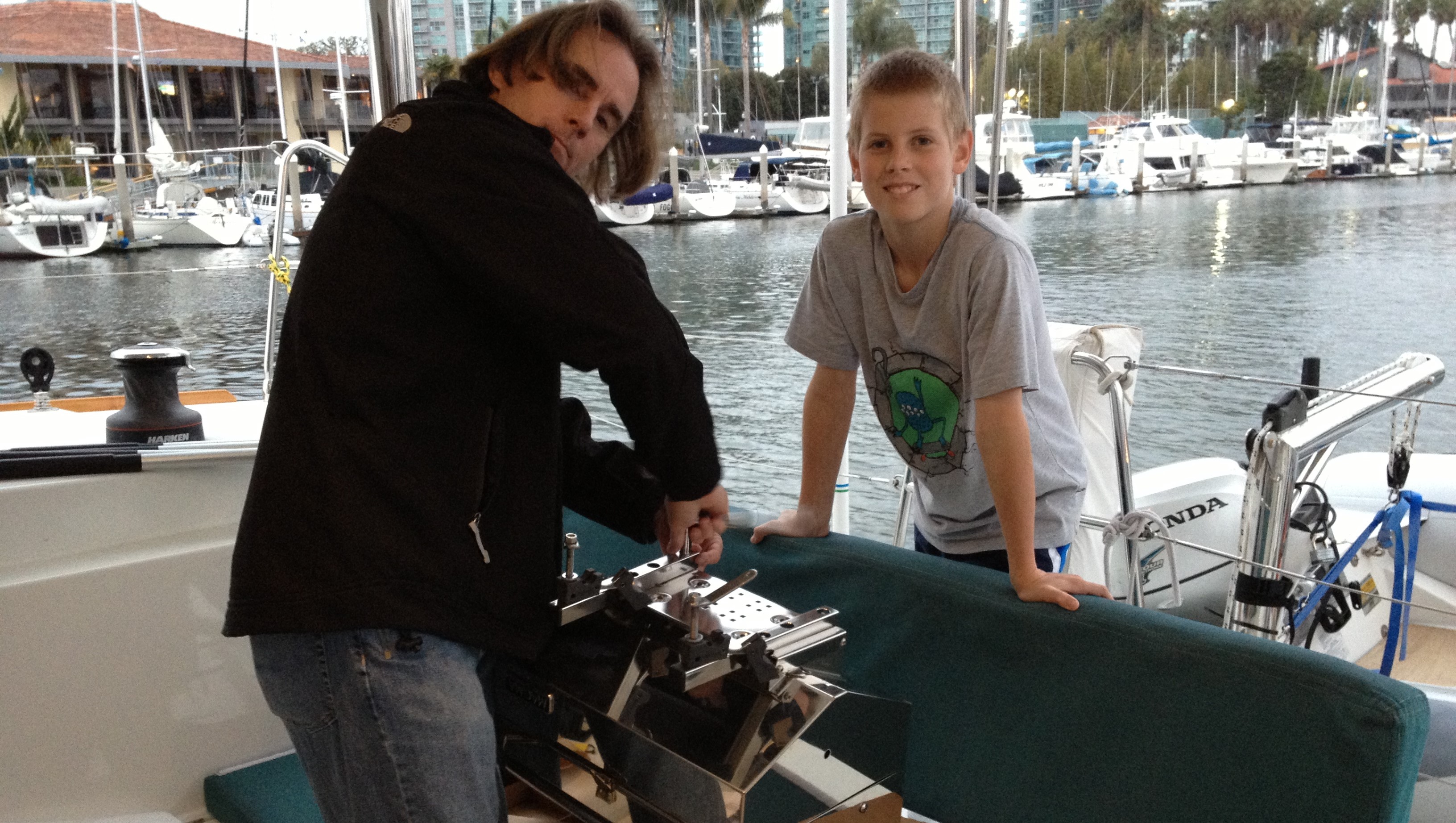
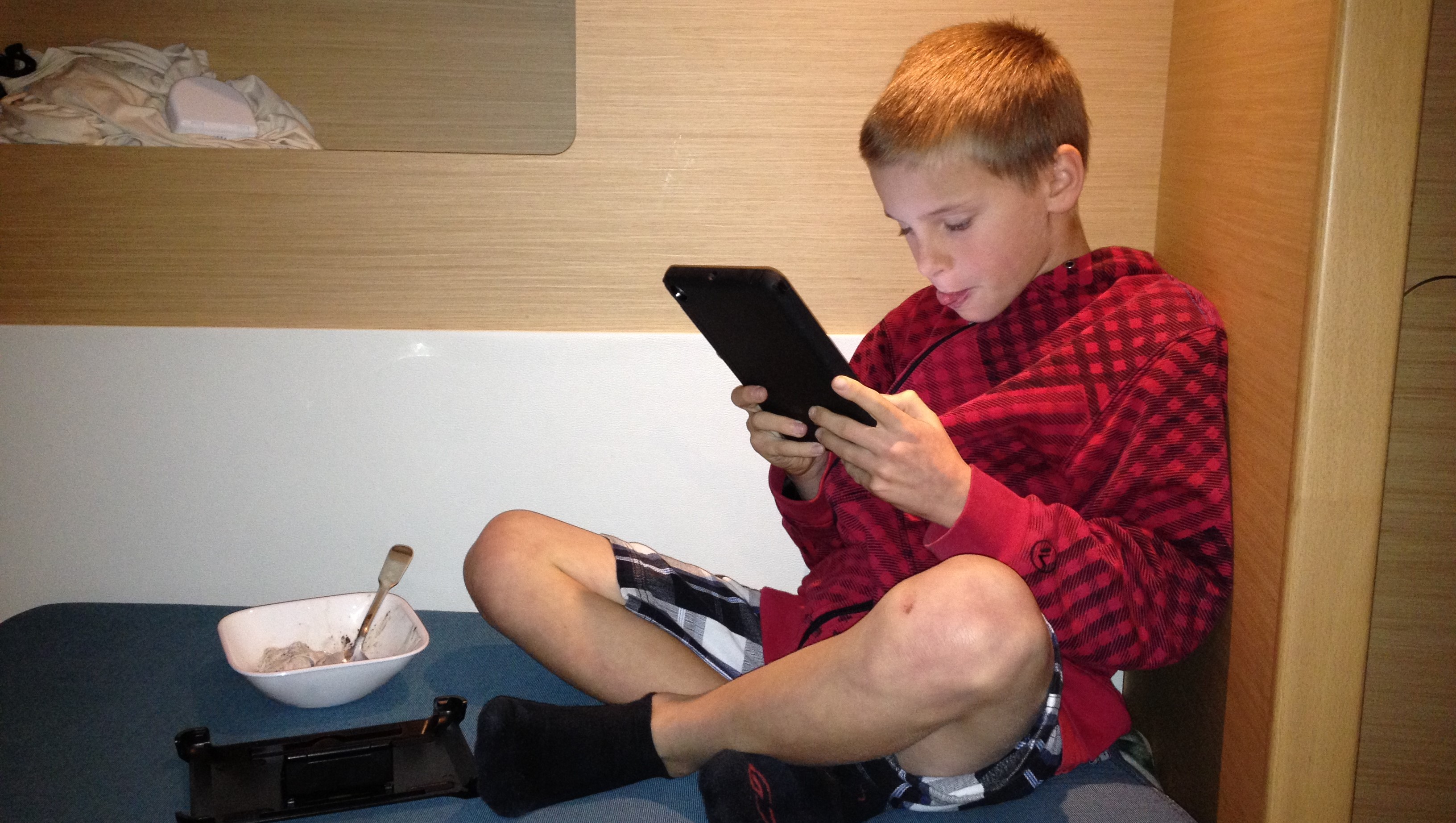
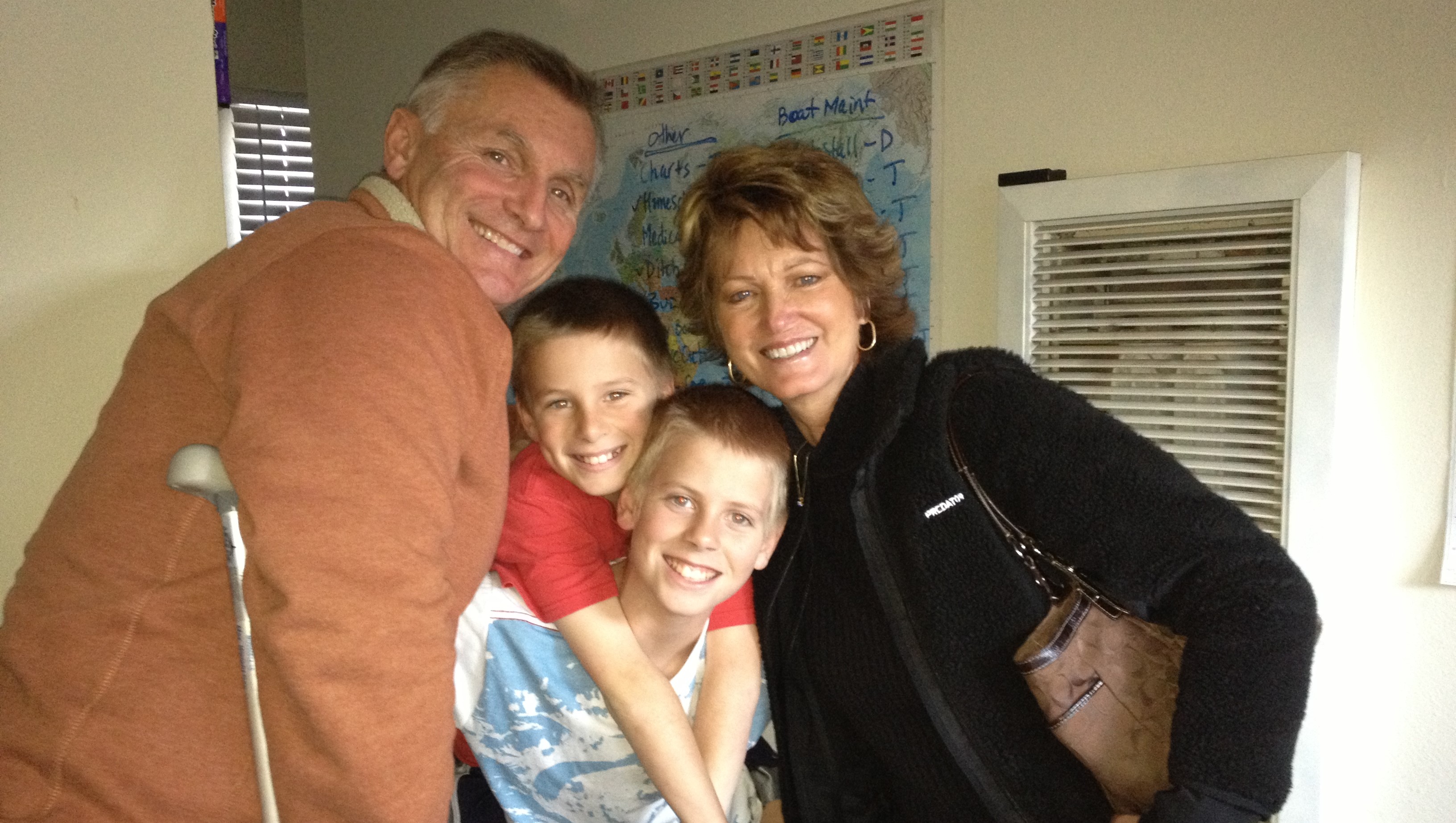
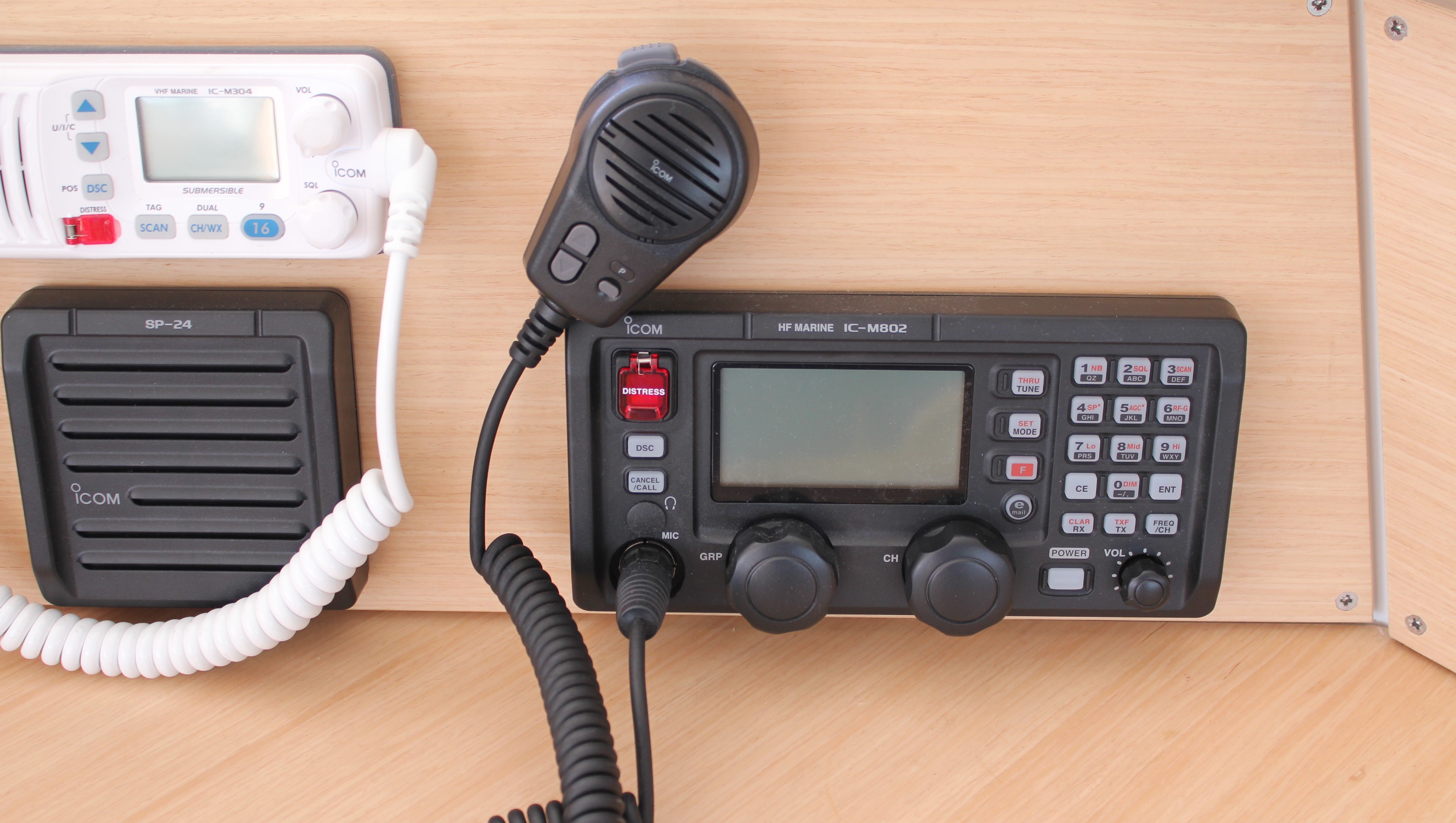
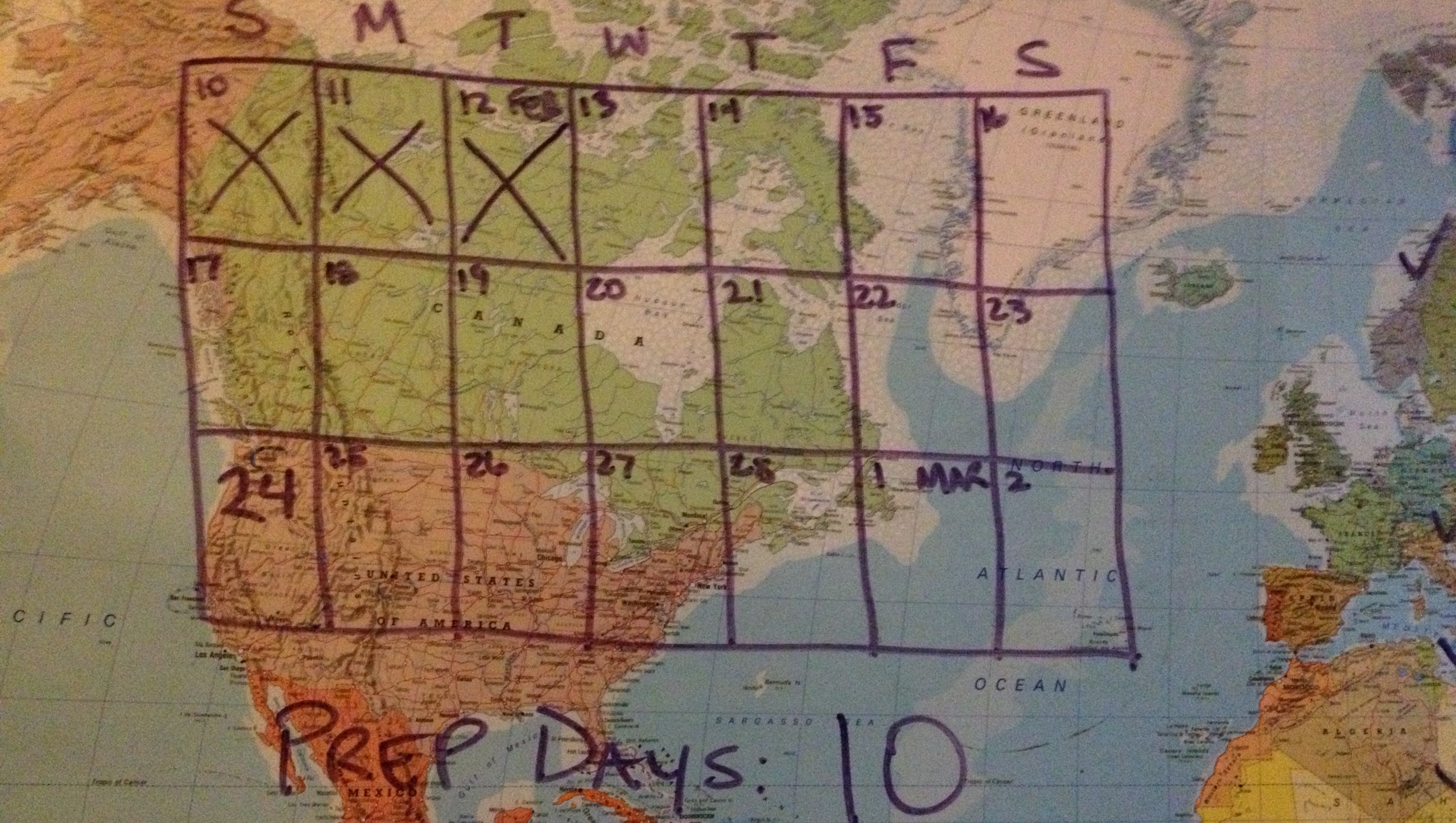
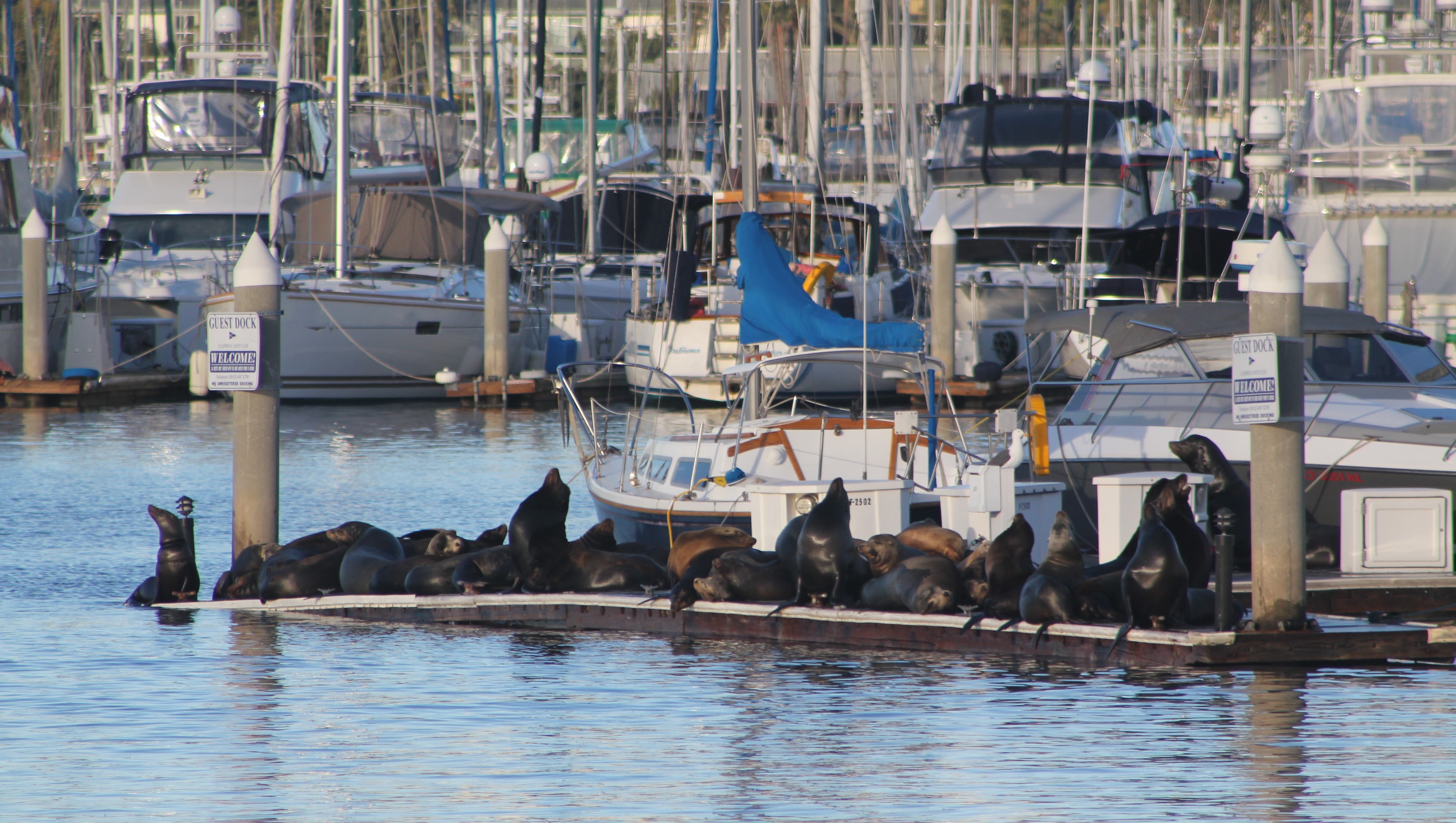
Alex uses the chart plotter to navigateBrenden helps with an oil change – he’s the best at fitting in tight spaces.Uncle Mike visits! He gave us a ton of medical supplies, which thankfully we never needed.Hammock burrito!Late-night pillow shenanigans in the salon.Andrew visits!A day sail with Andrew.Anthony visits!Sunset at the marina.On Feb 1, 2013, we completed the offshore delivery and became official owners of Exodus.Proud new owner!Another beautiful sunset at the marina.Putting together the new BBQ.Chillin’ and eatin’ ice cream in Brenden’s berth. Being a catamaran, Exodus has two hulls. In the port hull there are two berths, so the boys each had their own rooms, each with a double wide bed. Pictured here is the forward berth, which was claimed by Brenden, so eventually half of the bed was taken up with bins of legos.Chillin’ in Brenden’s berth, eating ice cream and playing some Minecraft.Papa and Nana visit!We installed an SSB radio, which was the only major outfitting we had to do in order to get Exodus ready for offshore cruising.Departure countdown.We call him Brenden the boat diver.Brenden the boat diver.Brenden the boat diver.Jen and Heather visit. Oh how I will miss these ladies.Sea Lions on one of the end ties at the marina. Luckily they never invaded Exodus!
We were fortunate to be able to spend 2 weeks on Exodus with the previous owners (John and Sherry) before we officially took ownership. The Baja Ha Ha is an annual boat rally from San Diego to Cabo San Lucas, and it’s known for being an initiation for novice cruisers looking to spend the cruising season in Mexico before making the jump across The Pacific.
It was an informative trip, but also a lot of fun. Joe and Cole rounded out the crew, and with Joe’s sailing and boat knowledge and Cole’s culinary talents, we learned a lot. We had mostly calm weather and mostly NW winds, which meant a lot of motoring and some spinnaker sailing. We had mixed feelings not taking the kids, but overall I think it was best that our focus was on learning as much as we could.
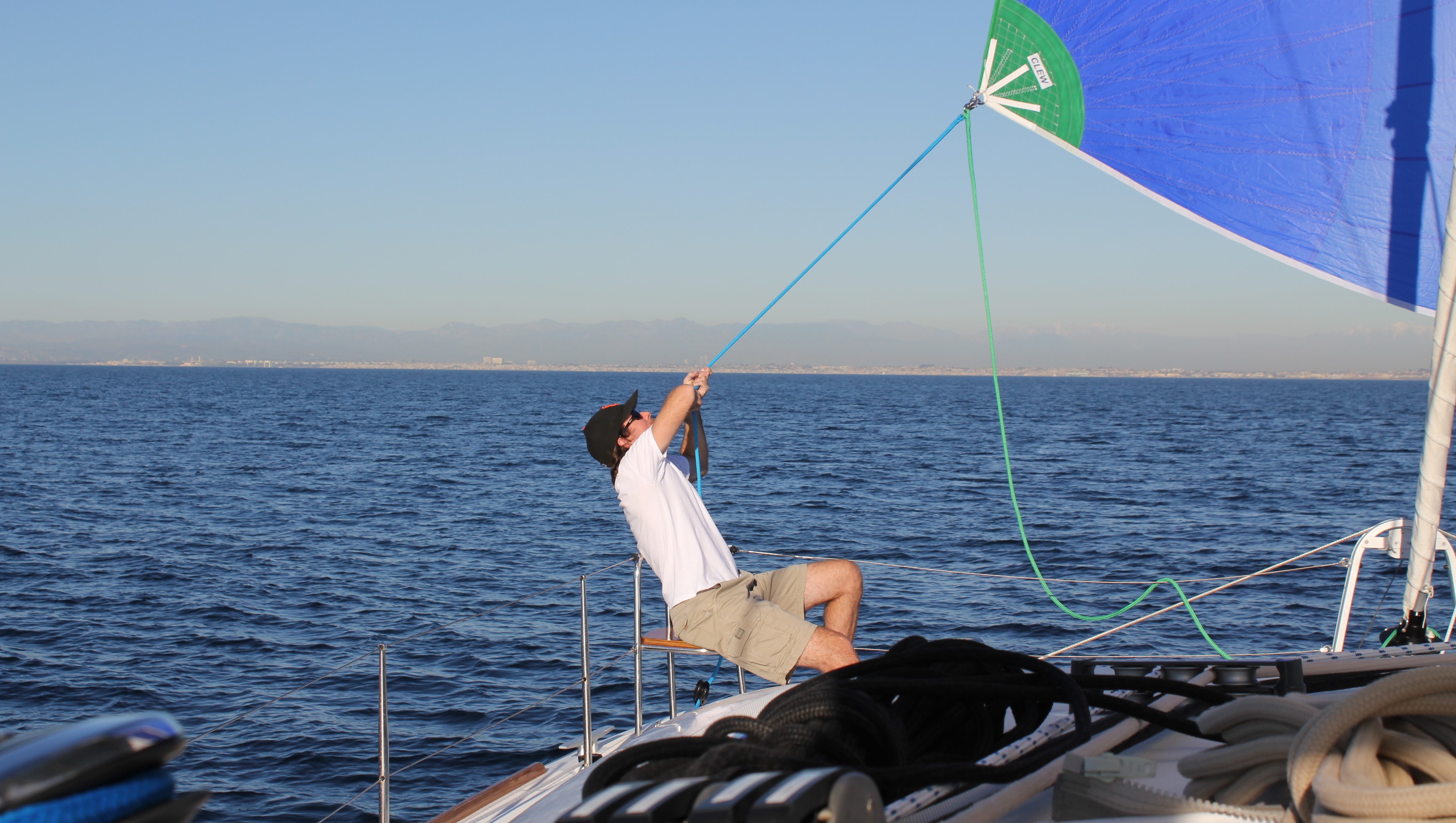
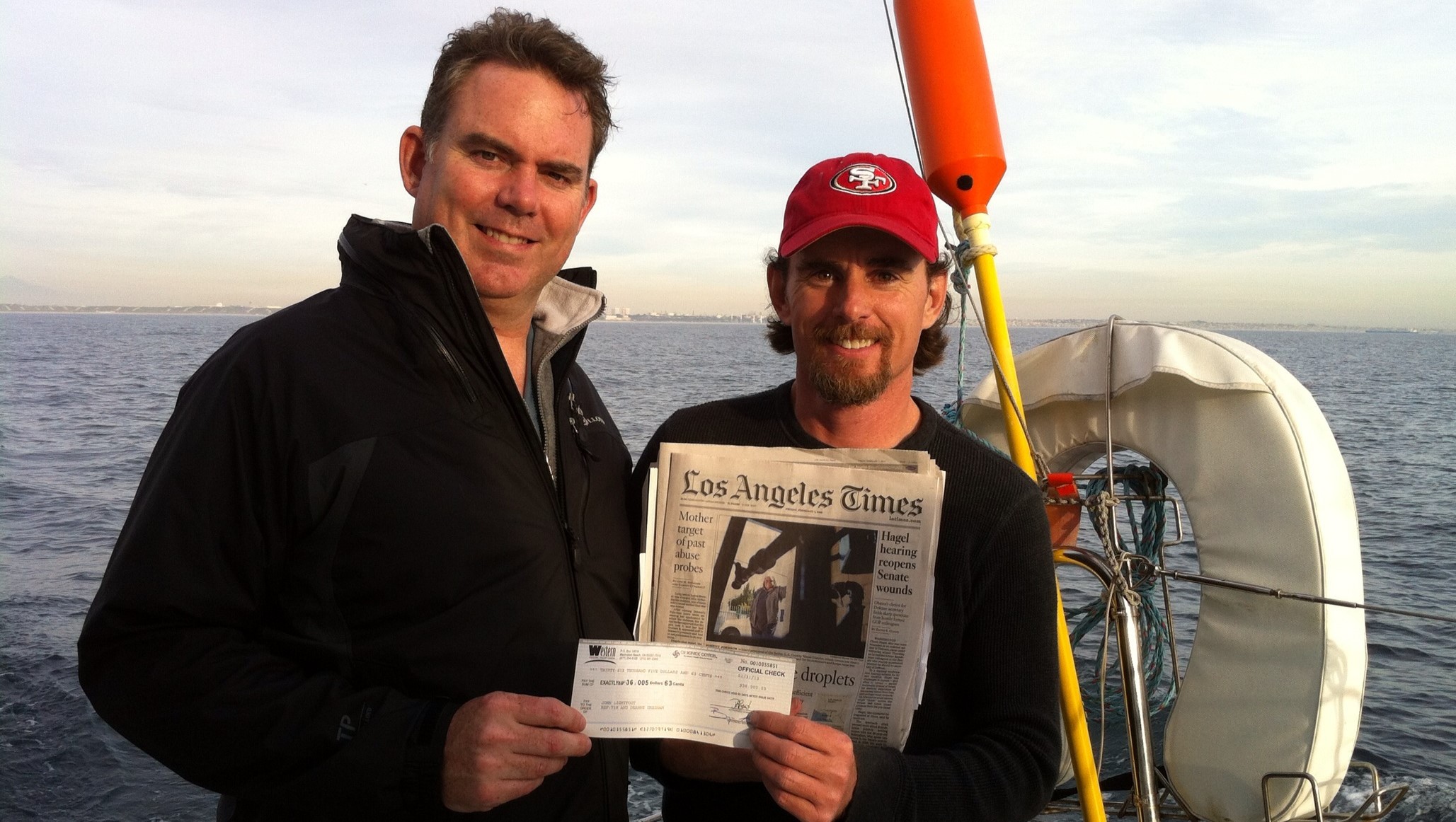
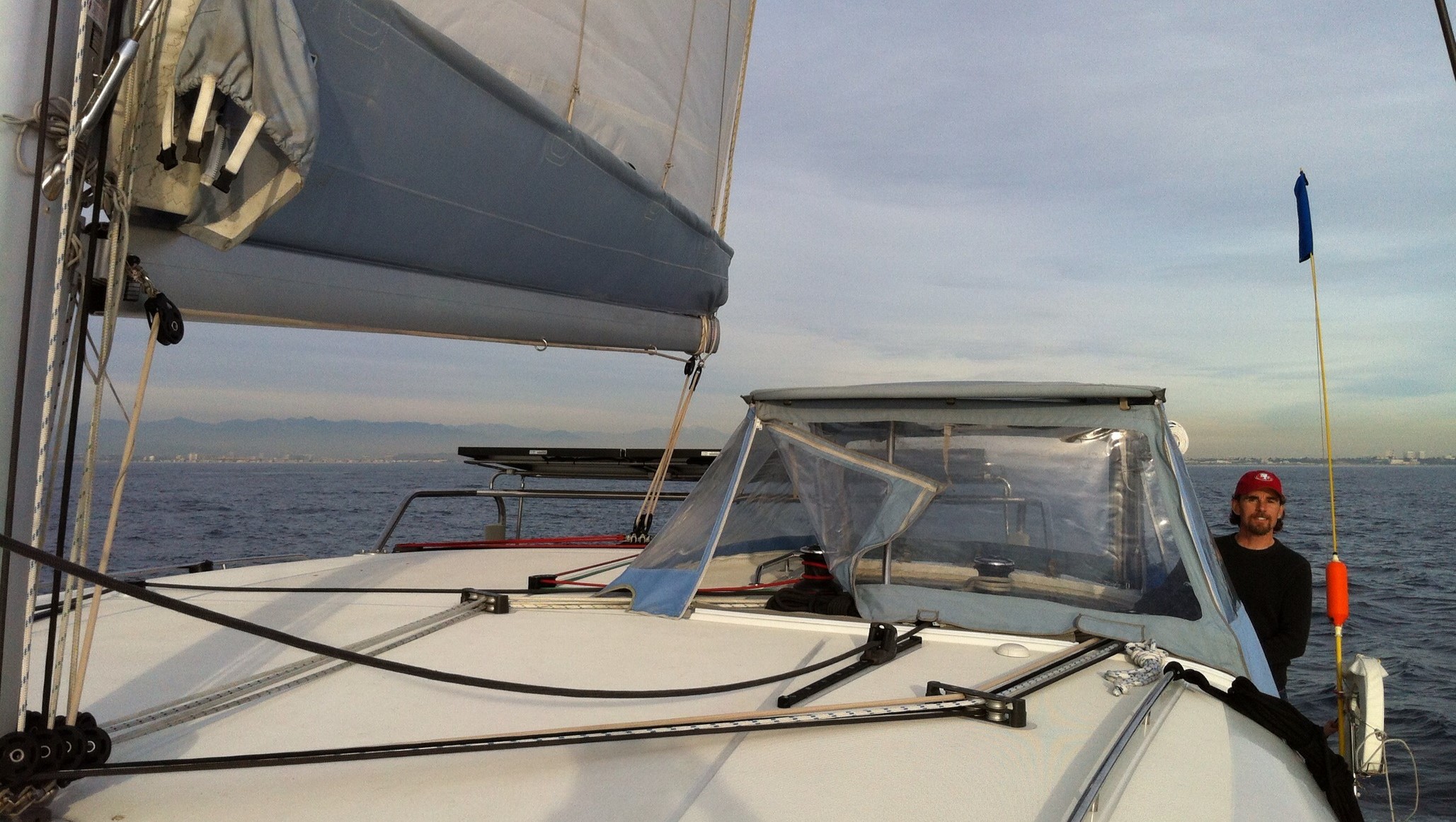
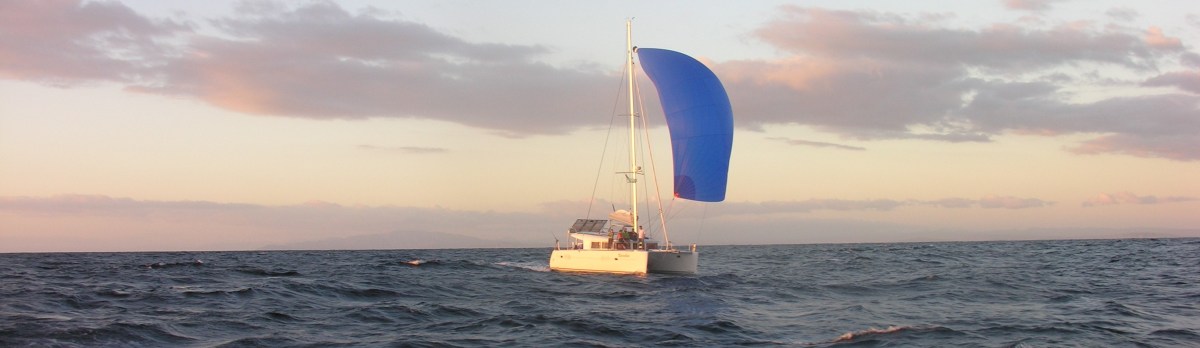
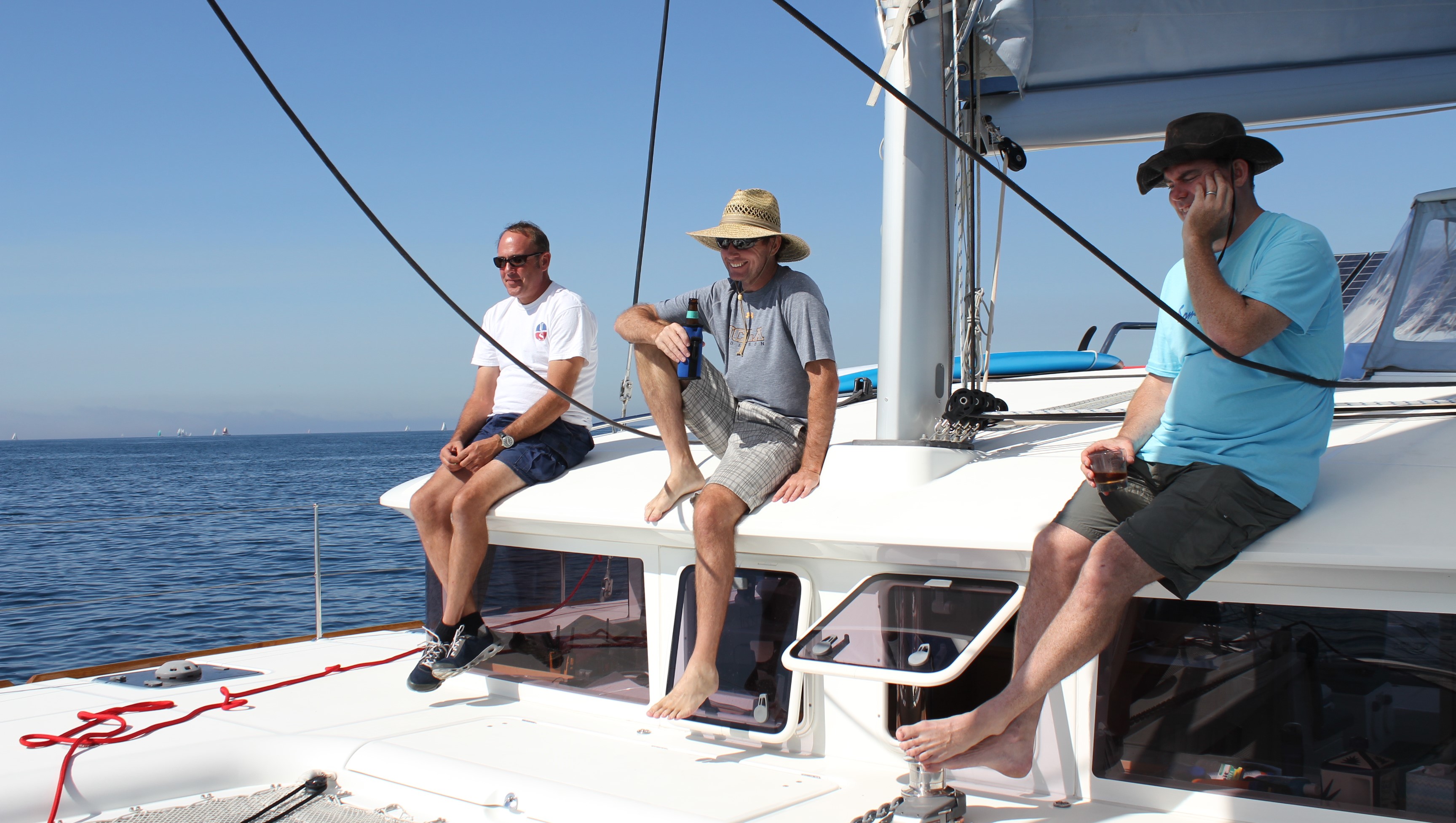
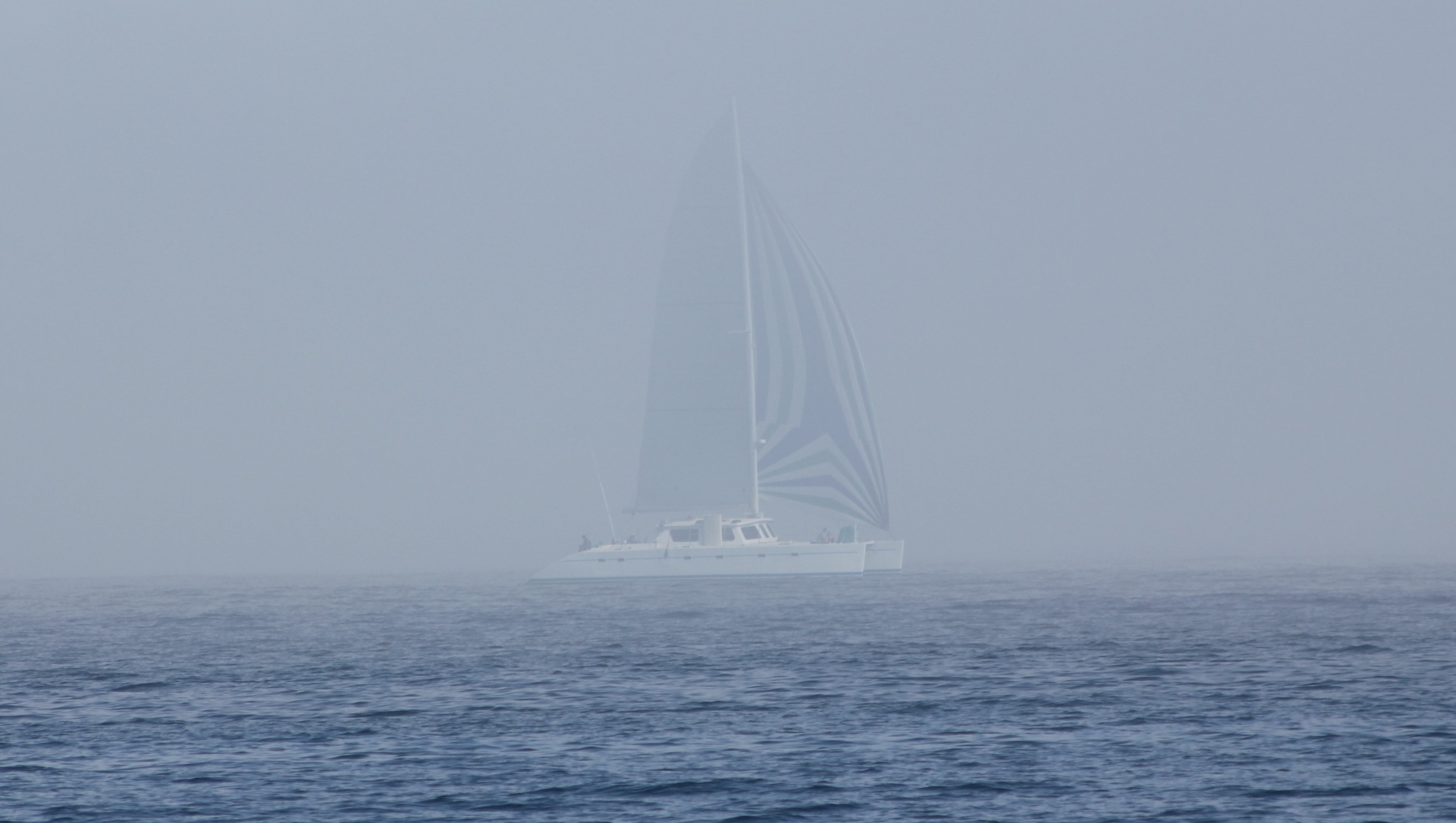
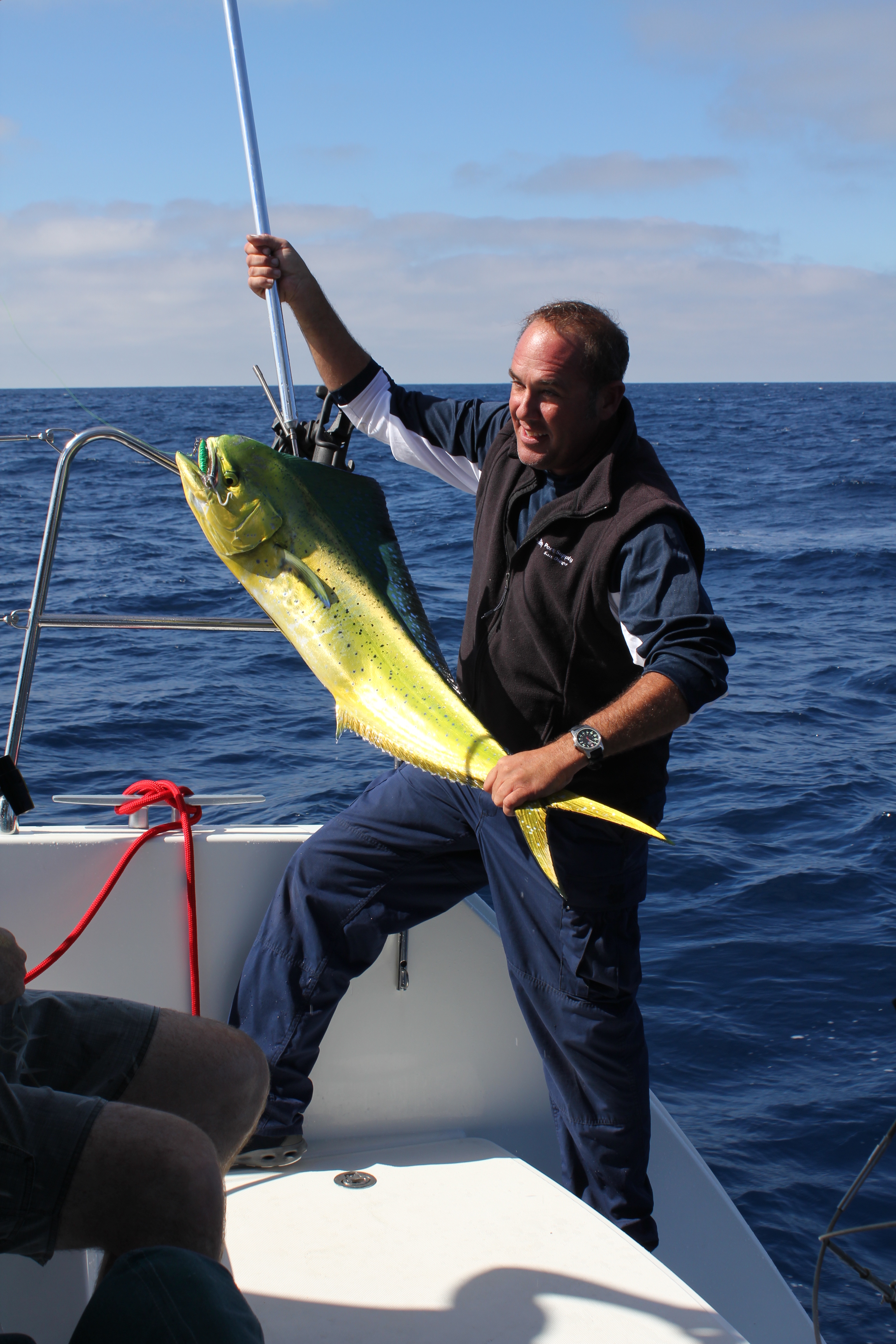
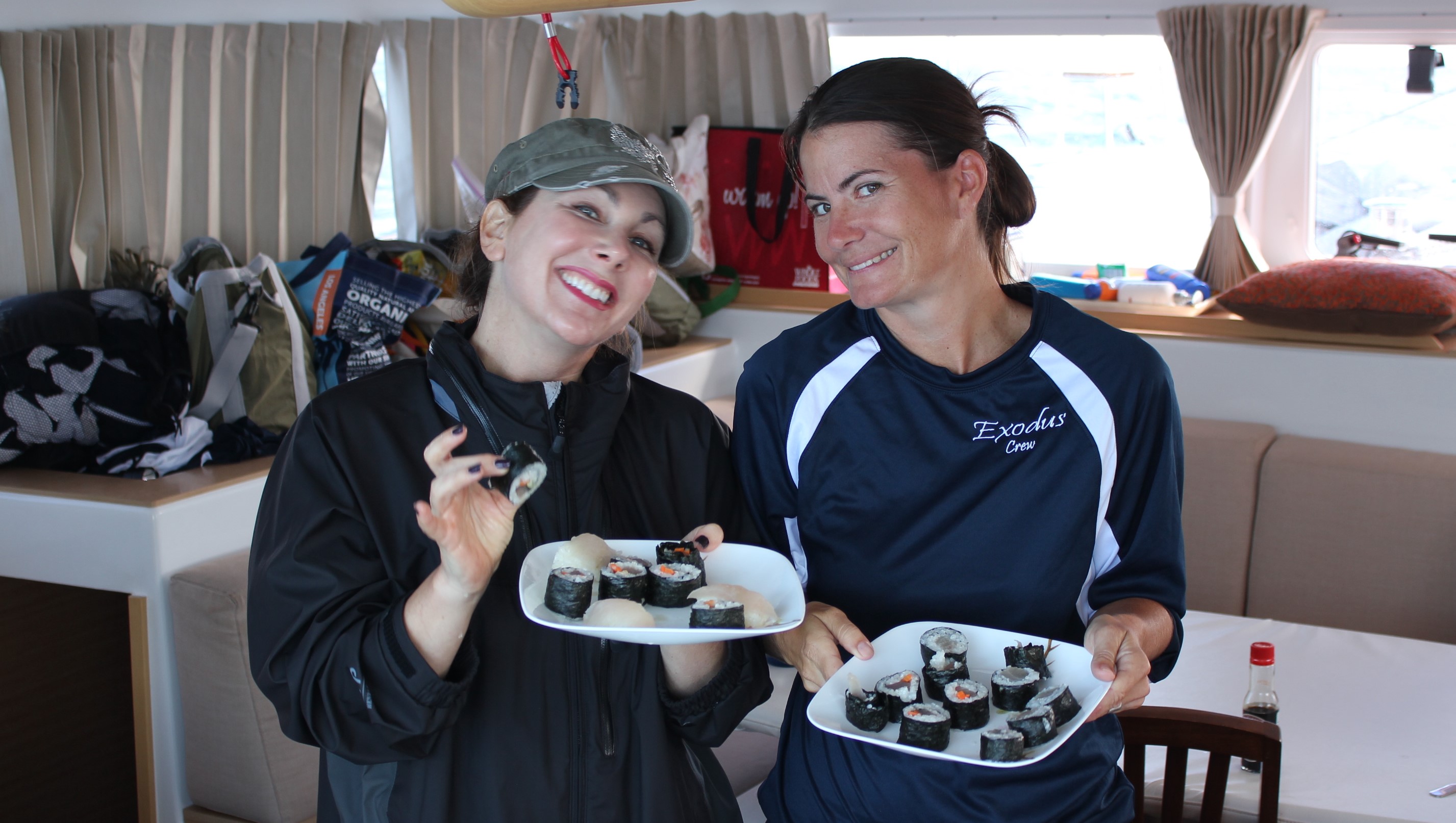
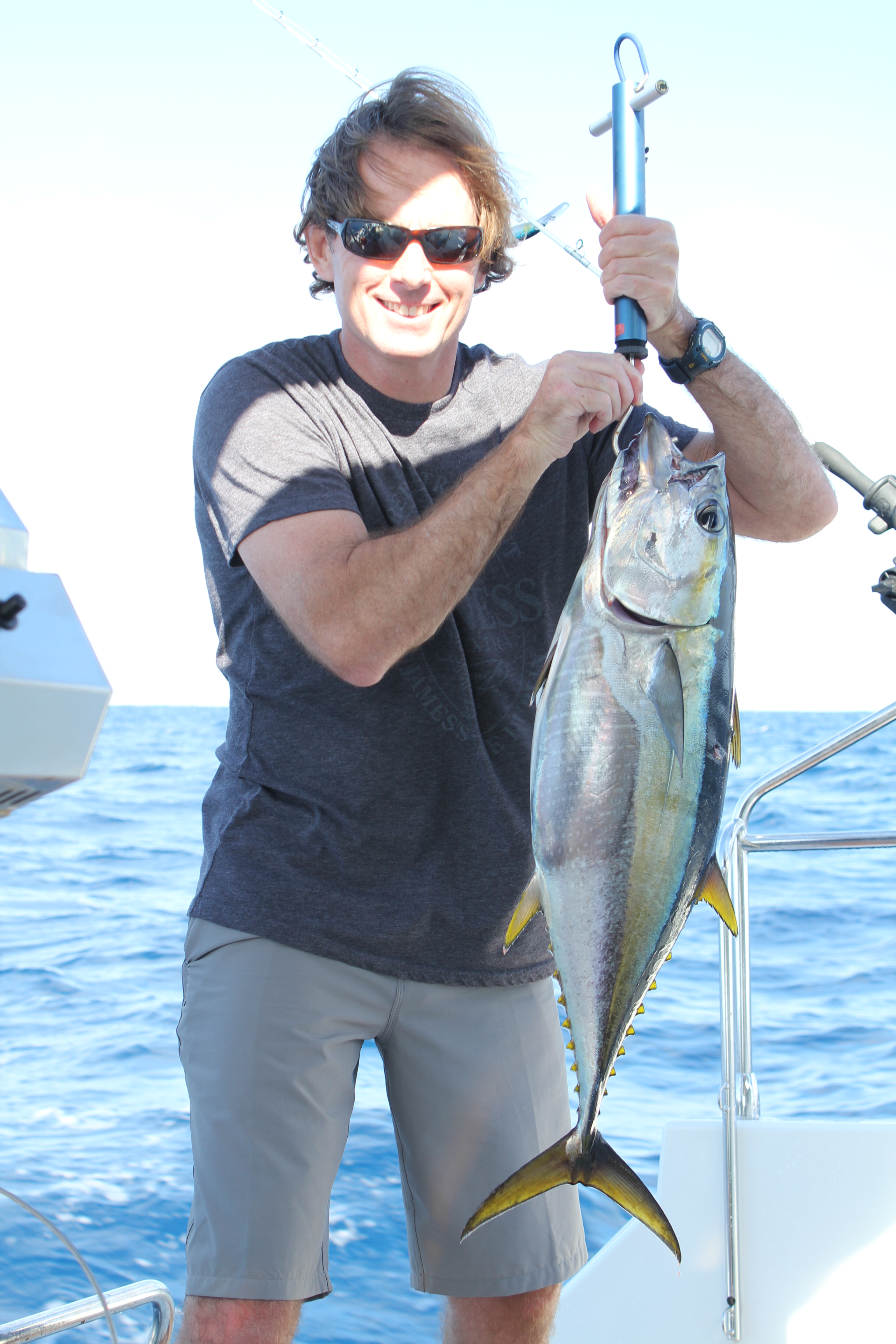
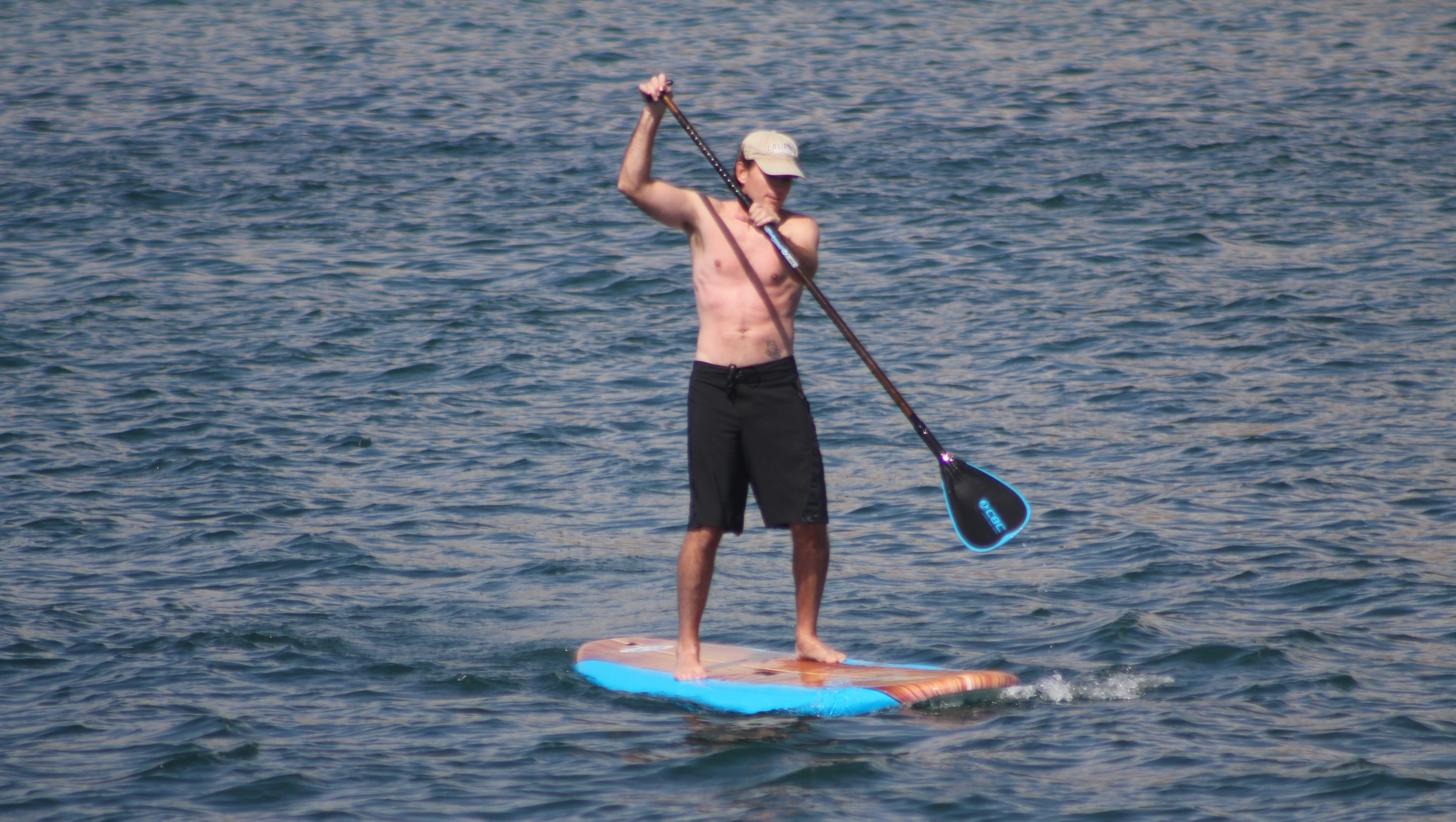
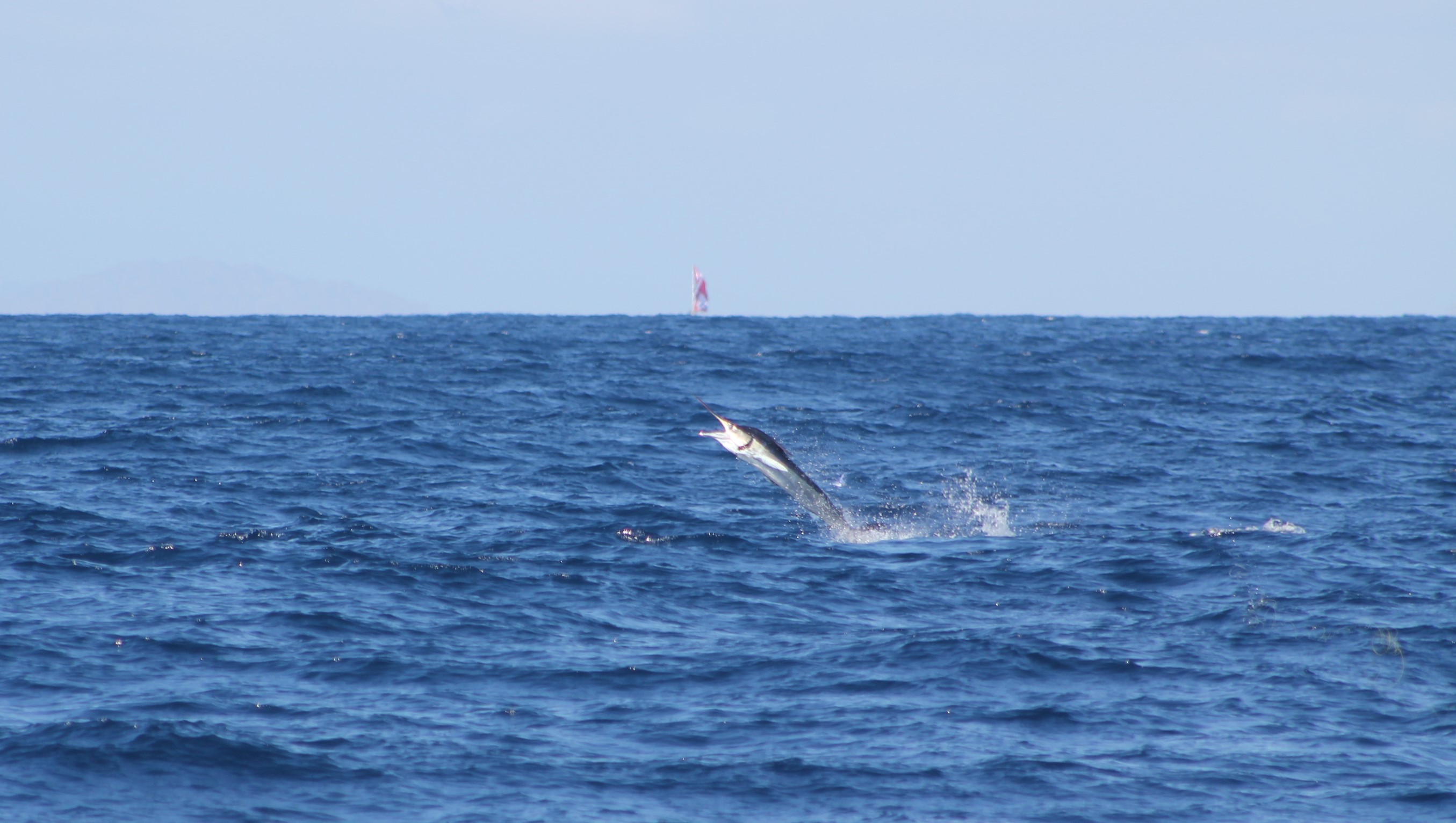
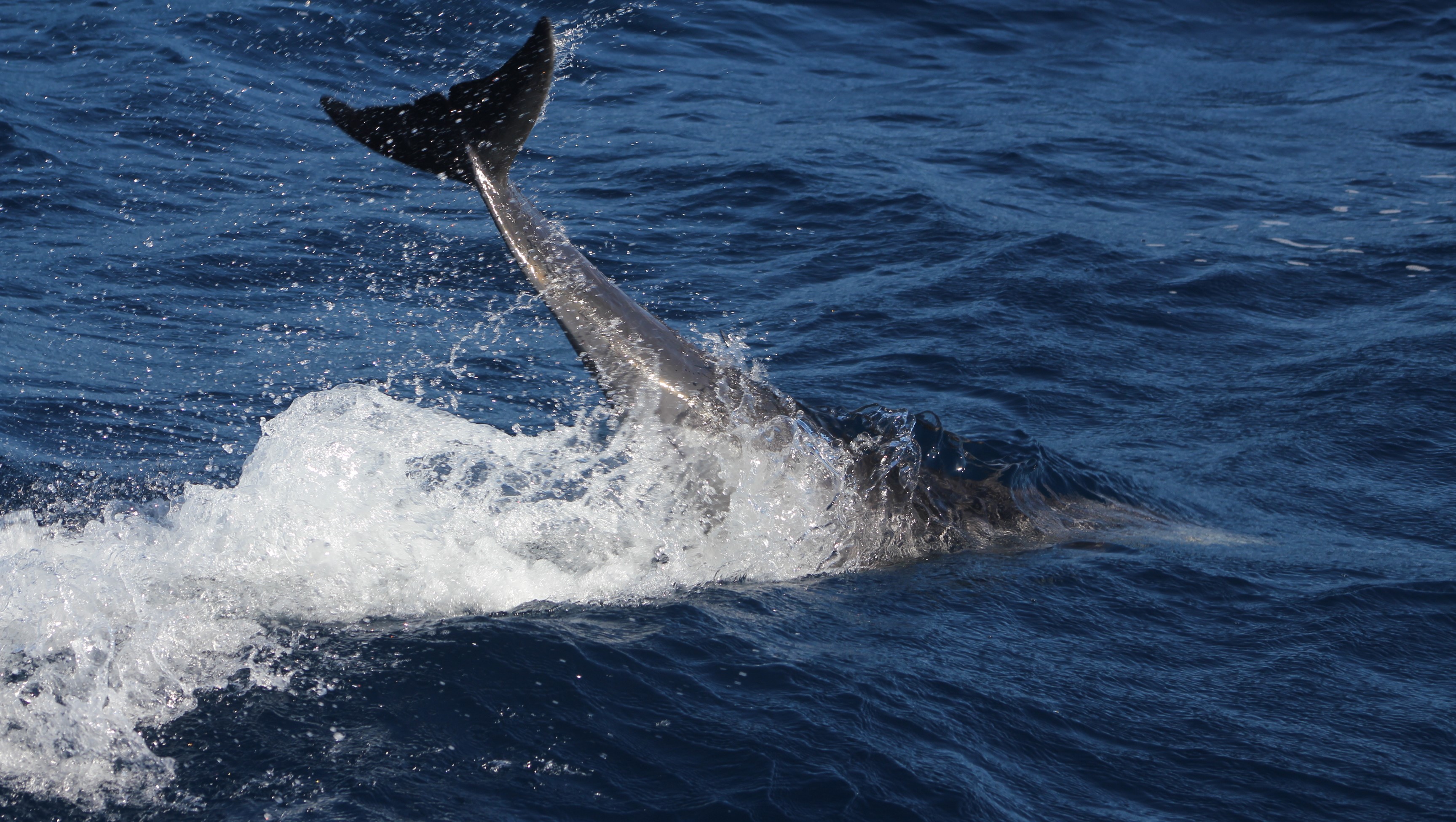
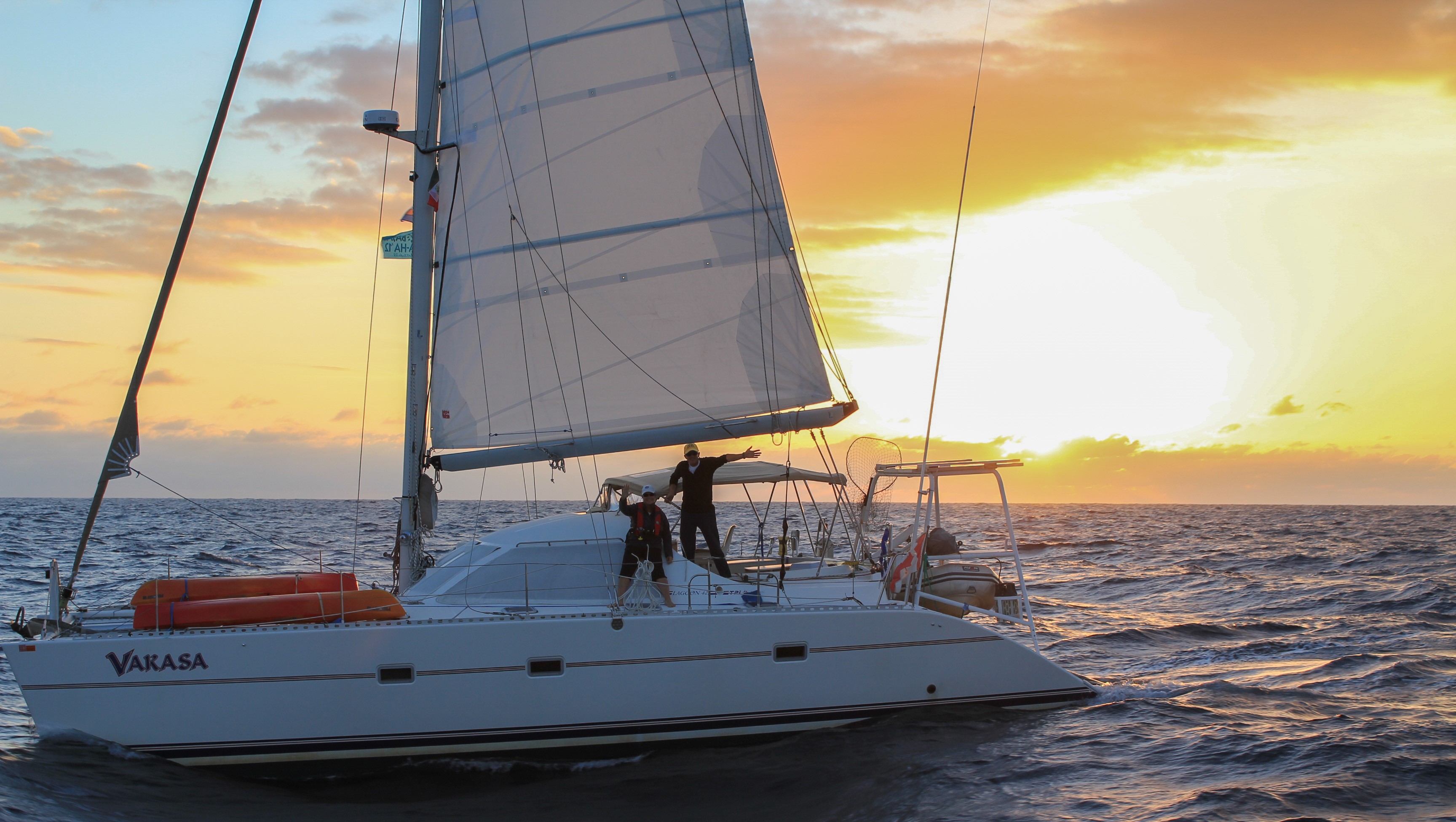
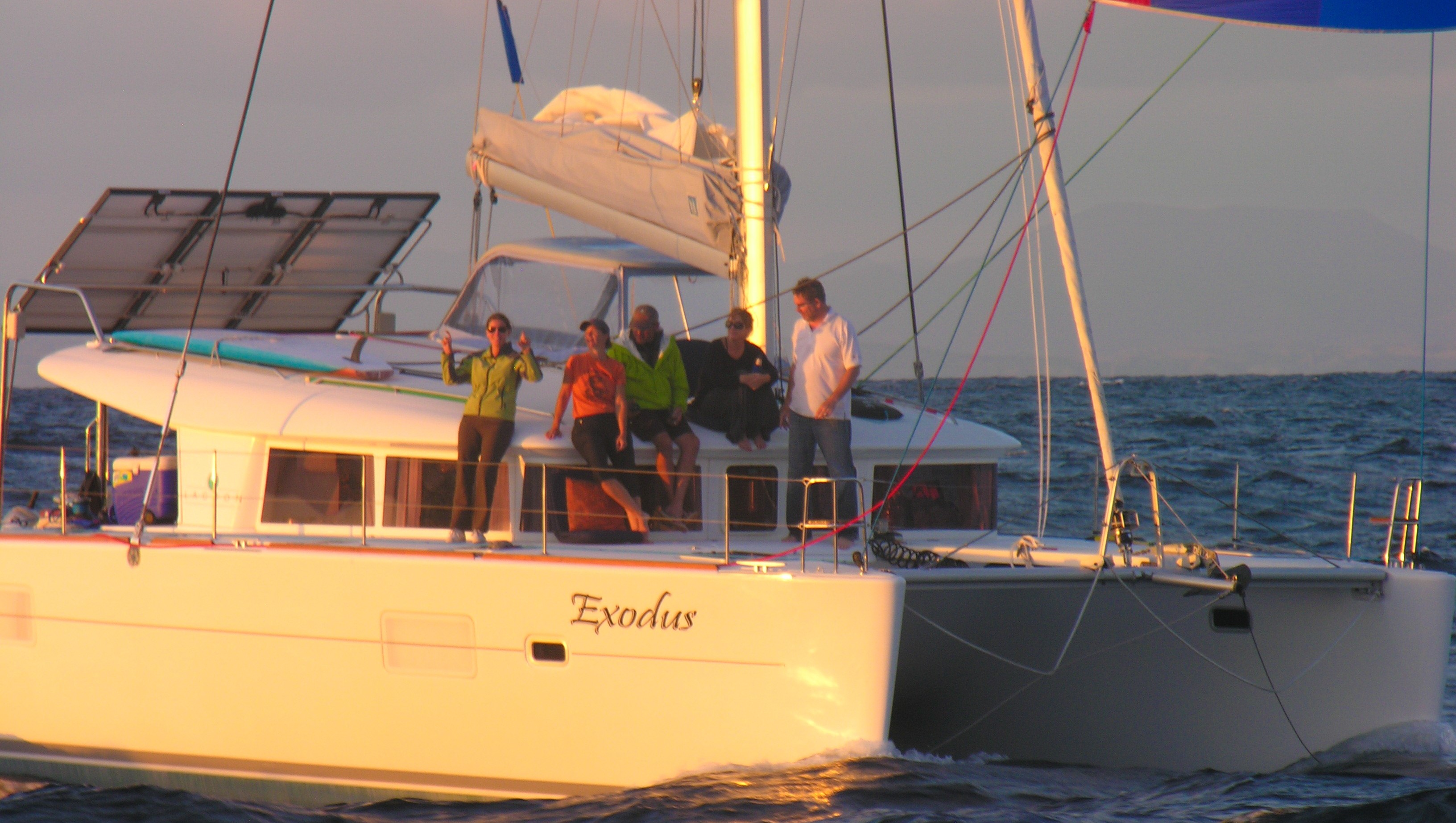
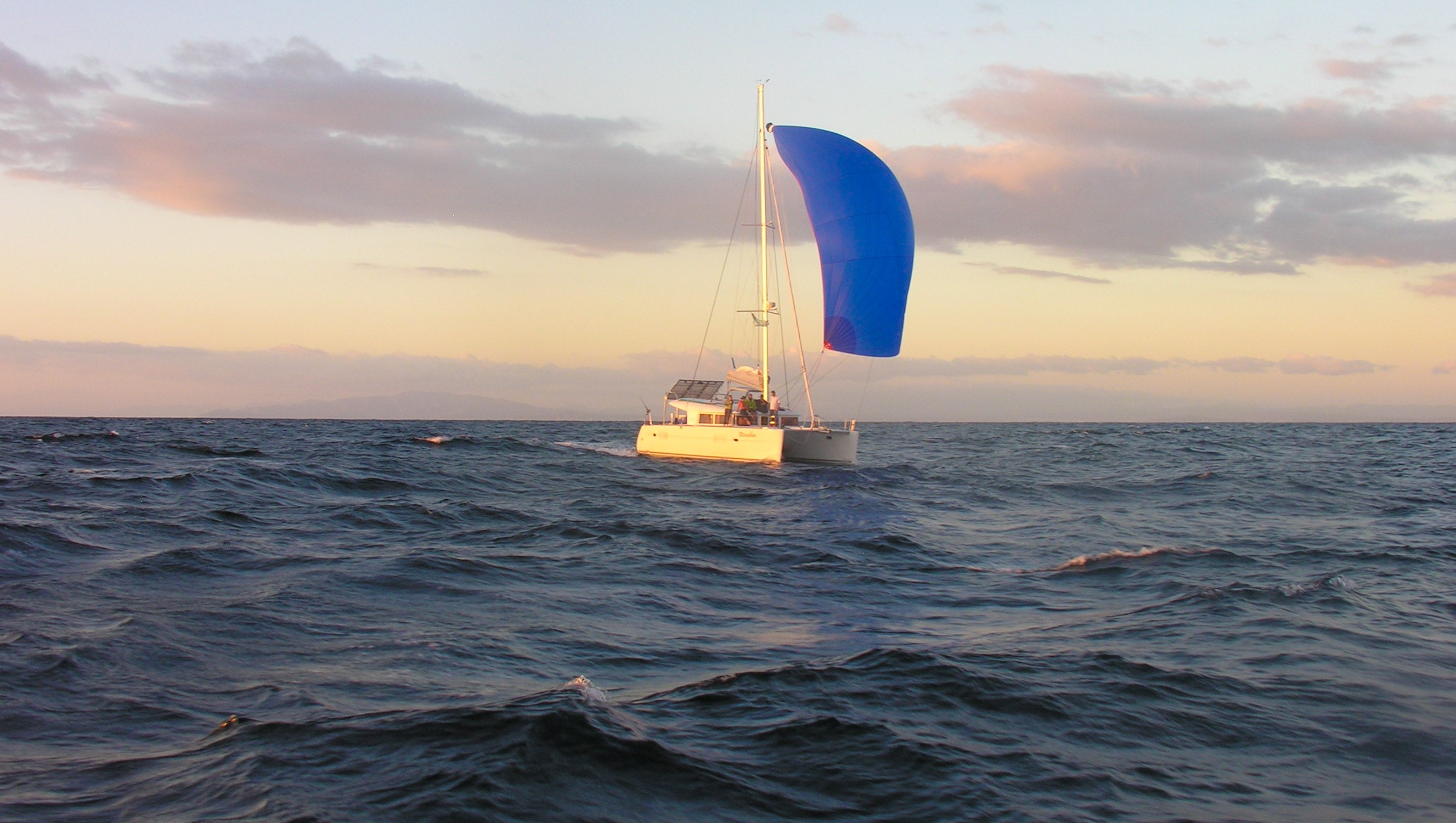
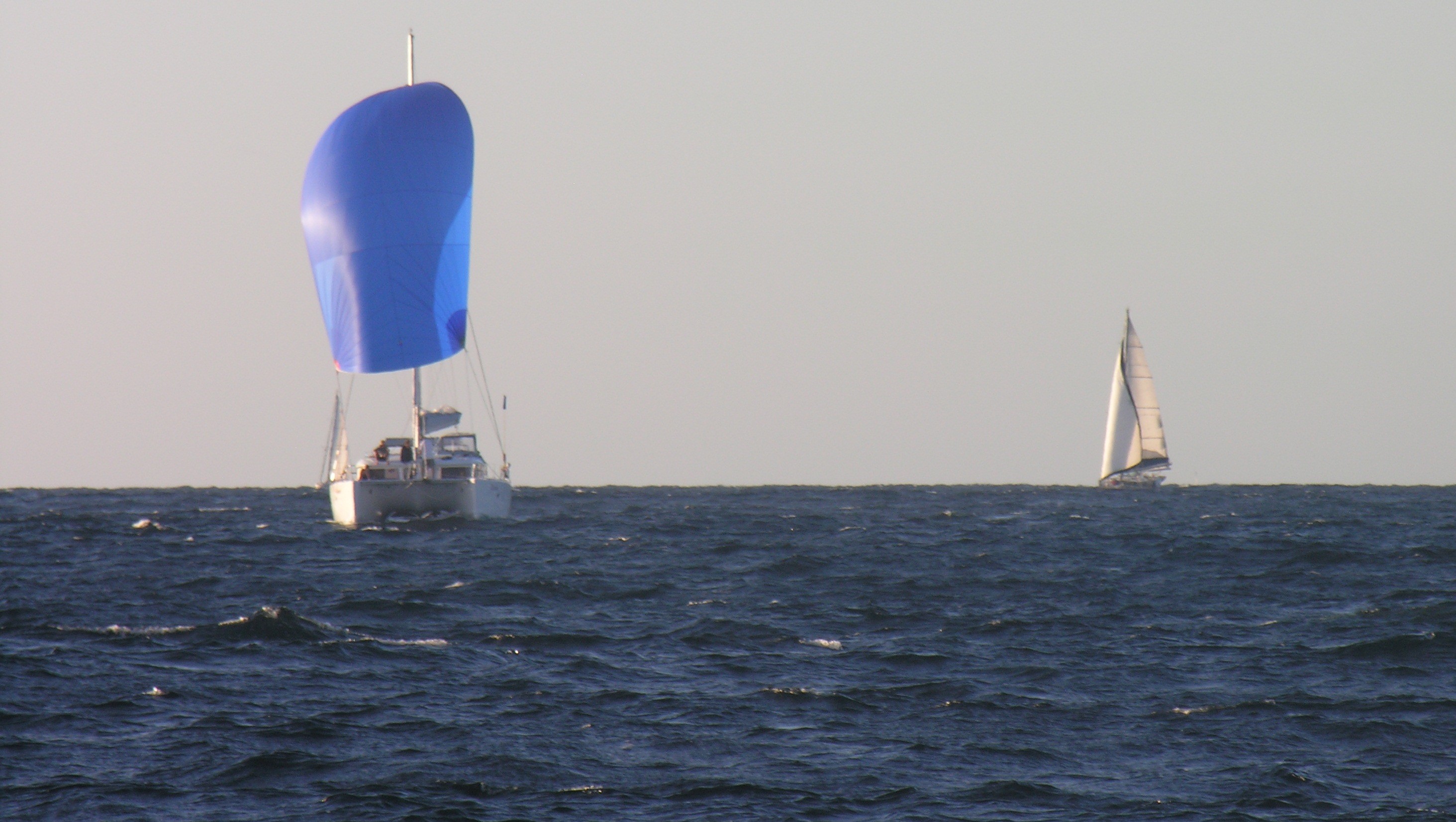
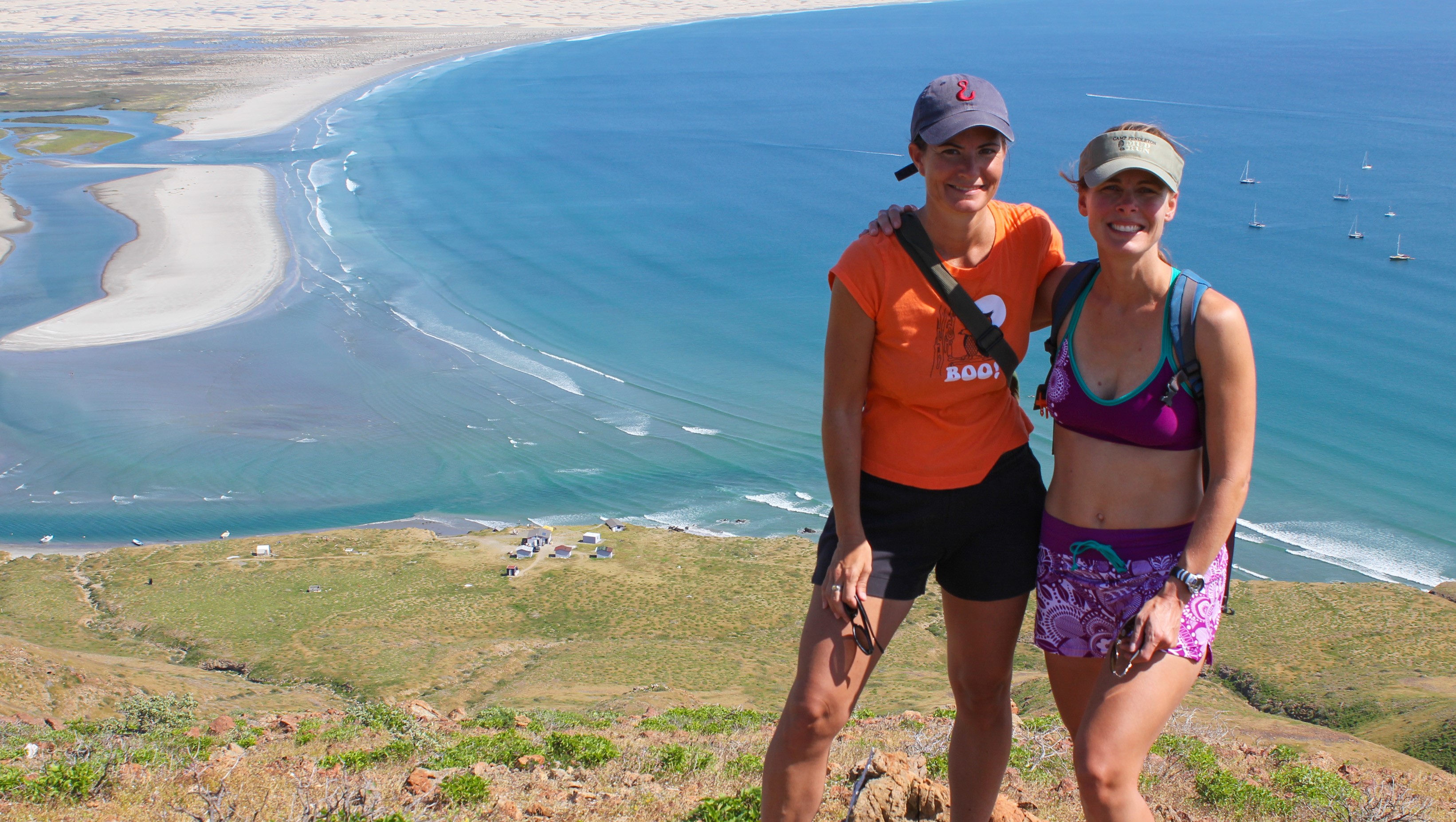
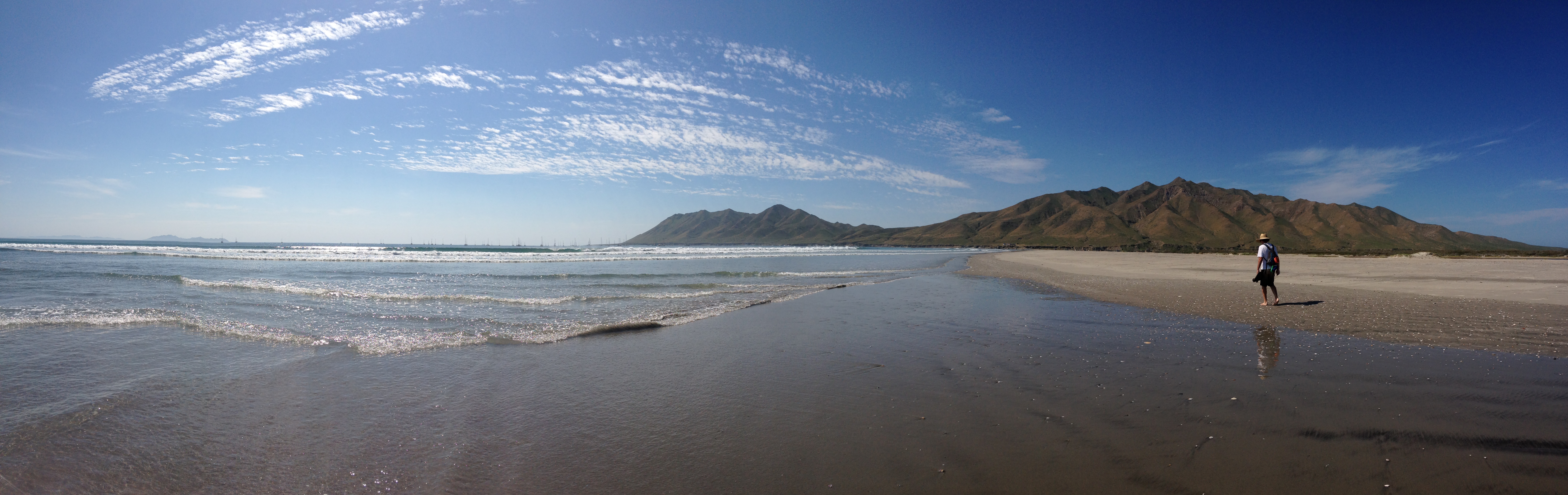
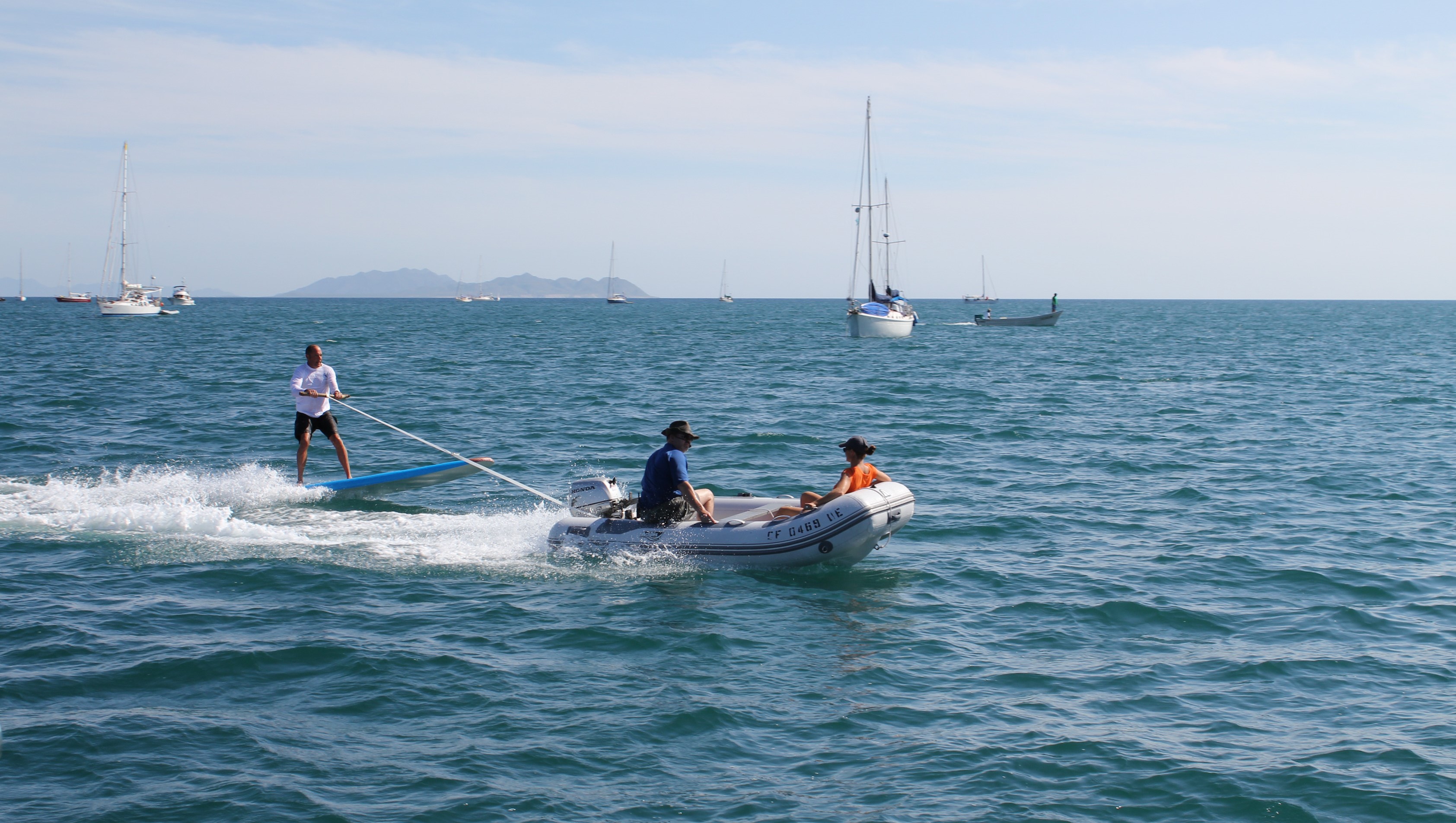
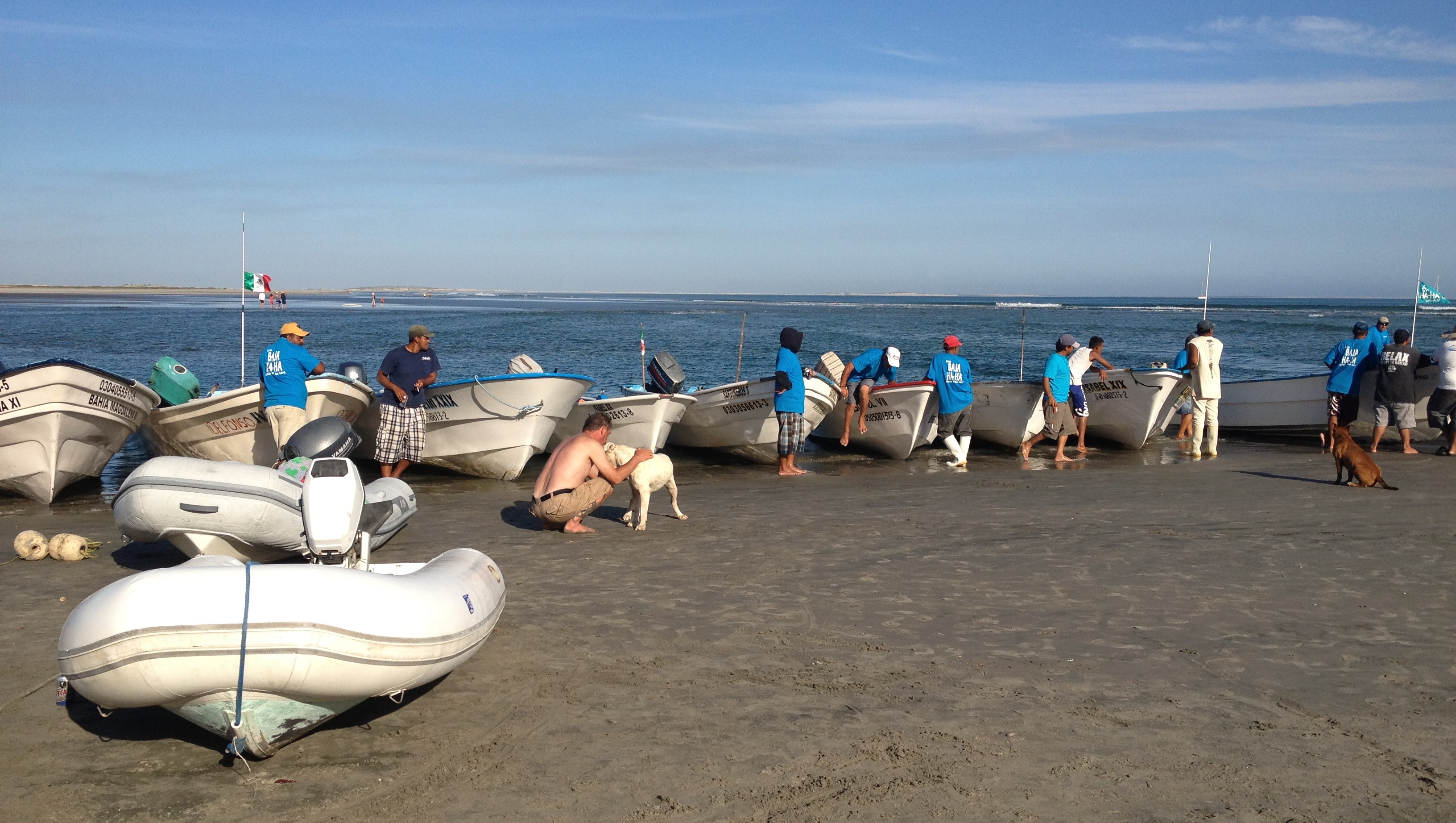
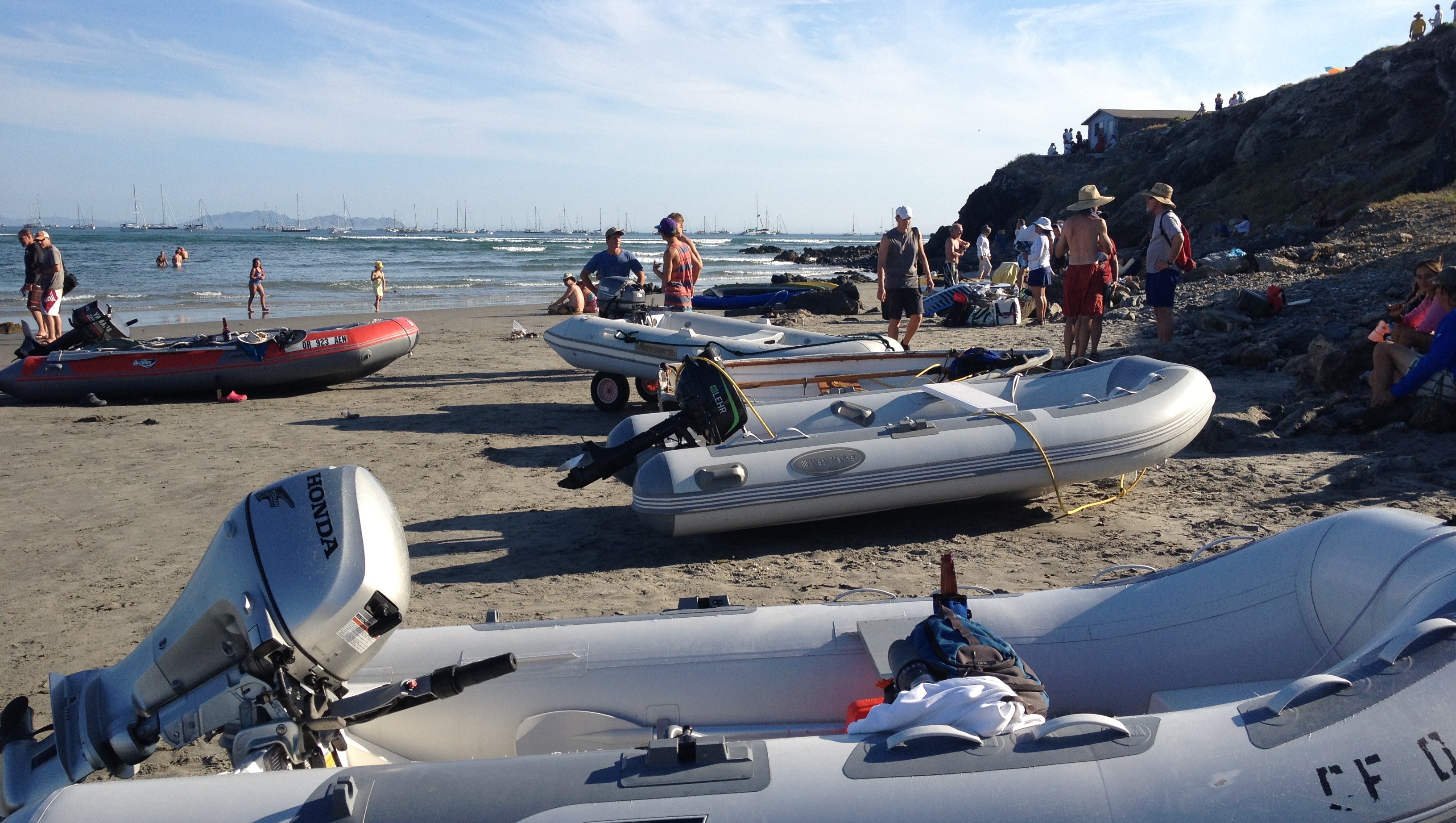
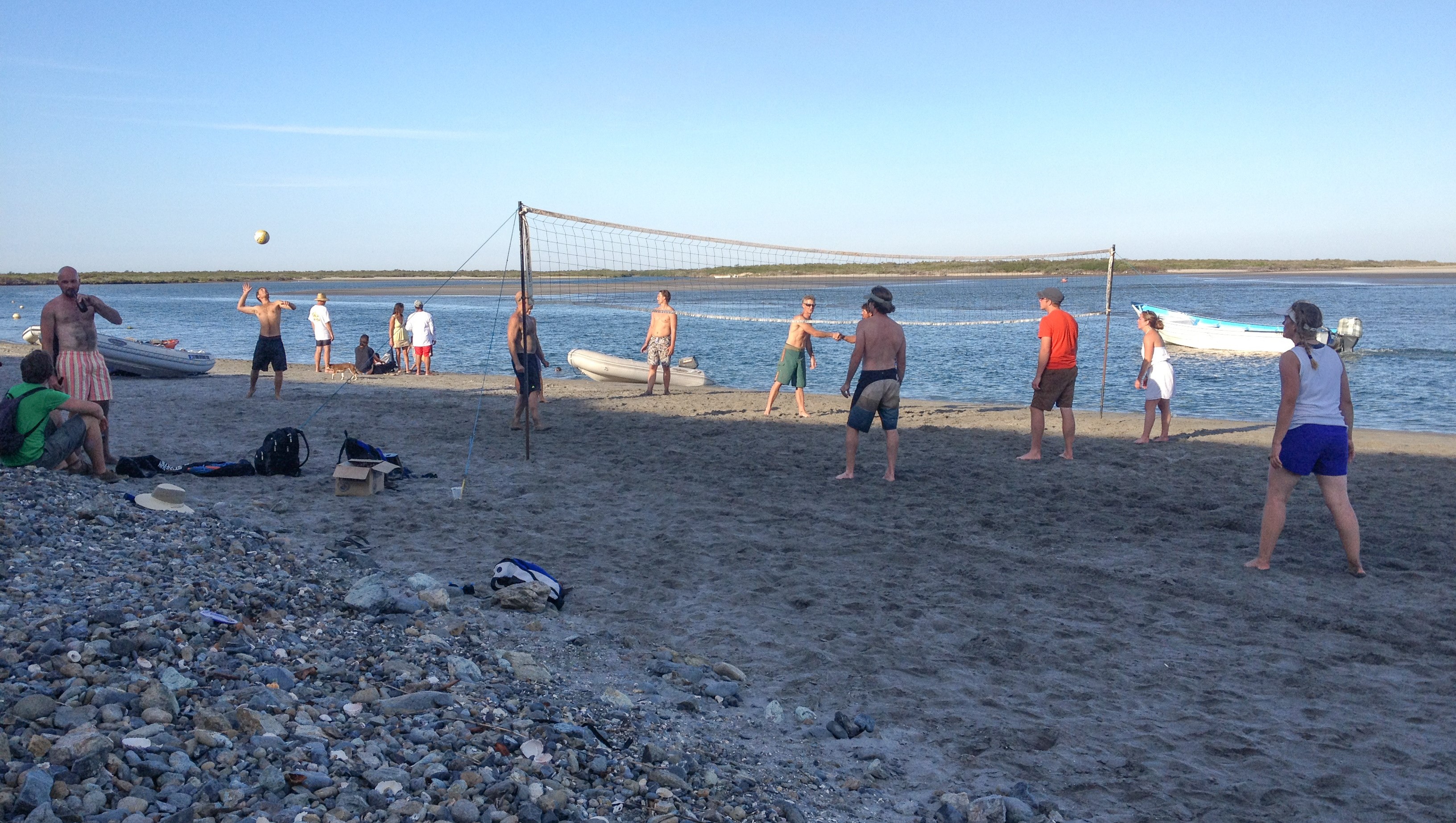
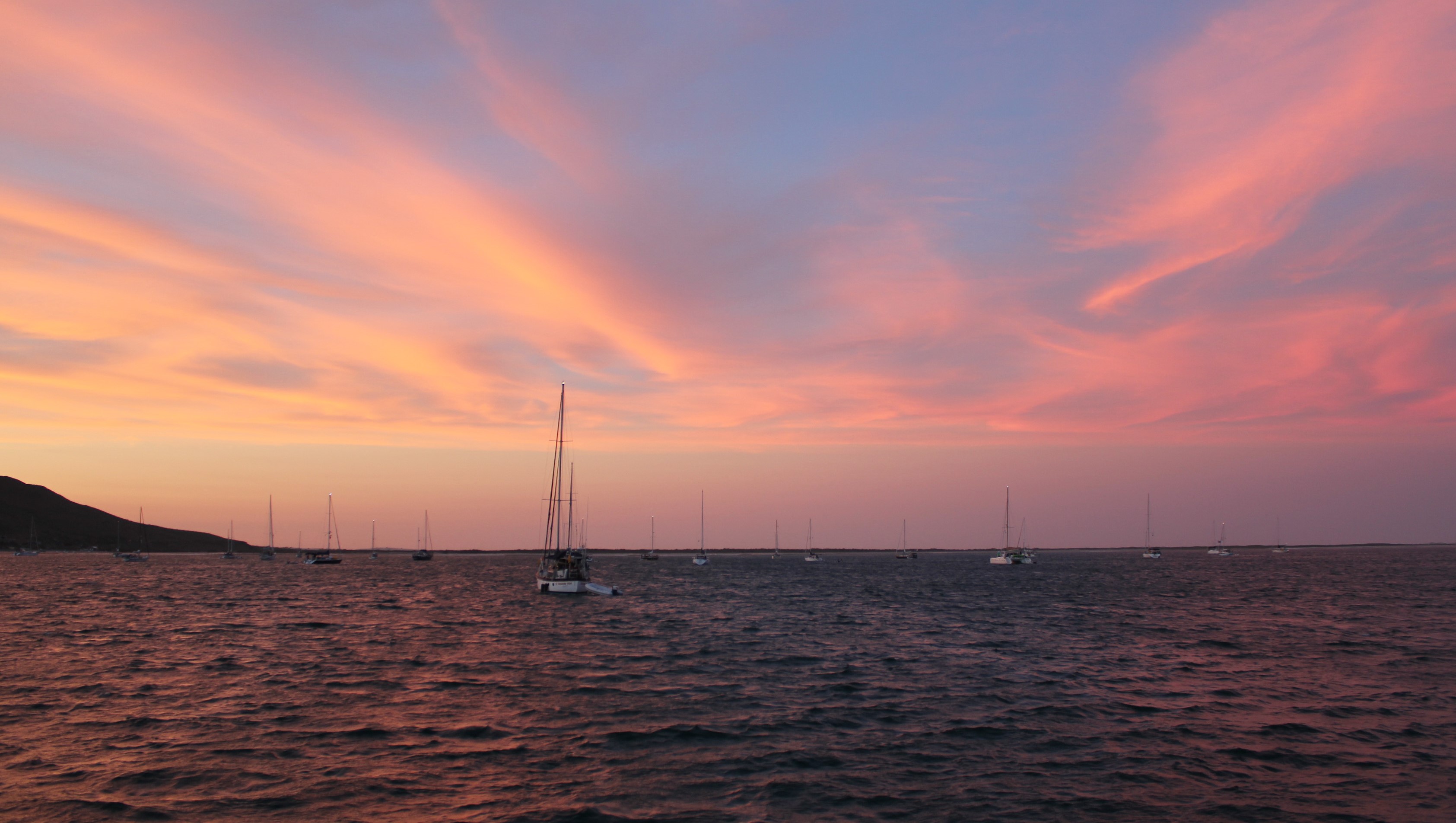
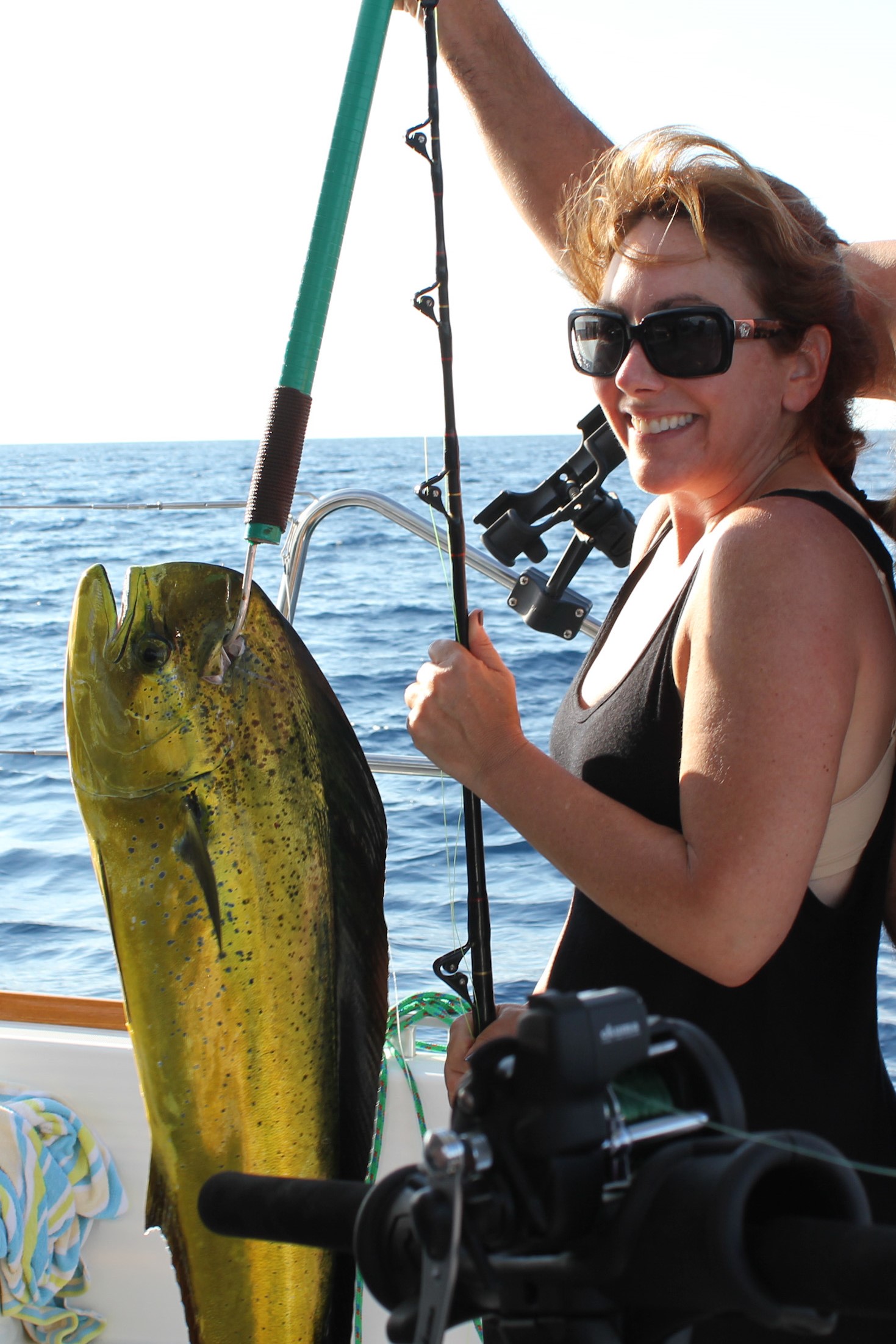
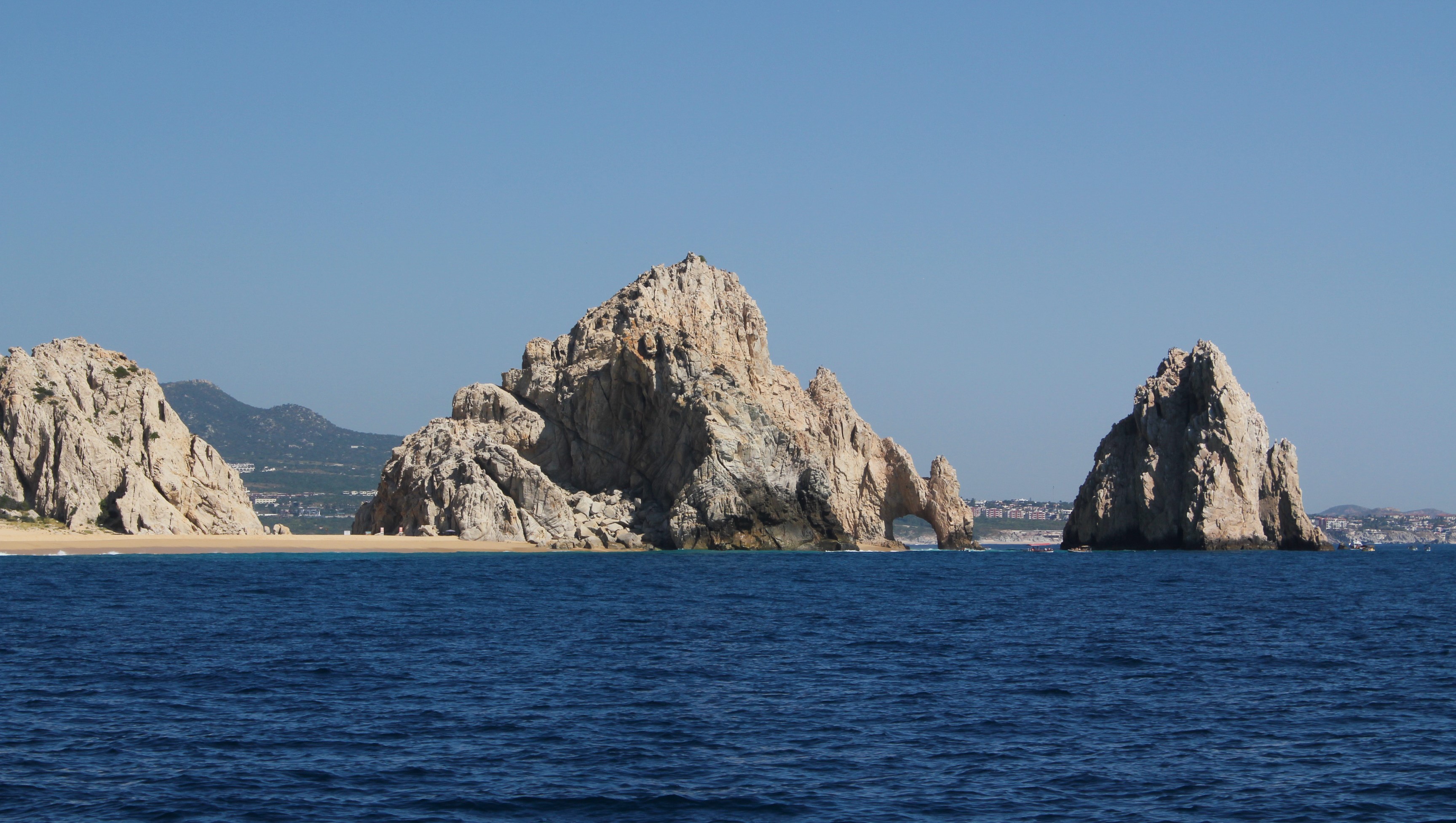
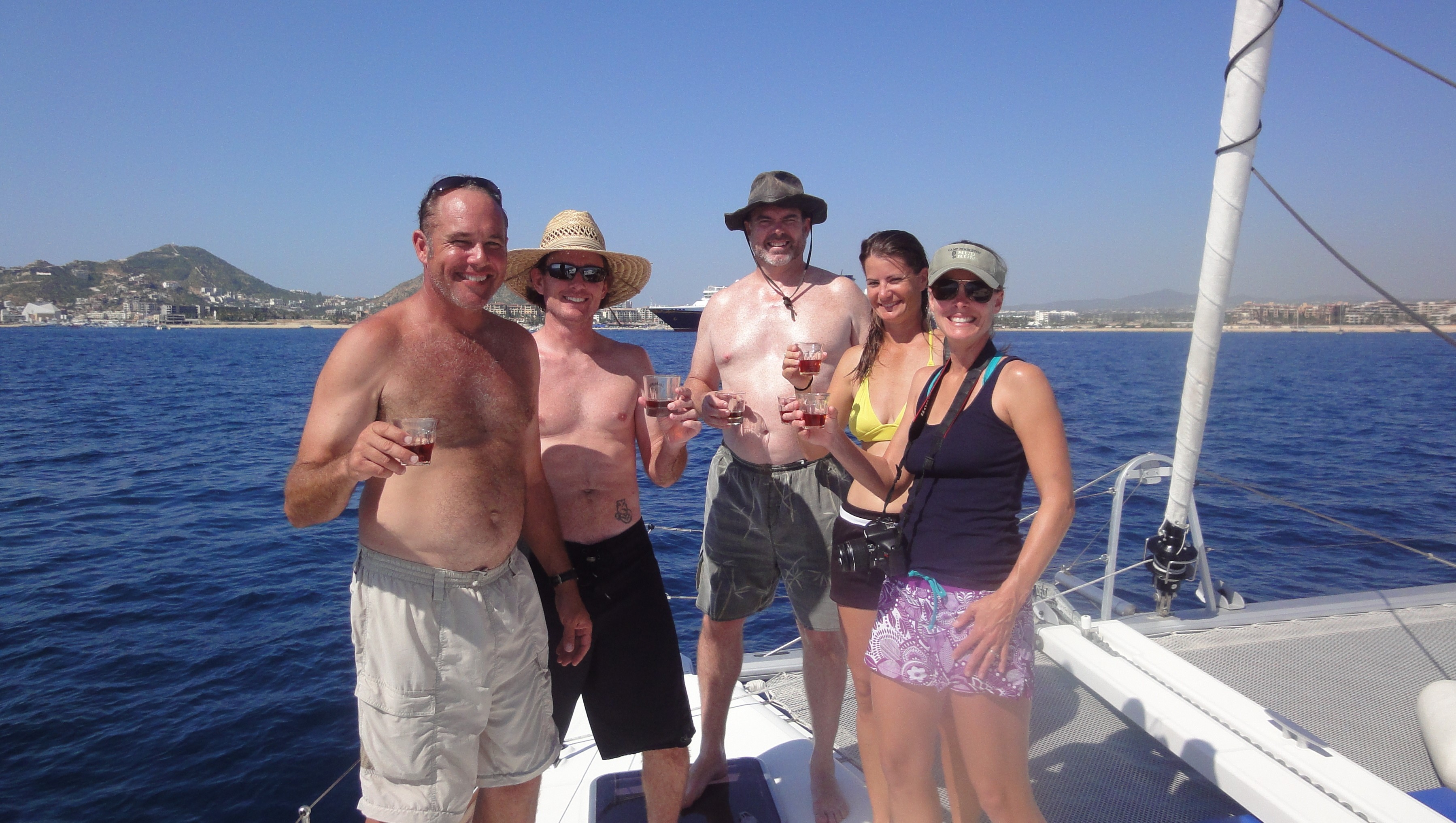
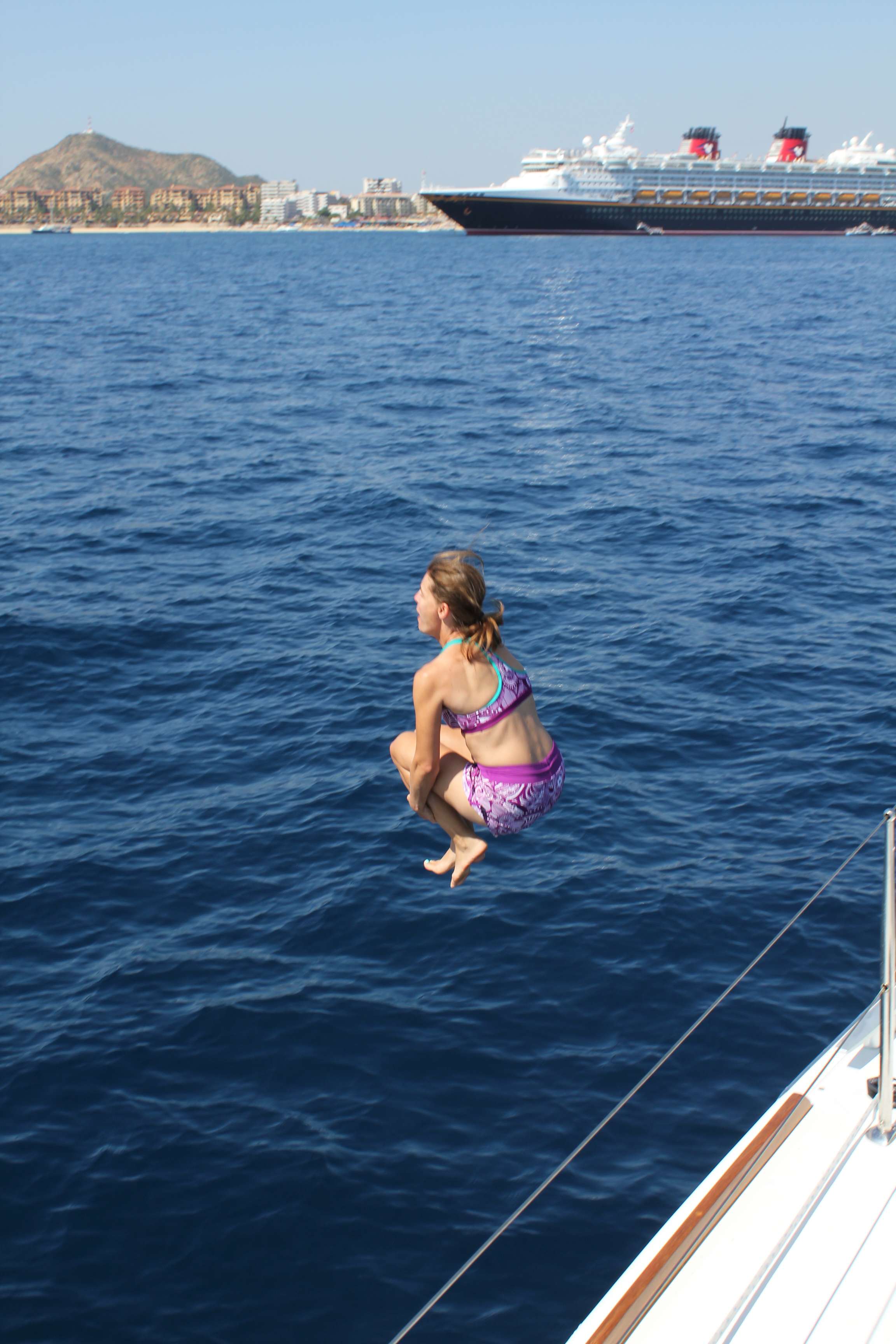
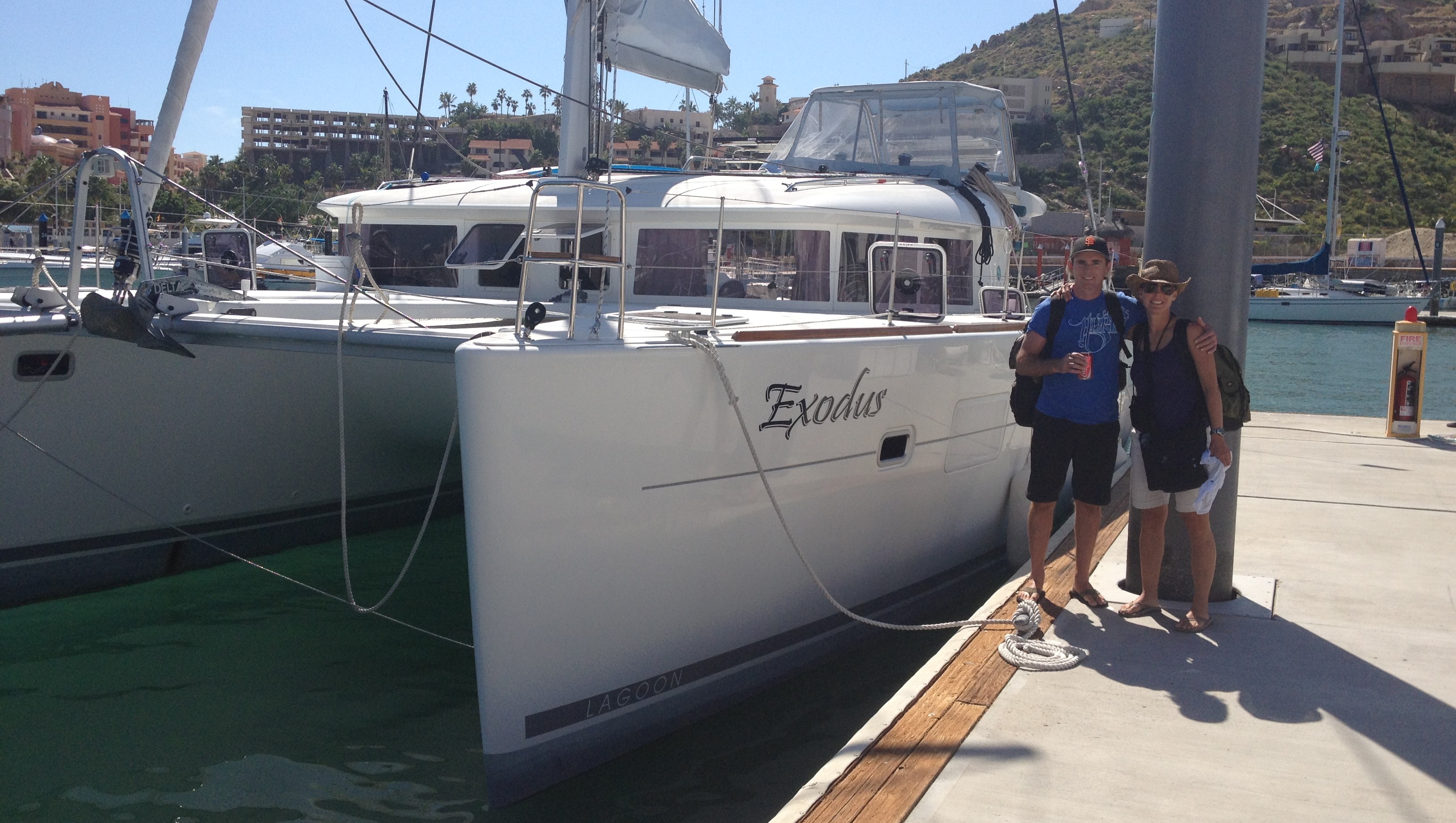
Tim is at the bow while getting ready to leave San Diego Harbor. We had really cal, sunny weather at the start.Raising the mainsail. Tim is helping it out of the stack pack while Cole looks on. Raising and lowering the mainsail on Exodus is easiest with at least 3 people. One person at the helm to steer Exodus into the wind, one person on the controls for the electric winch (when raising) or tailing the halyard (when lowering), and then a third person up top guiding the sail in or out of the stack pack. When needed, the person at the helm can pull double duty and work the winch as well.The fleet all lined up and ready to go. Some boats have their colorful spinnakers flying already.Cole and Sherry relaxing on the net at the bow..Flat seas so far, so the beers and cocktails are already flowing.The fog rolled in shortly after leaving San Diego. It just happened to be during my watch, so I got a lesson in using the radar to detect other vessels in low visibility.Our first sunset at sea. The boats in the rally have all spread out, but there are still several nearby.The first catch was a Dorado, as they are known in Mexico. Later, when we got to the South Pacific we switched to calling them Mahi Mahi. They’re called Dolphin Fish in English, but who calls them that?Fresh sushi rolls.The second catch was a yellowfin tuna!Our first of two stops was Bahia Tortuga (Turtle Bay). It’s a large bay with a small town.A friendly game of cruisers baseball with some of the local kids at Turtle Bay. That’s Deanne heading for third base.Tim takes a turn on the stand-up paddle board in Turtle Bay.Getting ready to leave Turtle Bay. Another beautiful morning.The spinnakers come out.Look out, Deanne’s at the helm.Getting a lesson in trimming the spinnaker.The marlin that got away.The dolphin show.Cruising along with a fellow catamaran – sunset behind S/V Vakasa.The view of Exodus from S/V Vakasa.Exodus’s glorious blue spinnaker is not necessarily a light wind sail. It works best with at least 10 knots of wind and is rated up to 25 knots. We tested it a few times over the years.A view of Exodus’s spinnaker from the front. Catamarans sail very well dead downwind because they don’t need the mainsail for stabilization.Our second stop was Bahia Santa Maria, which is a small bay just outside of the much larger Bahia Magdalena (aka Mag Bay). I walked up to the ridge with Cole to take in the view of the bay.Exodus at anchor at Bahia Santa Maria.Panorama of the beach at Bahia Santa Maria.Skurfing = part water skiing, part surfing. This would become a favorite pastime for Alex and Brenden and their cruising friends over the years. Here on the Baja Ha-Ha it was a favorite pastime for the men.At Bahia Santa Maria, the dinghy beach landing could be quite treacherous, so the locals would give you a ride to shore in a panga (for a small fee)Many people still brought their dinghies to shore (including us, that’s Exodus’s dinghy at the bottom). We expertly navigated the surf to safely make it to shore. We did spend a few minutes ahead of time discussing what to do if the dinghy capsized, just in case.We played a lot of volleyball, including a few high stakes games for beers.Sunset at Bahia Santa Maria.Another Dorado (Mahi Mahi).We made it to Cabo! In this photo you can see El Arco (The Arch), which is the distinctive rock formation at the tip of Cabo.Safe arrival cocktails! This would become our Exodus tradition after every passage, not matter how long or how short.We also did safe arrival cannonballs off of the bow, and even Deanne jumped in!After a couple days in Cabo we said goodbye to Exodus
It was a great trip, and we learned a lot. We weren’t quite the new owners yet, but we hired Joe to bring Exodus back up to San Diego where we would eventually take possession and then sail to Marina del Rey for final outfitting and preparations. This was getting real…

















 Gresham Family Exodus